Thirteen days may seem short for a country the size of China, but it is enough time to discover some of Asia's most impressive destinations — from futuristic cities built between mountains to historic villages preserved for centuries.
This 13-day China itinerary combines Chongqing, Zhangjiajie, Furong, Fenghuang, Xi'an, Pingyao and Beijing in a well-balanced route between nature, history and Chinese urban culture, making it an excellent foundation for first-time visitors to the country.
Itinerary at a glance
- 3 days in Chongqing — futuristic city built between mountains
- 2 days in Zhangjiajie — Avatar Mountains and national park
- 1 day in Furong — historic village with waterfall
- 1 day in Fenghuang — ancient town on the riverbank
- 1 day in Xi'an — Terracotta Army and the Silk Road
- 2 days in Pingyao — preserved walled city
- 3 days in Beijing — Forbidden City and Great Wall
Chongqing — futuristic city built between mountains
Days 1–2 — Chongqing: city and landmarks
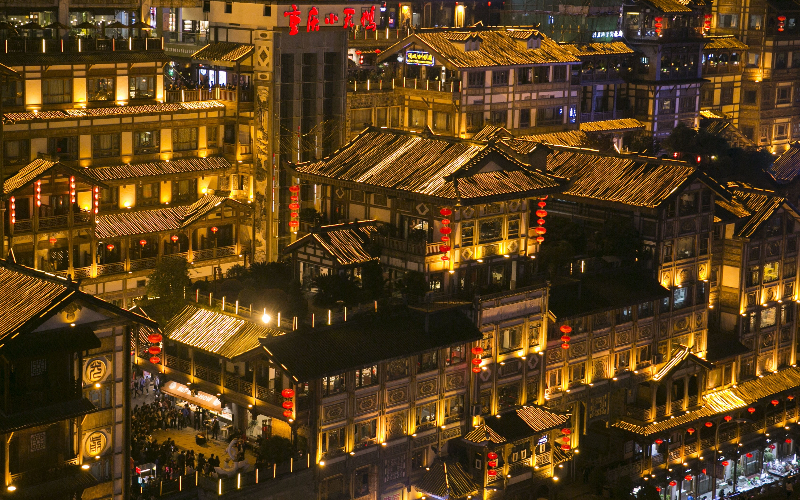
Hongya Cave — multi-storey historic complex built into the hillside, illuminated at night with traditional lanterns. One of the most photographed spots in Chongqing.
Kuixinglou Square — viewpoint that reveals the city's surprising vertical topography across multiple street levels.
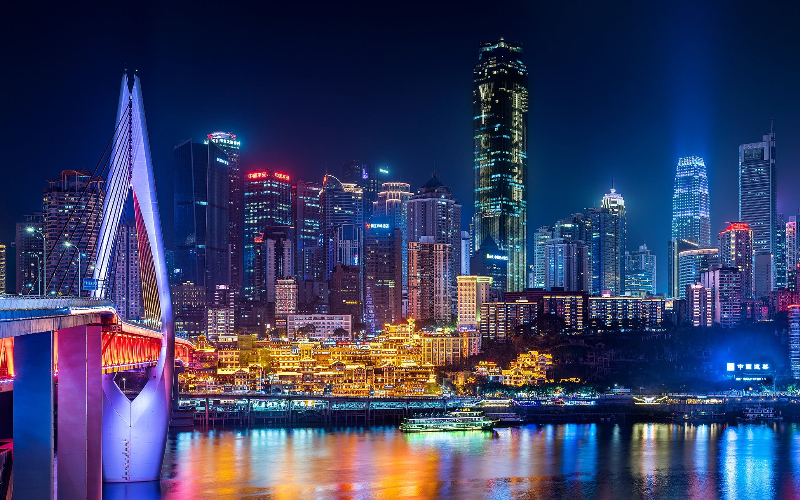
Yangtze River — walks along China's longest river with views of the vertical skyline and the enormous bridges connecting the city's districts.
Day 3 — Wulong and Three Natural Bridges
Wulong — Three Natural Bridges — three enormous natural stone arches formed by collapsed karst caves, each tens of metres tall. Among the most impressive geological formations in China, about two hours from Chongqing.
Zhangjiajie — Avatar Mountains and national park
Day 4 — National Park and Avatar Mountains
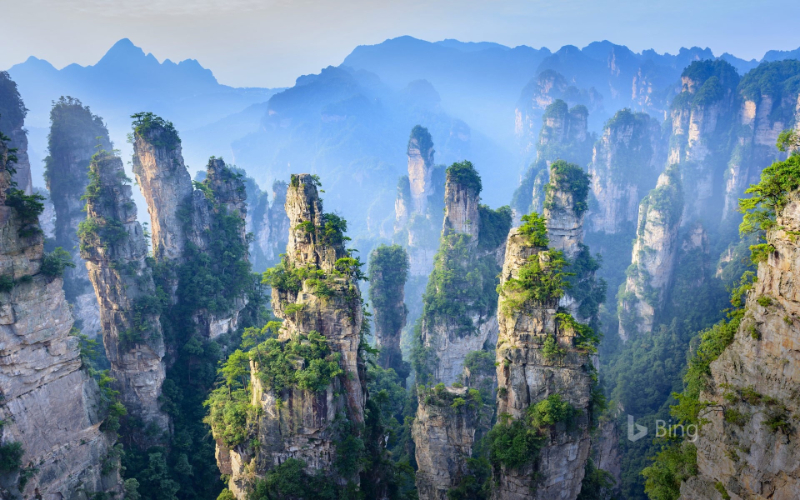
Yuanjiajie (Avatar Mountains) — sandstone pillars covered in vegetation that inspired the floating mountains in the Avatar film. Accessible via the Bailong Elevator, the world's tallest outdoor lift.
Tianzi Mountain — elevated viewpoint above the sea of clouds and the forest of stone pillars stretching across the national park.
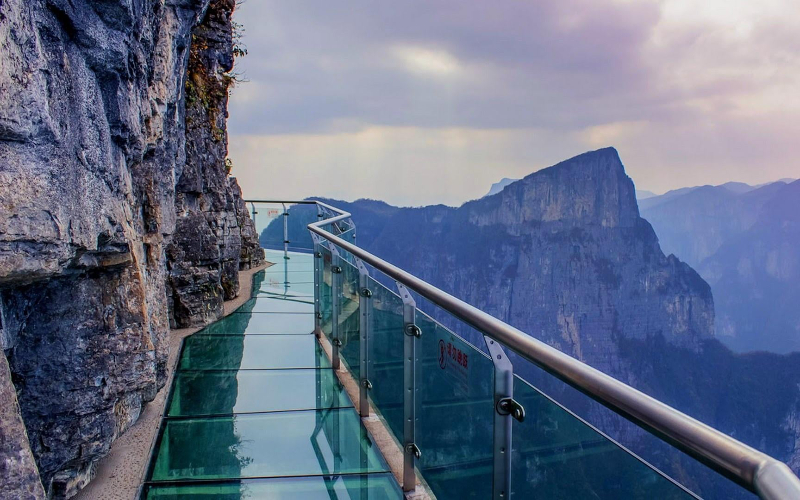
Zhangjiajie Glass Bridge — one of the world's highest glass bridges, suspended between two peaks with views of the valley hundreds of metres below.
Day 5 — Tianmen Mountain
Tianmen Mountain (Heaven's Gate) — mountain with a massive natural rock arch forming a gateway. Access by the world's longest cable car, with views across valleys and forest.
Furong — historic village with waterfall
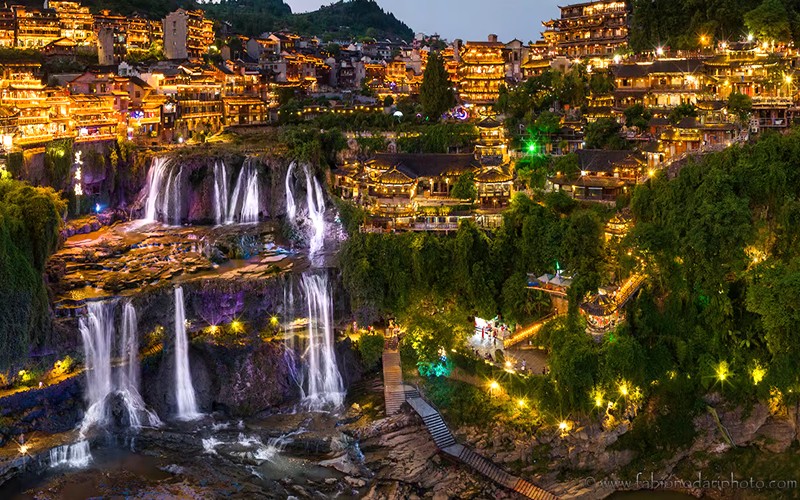
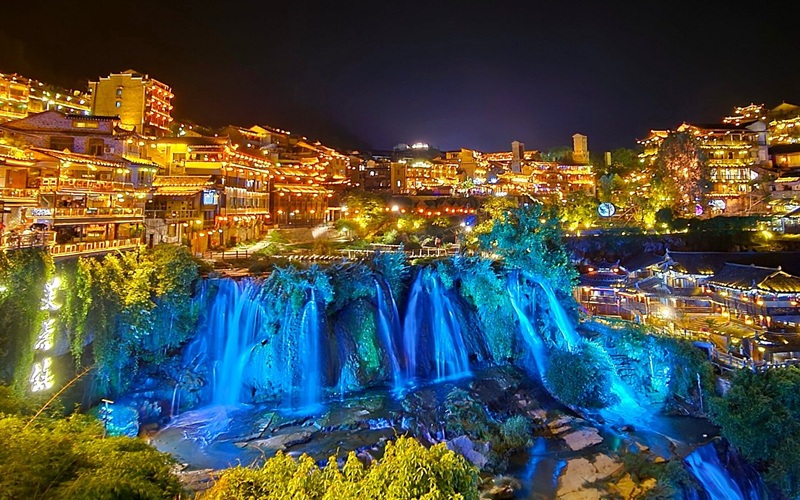
Furong Ancient Town — small historic village built on a cliff with a 60-metre waterfall flowing through the centre. The combination of traditional Tujia architecture and the natural waterfall creates a scene found nowhere else in China.
Wooden walkways beside the waterfall — paths running alongside the cascade with views of the traditional buildings and the valley below.
Viewpoints and traditional market — elevated spots above the village and local market with Tujia culture. At night, the illuminated historic buildings make Furong one of the most photogenic stops on the itinerary.
Fenghuang — ancient town on the riverbank
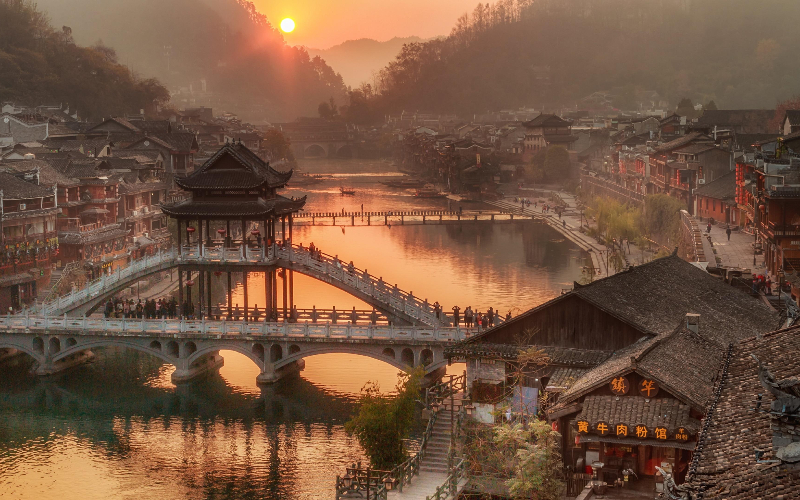
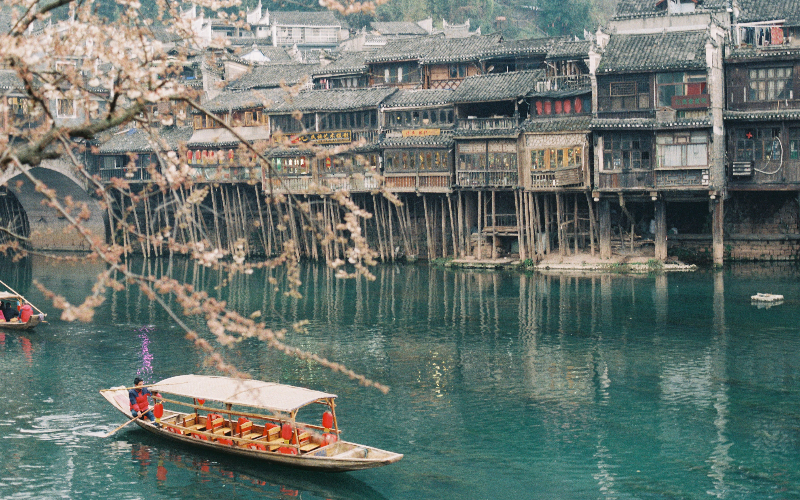
Fenghuang historic centre — stilt houses and cobblestone streets on the banks of the Tuojiang river, with traditional Miao and Tujia architecture preserved for centuries.
Wooden bridges over the Tuojiang river — historic crossings with views of the stilt houses and the water below reflecting the old town.
Ancient temples and watchtowers — historic monuments along the riverbank, especially striking at night when the lighting creates reflections on the water.
Xi'an — Terracotta Army and the Silk Road
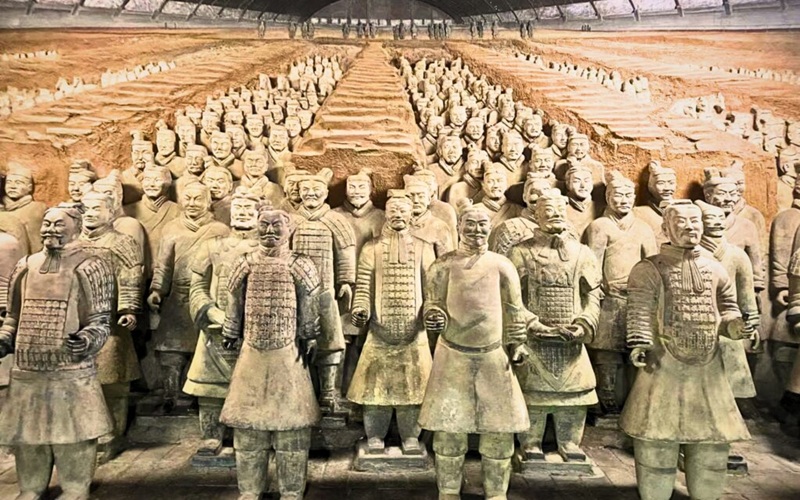
Terracotta Army — thousands of life-size warrior statues buried for over 2,200 years and unearthed in 1974. One of the greatest archaeological discoveries in history.
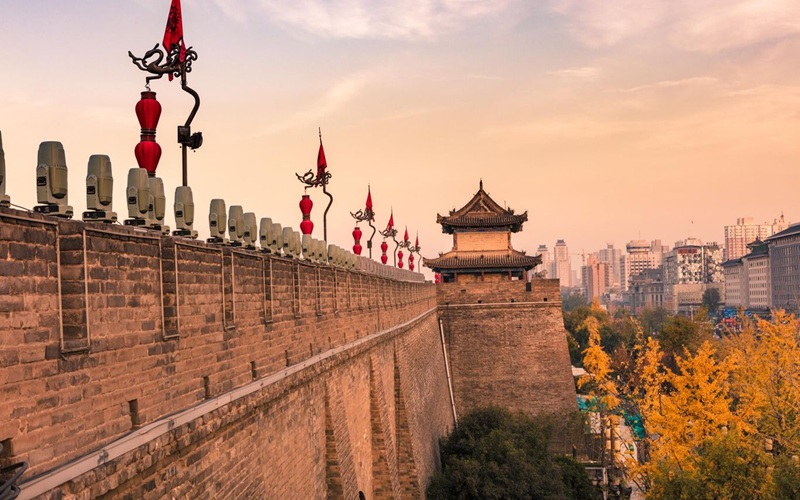
Ancient city wall — medieval wall encircling Xi'an's historic centre, walkable or cyclable along its full perimeter with views of both the old and new city.
Muslim Quarter — a maze of historic streets with century-old mosques, traditional markets and Silk Road cuisine.
Pingyao — preserved walled city
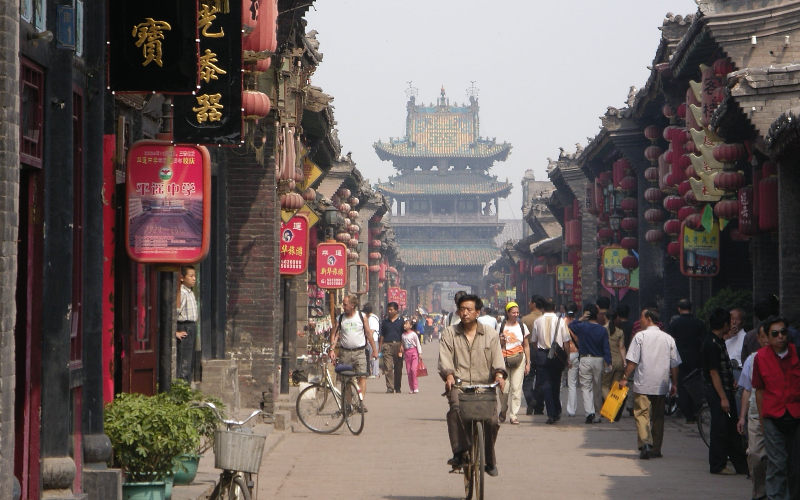
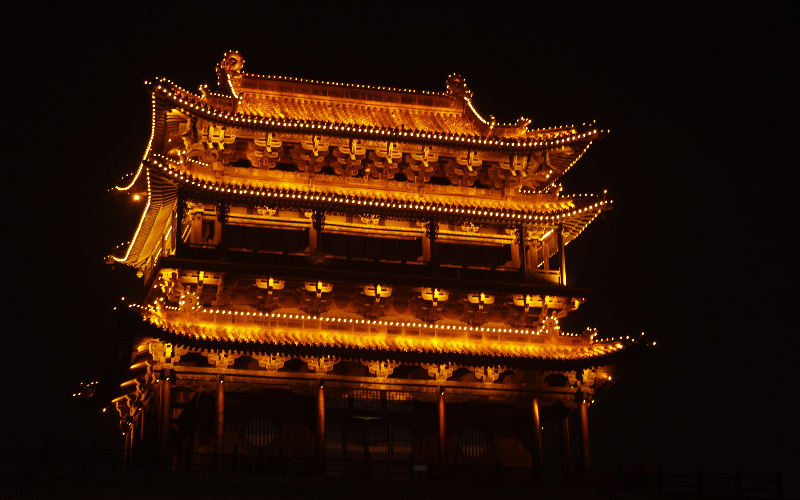
Pingyao city walls — 14th-century imperial walls, a UNESCO World Heritage Site, with watchtowers and panoramic views over the historic centre.
Cobblestone streets and historic merchant houses — preserved Ming dynasty architecture with traditional courtyards and centuries-old shop fronts.
Rishengchang Exchange Shop — China's first draft bank, founded in 1823, now a museum that reveals Pingyao's role as the financial capital of imperial China.
Beijing — Forbidden City and Great Wall
Days 11–12 — Beijing: imperial palaces and squares
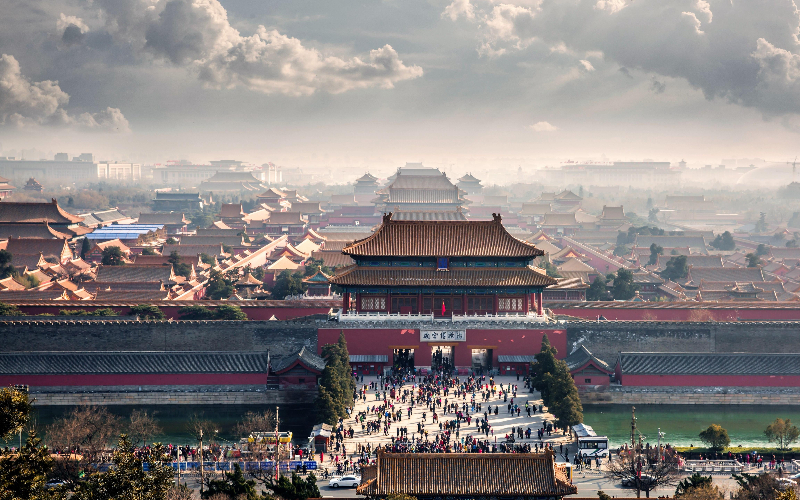
Forbidden City — the ancient imperial palace with 9,999 rooms across 72 hectares, home to China's emperors for nearly 500 years. Entrance through Tiananmen Square.
Tiananmen Square — one of the world's largest public squares, with the portrait of Mao Zedong at its northern end and the Monument to the People's Heroes at the centre.
Summer Palace — imperial complex of gardens, lakes and pavilions 15 km from the city centre, considered the most harmonious of China's imperial palaces.
Day 13 — Great Wall
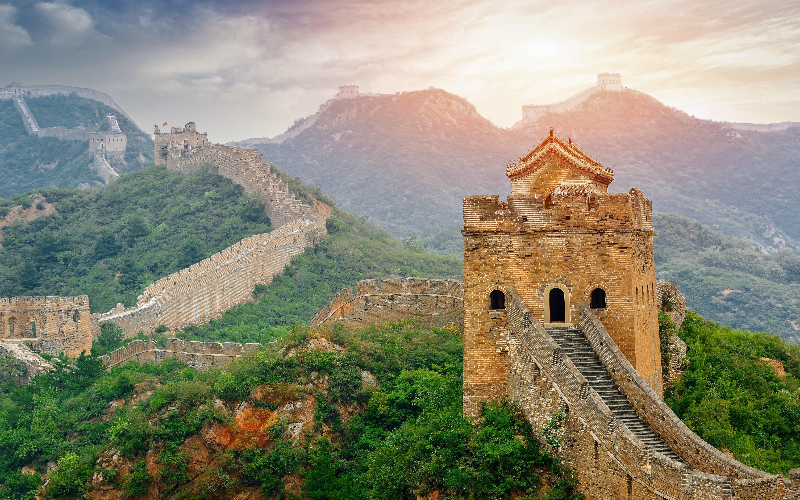
Great Wall of China — Mutianyu — one of the best-preserved sections, about 90 minutes from Beijing with fewer crowds than Badaling. Access by cable car or steep hike, with views over forested valleys.
Planning your trip to China: essential tips
Before starting this itinerary across China, it's important to understand some practical aspects of the trip. Unlike most destinations, China has its own ecosystem — apps, internet, payments and transport all work differently from the rest of the world, and a little preparation goes a long way.
Essential apps
- WeChat — messaging, payments and bookings
- Alipay — payments in shops and restaurants
- Didi — China's equivalent of Uber
- Baidu Maps or Apple Maps — for navigation
Internet & VPN
- Google, Instagram and WhatsApp are blocked
- A VPN is required to access these services
- Install and test your VPN before arriving
- Use a reliable VPN for a stable connection
Payments
- China is almost entirely cashless
- WeChat Pay and Alipay work almost everywhere
- International cards don't always work
- Set up the payment apps before you travel
Transport between cities
- High-speed train — the main way between cities
- Domestic flights — good for longer distances
- Didi — getting around within cities