Fourteen days may seem short for a country the size of China, but it is enough time to discover some of Asia's most impressive destinations — from futuristic cities built between mountains to historic villages preserved for centuries.
This 13-day China itinerary combines Chongqing, Zhangjiajie, Furong, Fenghuang, Xi'an, Pingyao and Beijing in a well-balanced route between nature, history and Chinese urban culture, making it an excellent foundation for first-time visitors to the country.
Itinerary at a glance
- 3 days in Chongqing — futuristic city built between mountains
- 2 days in Zhangjiajie — Avatar Mountains and national park
- 1 day in Furong — historic village with waterfall
- 1 day in Fenghuang — ancient town on the riverbank
- 1 day in Xi'an — Terracotta Army and the Silk Road
- 2 days in Pingyao — preserved walled city
- 3 days in Beijing — Forbidden City and Great Wall
Chongqing — futuristic city built between mountains
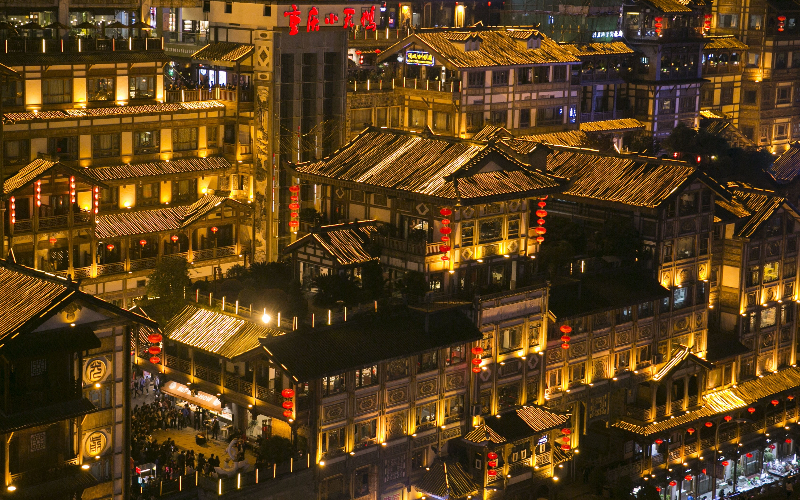
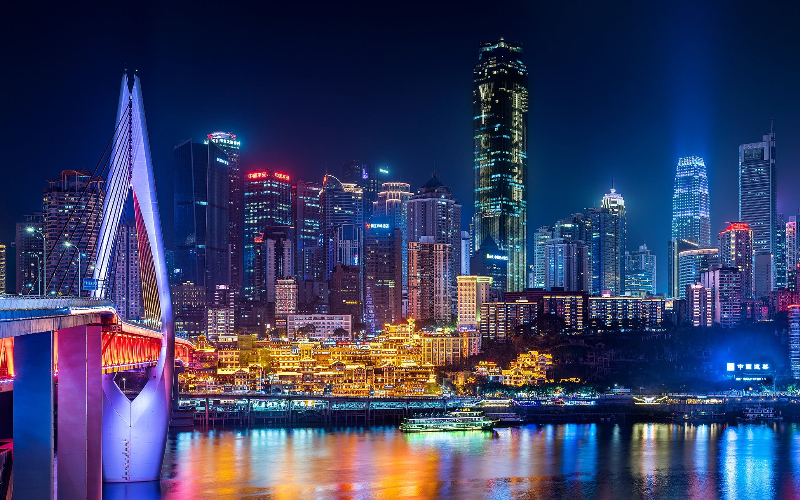
Chongqing is one of the most impressive cities in modern China, built between mountains and bisected by the Yangtze and Jialing rivers. Its vertical architecture, enormous bridges and varied topographic levels create unique and futuristic urban landscapes.
Over three days, explore the historic Hongya Cave district with its traditional buildings illuminated at night, the Kuixinglou Square viewpoint that reveals surprising perspectives of the city at different levels, and walks along the Yangtze River. The city is also one of the best places in the country to try authentic Sichuan hotpot.
Set aside a day for a trip to Wulong, home to the Three Natural Bridges — enormous stone arches formed naturally by the karst landscape typical of China's interior. The three natural archways, each tens of metres tall, are among the most impressive geological formations in the region and lie around two hours from Chongqing.
Zhangjiajie — Avatar Mountains and national park
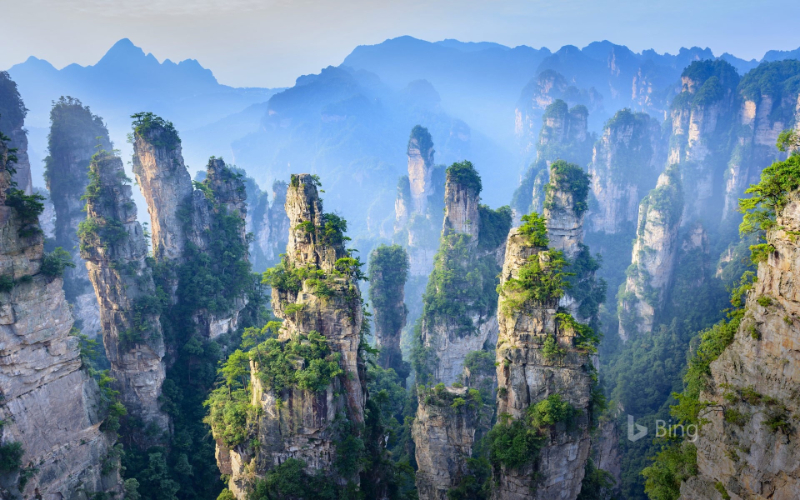
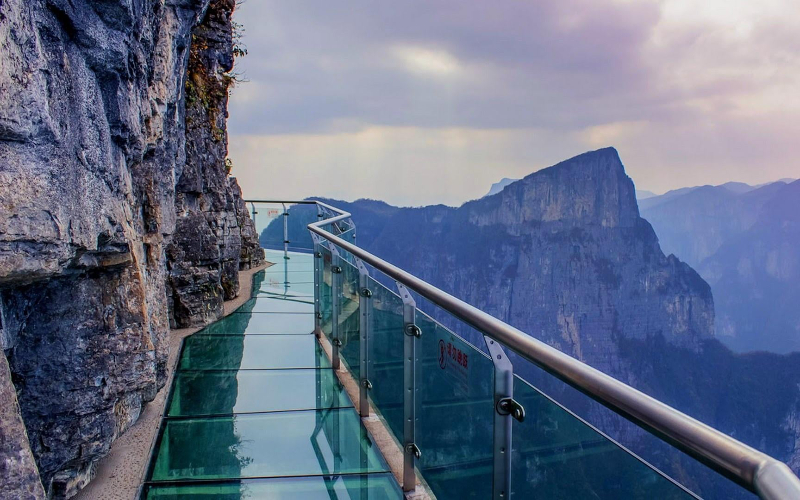
Zhangjiajie is home to some of China's most breathtaking natural landscapes and gained international fame for the rock formations that inspired the scenery of the Avatar film. The national park features giant sandstone pillars covered in vegetation, suspended walkways and unique panoramic viewpoints.
Over two days, explore Yuanjiajie with its iconic pillars accessible by the Bailong Elevator, Tianzi Mountain with sweeping panoramic views, and the world's longest glass bridge. Cable cars connect different sectors of the park and provide easy access to the main attractions.
Furong — historic village with waterfall
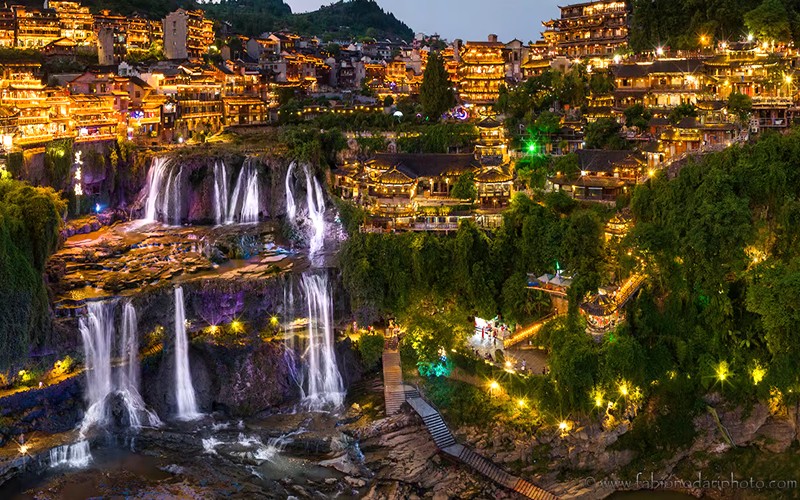
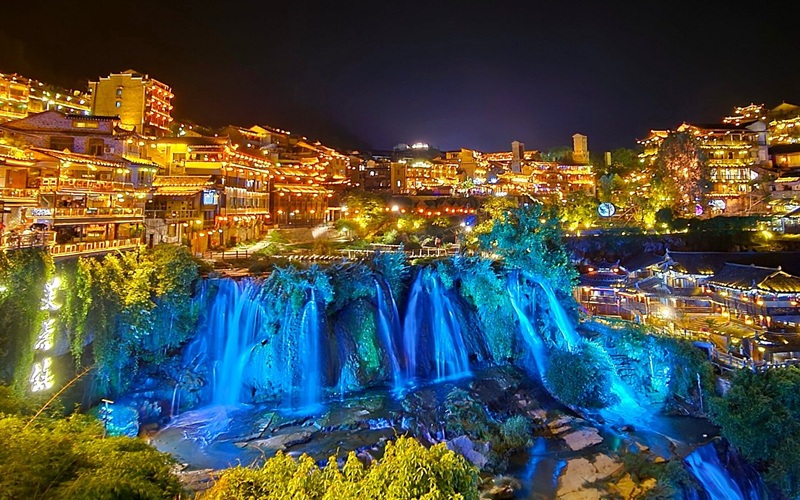
Furong is a small historic village built on a cliff with an approximately 60-metre waterfall running through the centre of the settlement. The combination of traditional Tujia architecture and the natural waterfall creates a scene found nowhere else in China.
Even on a short visit, it is possible to walk the wooden walkways beside the waterfall, explore the traditional market and watch the sunset from elevated viewpoints. At night, the illumination of the historic buildings creates one of the most photogenic scenes on the entire itinerary.
Fenghuang — ancient town on the riverbank
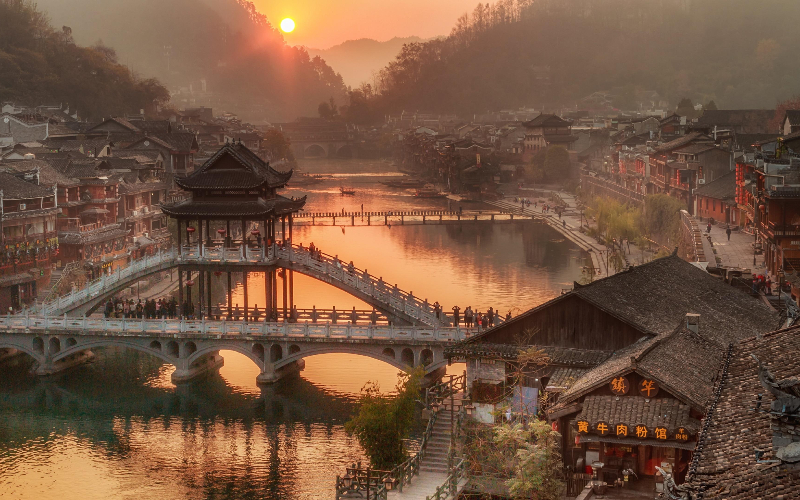
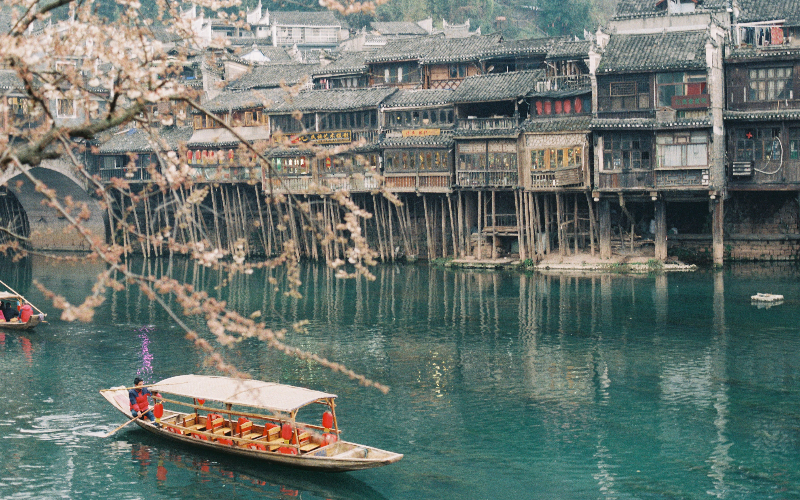
Fenghuang is considered one of the best-preserved ancient towns in China. Located on the banks of the Tuojiang river, it retains historic wooden bridges, stilt houses and cobblestone streets that reflect the traditional architecture of the Miao and Tujia ethnic minorities.
One day allows you to walk through the historic centre, cross bridges over the river, visit ancient temples and observe watchtowers. The evening is especially recommended, when the lighting creates reflections on the river and reveals the traditional atmosphere of the town.
Xi'an — Terracotta Army and the Silk Road
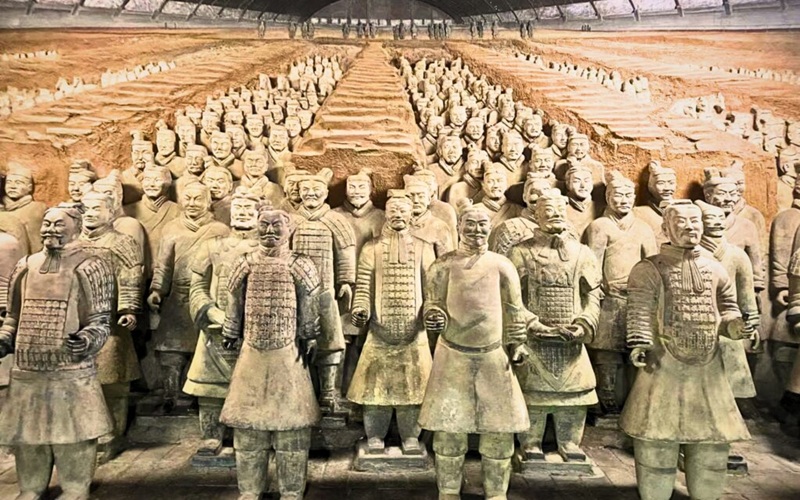
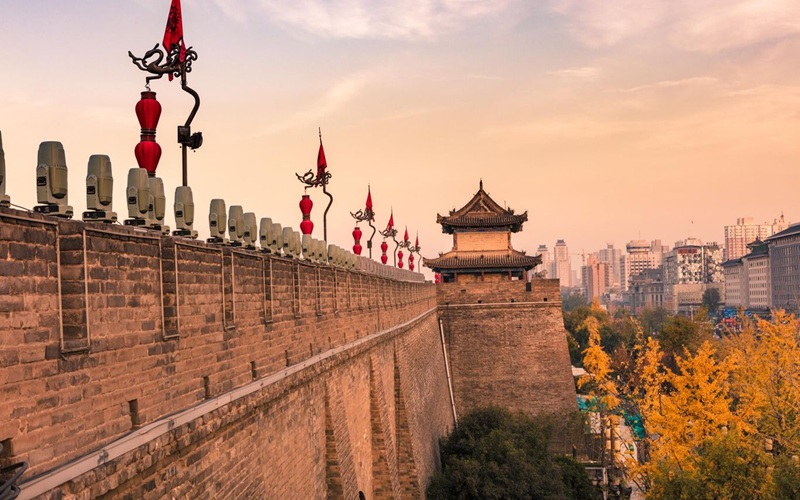
Xi'an was one of ancient China's most important capitals and marks the eastern end of the historic Silk Road. The city combines world-class archaeological sites with preserved city walls and traditional neighbourhoods.
The main highlight is the Terracotta Army, one of the most important archaeological discoveries in the world, featuring thousands of life-size warrior statues unearthed in 1974. The ancient city wall can be walked or cycled along its entire perimeter, and the Muslim Quarter preserves historic mosques and traditional markets.
Pingyao — preserved walled city
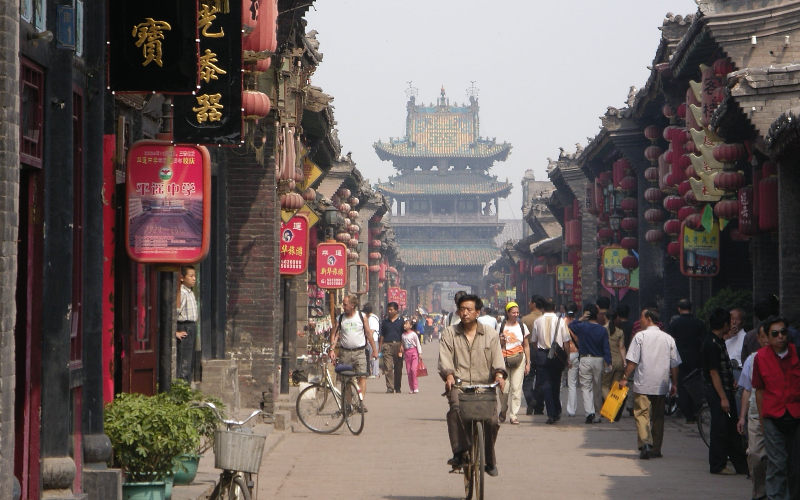
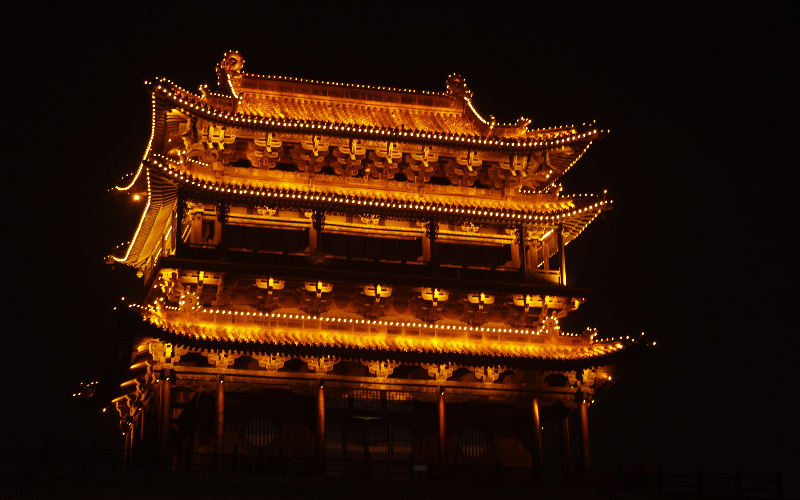
Zhangjiajie is home to some of China's most impressive natural landscapes and became known worldwide for the rock formations that inspired the scenery in the film Avatar. The national park brings together giant sandstone pillars, suspended walkways, and panoramic viewpoints spread across the mountains.
During your visit, explore the Yuanjiajie area, where the famous Avatar Mountains are accessible via the Bailong Elevator, continue to Tianzi Mountain with sweeping panoramic views, and finish at the Zhangjiajie Glass Bridge, a suspended glass walkway over the Grand Canyon.
In the evening, visit the Qilou complex (72 Strange Buildings), an illuminated architectural ensemble inspired by traditional Chinese constructions and one of the most photogenic night scenes in the city.
Beijing — Forbidden City and Great Wall
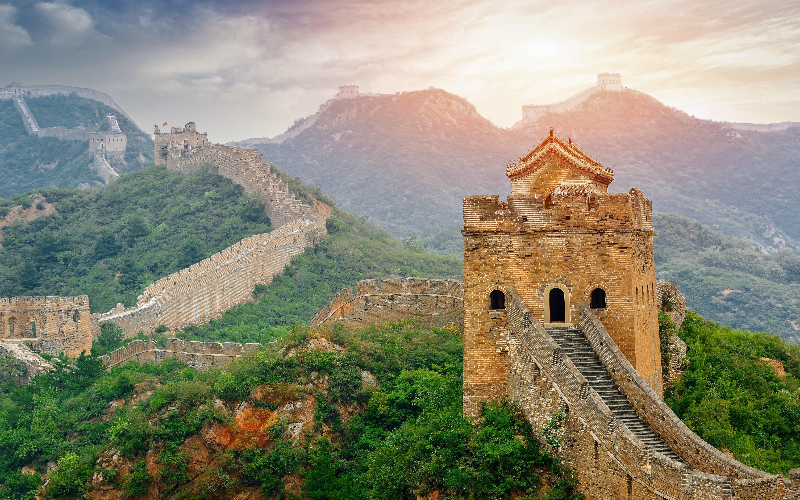
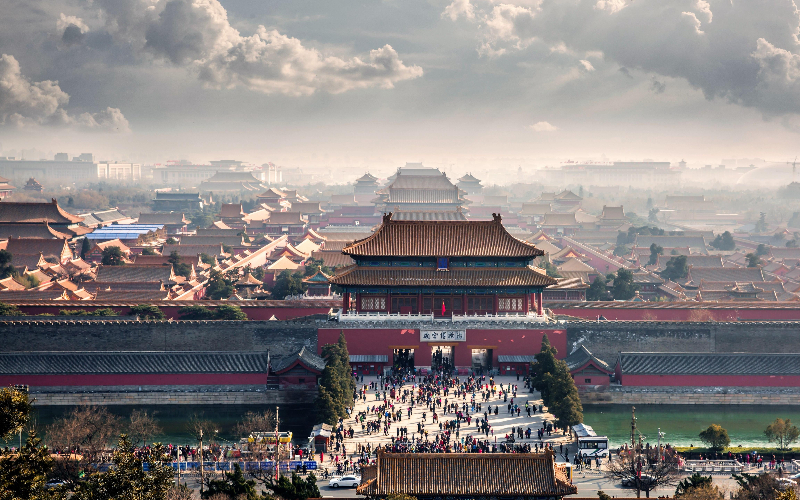
Beijing brings the itinerary to a close with three days dedicated to China's capital and its greatest historic monuments.
The first day can be devoted to the Forbidden City and Tiananmen Square. The second day is set aside for the Great Wall, preferably the Mutianyu or Jinshanling sections. The third day allows for visits to the Temple of Heaven, the Summer Palace and traditional Hutong neighbourhoods. The final day is free to revisit favourite spots or explore the 798 Art District.
China's capital serves as the ideal conclusion to the itinerary, bringing together imperial history, monumental architecture and the political and cultural dimensions of contemporary China.
Planning your trip to China: essential tips
Before starting this itinerary across China, it's important to understand some practical aspects of the trip. Unlike most destinations, China has its own ecosystem — apps, internet, payments and transport all work differently from the rest of the world, and a little preparation goes a long way.
Essential apps
- WeChat — messaging, payments and bookings
- Alipay — payments in shops and restaurants
- Didi — China's equivalent of Uber
- Baidu Maps or Apple Maps — for navigation
Internet & VPN
- Google, Instagram and WhatsApp are blocked
- A VPN is required to access these services
- Install and test your VPN before arriving
- Use a reliable VPN for a stable connection
Payments
- China is almost entirely cashless
- WeChat Pay and Alipay work almost everywhere
- International cards don't always work
- Set up the payment apps before you travel
Transport between cities
- High-speed train — the main way between cities
- Domestic flights — good for longer distances
- Didi — getting around within cities