The Terracotta Army is one of the most impressive archaeological sites in the world and Xi'an's top attraction. Discovered in 1974, the site holds thousands of life-size soldiers built over 2,000 years ago to protect Emperor Qin Shi Huang in the afterlife.
Listed as a UNESCO World Heritage Site, the Terracotta Army is one of the greatest symbols of Chinese history and one of the most memorable experiences of any trip to the country.
What is the Terracotta Army?
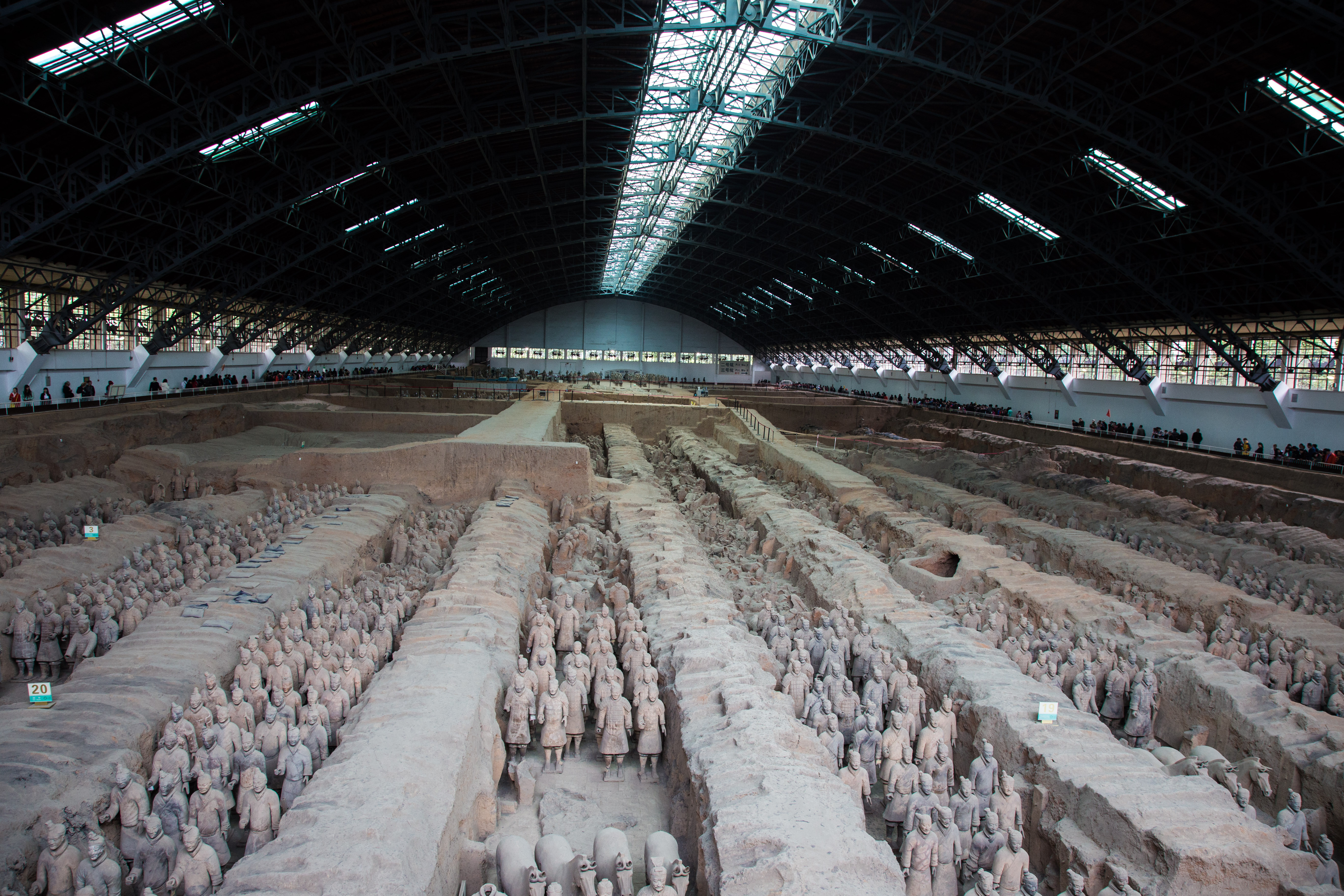
The Terracotta Army is part of the funerary complex of China's first emperor, Qin Shi Huang. The site includes thousands of statues of warriors, horses and chariots — each with unique individual details.
Every soldier has distinct features, including facial expressions, posture and armour, reflecting the extraordinary level of artistry and organisation of the period.
Where is the Terracotta Army?
The Terracotta Army is located around 40 km from central Xi'an, in Shaanxi Province — easily reachable as a day trip from the city.
How to get to the Terracotta Army
The archaeological site is located around 40 km from central Xi'an. The main transport options are:
- Organised tour or private transfer — the most practical and comfortable option
- Tourist bus — a more budget-friendly alternative
- Didi (ride-hailing app) — comfortable and direct
The journey takes approximately 1 hour depending on traffic.
How the visit works
The complex is divided into several pits, the main ones being:
- Pit 1 — the largest and most impressive, with hundreds of warriors lined up in formation
- Pit 2 — featuring different military formations
- Pit 3 — considered the command headquarters of the army
There are also exhibition areas covering excavation techniques, restoration work and the history of the site.
How long to spend
Plan on 2 to 3 hours to visit the Terracotta Army at a comfortable pace — enough time to explore all the pits and gain a deeper understanding of the site's historical significance.
What to expect
The visit to the Terracotta Army is more contemplative than interactive, centred on observing the excavations and the sculptures.
Even so, the visual impact of seeing thousands of soldiers lined up across an enormous space is unlike anything else — and difficult to compare with any other attraction.
Practical tips
- Arrive early to avoid crowds
- Buy tickets in advance
- Wear comfortable footwear
- Allow at least half a day including travel time
- Avoid weekends and Chinese public holidays