Samarkand is one of the most iconic cities in Uzbekistan and one of the most impressive destinations in Central Asia. With over 2,500 years of history, the city was one of the world's leading cultural, scientific and commercial centres during the ancient Silk Road.
Known for its blue domes, monumental madrassas and detailed Islamic architecture, Samarkand contains some of the most important tourist sites in Uzbekistan. In this 1-day Samarkand itinerary, you'll discover the city's highlights through an organised, practical and efficient route.
Although distances are greater than in Bukhara and Khiva, it's possible to explore Samarkand in 1 day with good planning. If you're building a Uzbekistan itinerary, Samarkand is a must-stop to understand the history, culture and significance of the Silk Road in Central Asia.
1-day itinerary in Samarkand: what to do day by day
Day-by-day itinerary
- Day 1 — Main tourist sites of Samarkand and complete city itinerary
Samarkand in 1 day
Morning
Registan
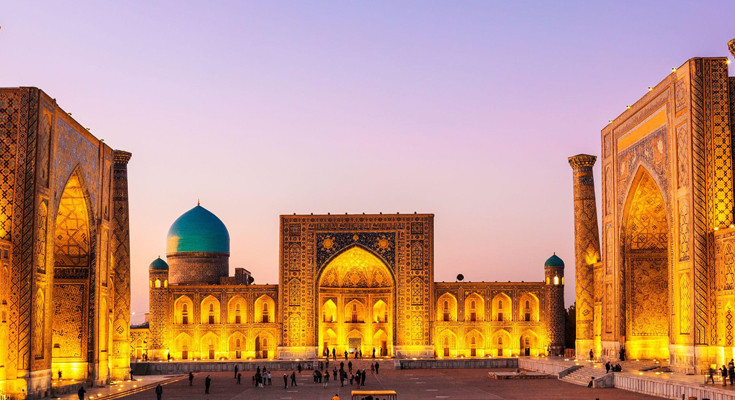
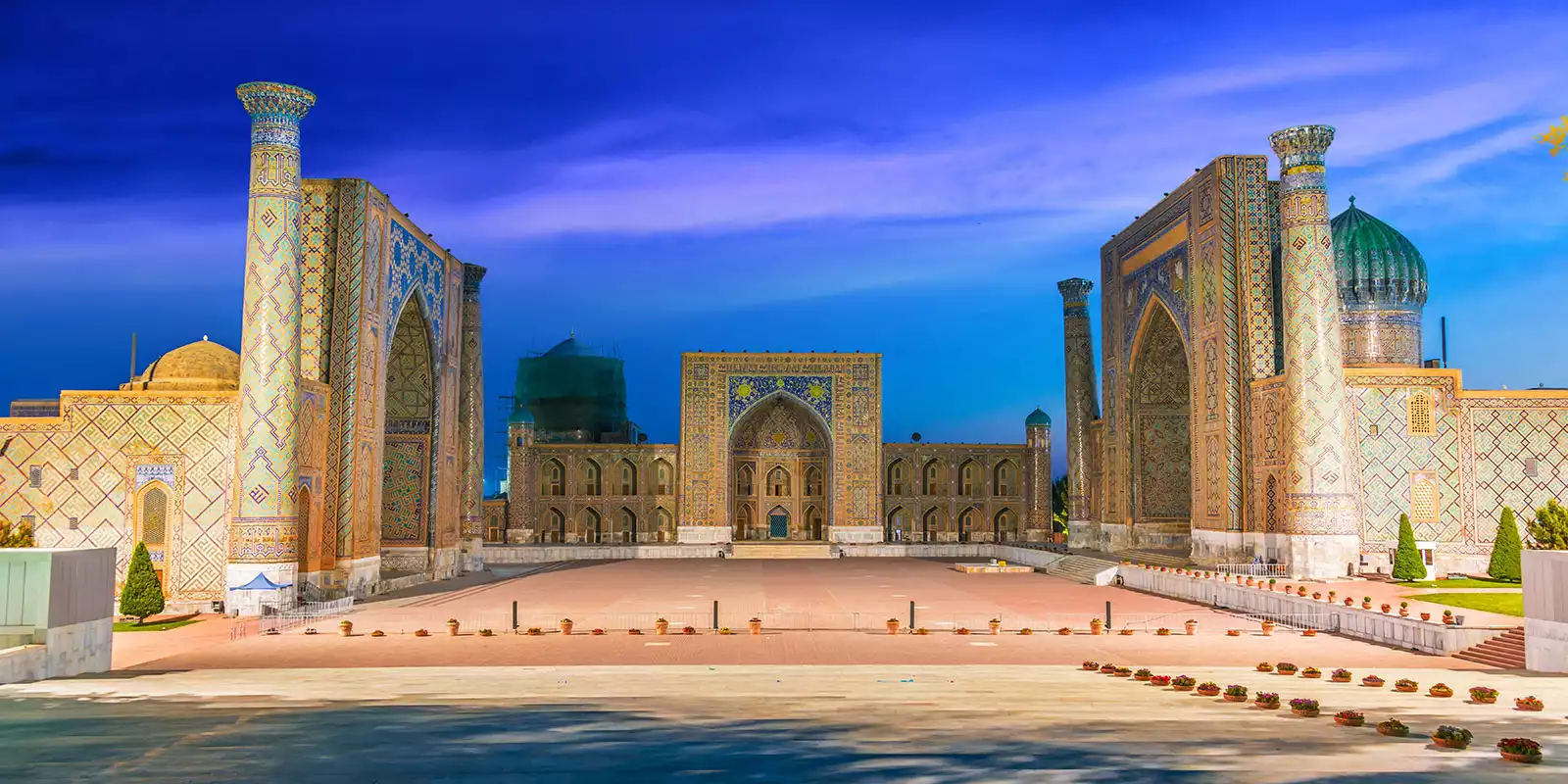
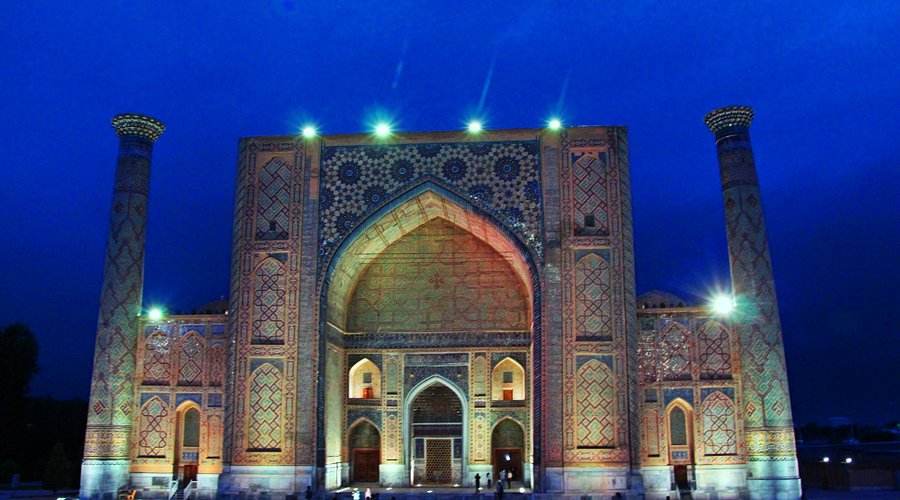
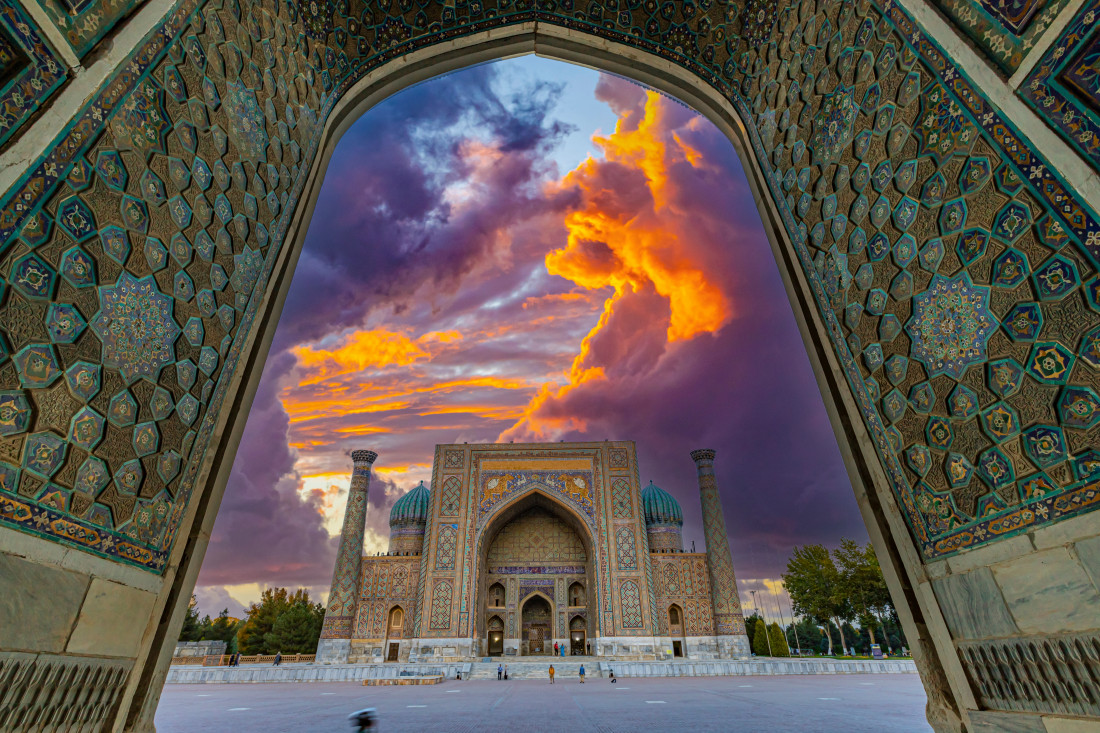
The main landmark of Samarkand and one of the most impressive architectural ensembles in the world. Located in the historic centre, it is the most important stop on any Samarkand itinerary — a symbol of Uzbekistan, bringing together three monumental madrassas around a single square.
Ulugh Beg Madrassa
Built in the 15th century, it was one of the leading educational institutions in the Islamic world. It represents Samarkand's importance as a scientific centre during the Silk Road, with geometric tilework and an imposing facade overlooking the square.
Sher-Dor Madrassa
Known for its decorative details featuring lion figures — rare in Islamic architecture — which makes the Registan ensemble even more unique. Built in the 17th century, it is one of the most photographed madrassas in Samarkand.
Tilya-Kori Madrassa
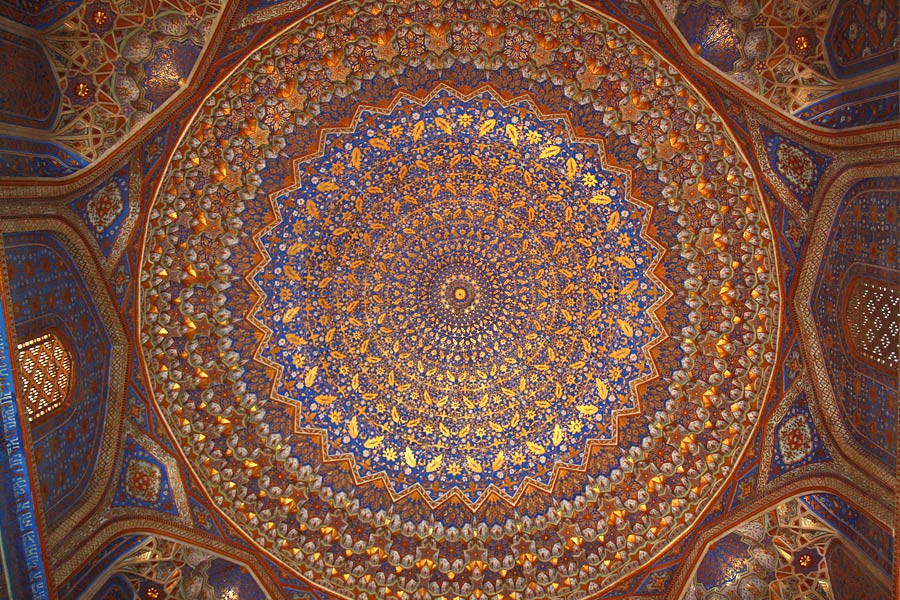
Famous for its gilded interior and ornamental details covering the ceiling and walls. Considered one of the most impressive spaces within the Registan, its gold and blue decoration creates a unique atmosphere in Central Asia.
Gur-e-Amir Mausoleum
Tamerlane's mausoleum, with its iconic blue dome that became the reference for funerary architecture across Central Asia. One of the most important monuments in Samarkand and one of the most historically significant sites in Uzbekistan, built in the early 15th century.
Bibi-Khanym Mosque
One of the largest mosques in the Islamic world at the time of its construction, commissioned by Tamerlane in the late 14th century. Its monumental scale reflects Samarkand's power during the Silk Road, with an entrance portal over 35 metres high.
Siyob Bazaar
A traditional working market next to Bibi-Khanym Mosque, ideal for experiencing local culture, sampling typical products like non bread and dried fruits, and taking a break during the itinerary.
Afternoon
Shah-i-Zinda
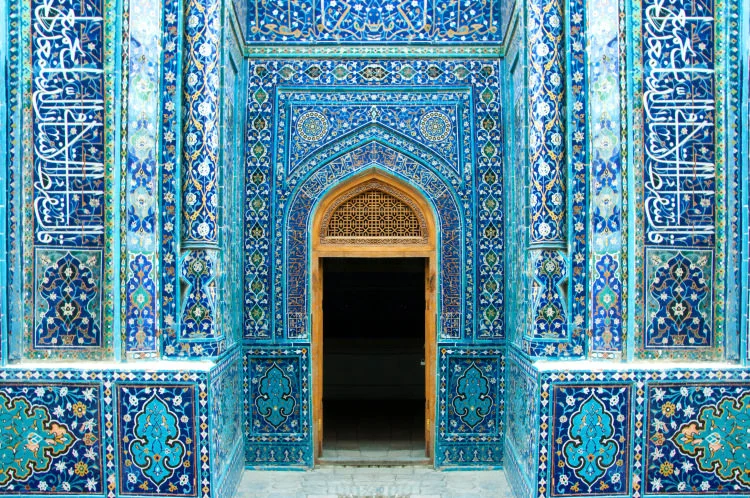
The most impressive complex in Samarkand, made up of a corridor of mausoleums with exceptionally detailed blue tilework. Considered one of the most beautiful sites in Uzbekistan, the path between the mausoleums creates one of the most striking visual experiences on the Silk Road.
Hazrat Khizr Mosque
A mosque set on elevated ground, offering one of the best panoramic views of Samarkand. A quick stop, but with one of the most photogenic scenes on the itinerary — with Shah-i-Zinda in the background.
Ulugh Beg Observatory
One of the most important observatories in Central Asia, built in the 15th century by Tamerlane's grandson. It shows Samarkand's scientific advancement during the Silk Road and houses a museum with historic astronomical instruments.
Evening
Registan illuminated
Visiting the Registan at night is one of the best experiences in Samarkand. The lighting highlights every detail of the three madrassas' architecture and creates one of the most stunning scenes in Uzbekistan — very different from what you see during the day.