Last updated: August 2026
Butrint is one of the most important archaeological sites in Albania and one of the best attractions to combine with a trip to Ksamil and Saranda.
Located in the south of the country, within Butrint National Park, the site brings together Greek, Roman, Byzantine, Venetian and Ottoman ruins amid a natural area surrounded by a lagoon, vegetation and short trails.
For anyone doing an itinerary through Albania's southern coast, Butrint is an essential stop. The visit combines history, nature and peaceful scenery, working very well as a complement to Ksamil's beaches.
In a region well known for its blue sea and beach clubs, Butrint shows a different side of southern Albania. The visit helps balance the itinerary between beach, culture and history.
How this guide was planned
This guide was created with a focus on practical trip planning. The idea is to explain how to visit Butrint, how much it costs, how to get there, how much time to set aside and how to combine the archaeological site with Ksamil and Saranda.
For a first trip to Albania's southern coast, I would put Butrint among the most important visits in the region. It works very well early in the day, before the strongest heat, and can be combined with nearby beaches in the afternoon.
The biggest mistake when visiting Butrint is treating it as a quick stop before or after the beach. The archaeological site is large enough to deserve a few hours of visiting, especially if you like history, ancient ruins and natural scenery.
That is why this guide organizes the visit in a simple way: what Butrint is, what to see in the archaeological park, how to get there, tickets, ideal time, best time to visit and practical tips.
Is Butrint worth visiting?
Yes, Butrint is very much worth visiting because it is one of Albania's most important cultural visits and sits just a few kilometers from Ksamil and Saranda.
The archaeological site is recognized by UNESCO and preserves layers from different historical periods in an area that is relatively easy to walk through.
The experience is quite different from the region's beaches. Instead of sea, sunbeds and beach clubs, Butrint offers ancient ruins, shaded paths, views over the lagoon and direct contact with the history of southern Albania.
I would include Butrint in any 2-day itinerary through Ksamil and Saranda, because it makes the trip more complete and shows that Albania's southern coast is not just about the beaches.
What is Butrint?
Butrint is an ancient city located within what is now Butrint National Park, at the southern tip of Albania.
The site preserves remains from several civilizations, including Greeks, Romans, Byzantines, Venetians and Ottomans.
The archaeological area sits on a peninsula surrounded by water and vegetation, which makes the visit more pleasant and visually different from other historical sites.
Besides the ruins, the park also protects important natural areas, including lagoons, wetlands, vegetation and bird habitats.
This combination of archaeology and nature is one of the things that makes Butrint such an interesting visit. You are not just walking through ancient ruins, but through a historic complex surrounded by natural scenery.
What to see at Butrint
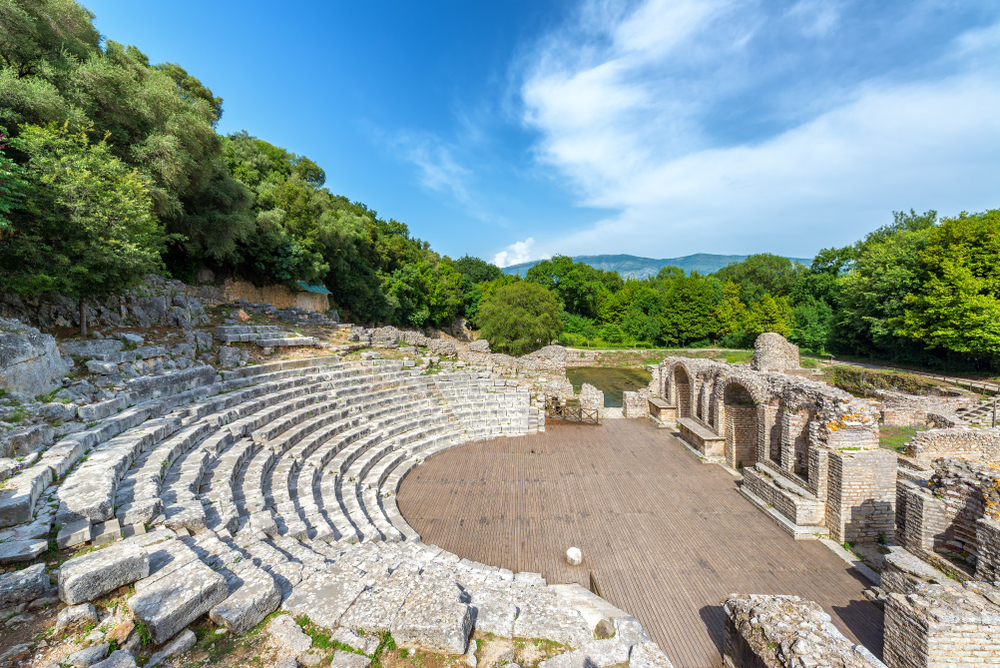
Ancient Theatre
One of Butrint's best-known structures, it is linked to the Greco-Roman period and is one of the most photogenic points of the archaeological site. The structure helps show the importance of the ancient city and is usually one of the first memorable stops of the visit.
Baptistery
A structure from the early Christian period, it is known for its preserved mosaics, although they are not always fully visible to the public. Even so, the site is important for understanding Butrint's early Christian phase and the city's religious transformation over the centuries.
Basilica
Ruins of a large Byzantine church, it features preserved columns and walls that help explain the site's religious importance. It is one of the most interesting areas for observing how different historical periods overlap within the archaeological park.
Lion Gate
A historic gate with a lion relief, it is one of Butrint's most symbolic elements. The structure is part of the ancient fortifications and tends to draw attention during the walk through the archaeological site.
Venetian Castle
Located in a higher area of the visit, it offers a view over the surrounding natural landscape and the Vivari Channel. The climb up to this part is worth it, especially for a broader view of the park and to understand Butrint's strategic position.
Butrint Museum
A small museum located in the castle area, it brings together archaeological finds and information about the site's history. It is worth visiting if it is open, especially to complement the tour and better understand what was found during the excavations.
Vivari Channel
A body of water near the archaeological site, it helps create Butrint's natural setting. The presence of the lagoon, the channel and the vegetation makes the visit more pleasant and sets the site apart from other, drier and more open archaeological sites.
Internal trails
They connect the main ruins within the park. The path is relatively simple, but it passes through stone areas, shade, vegetation and uneven stretches, so it is worth walking calmly and wearing comfortable shoes.
How to get to Butrint
Butrint is located in southern Albania, about 18 kilometers from Saranda and just a few kilometers from Ksamil.
The trip is simple and can be done quickly from either base, especially if you are traveling by car or taxi.
- Rental car, is the best option for those doing an itinerary through the Albanian Riviera and who want to combine Butrint with Ksamil and other nearby beaches. The car gives you more freedom to organize the day and stop wherever you want.
- Taxi from Saranda or Ksamil, is a practical option for those without a car. It works well because the distances are short, but it is worth agreeing on the price before the ride or confirming whether the driver can make the return trip.
- Local bus or van, can be an affordable alternative between Saranda, Ksamil and Butrint. Schedules can vary depending on the season, so it is worth confirming locally before relying on this transport.
- Local tour, can be useful for those who prefer organized transport and guided explanations. This option makes more sense if you enjoy historical context and do not want to worry about getting around.
If you are staying in Saranda, Butrint works very well as a half-day outing. If you are staying in Ksamil, the visit is even easier to fit into the 2-day itinerary through Ksamil and Saranda.
How the visit works
The visit to Butrint is done on foot, following a circuit within the archaeological site.
The route passes through ruins, shaded trails, open areas and spots with views over the water.
The path is relatively simple, but it has stretches of stone, stairs and uneven areas. That is why it is worth wearing comfortable shoes and avoiding the hottest hours, especially in summer.
The visit can be done on your own, reading the signs and following the main route. Even so, a guide or audio guide can help a lot if you want to better understand the site's historical layers.
Since Butrint combines ruins and nature, the tour does not feel as heavy as some indoor museums. The walk is pleasant, but in summer the heat can make the middle of the day more tiring.
Tickets
- Adults, standard ticket around 1,000 ALL per person, roughly R$62.
- Young people aged 12 to 18, ticket around 500 ALL per person, roughly R$31.
- Children aged 0 to 12, free admission.
- Groups, may have different prices depending on group size and current rules.
Prices can change depending on season, local policy or how you buy the ticket. It is worth checking the updated price before the visit or confirming at the ticket office.
How long to stay
Set aside 2 to 3 hours to visit Butrint calmly.
That amount of time is enough to walk the main circuit, see the most important ruins, climb up to the castle area, pass through the museum if it is open and stop for photos.
If you really enjoy history, archaeology or plan to read the information carefully, you might consider a little more time.
If the idea is to combine Butrint with Ksamil on the same day, I would do Butrint in the morning and leave the beach for the afternoon.
Best time to visit
Early morning, is the best option to avoid heat and larger groups. It also works well for those who want to combine Butrint with Ksamil afterward.
Late afternoon, can have beautiful light for photos and a more pleasant temperature, but it requires attention to the closing time.
Weekdays, tend to be calmer than weekends and high season.
In summer, avoid the middle of the day, because some areas are open and the heat can make the visit more tiring.
What I would prioritize at Butrint
If I had little time, I would prioritize the Ancient Theatre, the Baptistery, the Basilica, the Lion Gate, the Venetian Castle and the view over the Vivari Channel.
These spots show well the mix of ancient ruins, religious history, fortifications and natural scenery.
If there is time, I would also visit the Butrint Museum, because it helps give more context to what you see during the walk.
The most important thing is not to rush through Butrint. Even though the circuit is easy, the place becomes more interesting when you walk calmly and understand that each part represents a different phase of the region's history.
What can be optional in this itinerary
Butrint Museum, can be optional if you have little time or if it is very crowded, but it is worth entering if it is open and if you want to better understand the archaeological finds.
Local guide or tour, can be optional for those who prefer to visit on their own. However, for those who enjoy history, a guide can make the visit richer.
Combining Butrint with several beaches on the same day, can be tiring. If you visit the archaeological site calmly, choose just one beach for the afternoon.
Visiting in the late afternoon, can be optional if you are not sure about the closing time. To avoid risk, the morning tends to be safer.
Doing a very rushed visit, is only worth it if the itinerary is tight. Ideally, set aside at least 2 hours for Butrint.
Mistakes to avoid when visiting Butrint
The first mistake is leaving Butrint for the hottest time of day, especially in summer. Despite having shaded areas, part of the visit is outdoors.
Another mistake is wearing uncomfortable shoes. The route has stones, stairs and uneven stretches, so sneakers or sturdy shoes help a lot.
It is also worth avoiding arriving very late without confirming the closing time. Since the visit deserves to be unhurried, it is better to arrive with time to spare.
Do not treat Butrint as just a quick stop before Ksamil. The site is one of Albania's most important historical attractions and deserves attention.
If you do not have a car, confirm the return transport to Saranda or Ksamil carefully, especially outside high season.
Practical tips
- Bring water, especially between June and September
- Wear comfortable shoes, since the route has stones and uneven stretches
- Combine Butrint with Ksamil on the same day if you want to mix history and beach
- Bring cash, since card payments may not always work
- Set aside time to climb up to the castle area, where some of the park's best views are
- Avoid arriving too late if you want to visit calmly and enjoy the natural light
- Use sunscreen and a hat on hot days
- Confirm hours and prices before the visit, especially in high season
- If traveling by bus or van, check the return schedule before entering the park
After visiting Butrint, it is worth continuing the itinerary through Ksamil, Saranda, Mirror Beach and Monastery Beach.
Butrint also fits very well into a longer trip through Albania, along with Tirana, Berat, Llogara Pass, Dhërmi, Himarë and Gjipe Beach.