Last updated: June 2026
One week in Georgia provides enough time to combine four distinct parts of the country: Tbilisi's urban life, the Caucasus mountains around Kazbegi, Mtskheta's religious heritage and Kakheti's wine traditions.
This seven-day itinerary is designed for a first trip, with three days in the capital, one night in Stepantsminda and two day trips from Tbilisi. Rather than attempting to cover the entire country, it creates a coherent route with few hotel changes and enough time in each region.
How this Georgia itinerary was planned
The itinerary is based on the location of the attractions, typical travel times and practical logistics for a first visit to Georgia. It is a researched plan rather than an account of a journey I have already taken.
Tbilisi works as the main base because it has the best transport connections and lets you visit Mtskheta and Kakheti without carrying all your luggage. Kazbegi is the only stop that involves a change of accommodation, since spending one night in Stepantsminda keeps one of the most beautiful stretches of the trip from turning into a long, rushed day trip.
The days can be adjusted according to flight schedules and time of year. In mountain regions, weather has a big impact on visibility and traffic, so it is important to check conditions on the Georgian Military Highway before setting off for Kazbegi.
Georgia in 7 days: itinerary summary
Day-by-day itinerary
- 3 days in Tbilisi: historic centre, sulphur baths, Narikala, Sameba, Rustaveli, Mtatsminda, Fabrika and Chronicle of Georgia
- 2 days in Kazbegi: Zhinvali, Ananuri, Gudauri, the Georgian Military Highway, Stepantsminda and Gergeti Trinity Church
- 1 day in Mtskheta: Jvari Monastery, Svetitskhoveli Cathedral and Samtavro
- 1 day in Kakheti: Bodbe Monastery, Sighnaghi, the Alazani Valley and a winery
How many nights to book
To follow this route, plan Tbilisi as your main base and book one night in Stepantsminda. A practical split is:
- Tbilisi at the start of the trip
- one night in Stepantsminda between days 4 and 5
- back to Tbilisi for days 6 and 7
The total number of nights will depend on your arrival and departure times. Anyone landing late the night before the first full day, or flying out only on the morning after day 7, will need to add another night to the plan.
Tbilisi: Georgia's historic and creative capital
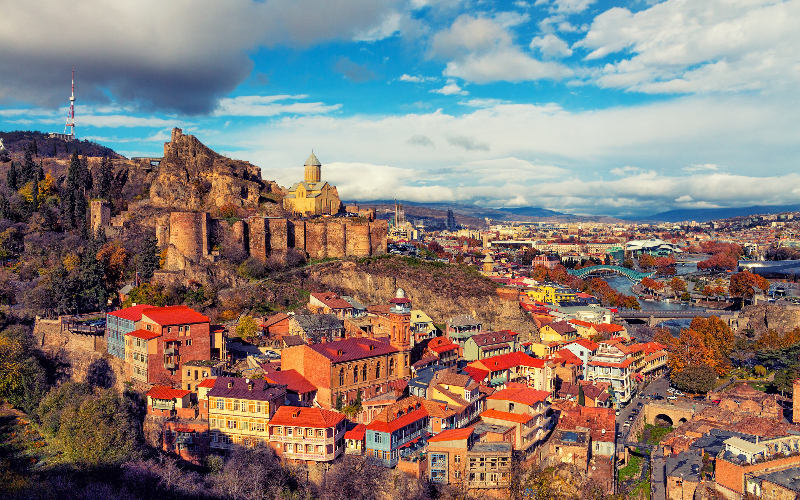
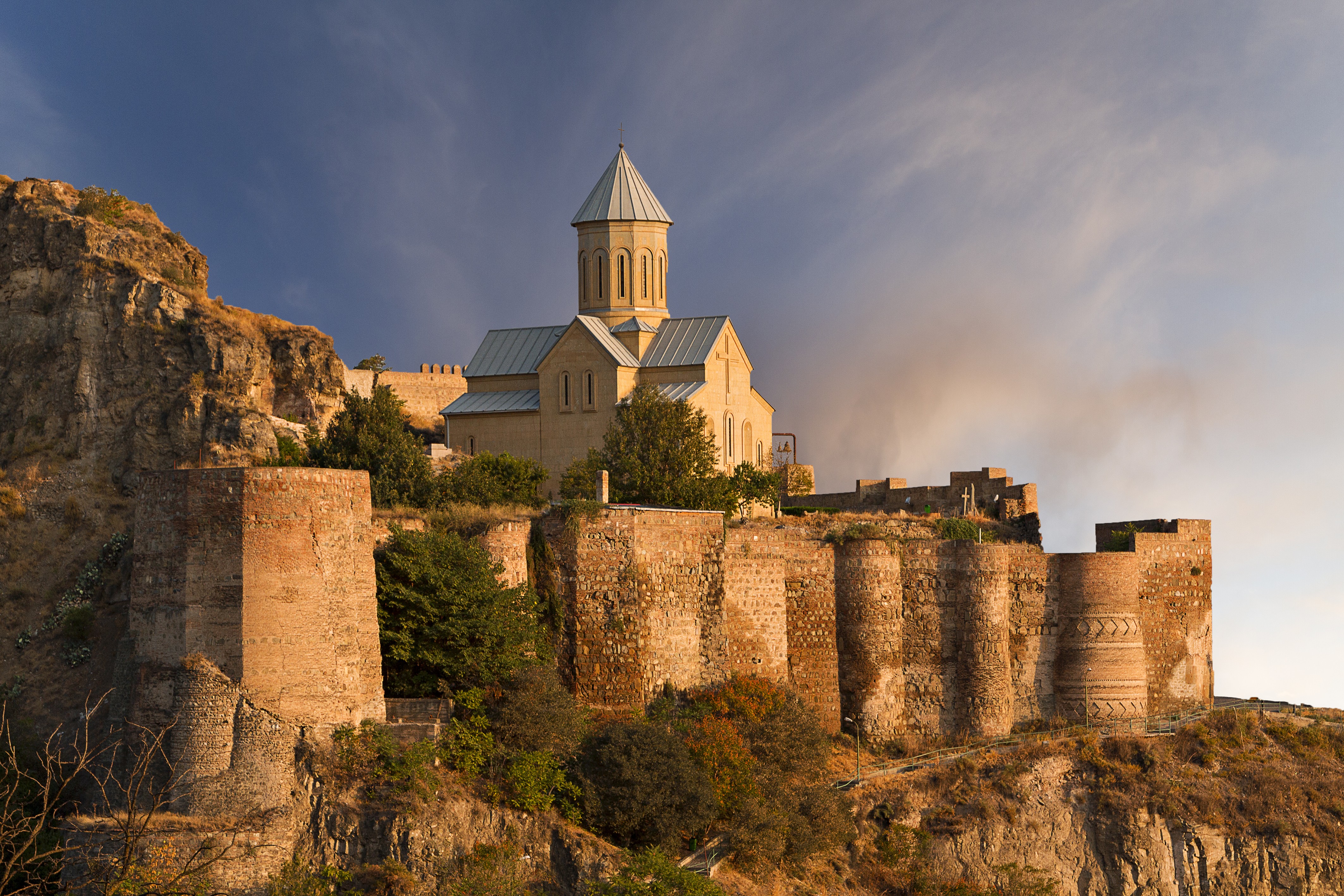
Tbilisi deserves three days because its main attractions are spread across different areas. The historic centre can be explored on foot, while places like Chronicle of Georgia and Turtle Lake require transport.
The capital mixes houses with wooden balconies, Orthodox churches, old sulphur baths, Soviet-era buildings, contemporary cafés and viewpoints. That variety makes Tbilisi much more than just a base for the day trips.
Old Tbilisi, sulphur baths and Narikala
The first day covers the attractions of the historic centre. Since most of the route can be done on foot, it is a good way to get a feel for the city's layout without relying too much on transport.
In the morning, start at Abanotubani, the sulphur baths neighbourhood. The brick domes are one of Tbilisi's most recognisable sights and are tied to the very origins of the city.
Follow the small Leghvtakhevi canyon up to the waterfall. The walk is short and creates a curious contrast: within a few minutes, the old streets give way to a narrow passage between rock walls.
Afterwards, walk through Old Tbilisi taking in the wooden-balcony houses, the churches and the sloping streets. It is worth including the area around Meidan Square and the climb up to Metekhi Church, which offers a good view over the historic centre.
In the afternoon, cross the Bridge of Peace, a modern glass-and-steel structure over the Mtkvari river, and walk through Rike Park.
From the park, a cable car climbs to the upper part of the city. Taking it makes it much easier to reach Narikala Fortress and avoids a steep climb on foot. Before boarding, check that the service is running and confirm the day's operating times.
Narikala is a historic fortress set high above Old Tbilisi. The main reason to go up is the view of the river, the domes of the baths, the churches and the houses spread across the hillsides.
Nearby stands the Mother of Georgia statue, shown holding a cup of wine in one hand and a sword in the other. The image symbolises hospitality for friends and resistance against enemies.
In the evening, wrap up the day in the historic centre. One option is to book a private bath in Abanotubani; another is to choose a restaurant to try Georgian dishes such as khinkali, khachapuri and badrijani. The best-known baths work by reservation and offer different room categories, so it is worth checking prices, duration and rules directly with the venue before your visit.
If time is tight, prioritise Abanotubani, Old Tbilisi and the view from Narikala. The waterfall and the Bridge of Peace fit easily into the route, but can be dropped without hurting the rest of the itinerary.
Sameba, Rustaveli Avenue and Mtatsminda
The second day combines the religious, cultural and urban sides of Tbilisi. Since the attractions are not all close together, it will be necessary to switch between walking, the metro and app-based rides.
Start at the Holy Trinity Cathedral, known as Sameba. The complex is one of the capital's main religious landmarks and stands out for the size of the cathedral, its gardens and its elevated position. Set aside time to walk around the grounds and to go inside, respecting dress and behaviour rules, as modest clothing is the safest choice in Orthodox churches.
In the afternoon, head to Freedom Square and walk along Rustaveli Avenue, one of Tbilisi's most important avenues. The area is home to theatres, historic buildings, cafés, shops and cultural institutions.
The Georgian National Museum can be added to the plan, but it is worth confirming which exhibitions and buildings are open on your travel dates, since museums can change hours, close on certain days of the week or undergo renovations. If you would rather spend the afternoon away from museums, use the time to walk unhurried along the avenue and the nearby streets.
Later in the afternoon, head up to Mtatsminda Park. The funicular is one of the easiest ways to reach the top, and the viewpoint lets you watch Tbilisi transform as the evening lights come on. The park has rides and restaurants, but the panoramic view alone is worth the trip up. Check the time of the last funicular before planning your way back down.
Sameba, Rustaveli Avenue and Mtatsminda form the core of the day. The museum should be treated as an optional activity, especially on clear days, when it is worth making the most of the viewpoints.
Dry Bridge Market, Fabrika and Chronicle of Georgia
The third day shows a different side of the capital, with an antiques market, creative spaces, urban architecture and a monument outside the centre.
Start at the Dry Bridge Market, known for antiques, coins, books, Soviet-era objects, paintings and souvenirs. The mix of sellers and items changes from one day to the next, and how busy it is usually depends on the weather. The market works better as a browsing walk than as an attraction with a fixed route, so set aside about an hour, or longer for anyone who enjoys antiques and street photography.
In the afternoon, head to Fabrika, a former industrial space turned into a creative complex with a hostel, cafés, shops, bars and street art.
Afterwards, walk through the Marjanishvili area and the restored stretch of Aghmashenebeli Avenue. This part of the city shows a different side of Tbilisi from Old Tbilisi, with historic facades, wider streets and local life.
Save the late afternoon for the Chronicle of Georgia, a monument of tall columns decorated with scenes from the country's history and religious tradition. It sits away from the centre, and public transport is not the simplest option for every traveller, so an app-based ride usually makes both the trip there and back easier. Arrange a meeting point with the driver or keep internet access available to request another car.
The monument stands in an open area, with little shelter from sun, wind or rain. On days with poor weather, swap this visit for a sulphur bath, a museum or more time in the central neighbourhoods.
Turtle Lake is an alternative for those who prefer a quieter afternoon. Trying to fit Chronicle of Georgia, Turtle Lake, Fabrika and the whole centre into the same day can leave the itinerary feeling scattered, choose the attraction that best suits your style.
Kazbegi: Caucasus mountains and the Georgian Military Highway
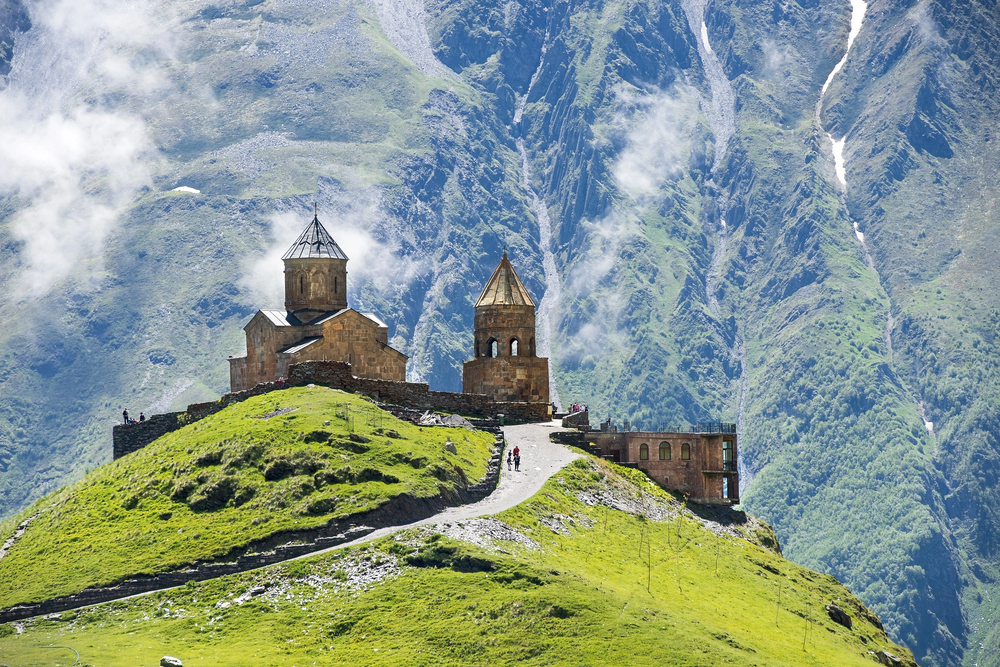
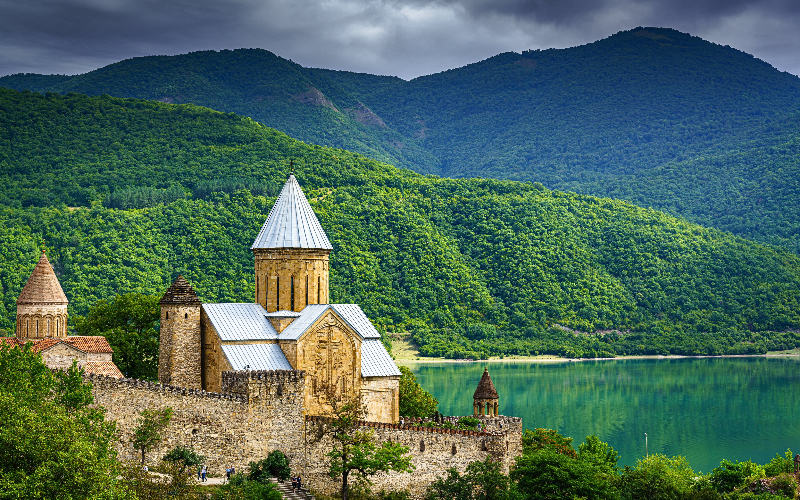
Stepantsminda, often referred to by the name of the region, Kazbegi, lies north of Tbilisi. The direct drive takes around three hours in normal conditions, but day 4 runs longer because the road has several stops.
Spending the night in the area allows a calmer visit to Gergeti Trinity Church and improves the chances of good visibility in the mountains. Even so, the weather can change quickly even in summer.
Zhinvali, Ananuri, Gudauri and arrival in Stepantsminda
Leave Tbilisi early to make the most of the stops along the Georgian Military Highway.
The Zhinvali Reservoir is usually the first scenic stop. The landscape combines water surrounded by mountains and changes quite a bit depending on the season and the light. Treat the reservoir as a brief stop, the main historic site on this stretch is just ahead.
The fortified complex of Ananuri sits on the banks of the reservoir and brings together walls, towers and churches. The site's position helps explain the strategic importance of the old route along the Aragvi river valley. Set aside 45 minutes to an hour to walk around; in high season, arriving earlier helps avoid the busiest times.
Pasanauri is a convenient lunch stop and is known for its khinkali. The break also helps split up the stretch before the climb toward Gudauri.
After Gudauri, stop at the viewpoint known as the Russia-Georgia Friendship Monument, or Gudauri Viewpoint. The colourful semicircular mural overlooks a broad Caucasus valley.
The road continues over the Jvari Pass, one of the highest points on the route. Fog, snow, heavy rain or truck traffic can add considerably to the travel time.
Arrive in Stepantsminda in the late afternoon and check in. If the sky is clear, take the chance to spot Mount Kazbek and Gergeti Trinity Church from the village. Avoid planning too many activities after arrival, the day already includes several stops, and mountain light and weather are unpredictable.
A private driver or group tour makes the stops between Tbilisi and Stepantsminda easier. The marshrutka is cheaper, but it usually works as transport between towns rather than a sightseeing trip with time at each attraction. Anyone renting a car needs to account for curves, mountain sections, changing weather and heavy vehicle traffic. In winter, check tyre and chain requirements and confirm road conditions before setting out.
Gergeti Trinity Church and return to Tbilisi
The main plan for the day is Gergeti Trinity Church, a 14th-century church built on a hill above Stepantsminda.
There are two main ways to get there: drive up or take a local taxi along the road, or hike up from Stepantsminda. The hike requires preparation, proper footwear and attention to the weather. Anyone who wants to save time and energy for the rest of the trip can ride up and walk only around the church grounds.
Set off in the morning, when there is usually more time to wait in case clouds are covering the mountains. Even so, there is no guarantee of visibility.
After the visit, have lunch in Stepantsminda and walk around the village before heading back to Tbilisi.
Dariali Gorge can be included only with organised transport, favourable weather and enough time to spare. On a seven-day itinerary, it should be treated as an optional extension, not a must. The Juta, Truso Valley and Gergeti Glacier hikes need more time and work better on a trip with at least one extra day in the area, they should not be squeezed into this schedule.
The direct drive back to Tbilisi takes around three hours, but delays are possible. Leave with a buffer and avoid booking anything with a fixed time for the same evening.
Mtskheta: Georgia's ancient capital and religious heart
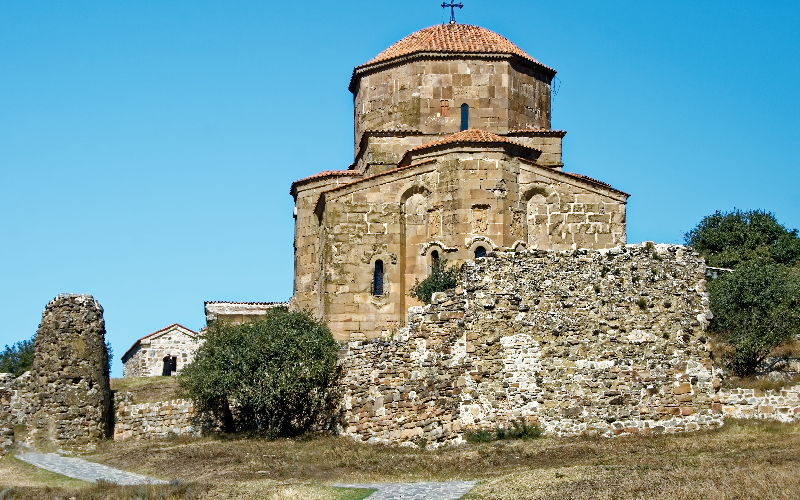
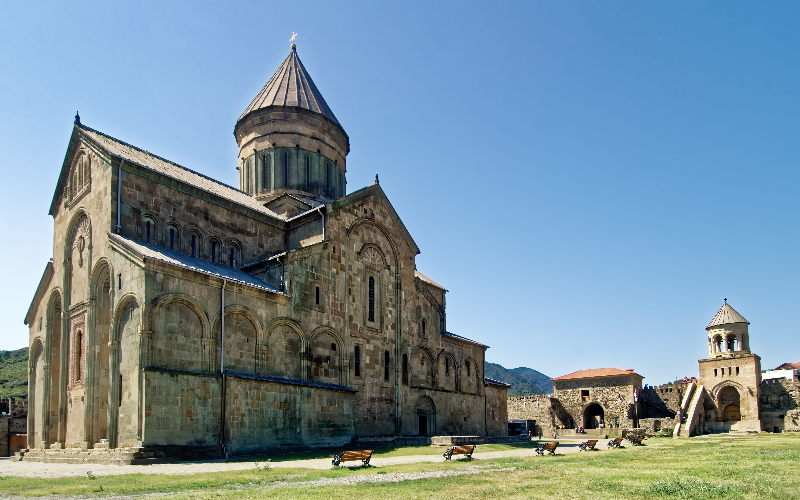
Mtskheta was Georgia's ancient capital and remains one of the country's most important religious centres. The city sits close to Tbilisi, which makes for an easier visit after the two days on the road in Kazbegi.
The official tourist route for the region's main monuments is estimated at four to six hours. With lunch and transfers from Tbilisi, set aside most of the day.
Start at Jvari Monastery, built on top of a hill. From there you can see Mtskheta and the confluence of the Mtkvari and Aragvi rivers. Jvari is not in the city centre, so the visit works best with a driver, taxi or tour that combines the monastery with the attractions in the centre.
Afterwards, head to Svetitskhoveli Cathedral, in the centre of Mtskheta. The current cathedral was built in the 11th century and is part of the UNESCO-recognised group of historic monuments. It is an active place of worship, so dress appropriately, avoid speaking loudly and check whether photography is allowed inside.
Set aside time to walk through the small streets near the cathedral and have lunch in the centre.
Round off the day at Samtavro Monastery, another important monument in the city. Jvari, Svetitskhoveli and Samtavro form the most important historic core for a first visit.
Mtskheta is about 20 minutes from Tbilisi under normal conditions, but traffic can change that. Head back in the late afternoon and leave the evening free.
If you need to shorten the visit, keep Jvari and Svetitskhoveli. Samtavro and a longer walk through the centre can be adjusted depending on time.
Kakheti: wine, Sighnaghi and the Alazani Valley
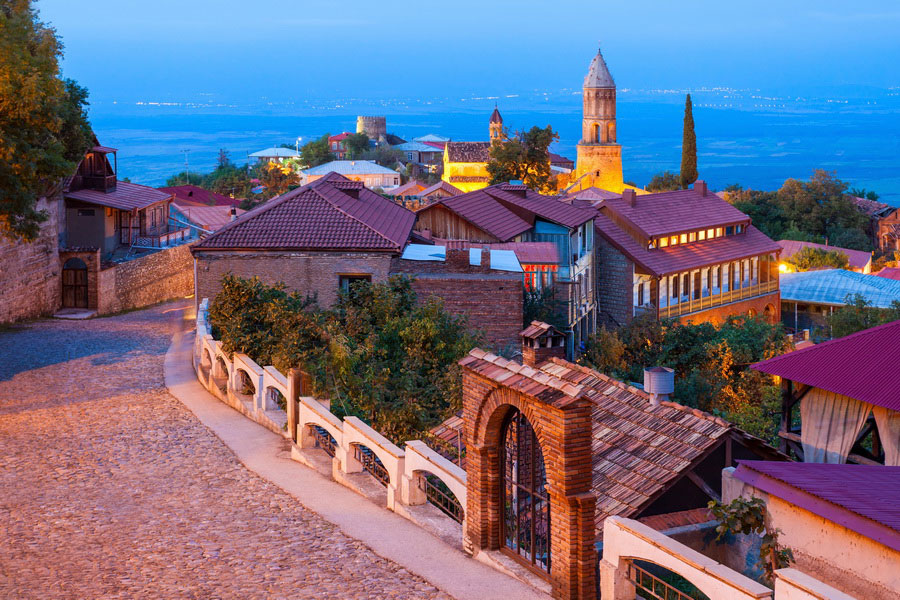
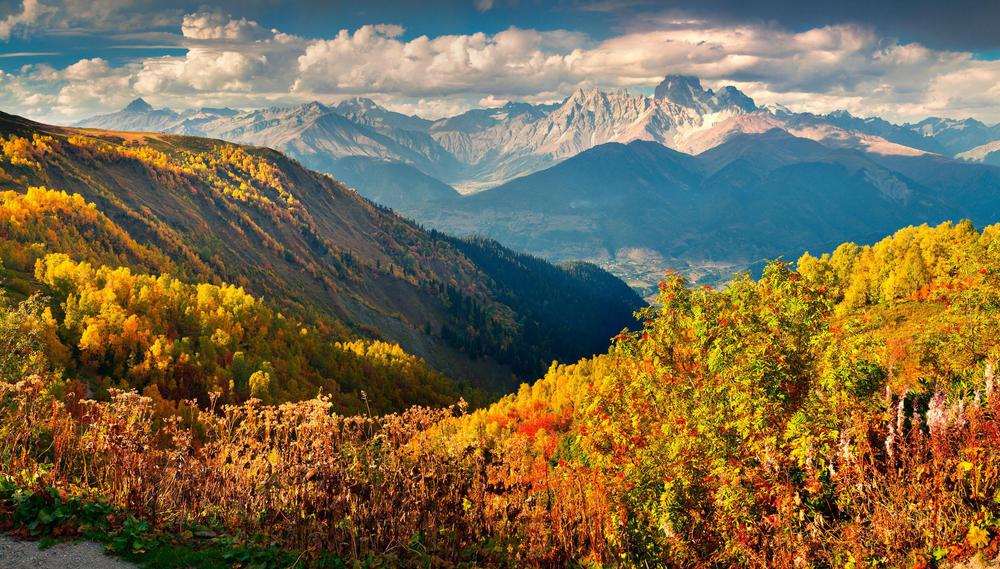
Kakheti is Georgia's main wine region. A day trip allows you to see Bodbe, Sighnaghi, the Alazani Valley and one winery, but not the whole region.
The outing usually takes between eight and twelve hours. Leave early and choose a focused route. Trying to combine Sighnaghi, Telavi, several monasteries and multiple tastings in the same day leaves little time at each stop.
Start at Bodbe Monastery, near Sighnaghi. The religious complex is linked to Saint Nino and has gardens and views over the Kakheti landscape. As with the other monasteries on this itinerary, wear modest clothing and be respectful of religious activity.
Head on to Sighnaghi, a small town built high above the Alazani Valley. The main activities are walking along the cobblestone streets, admiring the houses with balconies, visiting stretches of the walls and enjoying the viewpoints. On clear days, the Caucasus mountains appear in the background. Set aside time for lunch and don't treat Sighnaghi as just a quick photo stop.
Include a winery or family cellar that explains wine production in qvevri, the buried clay vessels used in the traditional Georgian method. Tastings should be booked in advance, especially during busy periods. Confirm what is included, the duration, the language of the presentation and whether there are options for anyone who does not drink alcohol. If everyone in the group wants to taste wine, use a tour or a driver, do not mix driving with drinking alcohol.
For just one day, Sighnaghi and Bodbe form the simplest combination. Telavi is in another part of Kakheti and works better as its own route, paired with nearby wineries and attractions. Only include Sighnaghi and Telavi on the same day if transport is arranged and the plan allows for a longer schedule with less time to walk around.
Head back to Tbilisi at the end of the day. If the departure flight is that same night, keep a wide margin or move Kakheti earlier in the trip, since the day trip is long and delays could jeopardise the transfer to the airport.
Best order for this itinerary
The recommended sequence is: Tbilisi → Stepantsminda/Kazbegi → Tbilisi → Mtskheta → Kakheti → Tbilisi. This order reduces hotel changes and creates a balanced alternation between city, mountains and day trips.
Kazbegi can be shifted a day earlier or later if the forecast points to better conditions. To do this without losing bookings, choose accommodation and transport with change policies that fit the plan.
Getting around Georgia
Within Tbilisi. The metro, buses, walking and app-based rides cover most of the itinerary. Bolt is widely used in the capital. Old Tbilisi is best explored on foot, but expect slopes and uneven pavement. Chronicle of Georgia and some viewpoints need a bit more transport planning.
Between Tbilisi and Kazbegi. The main options are marshrutka, a group tour, a private driver or a rental car.
- Marshrutka: cheapest, but with no flexibility for sightseeing stops
- Group tour: covers the main attractions, but follows a fixed schedule
- Private driver: gives more control over the stops
- Rental car: offers freedom, but shifts responsibility for the roads and the weather onto the traveller
To Mtskheta. The city can be reached by public transport, but Jvari sits outside the centre. To visit Jvari, Svetitskhoveli and Samtavro in the same day, a tour, taxi or driver makes the logistics much simpler.
To Kakheti. An organised tour is the most practical option to combine Sighnaghi, Bodbe and a wine tasting. Public transport can reach the town, but it does not make it easy to move between wineries and attractions spread across the region.
Best time to visit Georgia
Generally speaking, May, June, September and October offer more pleasant temperatures for walking and visiting the regions covered in this itinerary.
July and August can be hot in Tbilisi and Kakheti, while the mountains stay cooler. Starting the day early helps avoid the hottest hours.
In winter, Tbilisi, Mtskheta and Kakheti remain accessible, but Kazbegi needs more attention. Snow, ice, avalanches, fog and traffic restrictions can affect the Georgian Military Highway.
The grape harvest in Kakheti usually happens in early autumn, but the dates vary depending on the weather, the grape variety and the winery. If this experience matters to you, confirm directly with the property.
How much does a 7-day trip through Georgia cost?
The budget depends mainly on the accommodation chosen and how Kazbegi and Kakheti are handled. Consider these categories:
- accommodation in Tbilisi and one night in Stepantsminda
- transport from the airport
- metro, buses and app-based rides in the capital
- tour or driver for Kazbegi
- tour or driver for Mtskheta
- full-day tour and tasting in Kakheti
- food
- sulphur baths, museums, funicular and cable car
- mandatory travel insurance
- a buffer for unexpected costs
Private tours increase the cost but reduce the logistical headaches. Marshrutkas and public transport save money, but require more time and planning.
As hotel prices, tickets and tours change, confirm current values on official pages and booking platforms before finalising the budget.
Where to stay
In Tbilisi. Old Tbilisi is convenient for staying close to the historic attractions, but can have slopes, busy streets and buildings without lifts. The areas near Freedom Square and Rustaveli make it easier to reach the centre and the metro. Marjanishvili is an alternative with restaurants, transport links and a more local feel.
Before booking, check:
- the real distance to the metro
- whether there is a lift
- car access
- noise levels
- the policy for storing luggage during the night in Kazbegi
Leaving the main suitcase in Tbilisi and taking only a small bag to Stepantsminda makes the accommodation change much simpler.
In Stepantsminda. Choose accommodation with easy access to the village and confirm whether there is a restaurant or food options nearby. Rooms with a view can be appealing, but visibility of the mountains depends on the weather. In winter and the colder months, read recent reviews about heating and access to the property.
What to eat on this itinerary
Georgian food is part of the trip and changes somewhat from one region to another. Some dishes and products to look for:
- khinkali: filled dumplings, traditionally eaten with your hands
- khachapuri: cheese bread, prepared in different versions
- lobio: seasoned beans, often served in a clay pot
- badrijani nigvzit: aubergine with walnut paste
- mtsvadi: skewered grilled meat
- churchkhela: walnut candy coated in thickened grape juice
- wines made using the traditional qvevri method
Pasanauri is a well-known stop for khinkali, while Kakheti concentrates experiences tied to wine and rural production.
Money, cards and internet
Georgia's currency is the Georgian lari (GEL).
Cards are common at hotels, restaurants and tourist establishments in Tbilisi, but cash remains useful for small shops, markets, local transport and rural areas. Do not rely on a single card, bring a backup and keep a small amount of cash on hand.
A local SIM card or eSIM makes it easier to use maps, translation and transport apps. Download offline maps before heading to the mountains, where signal can vary. Useful apps:
- Google Maps
- Google Translate
- Bolt
- an offline maps app
Do foreign travellers need a visa for Georgia?
Travellers from most European countries, the UK, the US and several other nations are typically on the list of nationalities allowed to enter Georgia without a visa and stay for up to one year, according to current official Georgian regulations.
Entry rules can change. Before travelling, confirm the information on Georgia's official consular website and check the passport validity required, as well as any documents that may be requested at immigration.
Is travel insurance mandatory in Georgia?
Yes. Since 1 January 2026, tourists entering Georgia must present a valid health and accident insurance policy.
The policy must cover the entire length of the trip. Check the updated requirements on the official consular website before departure and carry the document somewhere accessible, ideally also in English.
Mistakes that can make the itinerary feel tiring
Turning Kazbegi into a day trip packed with stops. It is possible to go and come back on the same day, but the time on the road is long. With one night in Stepantsminda, the visit depends much less on a tight schedule.
Fitting Sighnaghi and Telavi into the same day without a driver. The two towns sit in different parts of Kakheti. On a single day, choosing a focused route usually makes for a better experience.
Ignoring the mountain weather. A good forecast in Tbilisi does not mean clear skies in Kazbegi. Check local conditions and stay flexible.
Changing hotels more often than necessary. Mtskheta and Kakheti work well as day trips. Sleeping in each region adds time spent on luggage and check-in without a proportional benefit on a seven-day trip.
Scheduling the Kakheti day trip on the day of a flight. The outing is long. Traffic delays or a schedule that runs over could create an unnecessary risk.
Is it worth seeing Georgia in 7 days?
Seven days are enough for a first look at the country, as long as the itinerary stays focused.
Tbilisi shows the blend of history and contemporary life. Kazbegi brings the Caucasus landscapes. Mtskheta presents an important part of Georgia's religious heritage. Kakheti closes the route with villages, wine and the Alazani Valley.
What does not fit comfortably into this week is Batumi, Kutaisi, Svaneti and several long mountain hikes. Including these regions would require more travel and reduce the time spent at the main stops.
How to extend the itinerary
With 10 days, add one more region rather than spreading extra days across the whole country. Some possibilities:
- Kutaisi and Prometheus Cave
- Gori and Uplistsikhe
- one more night in Kazbegi for Juta or Truso Valley
- one night in Kakheti to combine Sighnaghi, Telavi and more wineries
Batumi and Svaneti call for a longer trip because of the distance and the logistics involved.
Georgia travel planning: essential tips
Before starting a Georgia itinerary, it is worth understanding some practical aspects of the trip. Despite being a relatively easy country to explore, Georgia has some particularities regarding transport, payments, internet and getting around that make a real difference to the experience.
Essential apps
- Google Maps, the main app for routes and navigation
- Google Translate, useful for translating menus and easing communication
- Bolt, widely used in Tbilisi for rides
- Maps.me, a useful offline maps option for mountains and rural roads
Internet in Georgia
- Internet works normally, with no restrictions for tourists
- Using an eSIM or buying a local SIM card on arrival is recommended
- Wi-Fi is available in hotels, cafés and restaurants
- Having internet access makes it easier to use maps and transport apps
How to pay
- Local currency: Georgian lari (GEL)
- Cards are accepted at hotels and tourist restaurants
- Cash is important at markets and villages
- Always keep a small amount for transport and other minor expenses
Transport between cities
- Private driver or tour: the most practical option for Kazbegi
- Marshrutka: shared vans used by locals and travellers
- Bolt: works well for getting around within Tbilisi
- Rental car: gives more freedom, but requires attention on the roads