Bukhara is one of the most important cities in Uzbekistan and one of the main historic centres of the ancient Silk Road. With over 2,000 years of history, the city brings together preserved mosques, madrassas and traditional bazaars, forming one of the most impressive architectural ensembles in Central Asia.
In this 1-day Bukhara itinerary, you'll visit the main highlights of the historic centre, all within short walking distance. This makes it easy to explore the city on foot — ideal for those seeking a well-organised itinerary in Uzbekistan.
If you're planning a trip to Uzbekistan, Bukhara is an essential stop to understand the culture, Islamic architecture and importance of the Silk Road.
1-day itinerary in Bukhara: what to do day by day
Day-by-day itinerary
- Day 1 — Historic centre of Bukhara, main monuments and complete walking itinerary
Bukhara in 1 day
Morning
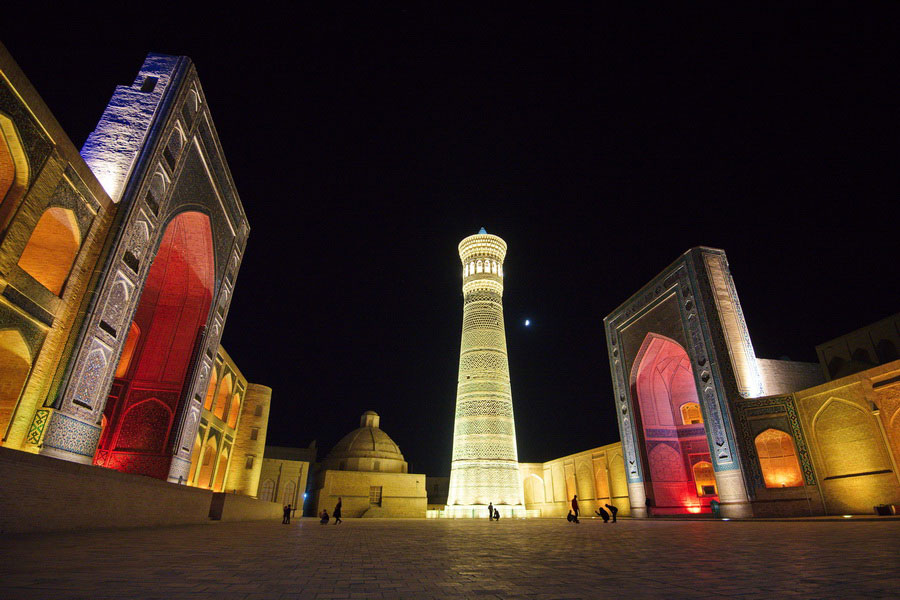
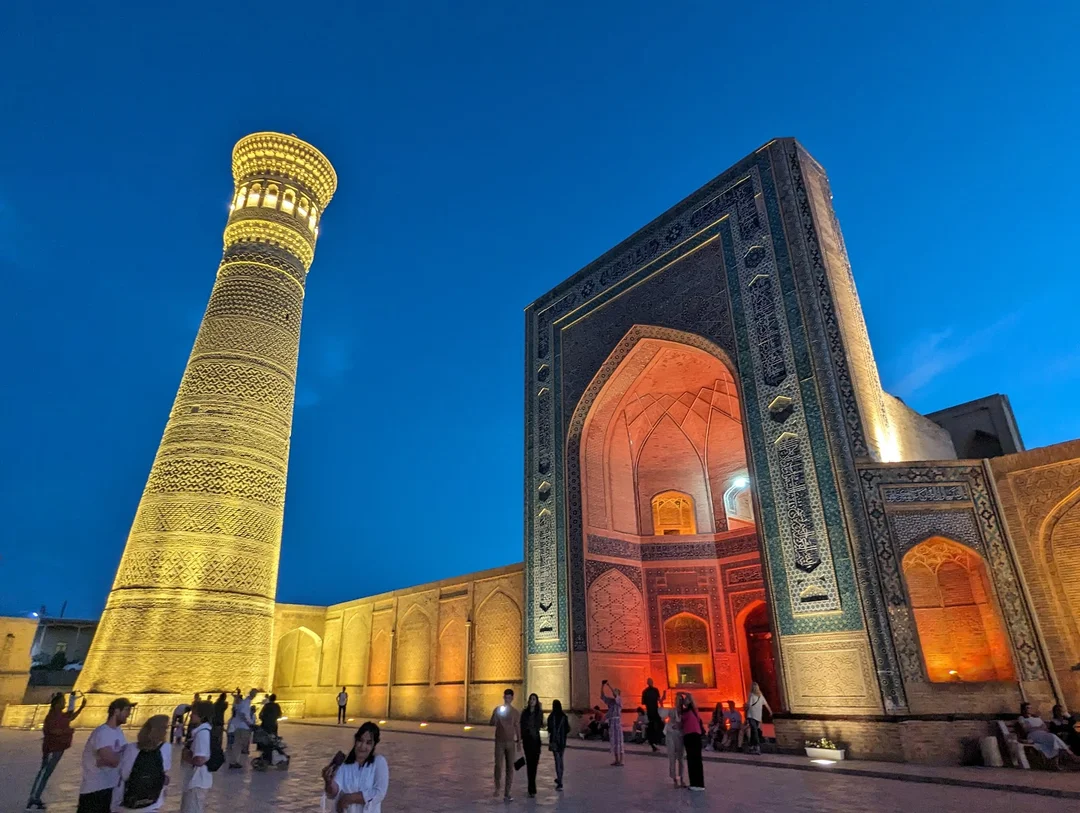
Poi-Kalyan Complex
The main architectural ensemble in Bukhara and the historic heart of the city. Located in the old centre, it is one of the most important sites in Uzbekistan and on the ancient Silk Road, bringing together three iconic monuments in a single square.
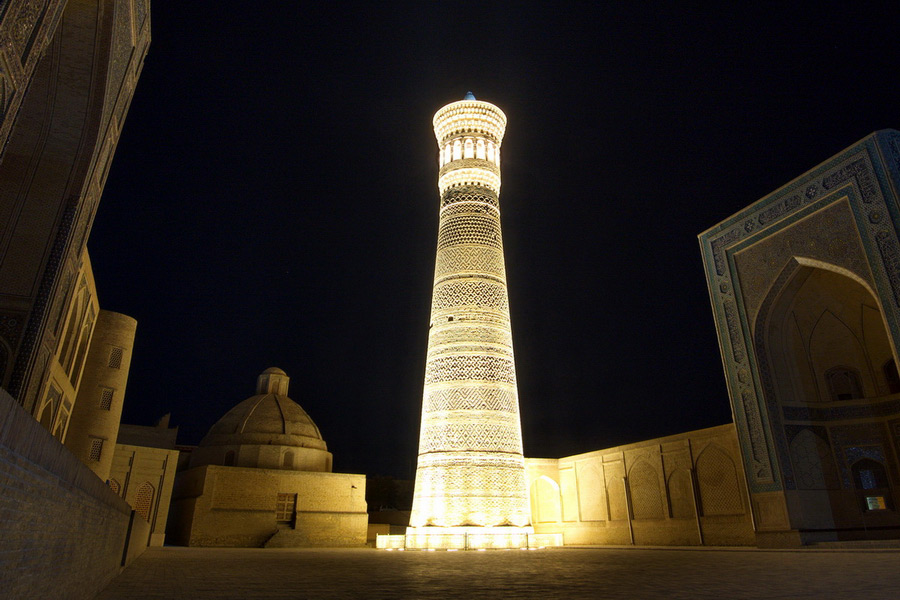
Kalyan Minaret
A 47-metre minaret built in 1127, considered one of the principal symbols of Bukhara. Beyond its religious function, it also served as a landmark for caravans crossing the Silk Road.
Kalyan Mosque
A mosque with capacity for up to 12,000 people, featuring a large central courtyard surrounded by traditional arcades. One of the most impressive structures in the historic centre of Bukhara.
Mir-i-Arab Madrassa
One of the most important madrassas in Central Asia, still active as an Islamic school and one of the most recognisable stops on a Bukhara itinerary.
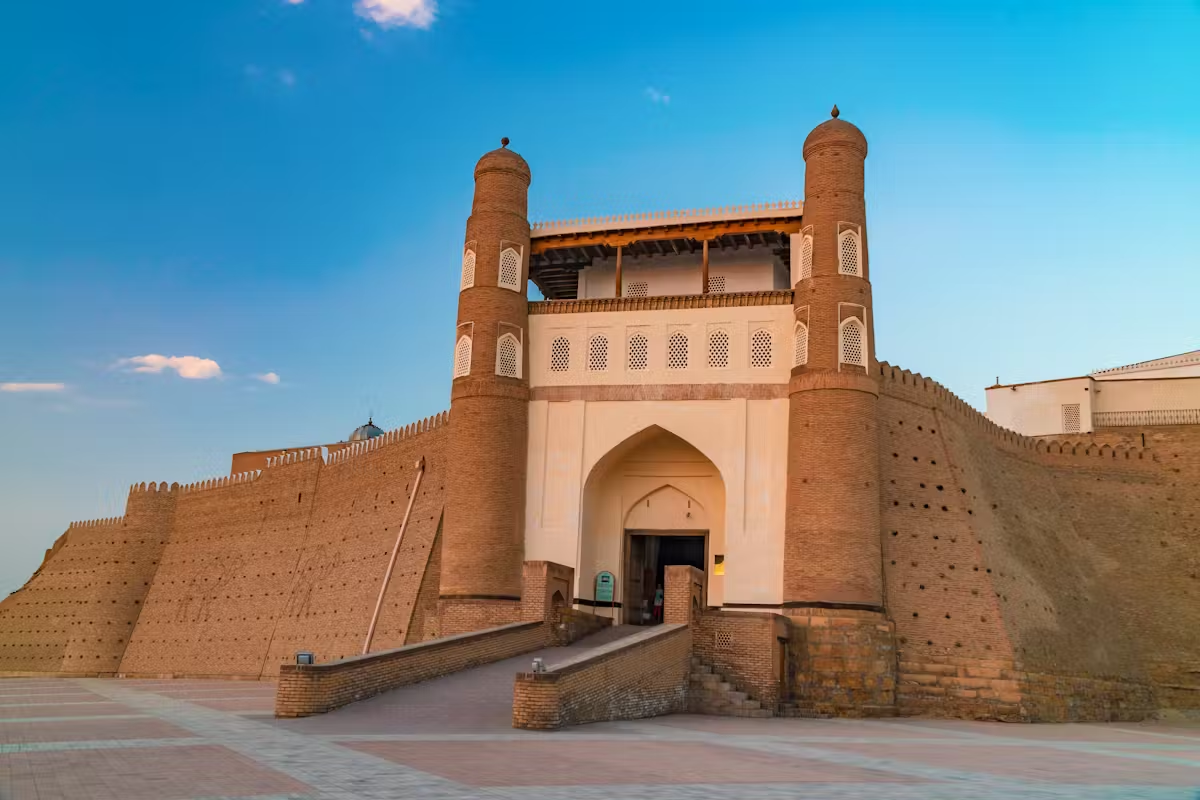
Ark of Bukhara
The ancient rulers' fortress, with walls up to 20 metres high and views over the historic centre of Bukhara. One of the most imposing monuments in the city, with centuries of political and cultural history.
Bolo Haouz Mosque
Known for its carved wooden columns reflected in the water, creating one of the most photogenic scenes in Bukhara. The pool in front perfectly mirrors the facade columns.
Chashma Ayub Mausoleum
A mausoleum linked to a spring considered sacred, associated with a local legend and an important part of the Bukhara itinerary.
Ismail Samani Mausoleum
One of the oldest Islamic monuments in Central Asia, built in the 9th century. Its brick architecture with geometric patterns is considered one of the most important in Uzbekistan.
Afternoon
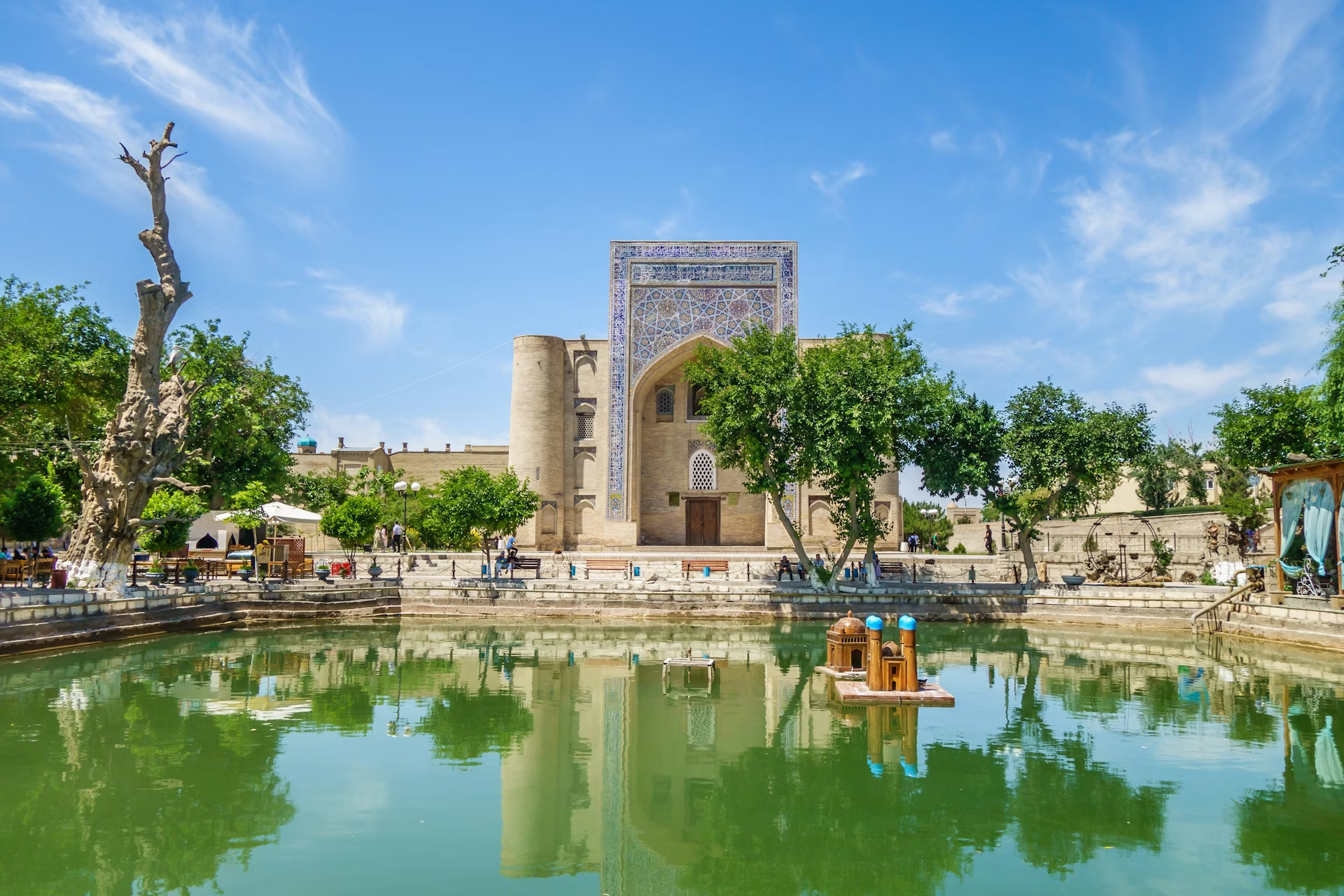
Lyabi-Hauz
One of the most pleasant areas of Bukhara, with a central pool surrounded by trees, cafés and restaurants. Perfect for a lunch break during the Uzbekistan itinerary.
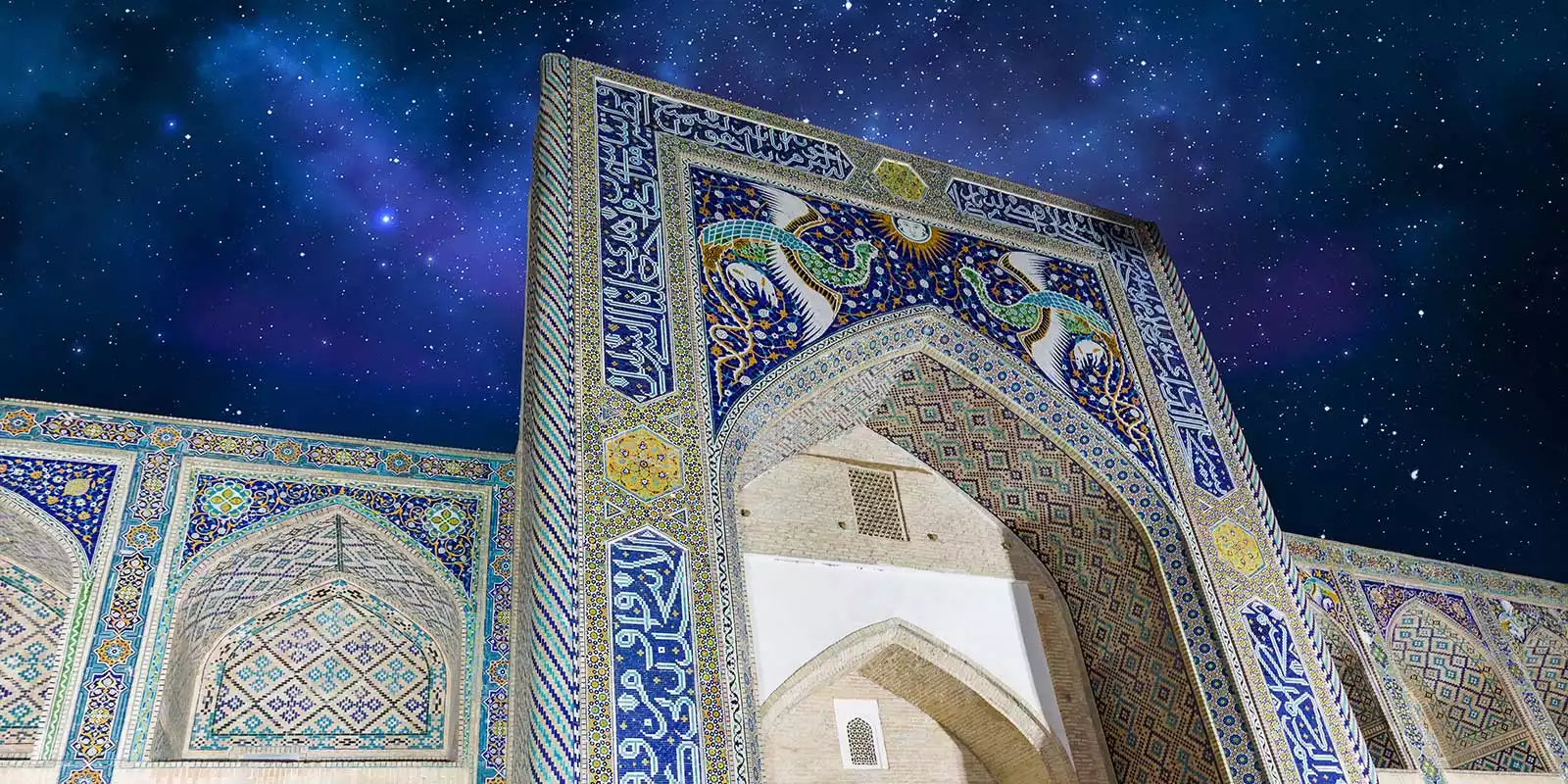
Nadir Divan-Begi Madrassa
Historic madrassa located around the Lyabi-Hauz square, with a decorated facade and great cultural significance in Bukhara.
Hammam Bozori Kord (optional)
Traditional 16th-century baths still in operation, offering an authentic cultural experience typical of the region.
Madrassas and trading domes (Toki)
Ancient Silk Road trading areas where covered markets once operated in the historic centre of Bukhara.
Ulugh Beg Madrassa
One of the oldest madrassas in the city, with ornate architecture and geometric tilework typical of the Silk Road.
Abdulaziz Khan Madrassa
Known for its elaborate interior decorative details — one of the finest examples of Islamic art in Bukhara.
Magoki-Attori Mosque
One of the oldest mosques in Central Asia, built partially below street level. It reveals the historic layers of the city.
Chor Minor
A small monument with four blue minarets, one of the most distinctive and curious structures in Bukhara — unlike anything else in Uzbekistan.
Evening
Poi-Kalyan illuminated
One of the best moments in Bukhara, when the lighting highlights the architecture and creates a unique atmosphere. The illuminated Kalyan Minaret at night is one of the most impressive scenes on the Silk Road.
Lyabi-Hauz at night
The liveliest area of the city at night, with restaurants, local movement and reflections on the pool. One of the best ways to end the 1-day Bukhara itinerary.