Travelling through Uzbekistan is one of the most authentic experiences in Central Asia, with historic cities preserved along the ancient Silk Road. Between turquoise domes, centuries-old madrassas and nearly intact old centres, the country offers some of the most impressive and still little-explored scenery in the region.
In this 6-day Uzbekistan itinerary, you'll visit Khiva, Bukhara, Samarkand and Tashkent in a well-balanced journey through history, culture and Islamic architecture. Travel between cities was done mainly by train — the most practical and comfortable way to move between the country's main destinations.
If you're planning your first trip to Uzbekistan, this complete guide covers what to do in each city, how to organise the itinerary day by day and the must-see highlights along the way.
6-day Uzbekistan itinerary: day-by-day overview
Day-by-day itinerary
- 2 days in Khiva — the best-preserved walled city of the Silk Road
- 1 day in Bukhara — the historic heart of the Silk Road
- 1 day in Samarkand — the most iconic city in the country
- 2 days in Tashkent — modern and Soviet-era capital
Map of the 6-day Uzbekistan itinerary
Khiva — the walled city of the Silk Road
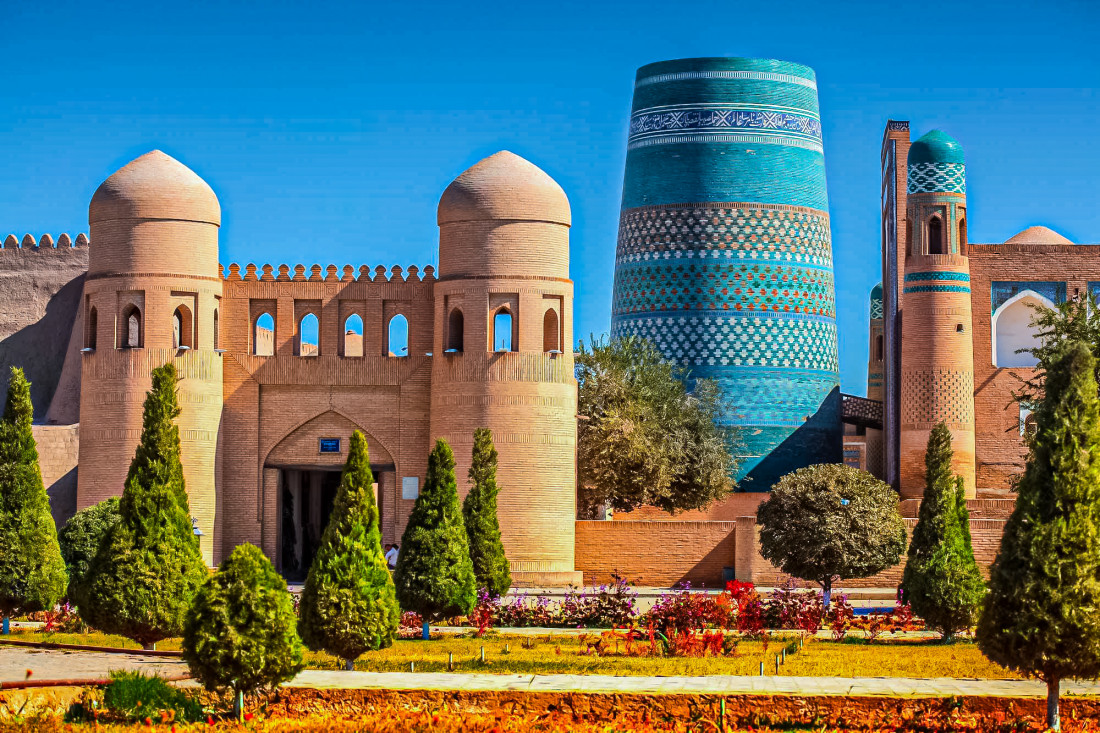
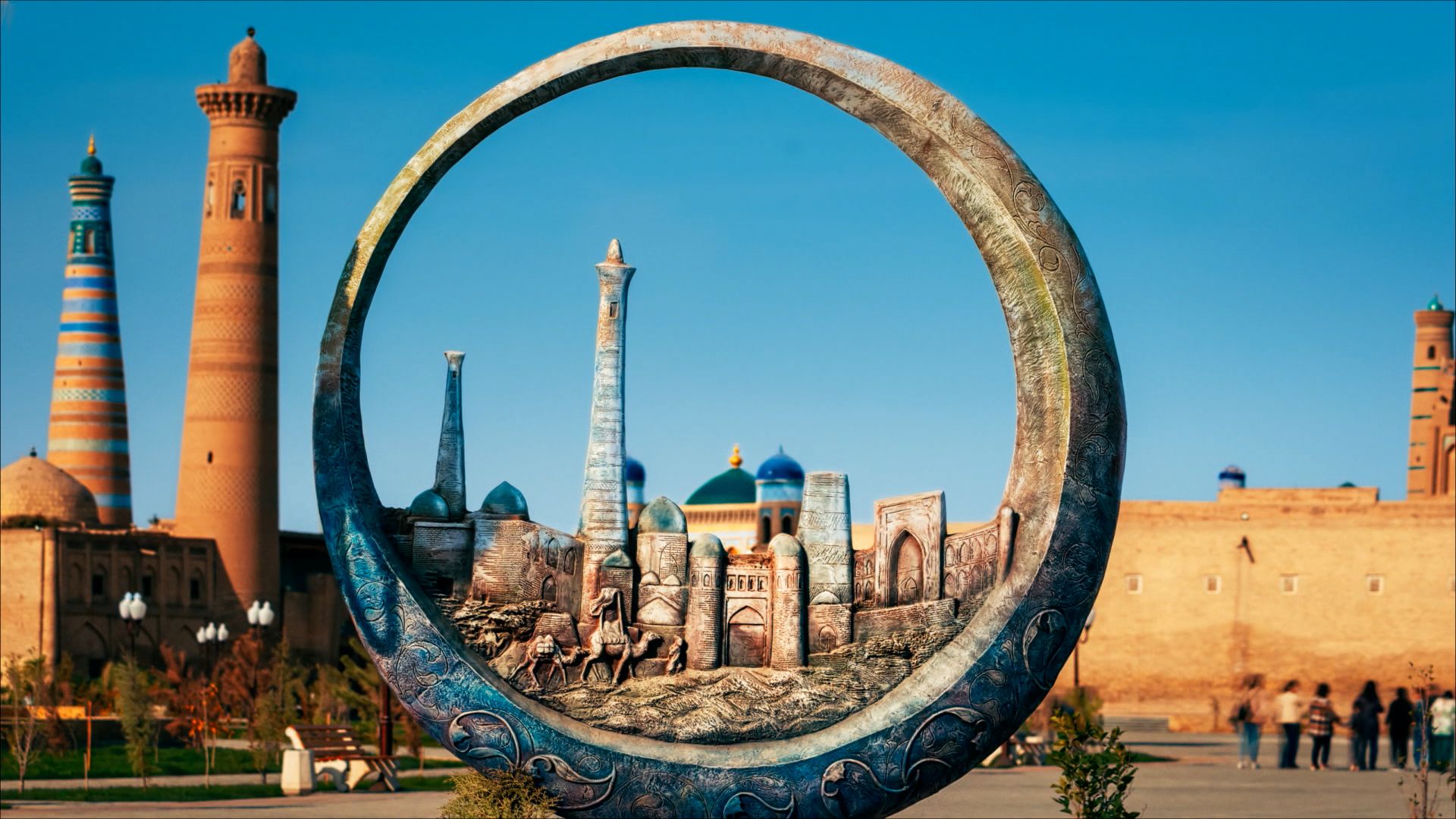
Khiva is one of the best-preserved historic cities in Uzbekistan and an essential stop on any Central Asian itinerary. Inside the walls of Ichan Kala, the old centre functions as a true open-air museum, with minarets, madrassas and mosques concentrated in a compact area.
Day 1 — Historic centre
Ota Darvoza — West Gate — the main gateway to the walled city and the best entry point. One of the most iconic photo spots in Khiva.
Mohammed Amin Khan Madrassa — one of the largest madrassas in Central Asia, with impressive turquoise tiles and typical Silk Road architecture.
Kalta Minor — Unfinished Minaret — the symbol of Khiva. Intended to be the tallest minaret in the world, but never completed — making it one of the most iconic images in Uzbekistan.
Kunya-Ark — Citadel — former residence of Khiva's rulers. Climbing up here is essential for the best panoramic view of the city.
Juma Mosque — Friday Mosque — a unique interior with over 200 carved wooden columns, unlike any other mosque in Uzbekistan.
Smaller mosques (Toshhovli and Ak Mosque) — quieter, more authentic and less visited spaces within the historic centre.
Sunset from the walls or Kunya-Ark — one of the best moments of the day in Khiva, when the city turns golden.
Day 2 — Palaces and minarets
Alla-Kuli-Khan Madrassa — now operates as a restaurant, making it a good option to start the day in the historic centre.
Tash Hauli Palace — Stone Palace — a complex with over 150 rooms and impressive decoration, showing the power of the ancient rulers.
Pahlavon Mahmud Mausoleum — iconic turquoise dome and one of the most beautiful spots in Khiva, with interiors covered in decorative tiles.
Islam Khoja Minaret — the best views of the city from the top, ideal for understanding the full layout of Khiva and photographing the minaret-filled skyline.
Bukhara — the heart of the Silk Road
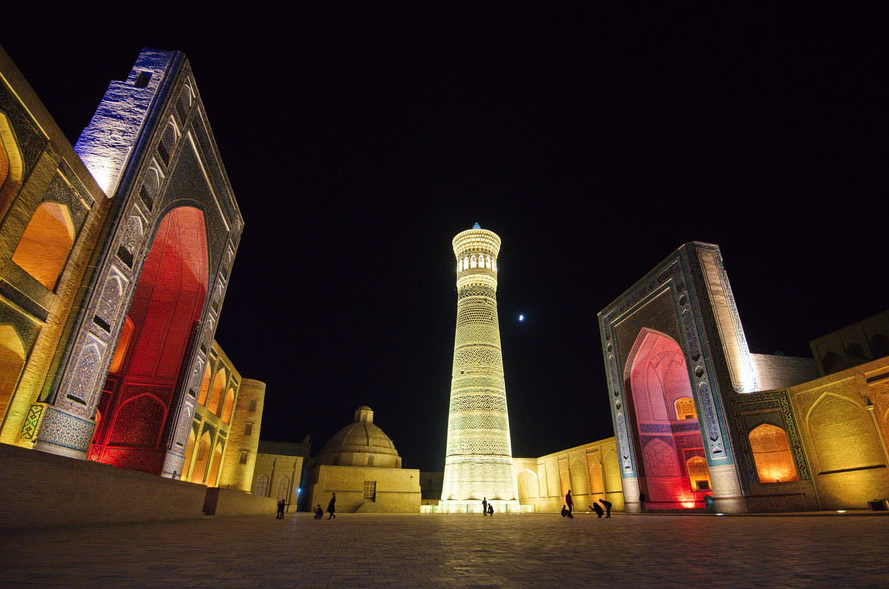
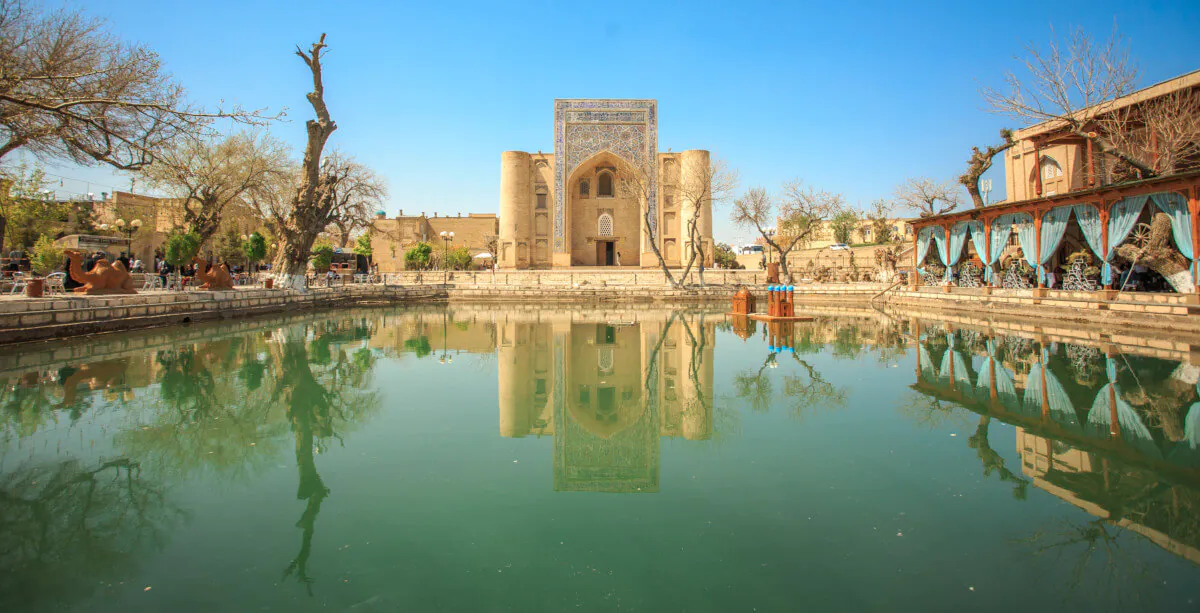
Bukhara is one of the most important cities in Uzbekistan and one of the main historic centres of the Silk Road. Its old centre concentrates some of the most impressive monuments in Central Asia.
Historic centre and monuments
Poi-Kalyan Complex — the main architectural ensemble in Bukhara, with a minaret, mosque and madrassa all in the same location. One of the most photogenic ensembles in Uzbekistan.
Ark of Bukhara and Bolo Haouz Mosque — historic fortress that served as the rulers' residence, and a mosque with carved wooden columns reflected in water.
Ismail Samani Mausoleum — one of the oldest Islamic monuments in Uzbekistan, with decorative brickwork over a thousand years old.
Lyabi-Hauz — a square around a historic pool, perfect for a break during the itinerary and for observing everyday life in Bukhara.
Exploring the historic centre
Trading domes and historic madrassas — a traditional trading area with preserved Silk Road architecture, ideal for finding local crafts.
Chor Minor — a unique monument with four blue minarets, unlike any other structure in Uzbekistan.
Poi-Kalyan illuminated and Lyabi-Hauz — one of the most beautiful scenes in Bukhara at the end of the day, with lighting enhancing the tilework mosaics.
Samarkand — the most iconic city in Uzbekistan
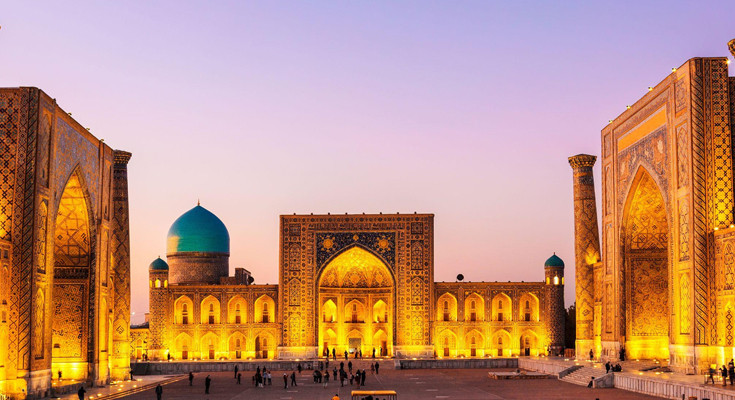
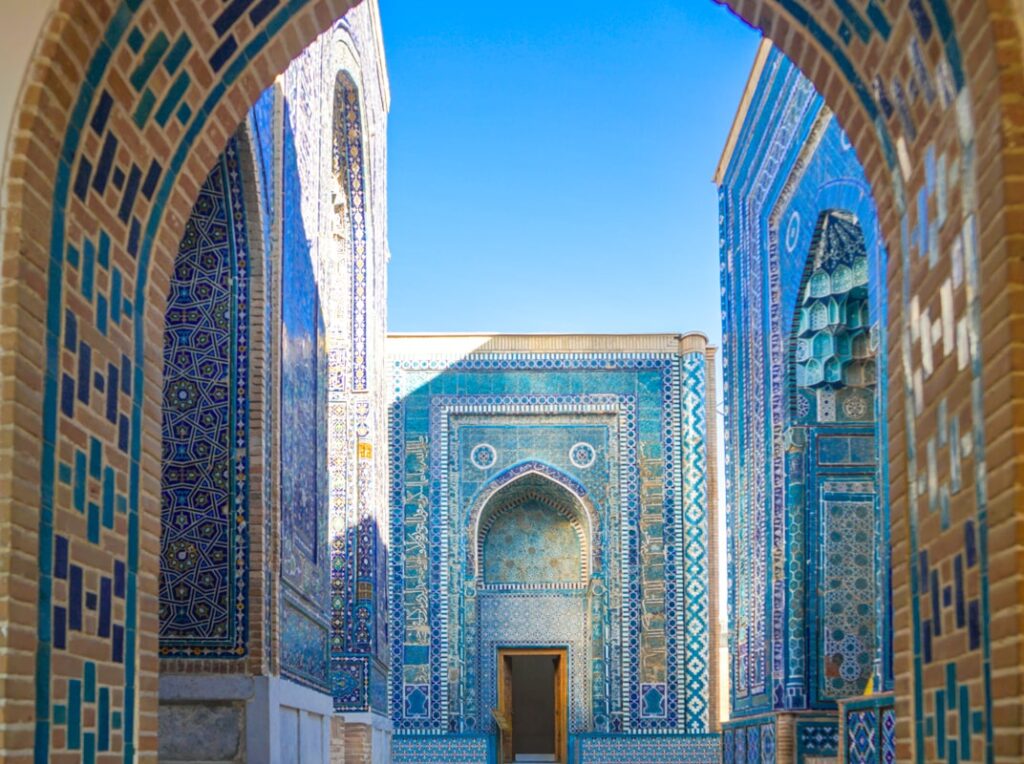
Samarkand is the great symbol of the Silk Road and one of the most impressive cities in Central Asia. It is a must-stop on any Uzbekistan itinerary and home to some of the most beautiful Islamic monuments in the world.
Main attractions
Registan — the main landmark of Samarkand and one of the most impressive architectural ensembles in the world, with three medieval madrassas surrounding a central square covered in turquoise tiles.
Gur-e-Amir Mausoleum — Tamerlane's mausoleum with its iconic blue dome, one of the most recognisable monuments in Uzbekistan.
Bibi-Khanym Mosque — one of the largest mosques in the Islamic world at the time of its construction, built by order of Tamerlane in the 14th century.
Siyob Bazaar — a local market ideal for experiencing the culture, sampling typical food and taking a break during the itinerary.
Continuing the itinerary
Shah-i-Zinda — the most beautiful site in Samarkand, with a corridor of medieval mausoleums covered in decorated tiles in shades of blue and turquoise.
Ulugh Beg Observatory — an important scientific centre in Central Asia, where astronomer Ulugh Beg built the world's largest sextant in the 15th century.
Registan illuminated — one of the most impressive moments of the Uzbekistan trip, when the architectural ensemble comes alive under night lighting.
Tashkent — capital of Uzbekistan
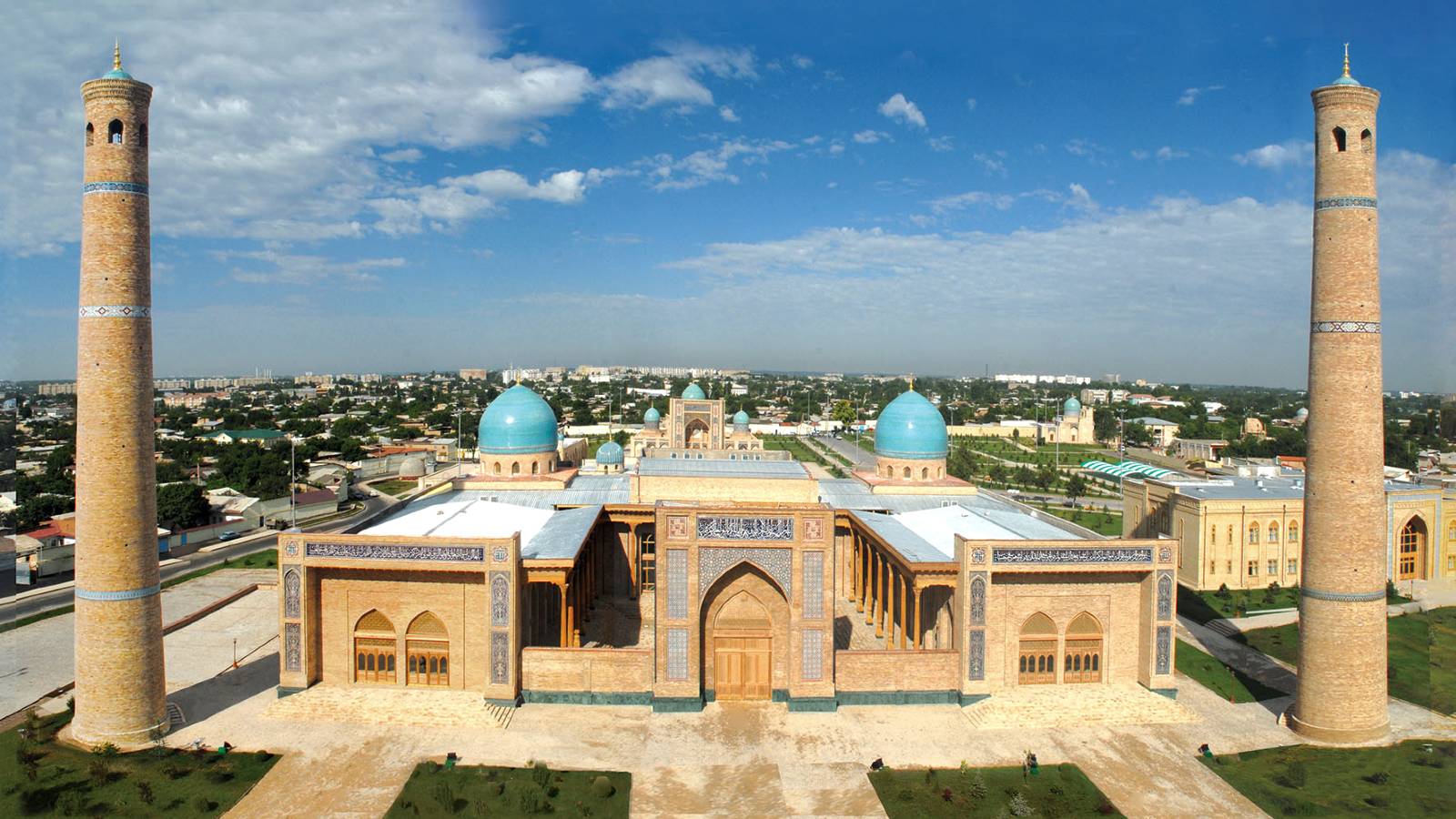
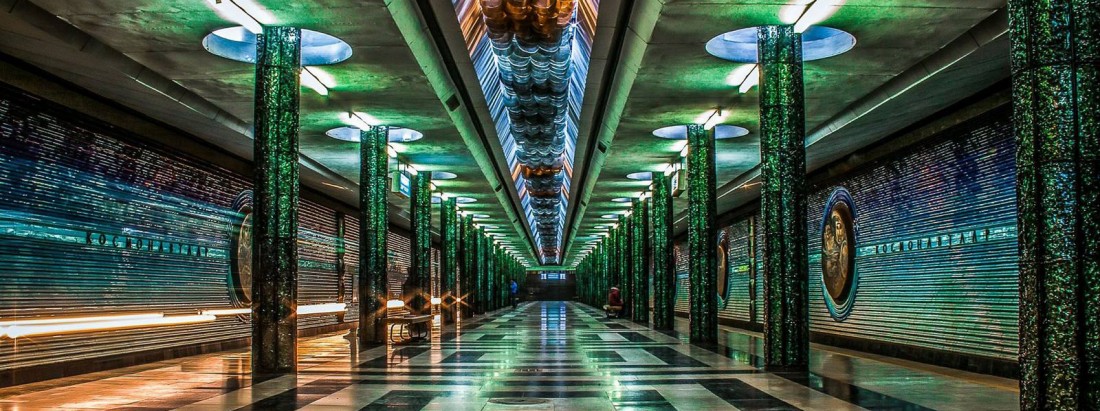
Tashkent is the capital of Uzbekistan and blends Soviet architecture, modern mosques and a more contemporary urban life. Unlike the other cities on the itinerary, Tashkent offers a 20th-century perspective on Uzbekistan — with wide boulevards, monumental squares and a decorated metro unlike almost anything else in the world.
Day 5 — Centre and experiences
Hazrati Imam Complex — the main religious centre of Tashkent, with the Grand Mosque and one of the most important examples of modern Islamic architecture in the country.
Chorsu Bazaar — traditional market with a blue dome and typical local food, one of the most lively bazaars in Central Asia.
Amir Timur Square and Museum — the heart of the modern city with an equestrian statue of Tamerlane and a museum dedicated to the history of the founder of the Timurid Empire.
Tashkent Metro — one of the most interesting experiences in the city, with stations decorated with Soviet-era mosaics, chandeliers and frescoes.
Tashkent City Park and Magic City — the ideal area for walking, relaxing and exploring the more contemporary side of the capital.
Day 6 — Monuments and walking
Independence Square — Uzbekistan's main square, with monuments and gardens marking the country's independence in 1991.
Navoi Theater and Romanov Palace — historic architecture in the city centre, with the opera house being one of the most elegant buildings in Tashkent.
Minor Mosque — a modern mosque with elegant white architecture and tilework, built on the banks of the canal.
Anhor Canal Walk — a peaceful walk along the canal, with views of parks and residential neighbourhoods, perfect for closing the Uzbekistan itinerary.
Travel planning for Uzbekistan: essential tips
Before starting the Uzbekistan itinerary, it's important to understand some practical aspects of the trip. The country has been modernising rapidly for tourism, but still has characteristics that require preparation — visas, local currency, transport and connectivity all work differently from what most travellers are used to.
Transport between cities
- Afrosiyob (high-speed train) — Tashkent, Samarkand and Bukhara
- Overnight train — Bukhara to Khiva (most comfortable option)
- Private transfer — Khiva to Bukhara is the most common route
- Book trains in advance at the official site uzrailpass.uz
Money and payments
- Local currency: Uzbekistani Som (UZS)
- US dollars are accepted in many places
- ATMs available in the main cities
- International cards accepted at larger hotels and restaurants
Internet and connectivity
- Local SIM card available at Tashkent airport
- Providers: Ucell and Beeline have good coverage
- Wi-Fi available at most hotels
- Google Maps and WhatsApp work normally