Last updated: May 2026
Budva and Sveti Stefan reveal Montenegro's Adriatic coastline through beaches, historic walls and viewpoints over the sea. Budva has a compact Old Town, while Sveti Stefan creates one of the country's most recognisable coastal landscapes.
One day provides enough time for Budva Old Town, the Citadel, the coastal path to Mogren Beach and the Sveti Stefan viewpoint. To keep the schedule comfortable, choose one principal beach rather than trying to include Mogren, Bečići and Jaz in the same day.
How this Budva and Sveti Stefan itinerary was planned
The first part of the day concentrates on Budva Old Town, its stone streets, churches, squares and the Citadel. Starting early helps you find the historic center at its quietest, especially in summer.
After the old city, the itinerary follows the coastal path to Mogren Beach. In the late afternoon, the schedule continues to Sveti Stefan, with time set aside for the viewpoint and for taking in the island from the coast.
Bečići Beach and Jaz Beach appear as alternatives for those who prefer more beach time. Choose only one of them in place of Mogren, as trying to include them all would leave the day rushed.
Budva and Sveti Stefan in 1 day: itinerary overview
Budva Old Town, Mogren Beach and Sveti Stefan
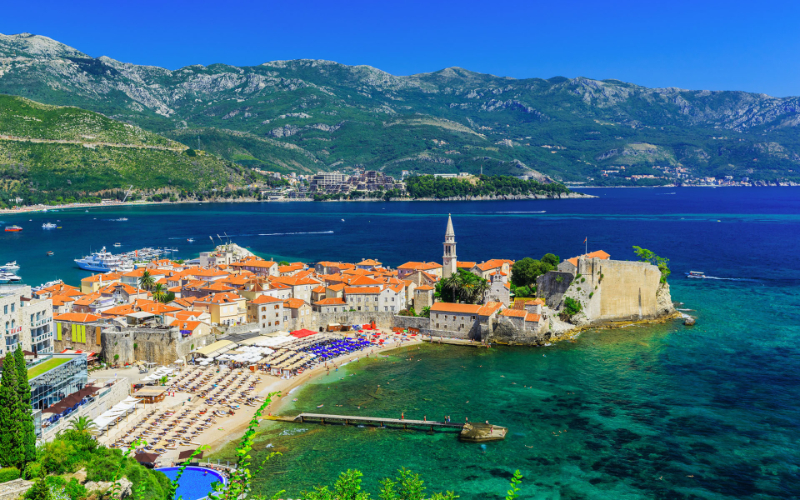
Budva Old Town is the best place to start the itinerary. The historic center is enclosed by walls and gathers narrow stone streets, small squares, churches, shops, cafés and restaurants.
The old city is smaller than Kotor's Old Town, but it has a different atmosphere. In Budva, the walls connect directly to the Adriatic landscape, with beaches and coastal paths close to the center.
Enter through the city gates and walk without a rigid route. The area is compact and can be explored at a calm pace, taking in the stone facades, the narrow passages and the small squares that appear between the streets.
St. John's Church is one of the Old Town's main visual landmarks. Its tower can be seen from different parts of the historic center and helps identify the old city's most important religious quarter.
Santa Maria in Punta Church sits close to the walls and the sea. Even when the interior isn't open, the outside area deserves a place in the walk for its location and historic architecture.
You don't need to enter every church or attraction. An important part of the visit is simply walking the streets, observing the walls and finding spots with views over the coastline.
The Budva Citadel occupies an elevated area inside the Old Town and offers views over the rooftops, the walls and the Adriatic Sea. The visit is usually quick and works well for understanding the historic center's position along the coast.
Entry to the Citadel usually costs around €5 per person. Since prices and hours can change, treat this figure only as a reference and confirm the conditions at the entrance.
After the Citadel, keep walking along the outside of the walls and head toward the coastal path that leads to Mogren Beach.
The Budva Ballerina statue appears on the way between the Old Town and Mogren Beach. The sculpture has become one of the city's most photographed spots, mainly for the composition with the walls and the sea in the background.
The coastal path has stretches close to the rocks and can get slippery when wet. Wear proper footwear and watch out for strong waves or temporarily blocked sections.
Mogren Beach is the most practical option to combine with the Old Town. Access is on foot along the coastal path, with no need for a car or taxi.
The beach is framed by rocky cliffs and usually has clear water during the summer months. Because it's close to the historic center, it can get quite crowded in July and August.
Access to the beach area is usually free, but sunbeds, umbrellas, food and other services are charged separately. Prices vary by season and operator.
You don't need to spend several hours at Mogren. If you just want to see the scenery, do the walk, stay on the beach for a while and then head back toward the Old Town.
Bečići Beach is an alternative for those who prefer a longer beach with more hotels, restaurants and services. It sits outside the historic center and requires an extra leg of travel.
Jaz Beach is another alternative, mainly for those with a car or planning to dedicate more time to the coast. The beach is further away and shouldn't be combined with Mogren and Bečići in the same one-day itinerary.
Choose Mogren for convenience, Bečići for facilities or Jaz for space and easier access by car. Don't try to see all three just to add more stops.
After your chosen beach, continue to Sveti Stefan. The trip can be made by car, taxi, local bus or organized tour. Factor in the coastal road traffic, especially during high season.
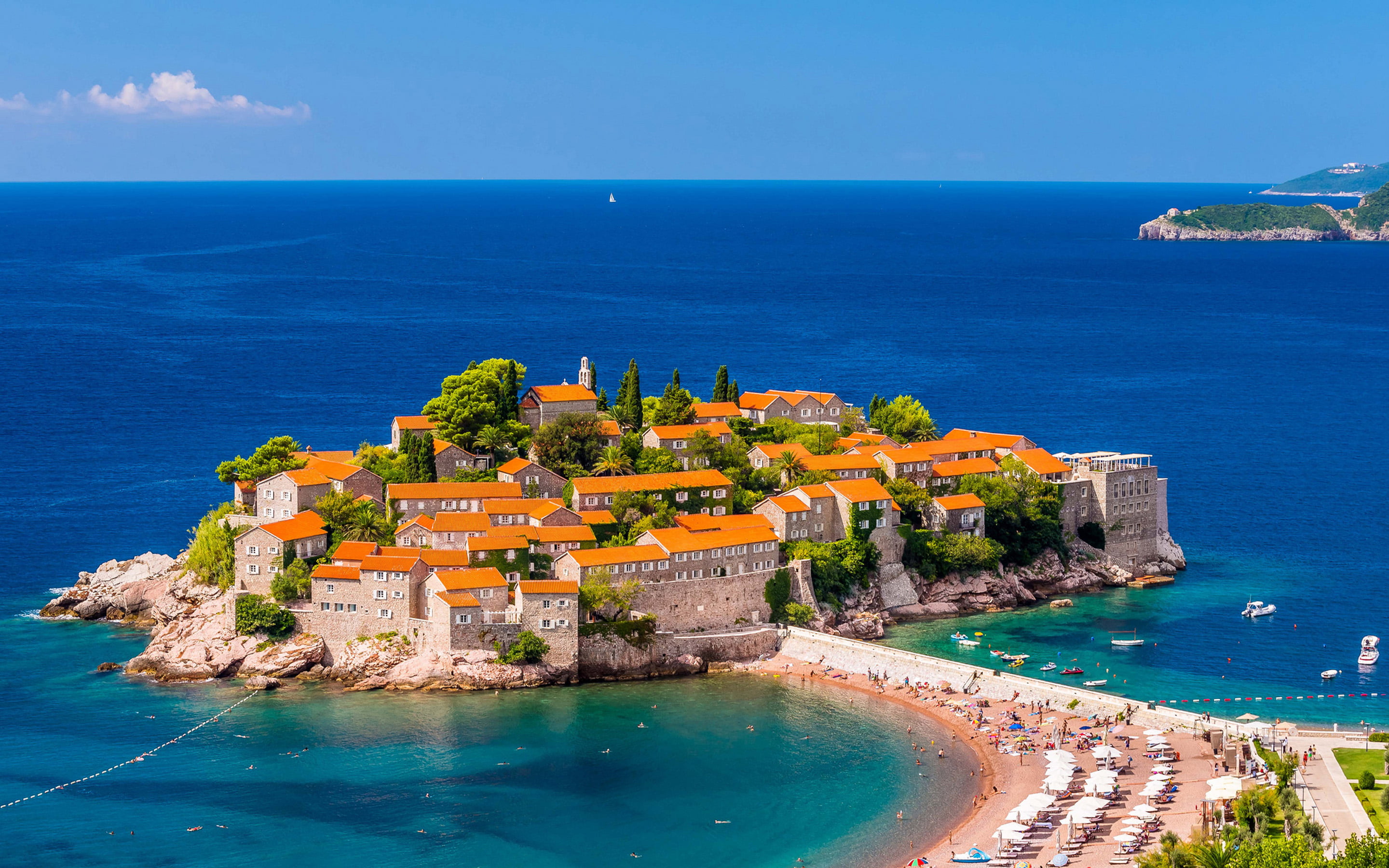
Sveti Stefan is a small fortified island connected to the mainland by a narrow strip of land. The stone buildings, the sea and the surrounding mountains form one of Montenegro's best-known images.
The island's interior shouldn't be considered a freely accessible attraction. Conditions depend on the resort's operation, the rules in force and the availability of authorized visits. Confirm up-to-date information before your trip.
Even when you can't enter the island, Sveti Stefan is still worth it as a scenic stop. The external view, the viewpoints and the nearby beaches are the main reasons to include it in this itinerary.
The Sveti Stefan viewpoint offers the classic view of the island connected to the mainland. Access to the panoramic spot is usually free, but parking and stopping conditions can vary.
If you're driving, stop only where it's allowed and safe. The coastal road can carry heavy traffic and it's not advisable to block the way for photos.
The late afternoon usually brings softer light over the sea, the rooftops and the mountains. Even so, don't organize the itinerary around a very tight schedule, as traffic between Budva and Sveti Stefan can increase in summer.
If you have time, walk through the public areas near the coast and look at Sveti Stefan from other angles. Check locally which beaches, paths and facilities are accessible at the time of your visit.
After Sveti Stefan, head back to Budva or Kotor. If you're staying in Budva, you can end the day with dinner near the Old Town. If Kotor is your base, factor in the return time along the coastal road.
What I would prioritize in this itinerary
I would prioritize the walk through Budva Old Town, the view from the Citadel, the coastal path to Mogren Beach and the Sveti Stefan viewpoint.
I would also start the itinerary early to see the old city before the busiest hours and leave Sveti Stefan for the late afternoon.
To keep the day comfortable, I would pick just one beach. Mogren is the best choice for its easy access from the Old Town.
What can be optional
Going inside the Citadel is optional. The visit offers a good view, but if you're watching your budget you can enjoy the streets, the outer walls and the free coastal areas.
Spending several hours at the beach is also optional. If you're more interested in history and scenery, just do the walk to Mogren before continuing to Sveti Stefan.
Bečići Beach and Jaz Beach should be treated as alternatives, not extra stops. Pick one of them only if it better matches your travel style.
Sleeping in Budva is optional. Kotor can remain your main base, with Budva working as a day trip. If beaches and nightlife are what you're after, a night in Budva can make sense.
Trying to enter the interior of Sveti Stefan also shouldn't be treated as a mandatory part of the itinerary. The visit depends on the access conditions in force.
Mistakes that can make this itinerary exhausting
The main mistake is attempting to include Budva Old Town, Mogren Beach, Bečići Beach, Jaz Beach and Sveti Stefan in a single day.
Another problem is starting too late in summer. The Old Town, the beaches, the parking areas and the roads get busier as the day goes on.
It's also unwise to allow too little time for the trip between Budva and Sveti Stefan. Traffic can upset the schedule, especially during high season.
Avoid planning the visit around guaranteed access to the interior of Sveti Stefan. Confirm the current rules and plan the stop mainly around the external view and the viewpoints.
If you're traveling without a car, don't rely only on old timetables found online. Confirm buses, boarding points and the last return option locally.
Don't walk the coastal access to Mogren in unsuitable footwear or during rough sea conditions. Some stretches can be wet and slippery.
Trip planning for Budva and Sveti Stefan: essential tips
Getting there and around
- Budva is about 20 kilometers from Kotor
- Budva Old Town should be explored on foot
- Mogren Beach can be reached on foot from the Old Town
- For Bečići, Jaz and Sveti Stefan, use a car, taxi, bus or organized tour
- Factor in traffic and parking during high season
Where to stay
- Kotor: practical base for combining the bay, historic towns and the coast
- Budva: better for those after beaches, restaurants and nightlife
- Budva Old Town: historic setting with easy access to the central attractions
- Bečići: alternative with larger hotels and more direct beach access
- Book in advance during the summer months
Entry fees and costs
- Budva Old Town: free access
- Budva Citadel: around €5 per person
- Mogren, Bečići and Jaz: generally free access, with beach services charged separately
- Sveti Stefan viewpoint: free access
- Access to the interior of Sveti Stefan: depends on the rules and current operation
- Confirm prices, parking and access conditions on site
Best times
- Budva Old Town: early morning
- Mogren Beach: morning or late afternoon to avoid the busiest period
- Sveti Stefan: late afternoon for softer light
- In summer, start early and leave a margin for traffic
- Avoid planning the day around very tight timings