Last updated: August 2026
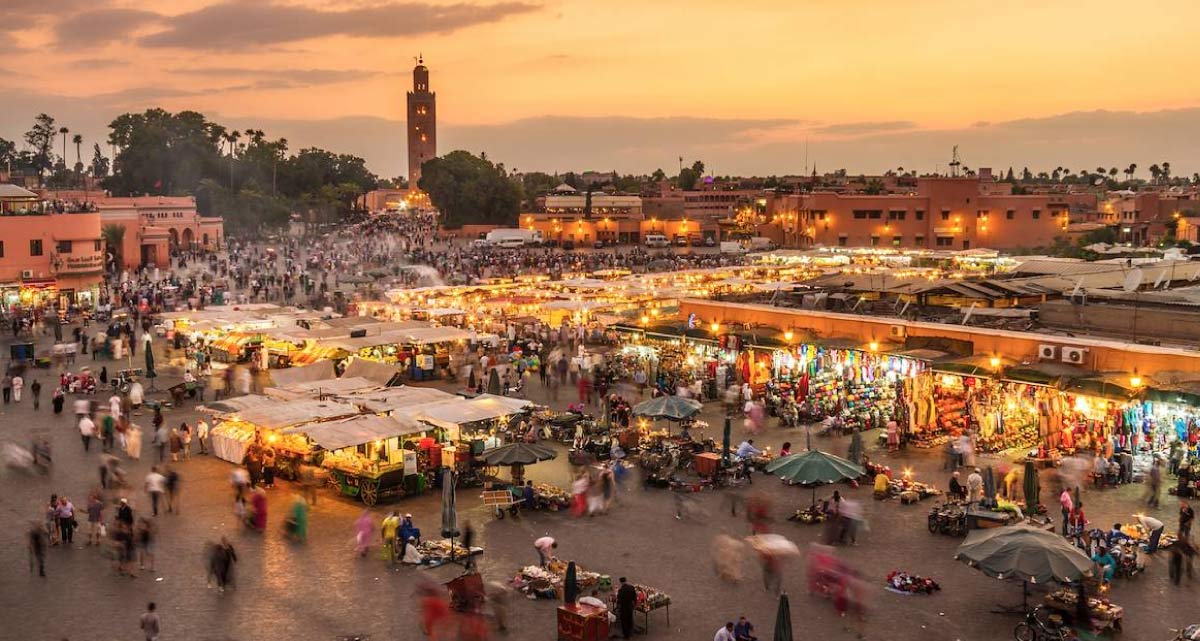
Jemaa el-Fna Square is one of the main public spaces of the Marrakech medina. During the day, it brings together vendors, drink carts, shops, and various services; in the late afternoon, food stalls being set up transform the look and rhythm of the place.
Musicians, storytellers, henna artists, and other performers can draw circles of people as they cross the square. How much of this activity is happening, and when, depends on the time of day, the season, the weather, Ramadan, and events in the city.
The cultural space of Jemaa el-Fna was proclaimed by UNESCO a Masterpiece of the Oral and Intangible Heritage of Humanity in 2001. In 2008, it was inscribed on the Representative List of the Intangible Cultural Heritage of Humanity.
The square also sits within the Marrakech medina, separately recognized as a UNESCO World Heritage Site since 1985. The two designations protect different things: one relates to living cultural practices, the other to the historic urban ensemble.
Quick facts
- Visit time: 1 to 3 hours
- Location: at the entrance to the souks area in the Marrakech medina
- Entrance: free
- Hours: public square, open continuously
- Busiest period: late afternoon and evening
- Type of visit: walking, food, cultural observation, and rooftop views
- Meal at the food stalls: approximately 40 to 80 MAD, about US$4 to US$8, depending on the order
- Payment: cash is the most practical option at the stalls and performances
- Accessibility: mostly flat ground, but crowds and obstacles can make getting around difficult
- Caution: agree on prices before photos, henna, or any service
Is it worth visiting Jemaa el-Fna?
Yes. The square brings together commerce, food, and cultural expression that help you understand Marrakech's public life. The experience changes throughout the day, so it's worth passing through at two different times.
Late afternoon lets you watch the stalls being set up and the crowds building. At night, the square gets more intense, with vendors, musicians, cooks, and visitors sharing the same space.
Anyone who prefers less crowding can see it in the morning and watch the nighttime activity from a rooftop terrace. You don't need to take part in every attraction to enjoy the atmosphere.
What is Jemaa el-Fna Square?
Jemaa el-Fna is a large public square located at the entrance to the souks of the Marrakech medina. Around it are restaurants, cafés, rooftop terraces, shops, and paths leading to different areas of the historic center.
During the day, the space hosts vendors selling juice, dried fruit, spices, and other products. In the late afternoon, food stalls start setting up in the square and the number of performances increases.
The square also works as a meeting point and a thoroughfare. Residents, merchants, workers, and visitors pass through daily, though the level of activity varies with the time of day, the season, and the religious calendar.
What does Jemaa el-Fna mean?
The origin of the name Jemaa el-Fna isn't settled. "Jemaa" may relate to gathering, assembly, or mosque, while "fna" allows for different interpretations.
A frequently repeated translation is "assembly of the dead," linked by some accounts to historical public executions. This explanation is only a hypothesis and shouldn't be presented as a proven historical meaning.
There are also interpretations tied to an unfinished or vanished mosque. Because of this, the most accurate thing to say is that the etymology remains uncertain.
UNESCO and intangible cultural heritage
UNESCO proclaimed the cultural space of Jemaa el-Fna Square a Masterpiece of the Oral and Intangible Heritage of Humanity in 2001. In 2008, it was inscribed on the Representative List of the Intangible Cultural Heritage of Humanity.
This recognition relates to the oral traditions, performances, music, social practices, and knowledge passed down in the square. It doesn't mean every activity found there today is part of the protected tradition.
The Marrakech medina has a separate designation: it has been inscribed on the World Heritage List since 1985 for its urban, historical, and architectural ensemble.
How to get to Jemaa el-Fna
Anyone staying inside the medina usually arrives on foot. Use an offline map and confirm the route from your riad, since the streets form a network of passages and not every access point is direct.
Petit taxis can drop passengers on nearby streets, but they don't drive into the central, busiest part of the square.
Coming from Guéliz, Hivernage, or other areas of the new town, use a taxi, bus, or walk depending on the distance.
If you're meeting someone or arranging transport, choose a landmark accessible to vehicles, such as a street near the Koutoubia or another entrance suggested by your accommodation.
How the square changes throughout the day
Morning
The square usually has more room to move around. Drink carts, vendors, and services start occupying different spots, while the cafés and souk entrances see activity.
Afternoon
The number of people grows, and performers, musicians, vendors, and service providers may show up. Stalls being set up start to change the central area.
Late afternoon
The transition into evening is one of the most interesting periods to watch the square. Kitchens start firing up, smoke rises over the stalls, and performance circles gather crowds.
Night
Food stalls and performances take up much of the space. Crowds can be intense, especially on weekends, holidays, and busier tourist periods.
During Ramadan, the timing and intensity change. Nighttime activity tends to start later, after iftar.
Storytellers, musicians, and performances
Storytellers, known as hlaykia, musicians, and other performers can form circles in the square, especially in the late afternoon and at night. There's no fixed schedule, so no specific performance is guaranteed.
Many stories are told in Moroccan Arabic and depend on the audience's participation. Even without understanding the language, you can watch the dynamic between the performer and the crowd.
If you stay to watch or photograph a performance, be prepared to offer a contribution. Watch first and confirm any charge before interacting directly.
Snakes and monkeys in the square
Some areas of the square may have men with snakes or monkeys used for photos. Whether these animals are present varies and shouldn't be treated as a guaranteed attraction.
Interactions like these raise animal welfare concerns and can involve insistent demands for payment after the photo is taken. The more responsible choice is not to touch the animals, not to pose with them, and not to pay for these activities.
Keep your distance if you don't want to take part. Photographing from up close can also be read as accepting the service.
Henna at Jemaa el-Fna
Henna artists offer designs on hands and arms. Some may start the design before explaining the price, so decline clearly if you're not interested.
If you want the application, agree on the design and total price beforehand. Choose natural henna, which has a brown or reddish tone.
Avoid so-called black henna. It can contain paraphenylenediamine, known as PPD, a substance that can cause irritation, burns, and allergic reactions.
Food stalls
Numbered stalls start setting up in the square in the late afternoon. The menu can include harira, grilled meats, skewers, fish, vegetables, bread, snails, and other dishes.
A meal usually costs between 40 and 80 MAD, approximately US$4 to US$8, but the total depends on the dishes and drinks chosen.
Read the menu and confirm prices before ordering. Also ask whether bread, salads, sauces, or side dishes placed on the table are included or will be charged.
Choose a stall with clearly displayed prices, food kept protected, and dishes prepared in an organized area. High foot traffic can suggest turnover, but it doesn't replace checking hygiene conditions for yourself.
There's no proven link between a stall's number and the quality of its food.
What to eat at Jemaa el-Fna
Harira
A soup made with tomato, legumes, herbs, and spices. The recipe and ingredients vary between stalls.
Grilled meats
Skewers, kefta, and other meats are prepared on grills. Confirm the type of meat, the portion, and the price before ordering.
Tanjia
A dish associated with Marrakech, slow-cooked in a clay vessel. Not every stall offers the same version or method of preparation.
Snail soup
Also called babouche, it combines small snails with a seasoned broth. It's a traditional dish found at specific spots in the square.
Juices and drinks
Carts sell fruit juices during the day. Confirm the price and ask whether the drink includes water, sugar, or ice if that matters to you.
Rooftop terraces overlooking the square
Cafés and restaurants around Jemaa el-Fna have rooftop terraces facing the square.
The view lets you watch the stalls being set up and the shifting crowds without staying in the middle of it.
Access usually depends on ordering something. Check the menu and prices before choosing a table, since drinks and meals on the terraces can cost more than at street level.
Arrive before sunset if you want to find a table with a view, especially during busy periods.
Photos and payments
Ask permission before photographing performers, vendors, or residents up close. Some performances rely on contributions from the audience, and a photo can prompt a request for payment.
Agree on the amount before accepting photos, services, or products. Keep small dirham notes separate for purchases and contributions.
Don't hand your wallet to anyone else, and don't accept unsolicited help counting money or finding a stall.
Safety
Jemaa el-Fna tends to stay busy until night, but the crowds call for attention to your belongings. Keep your phone, wallet, and documents in closed pockets or a bag worn in front of your body.
Politely and firmly decline insistent approaches. Confirm prices before ordering, check the bill, and avoid accepting services you didn't ask for.
When leaving the square, use busy routes and check the way to your accommodation beforehand. The medina's passages can get harder to recognize once the shops close.
Accessibility
The square is large and relatively flat, but heavy crowds, carts, stalls, and uneven ground can make getting around difficult.
Access to the rooftop terraces usually involves stairs, and not every venue has an elevator or an adapted restroom. Confirm conditions before ordering.
For anyone who needs more space or a quieter setting, morning tends to be more comfortable than the evening.
How long to spend
Set aside 1 to 2 hours to walk around, watch the activity, and check out the stalls. Add more time if you plan to have dinner or watch the sunset from a terrace.
A good strategy is to visit the square briefly during the day and come back in the late afternoon, when the atmosphere starts to change.
Best time to visit
Late afternoon is the most interesting time to watch the square transform. Stalls start opening, crowds build, and the temperature tends to be more pleasant.
Night brings the most activity. In the morning, the experience is calmer, making it easier to move around and photograph the space.
During Ramadan, the timing and pace of activities can change, especially around sunset and after the fast is broken.
Practical tips
- Visit the square during the day and come back in the late afternoon to see how the atmosphere changes
- Agree on prices before ordering, taking photos, or accepting any service
- Choose busy stalls and watch how the food is prepared
- Check the items and amounts on the bill before paying
- Avoid photos with snakes or monkeys
- Don't accept black henna, and confirm the price before any application
- Bring small dirham notes and keep your belongings secure
- Check the route back to your accommodation before heading into the medina's passages
Final tip
Arrive in the late afternoon to watch the stalls being set up and the crowd gradually building. If you want to see it all from above, pick a rooftop terrace and confirm beforehand whether access requires a minimum order.
Afterward, walk through the square at your own pace. Watch the performance circles, compare menus, and choose where to eat without giving in to pressure from vendors. The best experience comes from combining curiosity, attention, and enough time to see how the space changes.