Last updated: August 2026
Marrakech is one of Morocco's most visited cities and brings together much of what travelers look for on a first trip to the country. Inside and around the medina are souks, palaces, gardens, former religious schools, riads, and the busy Jemaa el-Fna Square.
Three days let you see the main sights without packing palaces, markets, and gardens into one exhausting schedule. The itinerary also leaves time to walk, rest at a café, and come back to Jemaa el-Fna at different times, since the square changes a lot between day and night.
This itinerary is a professional recommendation based on research into the attractions, the distances, and how travel logistics work in Marrakech. It is not presented as an account of personal experience, since I have not yet visited this part of Morocco.
How this Marrakech itinerary was planned
The first day focuses on the medina, the exterior of the Koutoubia Mosque, the souks, and Jemaa el-Fna. The idea is to start with the city's most important landmarks and get a better feel for the layout before visiting the paid monuments.
The second day starts outside the medina, at the Majorelle Garden and the Yves Saint Laurent Museum, and continues in the southern part of the historic center, with the Bahia Palace and the Mellah. This split cuts down on repeated trips between distant areas.
The third day brings together the Ben Youssef Madrasa, the souks in the northern part of the medina, the Saadian Tombs, and El Badi Palace. Depending on your flight time, energy level, and personal interest, some of these visits can be treated as optional.
Marrakech in 3 days: itinerary overview
Day by day
Marrakech Medina: Koutoubia, souks, and Jemaa el-Fna
Start of the day at the Koutoubia Mosque
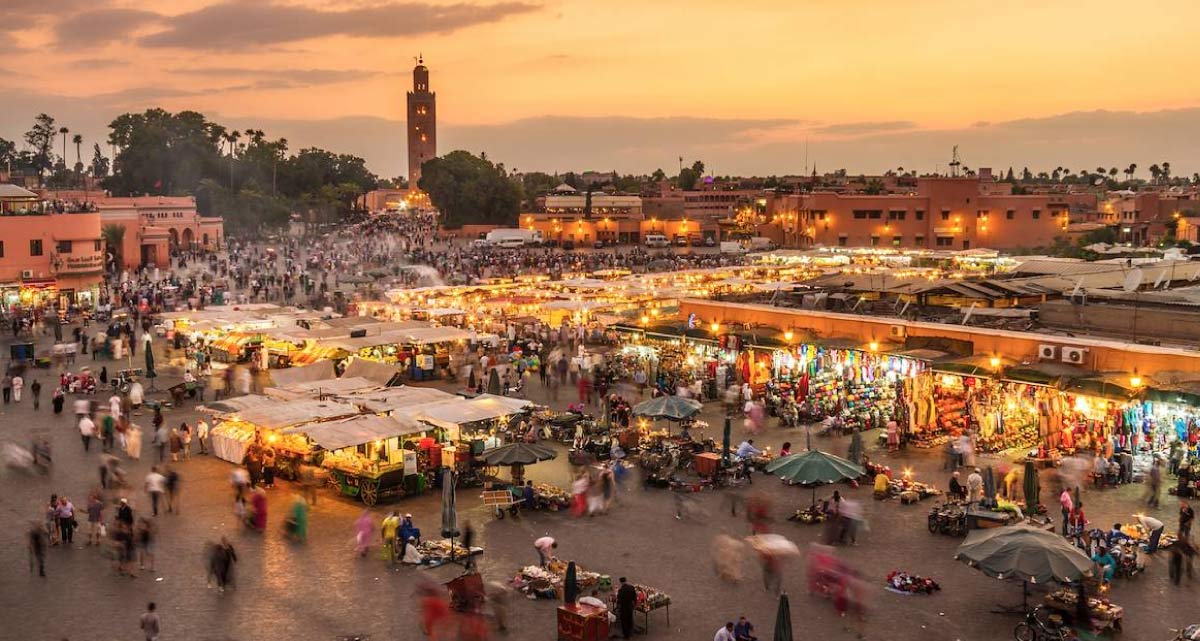
The Koutoubia Mosque is a good landmark for starting to get a feel for central Marrakech. Its minaret can be seen from several points near the medina and helps with orientation between the square, the gardens, and the surrounding avenues.
Non-Muslim travelers are usually limited to the exterior, so don't plan the day counting on entering the prayer hall. Walk through the gardens, take in the minaret, and continue toward Jemaa el-Fna.
Use this first stop to identify an easy meeting point. Inside the medina, a car doesn't always reach your accommodation's door, and knowing which entrance or square is closest to your riad makes it easier to get back at the end of the day.
Jemaa el-Fna during the day
Jemaa el-Fna serves as one of the medina's main landmarks. During the day, the square usually has vendors, stalls, residents passing through, and various services offered to visitors.
This first look is useful for understanding the souk entrances and finding your way back. The Marrakech Medina is part of the UNESCO World Heritage List, while the cultural space of Jemaa el-Fna is recognized as Intangible Cultural Heritage. Despite its tourist importance, the square remains a place of work, meeting, and daily life.
Agree on a price before accepting photos, performances, or any service. To avoid unexpected charges and to not encourage practices involving animals, don't interact with the monkeys or snake charmers.
First walk through the souks
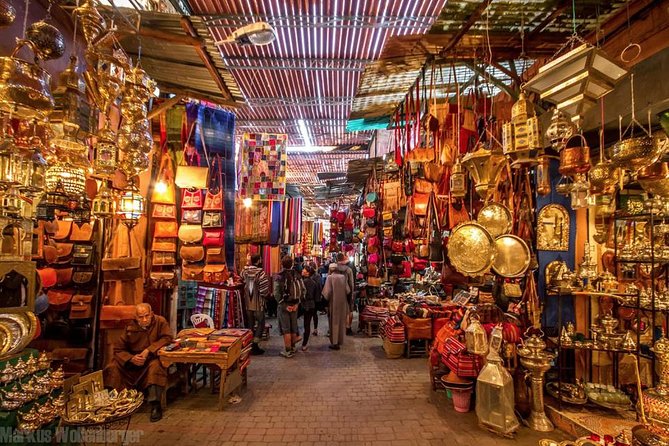
The souks of Marrakech form a network of commercial streets with fabrics, lanterns, ceramics, spices, leather goods, metalwork, and other products. Instead of trying to follow every street, pick a few main routes and note landmarks along the way.
Navigation apps help, but they can lose accuracy in narrow passages. Save your accommodation's location, take screenshots of your route, and ask your riad for the name of the nearest entrance reachable by car.
Motorbikes, bicycles, carts, and pedestrians share parts of the streets. Walk to the side when there's traffic, and avoid stopping in the middle of the flow to check your phone or take photos.
If you want to buy something, compare prices before negotiating. You're not obligated to complete a purchase after asking the price, but keep the conversation polite and don't take up a vendor's time when you're not really interested.
Lunch and a break inside the medina
Take a lunch break before continuing. Restaurants in interior courtyards and on rooftops offer a change of pace from the busy streets.
Don't choose a restaurant just for the view. Check the menu, confirm prices, and check whether any fees or service charges are disclosed before ordering.
Afternoon between the medina and the souks
After lunch, resume the walk with a flexible plan. The first day works better as an introduction to the city than as an attempt to see every monument.
Anyone who prefers a more structured walk can hire a licensed local guide for a few hours. Confirm the meeting point, duration, language, and what's included beforehand. Having a guide can help with orientation, but it doesn't make buying at the shops visited mandatory.
Set aside a break in the late afternoon. The heat, the crowds, and the constant attention needed to navigate make the medina more tiring than the distance covered would suggest.
Coffee with a view of Jemaa el-Fna
A rooftop terrace around Jemaa el-Fna lets you watch the shift from daytime activity to the setup of the night stalls. Arrive early if you want a table facing the square.
Some venues may require a minimum order or limit time at the most sought-after tables. Check the rules before sitting down, and choose another spot if the terms don't fit your budget.
Jemaa el-Fna at night
Return to the square after dark to find a different atmosphere from the one seen in the morning. Food stalls, musicians, vendors, and groups of visitors fill the space and make it busier to move around.
Anyone wanting to eat at the stalls should check prices before ordering and keep an eye on what's placed on the table. You can also take in the activity and have dinner at a nearby restaurant instead, a more comfortable option for those who prefer less approach from vendors.
Keep your phone and wallet secure in crowded areas. To get back to your riad, use a familiar route or arrange an accessible meeting point with your transport.
Majorelle Garden: Yves Saint Laurent Museum, Bahia Palace, and the Mellah
Booking the Majorelle Garden
The Majorelle Garden is one of Marrakech's most sought-after attractions and uses controlled entry. Book your ticket through the official channel in advance, choosing a date and time, especially during busier periods.
Don't count on showing up without a reservation and getting in right away. Keep the ticket on your phone, check the current rules, and plan your travel time to arrive before your slot.
The garden is outside the medina. Depending on where you're staying, a taxi or ride-hailing app can be more practical than trying to walk the whole way.
Majorelle Garden
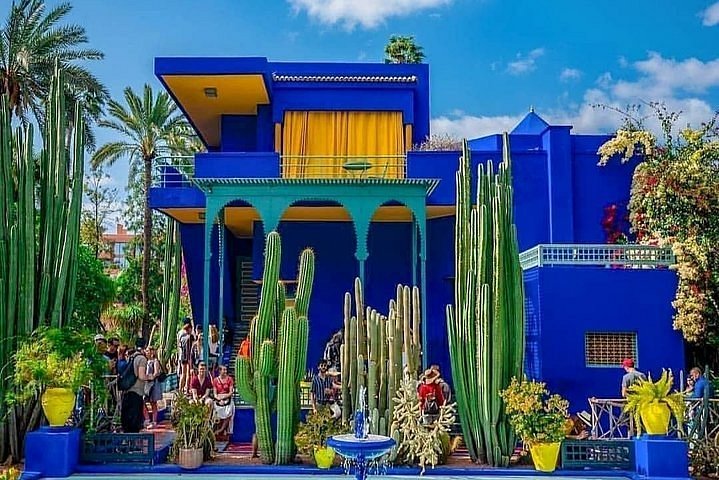
The garden brings together paths, cacti, botanical species, fountains, and buildings marked by the blue associated with artist Jacques Majorelle. The visit is relatively compact, but crowds can slow your pace and create lines at the most photographed spots.
Avoid blocking passages to get a photo, and respect areas where access isn't allowed. Anyone interested in Amazigh art and culture should check the ticket option for the Pierre Bergé Museum of Berber Arts, located inside the complex.
Yves Saint Laurent Museum
The Yves Saint Laurent Museum Marrakech sits close to the Majorelle Garden and presents work, documents, and exhibitions related to the designer. The visit is optional for anyone with no interest in fashion, but its proximity makes it easy to combine both in the same morning.
Tickets and access shouldn't be treated as automatically included with the garden entry. Check the official options and the calendar, since the museum usually doesn't open on Wednesdays and temporary exhibitions can change.
After these visits, have lunch in the area or head to the southern part of the medina. Factor in traffic when estimating the trip to the Bahia Palace.
Bahia Palace
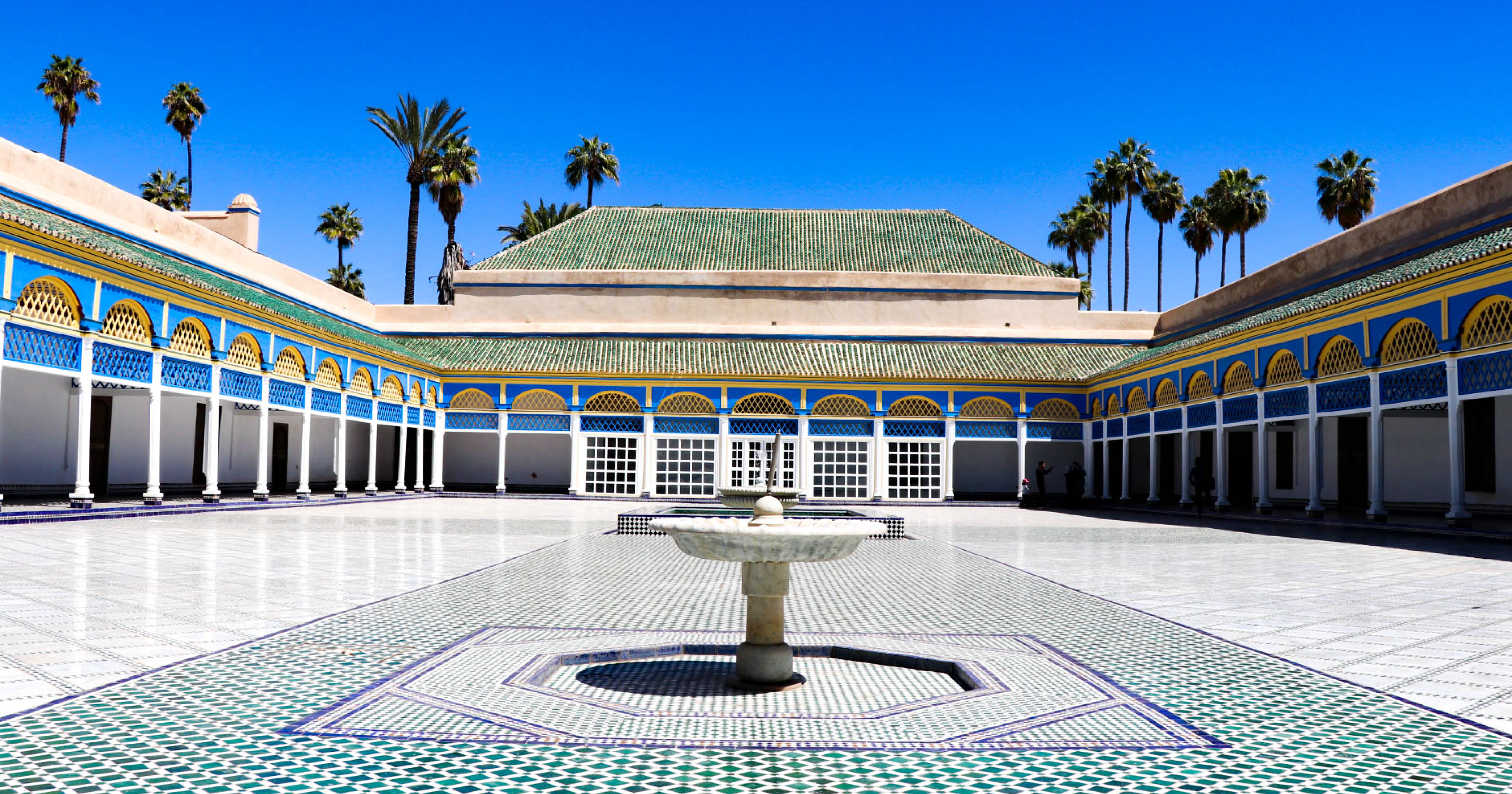
The Bahia Palace brings together courtyards, gardens, halls, woodwork, stucco, and mosaics. Part of the experience is in the architectural details, so there's no need to rush through the building.
The palace can host large groups and may occasionally have areas limited by maintenance or official activities. Confirm it's open on the day of your visit and consider swapping the order of the itinerary if there's a closure or long line.
Since the areas open to visitors can change, not every hall shown in older photos will necessarily be accessible. Enjoy the spaces open to the public at the time of your visit.
Walking through the Mellah
The Mellah is Marrakech's former Jewish quarter and sits close to the Bahia Palace. A short walk through the area can include commercial streets and the area around Place des Ferblantiers.
Anyone with a specific interest in Jewish history can check the visiting conditions for the Slat Al Azama Synagogue and the Jewish cemetery. Hours, entry rules, and operations should be confirmed locally.
Avoid treating the neighborhood as just a photo backdrop. Take in the everyday activity, ask permission before photographing people, and don't enter religious buildings without knowing the rules.
End of the second day
After the Bahia Palace and the Mellah, choose between heading back to your riad or having dinner at a restaurant in the medina. You don't need to return to Jemaa el-Fna every night.
A quieter evening helps balance the itinerary, especially since the third day goes back to walking, monuments, and souks.
Ben Youssef Madrasa: souks, Saadian Tombs, and El Badi Palace
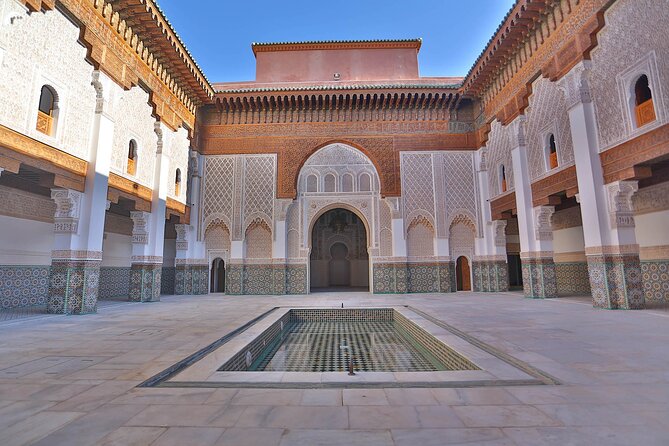
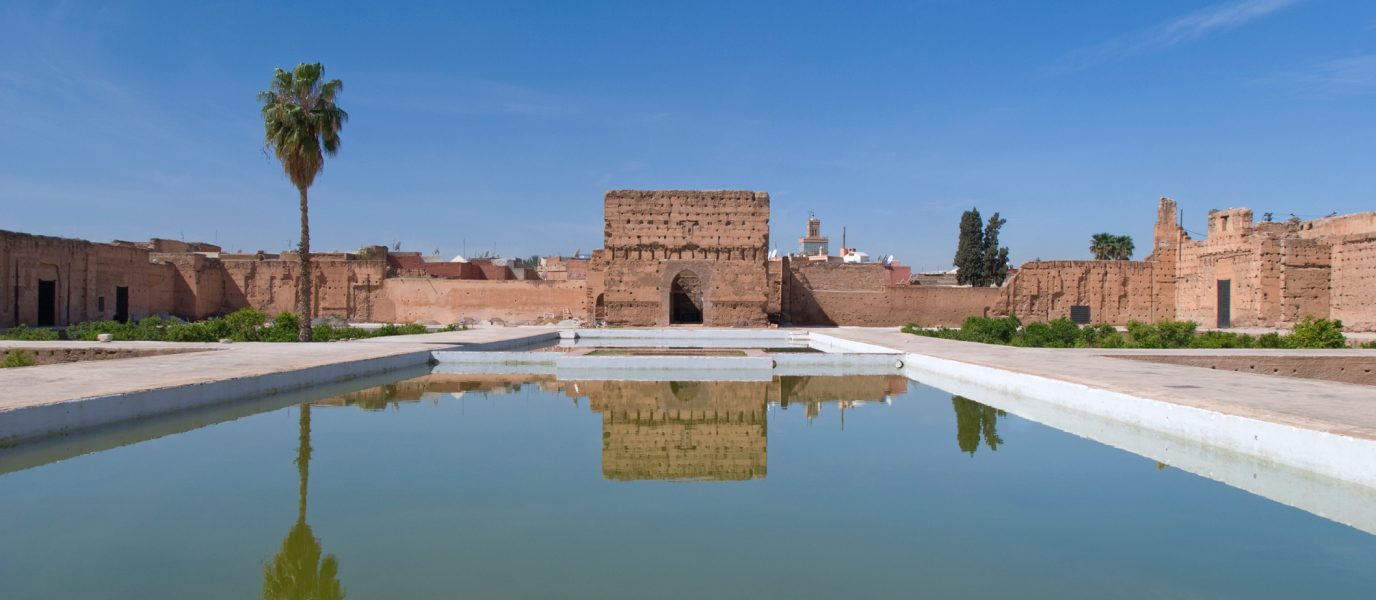
Ben Youssef Madrasa in the morning
The Ben Youssef Madrasa is a former Islamic school known for its central courtyard, inscriptions, woodwork, and geometric details. Starting early helps you see the spaces before larger groups arrive.
Check the official website for hours and the current way to buy tickets. Since the sales system can change, confirm before your visit whether tickets are available online or only at the entrance.
The visit includes stairs and former student rooms. People with reduced mobility should confirm in advance which areas are accessible.
Northern part of the medina
After the madrasa, walk through the northern part of the medina and head back to the souks. Since this is already the third day, it's easier to compare products and decide whether a purchase is really worth it.
Le Jardin Secret can be an optional stop for anyone wanting a break in a historic garden inside the medina. The attraction has its own ticket and seasonal hours, which should be checked on the official website.
If you have a flight or a trip the same day, don't make bulky purchases without considering luggage space, airline rules, and transport to the airport.
Heading to the Kasbah area
The Saadian Tombs and El Badi Palace are in the southern part of the medina. Take a lunch break and assess the time you have before crossing over to this area.
Anyone feeling tired can choose just one of the two attractions. The monuments offer different experiences, and skipping one is better than rushing through both.
Saadian Tombs
The Saadian Tombs preserve mausoleums and decorated spaces linked to the Saadian dynasty. The visitable area isn't very large, but lines can build up where the interiors are viewed through narrow passages.
Leave some buffer time and keep moving. If the line is long and you have a flight or transfer, prioritize whichever attraction matters most to you.
El Badi Palace
The El Badi Palace shows the ruins of a large palace complex, with walls, courtyards, and open areas. The visit contrasts with the Bahia Palace: here the interest lies in the scale and in reading what remains of the building, not in fully decorated rooms.
There's little shade in some parts. Bring water, sun protection, and avoid concentrating the whole visit during the hottest part of the day, especially in summer.
Check the last entry time and any restrictions before heading there. Maintenance and events can change which route is available.
Hammam or rest as an option
A hammam can replace part of the third day's sightseeing, especially after a long trip through Morocco. There are traditional establishments and spas set up for tourists, with important differences in facilities, privacy, and services.
Before booking, confirm whether the service is individual or shared, which treatments are included, how long it lasts, and what to bring. Don't schedule this activity right before your flight without leaving room for showering, changing, and getting there.
Leaving Marrakech
If Marrakech is the final stop of the trip, pack your bags before starting the third day and arrange with your accommodation where they'll be kept after checkout.
Cars usually can't get into every street of the medina. Confirm with your riad the exact meeting point for your taxi or transfer, and leave time to walk to the vehicle with your luggage.
Don't rely on a short traffic estimate as your only planning. Traffic on the avenues, airport access, and check-in procedures can take more time than expected.
What I would prioritize in this 3-day Marrakech itinerary
I would prioritize the first walk through the medina, seeing Jemaa el-Fna at two different times, and a visit to the souks with enough time to enjoy it.
Among the monuments, I would keep the Bahia Palace and the Ben Youssef Madrasa. Both offer different experiences and help you better understand Marrakech's historic architecture.
I would also book the Majorelle Garden in advance. Since it runs on entry time slots and gets a lot of visitors, it's the attraction that least suits last-minute decisions.
The rest should be adjusted to the pace of your trip. Marrakech is intense, and three days work best when they include breaks rather than a continuous string of visits.
What can be optional
The Yves Saint Laurent Museum is optional for anyone with no interest in fashion, design, or exhibitions. The Majorelle Garden can be visited independently, depending on the type of ticket chosen.
Le Jardin Secret and visits related to the Mellah's history can also be dropped if the day is full.
Anyone who prefers ruins can prioritize El Badi Palace. Anyone looking for decorated spaces can give more time to the Bahia Palace and skip El Badi.
The hammam doesn't need to take up the whole third day. It works better as a rest option than as a tourist obligation.
Mistakes that can make the itinerary tiring
The main mistake is trying to visit the Majorelle Garden, the palaces, the Ben Youssef Madrasa, the souks, and Jemaa el-Fna all in the same day.
Another problem is not booking the Majorelle Garden and planning the rest of the schedule counting on immediate entry.
Avoid following strangers who offer shortcuts or claim a street or attraction is closed. Confirm the information with your accommodation, an identified staff member, or the official ticket office.
Don't accept services, photos, or guidance without understanding whether there will be a charge. When you need help, ask the price first.
It's also not a good idea to walk back alone through unfamiliar streets late at night just because an app shows a shorter route. Use known routes and arrange accessible meeting points.
Finally, don't plan the third day without factoring in your flight time, baggage claim, and the route between your riad and the vehicle.
Travel planning for Marrakech: essential tips
Getting around
- Explore most of the medina on foot
- Use a taxi or app for the Majorelle Garden
- Save your riad's location and the nearest accessible entrance
- Arrange a meeting point when a car can't reach your accommodation
Tickets and hours
- Book the Majorelle Garden through the official channel
- Check the Yves Saint Laurent Museum's opening days
- Check the palaces' hours and last entry times
- Don't rely on old information about prices and access
Medina and souks
- Use Jemaa el-Fna and the Koutoubia as landmarks
- Download the map for offline use
- Agree on prices before accepting services
- Ask permission before photographing people or shops
Structuring the days
- Start early at the most popular monuments
- Take breaks during walks through the medina
- Avoid open areas during the hottest part of the day
- Leave margin for traffic, luggage, and the airport