Last updated: August 2026
Furong Ancient Town was one of the biggest surprises of my trip through China, and if I had to single out one moment, it would be the village at night. It's a historic town built on a cliff, with an enormous waterfall running through the centre, hence the nickname "waterfall town". It's in Hunan, between Zhangjiajie and Fenghuang, which makes it an easy stop to fit into the itinerary.
I reached Furong by train from Zhangjiajie. The journey is quick and comfortable, which makes Furong a very easy stop between Zhangjiajie and Fenghuang. A practical note: the station is a little outside the historic village, but there are taxis and other transport to complete the trip.
Entry to the village is paid. When I visited, the ticket cost around ¥108 (~$15), and I found it well worth it, mainly because it gives access to the whole historic area and the experience of seeing the town illuminated at night. It was one of the best-value tickets of the trip. Check the current price on the day, as prices may vary.
Furong Ancient Town 1-day itinerary: what to do day by day
Daily itinerary
Furong Ancient Town
Morning
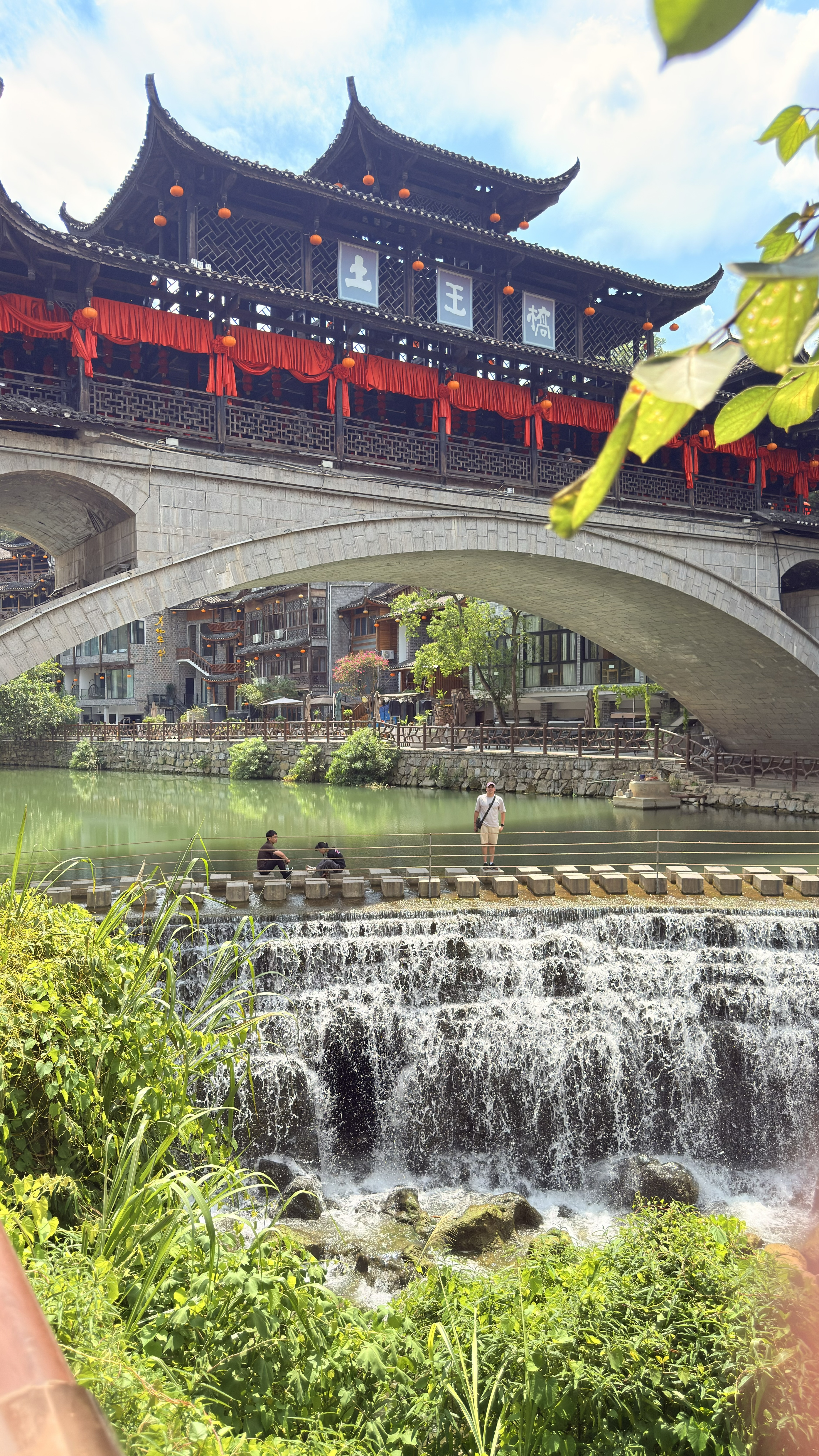
Tuwang Bridge
Historic bridge located near the village center, with a panoramic view of the river and traditional buildings. It is one of the best spots to understand the unique geography of Furong Ancient Town.
Wuli Street
The cobblestone street that is the heart of the village, with craft shops and local food. Here I tried rice tofu, one of Furong's specialities, and liked it a lot. The region's cuisine leans towards Hunan style, so expect spicy dishes. To be honest, the highlight of Furong for me wasn't the food, but the atmosphere of the village.
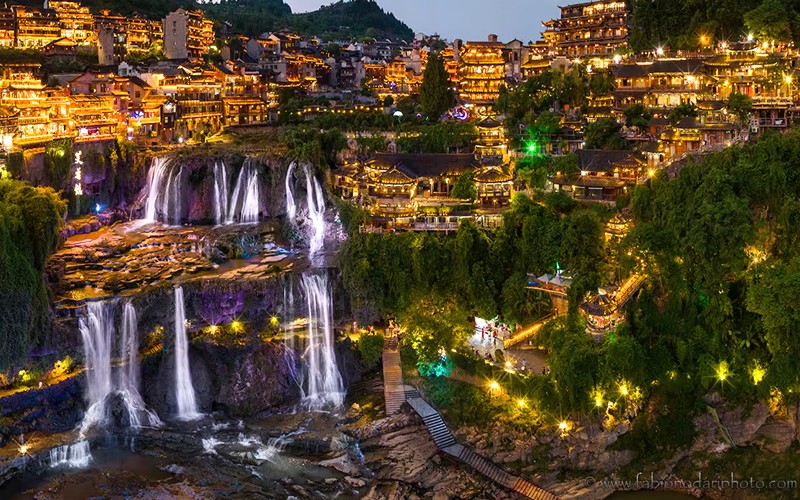
Furong Waterfall
The main attraction: a huge waterfall that runs through the village. It's impressive at any time, but one of the coolest things is that there's a passage behind the waterfall, which lets you see the falling water from a completely different angle. It was one of the parts I enjoyed most.
Waterfall Viewing Platform
An elevated viewpoint overlooking the waterfall, perfect for panoramic photos and observing the town from different angles.
Afternoon
Tusi Residence
Traditional residence representing the history of ancient local leaders, with architecture typical of the Tujia culture.
Youyang Palace
Historic palace that preserves cultural and decorative elements of the region, offering a glimpse into local tradition.
Tusi Palace
Ancient administrative and ceremonial center, with spaces that reflect the political and cultural organization of the era.
Xizhou Bronze Pillar
An important historic monument that symbolizes the cultural identity of the region and its ancestral heritage.
Traditional Courtyards
A cluster of ancient houses and courtyards showcasing traditional lifestyles, with well-preserved architectural details.
River God Cave
A natural cave tied to local legends, with interesting rock formations and an atmosphere quite different from the rest of the village.
Night
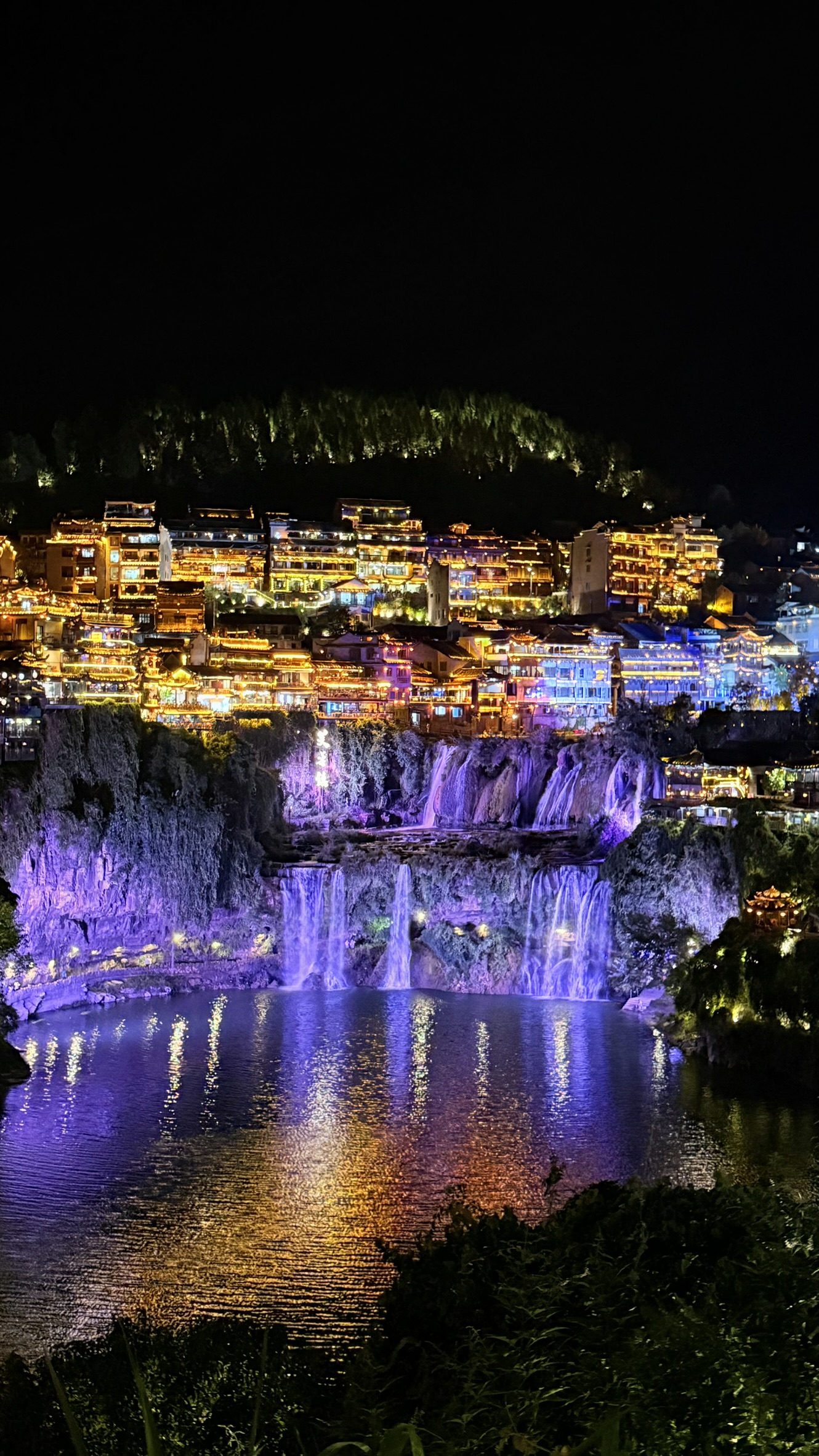
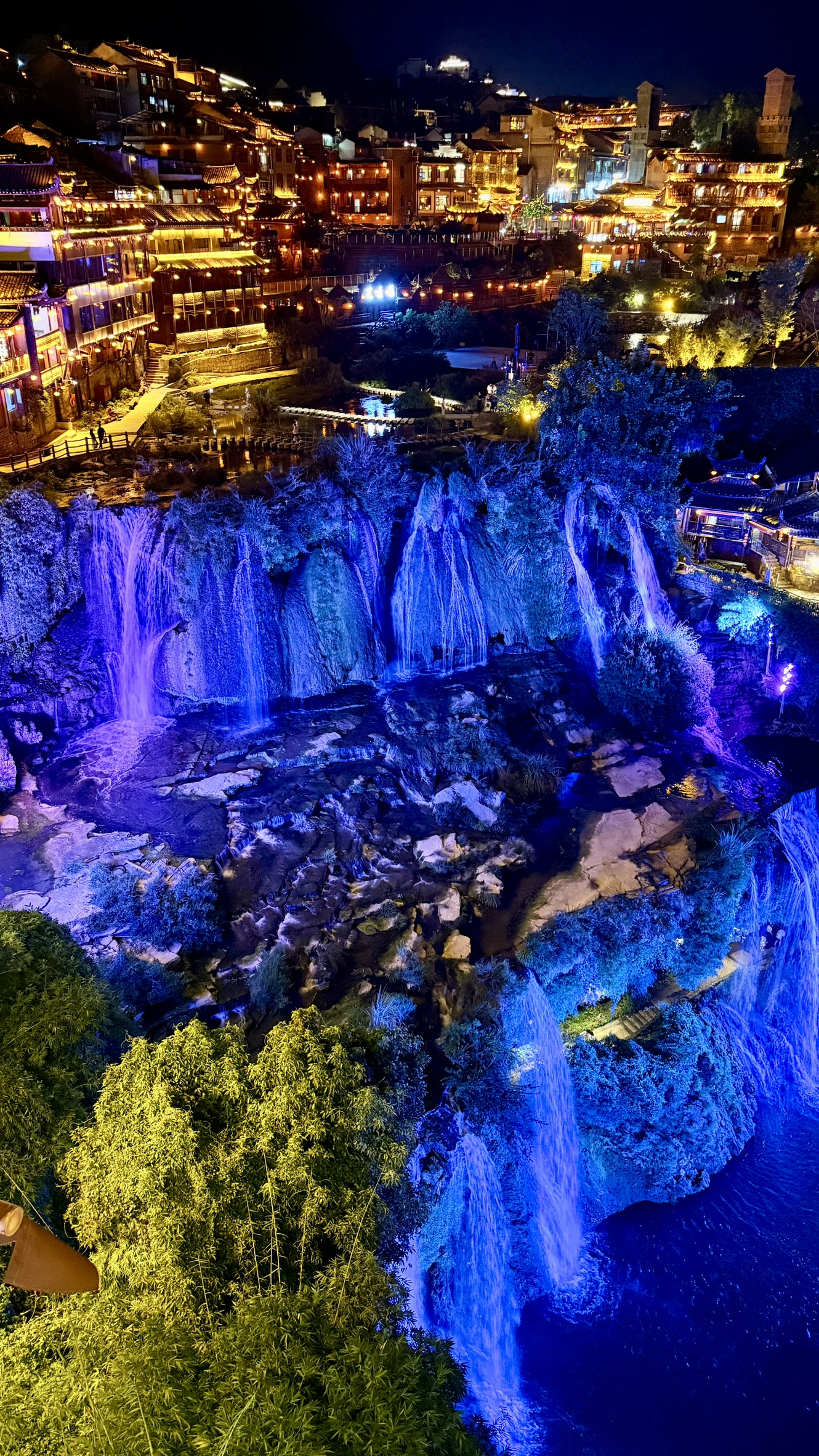
Wuli Street and Tuwang Bridge at night
This is the reason not to leave before nightfall. The waterfall, already beautiful by day, changes completely when the lights come on: there's coloured lighting, mainly in shades of blue and purple, accompanied by ambient music, creating a very special atmosphere. It was one of the most memorable memories of the whole trip and, for me, one of the most beautiful places I visited in China. The streets and restaurants also come alive. Don't leave Furong before seeing this.
Practical tips for visiting Furong Ancient Town
Furong Ancient Town is a compact and very photogenic village, everything is a few minutes' walk away, and the waterfall cutting through the centre is the most singular element of the place. One well-used day is enough to see the best of the village.
Getting there
- I arrived by train from Zhangjiajie; the station is outside the village, with taxi or bus to the centre
- Within the village everything is done on foot, the distances are short
- Combining Furong with Fenghuang is possible via a direct route between the two
Tickets
- Entry is paid: around ¥108 (~$15) when I visited, with access to the waterfall
- Buy the ticket at the main box office right at the entrance
- Accommodation inside the village offers better value than staying outside
Best time
- Early morning: waterfall with fewer visitors and good natural light
- At night: the lighting transforms the village, unmissable for photos
- Arriving in the early afternoon lets you see both the day and the night
Best views
- Wuli waterfall in the centre of the village: Furong's most unique sight
- Tuwang Bridge at night: illuminated bridge with the waterfall behind
- Stone streets with Tujia architecture: every alley is a different scene