Last updated: August 2026
Pingyao was one of the most peaceful cities of my whole trip through China, and that was exactly what made it special. It's the best-preserved ancient city in the country, a UNESCO World Heritage Site, with a Ming dynasty wall of over 6 km surrounding a historic centre of stone streets, temples and old mansions.
I arrived from Xi'an late at night and just slept; I used the whole next day to explore the city at a relaxed pace and left for Beijing the following morning by high-speed train. In practice, Pingyao takes up two nights in the itinerary, but you only need one full day to visit. I stayed in a hotel outside the ancient city and even so it was very easy to see everything on foot. One thing that struck me: at night, after the tour groups left, the city became even quieter.
1-day itinerary in Pingyao: what to do day by day
Daily itinerary
Pingyao Ancient City
Morning
Pingyao City Wall
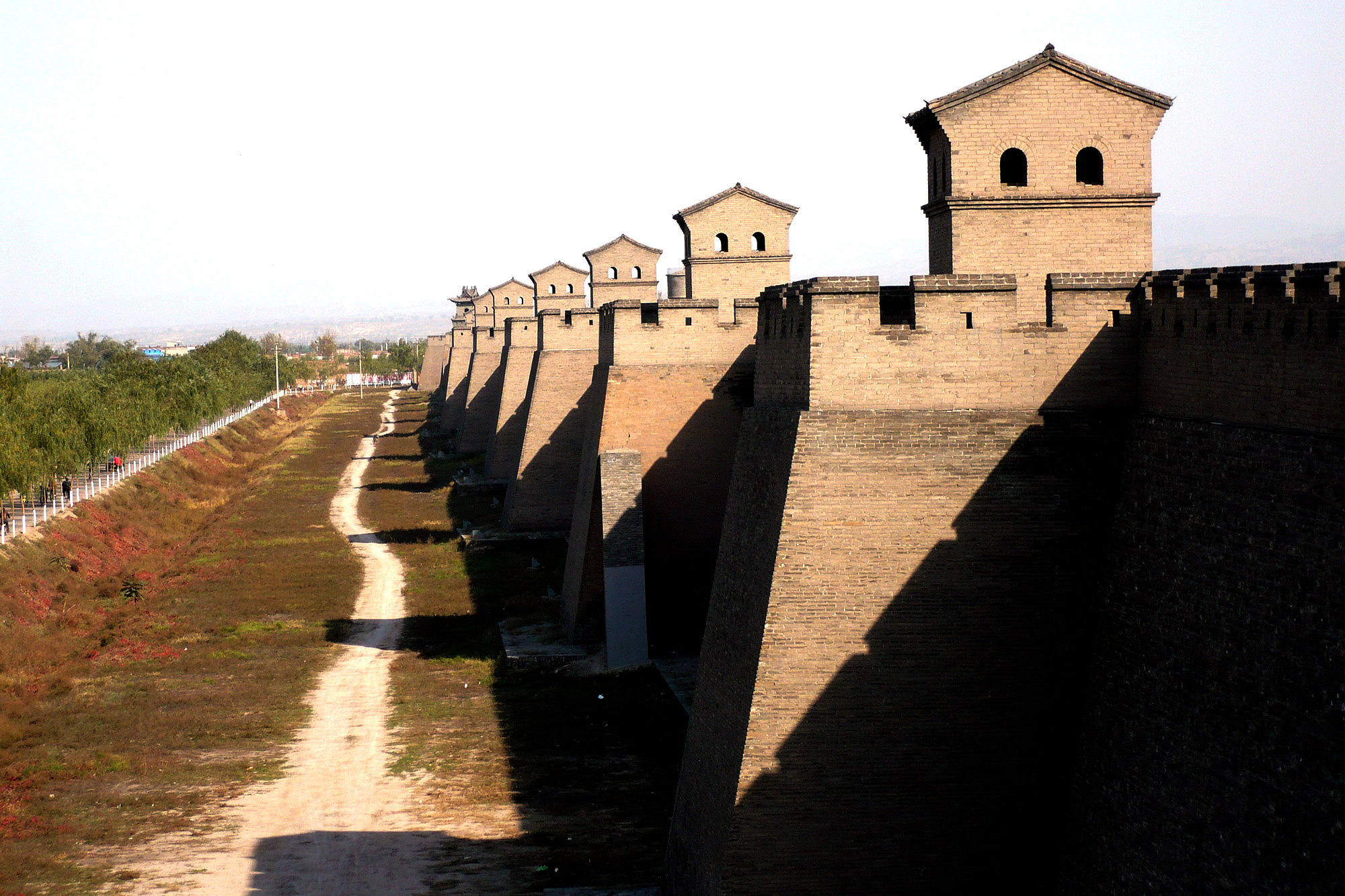
I climbed the wall and walked along part of it. The view of the old rooftops and the streets really helps you understand how the city was organised centuries ago. It's not a difficult walk, and it's worth setting aside time for it; it was one of the parts I enjoyed most. The wall stretches more than 6 km and was built during the Ming dynasty over 600 years ago.
Afternoon
Historic centre and temples
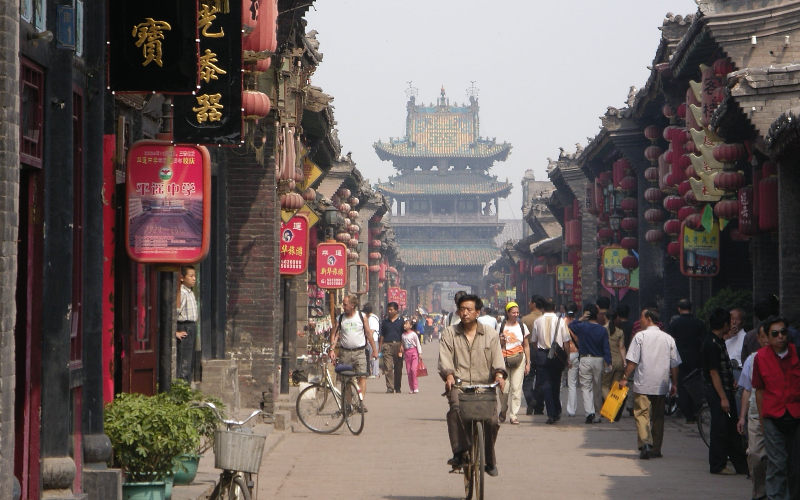
Inside the walls, the stone streets lead to temples, merchant mansions and the old Yamen. I visited the Rishengchang, considered China's first bank, along with other buildings tied to the city's financial past, and really enjoyed this part. It helps you understand why Pingyao was one of the main financial centres of imperial China. The courtyards, halls and preserved buildings complement the visit very well.
Night
Main street at nightfall
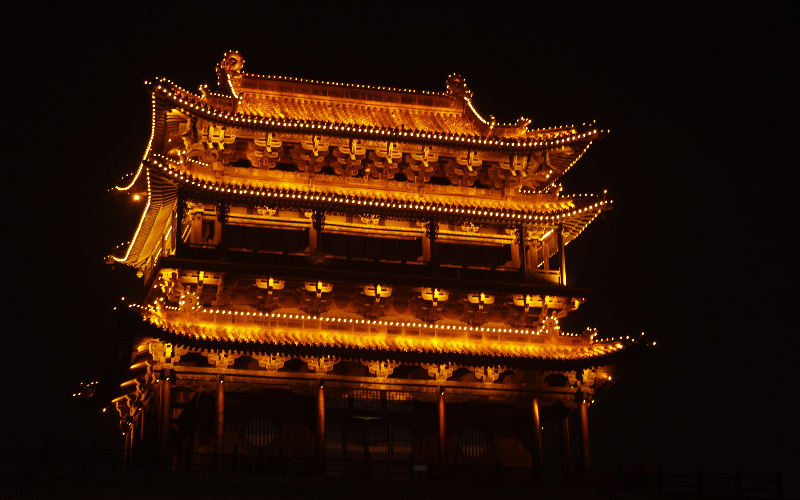
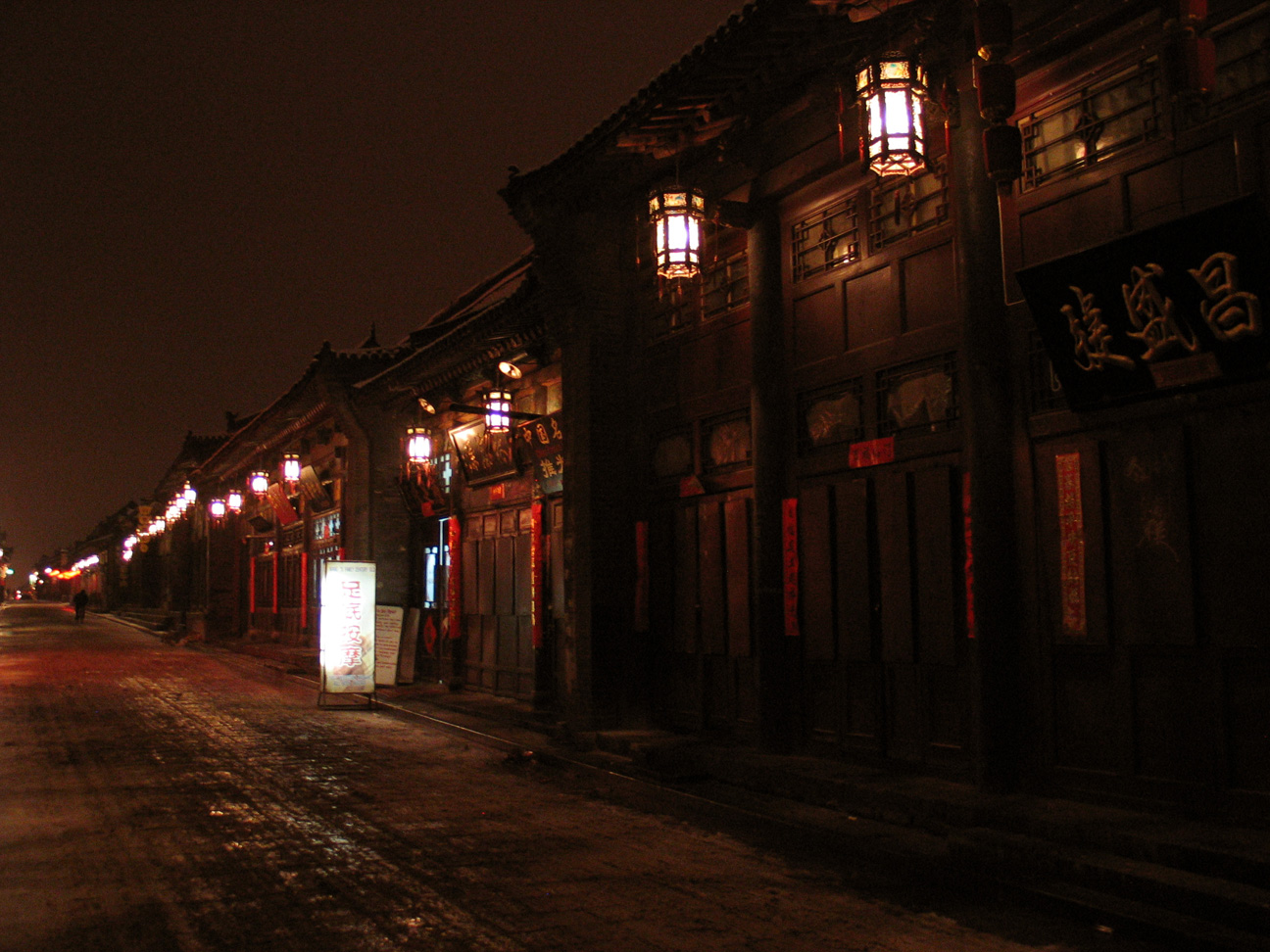
What struck me most about Pingyao was the tranquillity. At night, hundreds of red lanterns light up the main street and the city takes on a completely different atmosphere, one that takes you straight back to Imperial China. It was one of the calmest cities I visited in China, and I really enjoyed simply walking through the old streets looking at the illuminated buildings. After the big cities of the itinerary, it was a very welcome change of pace.
Ticket
Entry to Pingyao is via a combined ticket that gives access to the main historic attractions: the wall, the old banks, the temples and other preserved buildings. When I visited, it cost around ¥125 (~$18), and I found it worth it, mainly because I ended up visiting several of the buildings. Check the current price on the day, as prices may vary.
Food and impressions
It's worth trying the famous Pingyao beef, one of the specialities of Shanxi province, which I enjoyed a lot. But, to be honest, what made Pingyao special for me wasn't the food, it was the feeling of walking through a city that seems frozen in time. Pingyao doesn't have the visual impact of Zhangjiajie or the grandeur of Beijing, and that's exactly why it works so well in the itinerary: after so many big cities and so much nature, it's the calm pause.
Practical tips for visiting Pingyao
Pingyao is the best-preserved walled city in China, everything you see inside the walls is over 600 years old. One day is enough to walk the wall, explore the historic centre and experience the city's unique atmosphere at night.
Getting there
- From Xi'an or Beijing, high-speed train to Pingyao Ancient City, about 2h to 3h
- The station is outside the walls; taxi or rickshaw to the centre takes 5 to 10 minutes
- Within the historic city everything is done on foot
Tickets
- Combined ticket: around ¥125 (~$18) when I visited, covering the wall, banks, temples and mansions
- Buy it right at the city entrance; most monuments are included
- Sleeping inside the walls is more immersive, but I stayed outside and visited everything on foot without any problem
Best time
- Wall in the early morning: few people and good light for panoramic photos
- Historic centre in the afternoon: shops and temples with calmer movement
- Main street at night: red lanterns lit, don't leave before seeing it
Best views
- Top of the wall: panoramic view of the black Ming and Qing era rooftops
- Nan Dajie street at night: aligned red lanterns creating a tunnel of light
- Inner courtyards of the mansions: preserved architecture without excessive tourists