Last updated: August 2026
The Terracotta Army was one of the attractions that most exceeded my expectations in all of China. It's Xi'an's top attraction: thousands of life-size soldiers, built over 2,000 years ago to protect Emperor Qin Shi Huang in the afterlife, and only discovered in 1974. I visited on 1 September and, even though it's one of the most famous places in the country, I found the visit surprisingly peaceful.
It's a UNESCO World Heritage Site and one of the greatest symbols of Chinese history. I'll tell you how my visit went and what's worth knowing before you go.
Is the Terracotta Army worth visiting?
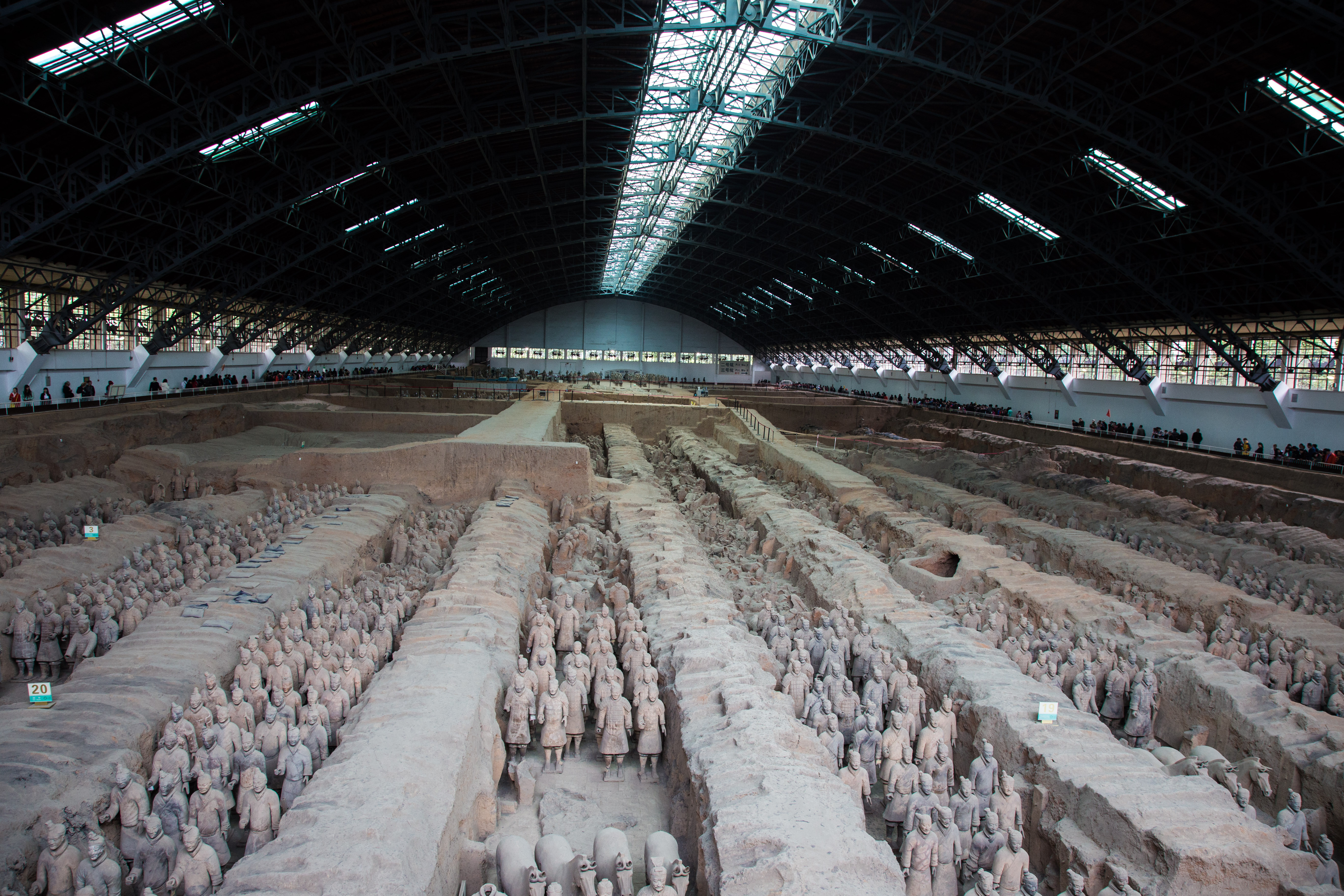
Yes, without question; for me it was one of the attractions that most exceeded my expectations. The impact of seeing the warriors lined up in Pit 1 for the first time is hard to compare with anything else. And the detail that surprised me most: every soldier has unique features, the facial expression, the posture and the armour are different on each one. Every face is different from the next.
What is the Terracotta Army?
The Terracotta Army is part of the funerary complex of China's first emperor, Qin Shi Huang. The site includes thousands of statues of warriors, horses and chariots, each with unique individual details. The complex also encompasses the Qin Shi Huang Mausoleum Archaeological Park (Lishan Garden), accessible with the same ticket.
How to get to the Terracotta Army
The site is around 35 km from central Xi'an. The main options are:
- Metro + local bus, Metro Line 4 to Huaqingchi station, then a tourist bus to the museum; the most budget-friendly option
- Taxi or Didi, more comfortable and direct, around ¥100 (~$14) one way
- Organised tour or private transfer, ideal for those wanting a guide and hassle-free logistics
The journey takes about 1 hour, depending on traffic. In my case, I went by DiDi on my own from central Xi'an, and found it far more practical than relying on a tour.
Tickets
- High season (March–November): ¥150 (~$21)
- Low season (December–February): ¥120 (~$17)
- The ticket includes access to all three pits, Lishan Garden and the shuttle bus between the two sites
Extras charged separately:
- Electric cart from the entrance to the museum: ¥5 (~$1) per person
- Audio guide: recommended for a deeper understanding of the site's history
Tickets must be purchased online in advance, they are not available at the ticket office on the day. Book at least 3 to 5 days ahead; during national holidays, reservations may need to be made up to 15 days in advance. Buy on Trip.com or the museum's official website.
How the visit works
The complex is divided into three pits (or vaults). I'll say upfront that Pit 1 was by far the one that impressed me most; the other two are worth seeing, but have less impact:
- Pit 1, the largest and most impressive, with hundreds of soldiers lined up in formation
- Pit 2, featuring different military formations and partially excavated figures
- Pit 3, considered the command headquarters of the army, with fewer figures but great historical significance
Pit 1 is the largest and far bigger than I imagined, with hundreds of warriors lined up; it was the real highlight. Pits 2 and 3 are smaller and, in my opinion, less striking, but they help you understand the whole. Don't miss the Bronze Chariots Exhibition either, which sits in a separate area from the pits: I took the complex's internal transport to get there and found it well worth it, it shows a different part of the history and complements the visit to the warriors nicely.
How long to spend
The official website suggests 2 to 3 hours, but I spent between 4 and 5 hours at the complex and found it the ideal amount of time to see everything at a relaxed pace, take photos and observe the details of each area, including the Bronze Chariots. You can do it in less time, but if you like visiting without rushing, set aside the whole morning. Counting the travel from Xi'an, it easily fills half a day.
Best time to visit
- Right at opening (8:30 AM), smallest crowds, no queues at the main pits
- Low season (December–February), quieter experience and cheaper tickets
- Avoid national holidays and July/August, the site becomes extremely crowded
Practical tips
- Bring your passport, it is required for entry and ticket verification
- I didn't use an audio guide, I preferred to explore at my own pace reading the available information; but if you like in-depth historical context, a guide or audio guide enriches the visit
- Wear comfortable footwear, the complex involves a lot of walking
- Avoid weekends and Chinese public holidays whenever possible