Last updated: June 2026
I reached Samarkand by train from Bukhara and immediately noticed how different it felt from Khiva and Bukhara. It is larger and more spread out, with more than 2,500 years of history as a major cultural, scientific and commercial centre of the ancient Silk Road.
I visited in April 2026, when the mild weather was comfortable for walking and exploring the monuments. I stayed at the Nursultan Grand Guest House, which was conveniently located for the route. Unlike compact Khiva and Bukhara, Samarkand has longer distances between some attractions, so taxis or ride-hailing apps can save time.
I visited the principal sights in one full day. Two days would provide a more relaxed pace, but a well-planned single day can include Registan Square, Gur-e-Amir, Bibi-Khanym, Siyob Bazaar and Shah-i-Zinda, followed by a return to Registan after dark.
1-day Samarkand itinerary: what to do day by day
Day-by-day itinerary
- Day 1, Main tourist spots of Samarkand and complete route through the city
Samarkand in 1 day
Morning
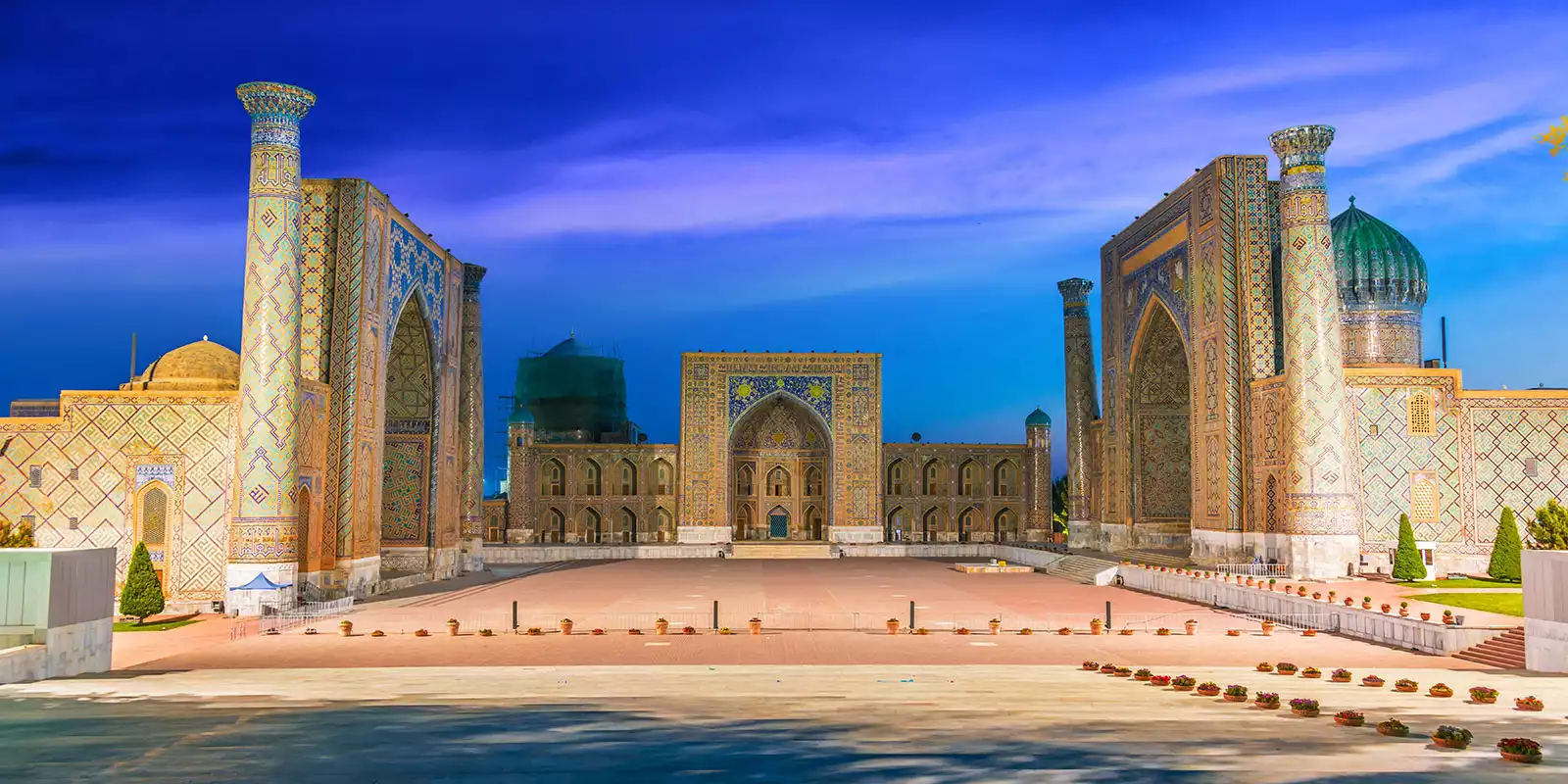
Registan
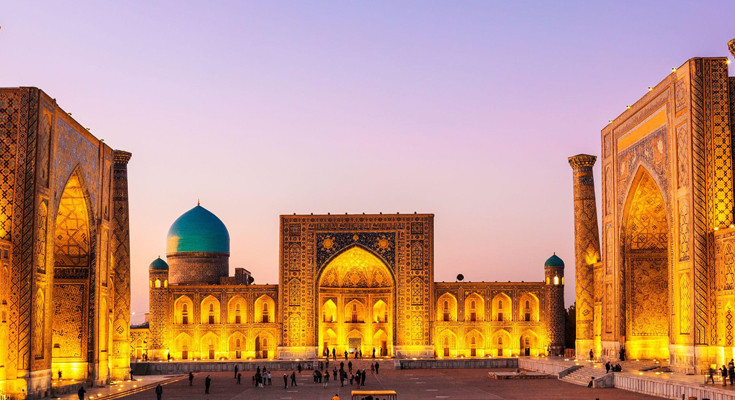
The main landmark of Samarkand and one of the most impressive architectural ensembles in the world. I'd seen many photos, but in person the square is much larger and more striking; for me it exceeded expectations. It brings together three monumental madrassas in a single square, and it's worth going inside them, not just staying outside.
Ulugh Beg Madrasah
Built in the 15th century, it was one of the leading educational institutions of the Islamic world. It represents Samarkand's importance as a scientific centre during the Silk Road, with geometric tiles and an imposing facade facing the square.
Sher-Dor Madrasah
Known for its decorative details with lion figures, something rare in Islamic architecture and which makes the Registan ensemble even more unique. Built in the 17th century, it's one of the most photographed madrassas in Samarkand.
Tilya-Kori Madrasah
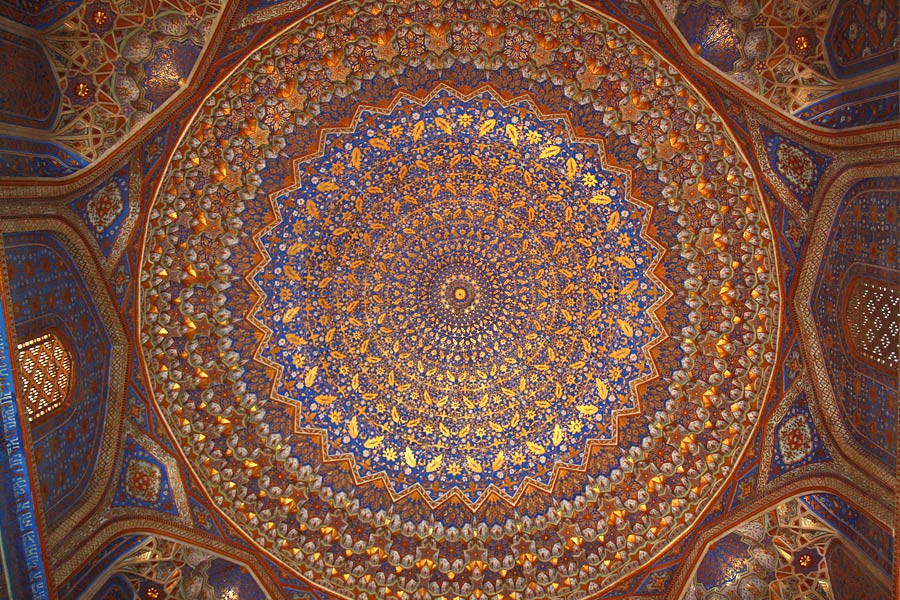
Famous for its golden interior, which was one of the spots that struck me most at the Registan. The gold and blue decoration covering the ceiling and walls creates a unique atmosphere in Central Asia. Don't miss going inside.
Sunset in Samarkand
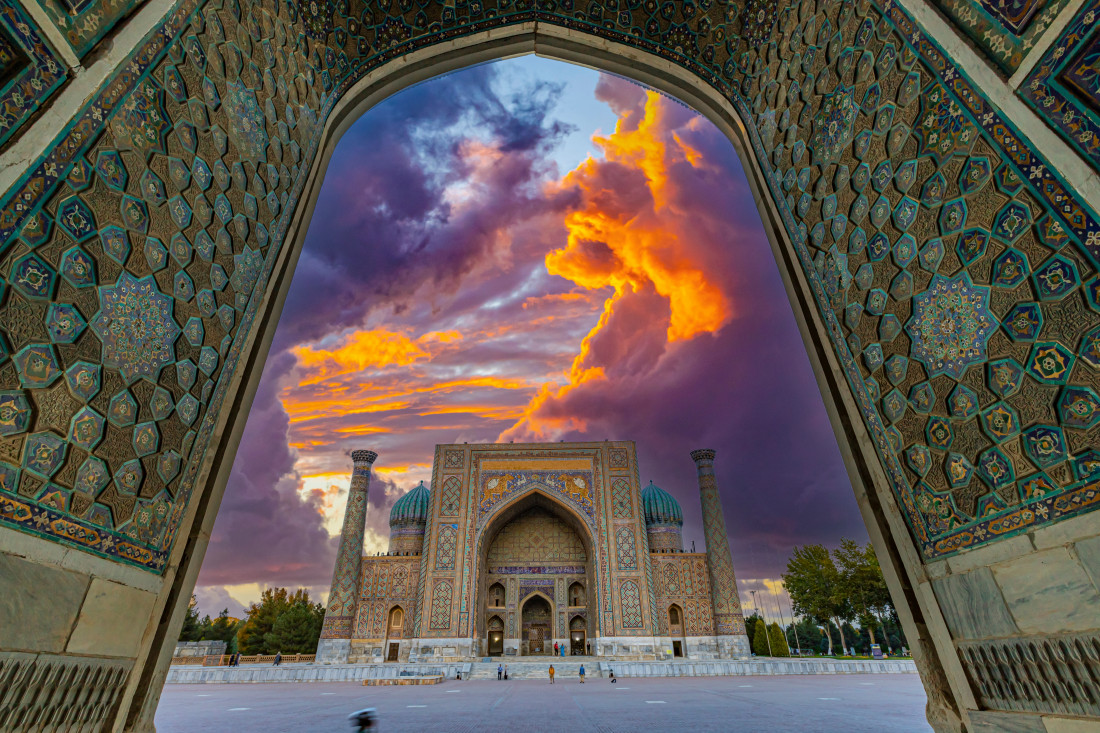
Dusk in Samarkand is one of the most photogenic moments in Uzbekistan. The golden light bathes the turquoise domes and the minarets of the city, creating a scene hard to find anywhere else in Central Asia. It's worth positioning yourself near the Registan or the Gur-e-Amir to enjoy the spectacle.
Gur-e-Amir Mausoleum
The mausoleum of Tamerlane, with the iconic blue dome that became a reference for the funerary architecture of Central Asia. It struck me a lot, both for its historical importance and for the decoration, which is very beautiful. It's one of the most significant monuments in Samarkand, built in the early 15th century.
Bibi-Khanym Mosque
One of the largest mosques in the Islamic world at the time of its construction, commissioned by Tamerlane in the late 14th century. Its monumental scale reflects the power of Samarkand during the Silk Road, with an entrance gate over 35 metres high.
Siyob Bazaar
A traditional market still in operation next to the Bibi-Khanym Mosque. I went and recommend it: it's a good place to see local life and try typical products. It's worth trying non bread, that traditional round bread of Uzbekistan, very common in the markets and part of the experience.
Afternoon
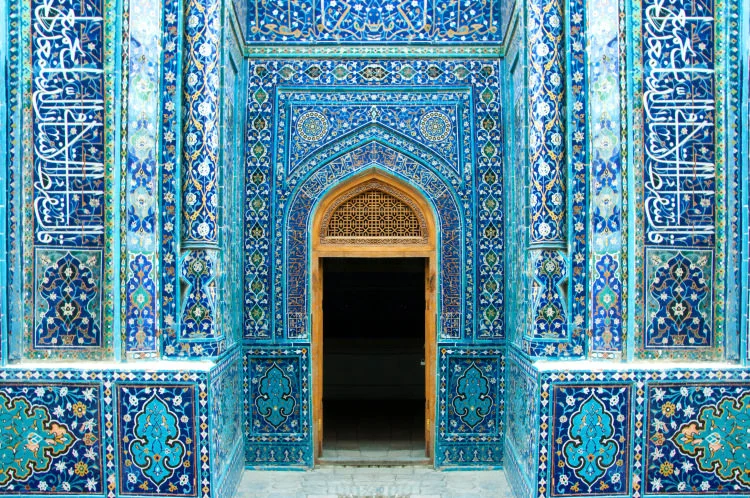
Shah-i-Zinda
One of the most beautiful spots in Samarkand, made up of a corridor of mausoleums with blue tiles of exceptional detail. It was among my favourites in the city. Remember it's a sacred place: go with appropriate clothing, covering shoulders and knees, and a calm demeanour.
Hazrat Khizr Mosque
A mosque located on a high point, offering one of the best panoramic views of Samarkand. A quick stop, but with one of the most photogenic scenes on the route, with Shah-i-Zinda in the background.
Ulugh Beg Observatory
One of the most important observatories in Central Asia, built in the 15th century by Tamerlane's grandson. It shows the scientific progress of Samarkand during the Silk Road and houses a museum with historic astronomical instruments.
End of the day
Return to the hotel or a break to rest before exploring the city again at night.
Night
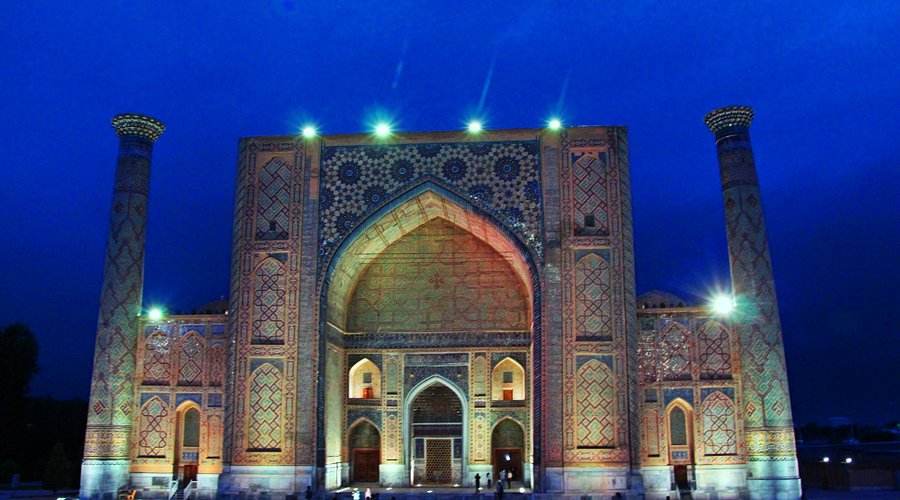
Registan illuminated
Coming back to the Registan at night was my favourite moment in Samarkand. The lighting highlights every detail of the architecture of the three madrassas and creates one of the most impressive scenes in Uzbekistan, completely different from what you see during the day. Don't leave the Registan for the day only: come back at night.
Practical tips for visiting Samarkand
Samarkand is one of the most impressive cities in Uzbekistan, with monuments spread across different areas. Although it's bigger than Bukhara and Khiva, I managed an efficient route in 1 day with good planning. I went in April and got great weather.
Getting around
- I arrived from Bukhara by train; the attractions in Samarkand are further apart
- Use a taxi or app between the more distant attractions to save time
- Combining walking + transport makes the day much easier
Tickets
- Most monuments charge individual entry (the Registan ~65,000 UZS when I went)
- Start with the main spots to avoid queues
- Bring cash to make payment easier
Best time
- Start early, the 1-day itinerary is packed
- Take breaks throughout the day, especially in summer
- Late afternoon and night have the best light on the monuments
Best views
- Registan: the main spot, and illuminated at night it was my favourite
- Shah-i-Zinda: corridor with the most beautiful tiles in Uzbekistan
- Hazrat Khizr Mosque: panoramic view of Samarkand