Last updated: August 2026
In 10 days, this route combines Yerevan, southern Armenia, Lake Sevan, Dilijan and the historic monasteries of the north, using overnight stops in Goris and Dilijan to avoid unnecessary return journeys.
Armenia is a small destination on the map, but very rich in history, culture, mountain landscapes and ancient monasteries. In a single trip, it is possible to visit one of the world's oldest capitals, explore temples and monasteries built among mountains, see Mount Ararat up close, cross scenic roads, pass through volcanic formations, canyons, cave villages, lakes, forests and mountainous regions of the Caucasus.
This 10-day Armenia itinerary passes through some of the country's most impressive places, including Yerevan, Echmiadzin, Zvartnots, Garni, Geghard, Khor Virap, Areni, Noravank, Goris, Tatev, Khndzoresk, Lake Sevan, Sevanavank, Dilijan, Haghartsin, Goshavank, Haghpat, Sanahin and Akhtala.
Ten days are enough to see a very complete part of Armenia without turning the trip into a rush. The secret is to build a logical route, using Yerevan as the entry point, doing the main excursions from the capital, heading south to Goris and Tatev, crossing the country towards Lake Sevan and Dilijan, visiting the historic monasteries of the north and returning to Yerevan at the end.
For a first trip through Armenia, I would not try to do everything as a day trip from Yerevan. The capital is an excellent base at the start, but some regions are too far for that kind of itinerary. Sleeping in Goris and Dilijan makes the trip more comfortable, reduces tiring transfers and helps you get to know the country better beyond the capital.
This itinerary is ideal for those visiting Armenia for the first time and who want to combine culture, history, nature, monasteries, mountains, traditional towns, lakes and scenic roads in a single trip.
How this Armenia itinerary was planned
This 10-day Armenia itinerary was planned with a focus on logistics, strategic bases and realistic travel times.
Armenia looks small on the map, but many places are in mountainous regions, on rural roads or in remote areas. Because of this, the best way to organise the trip is not just to look at the distance in kilometres, but to understand where it makes sense to sleep.
Yerevan works very well at the start because it is the country's main gateway, has the most important airport, good hotel infrastructure, restaurants, cafés, transport, tour agencies and easy access to the classic excursions.
Goris works as a base for southern Armenia. Tatev, Wings of Tatev and Khndzoresk are far from Yerevan, so sleeping in Goris makes this part of the itinerary much more comfortable.
Dilijan works as a base for the green, mountainous north. The town combines well with Lake Sevan, Sevanavank, Haghartsin, Goshavank, Parz Lake, Old Dilijan and the historic monasteries of the north.
The last night in Yerevan is important to make the departure safer. This way, you avoid a long transfer on the same day as your flight.
10-day Armenia itinerary: day-by-day overview
Day by day itinerary
- Days 1 to 4: Yerevan and surroundings, with Republic Square, Cascade Complex, Echmiadzin, Zvartnots, Garni, Geghard, Khor Virap, Areni and Noravank
- Days 5 and 6: Goris and southern Armenia, with Vardenyats Pass, Orbelian Caravanserai, Wings of Tatev, Tatev Monastery and Khndzoresk
- Days 7 and 8: Dilijan and Lake Sevan, with Sevanavank, Haghartsin, Goshavank, Parz Lake, Old Dilijan and forests
- Day 9: Historic monasteries of the north, with Haghpat, Sanahin, Akhtala and return to Yerevan
- Day 10: Last day in Yerevan, with markets, cafés, Blue Mosque, GUM Market, Vernissage Market, Cascade Complex and departure
Where to sleep in Armenia in 10 days
For this 10-day Armenia itinerary, the best division of bases is to spend 4 nights in Yerevan at the start of the trip, 2 nights in Goris, 2 nights in Dilijan and 1 final night in Yerevan before departure.
Yerevan works as the country's main gateway and the best base for exploring the capital and doing the classic excursions to Echmiadzin, Zvartnots, Garni, Geghard, Khor Virap, Areni and Noravank.
Goris is the best base for exploring southern Armenia, especially Tatev, Wings of Tatev and Khndzoresk. Sleeping in Goris makes the itinerary more comfortable and avoids a very tiring day trip from Yerevan.
Dilijan is the best base for exploring the green region of northern Armenia, including Lake Sevan, Sevanavank, Haghartsin, Goshavank, Parz Lake, Old Dilijan and the historic monasteries of the north.
The last night in Yerevan is important to make the trip safer and more relaxed before the flight, avoiding long transfers on the same day of departure.
Yerevan and surroundings: capital, monasteries, Mount Ararat and classic excursions
Yerevan deserves at least 4 nights at the start of the Armenia itinerary. The capital is the country's main gateway and has the best infrastructure for starting the trip at an easy pace.
The city is packed with hotels, restaurants, cafés, markets, museums, squares, pink stone architecture and views of Mount Ararat on clear days. Yerevan is also the best base for several classic excursions, such as Echmiadzin, Zvartnots, Garni, Geghard, Khor Virap, Areni and Noravank.
I would keep Yerevan at the start of the itinerary because it avoids changing hotel every day and makes arrival in the country more practical. It also helps you understand Armenian culture better before heading to more distant regions, such as Goris, Tatev, Lake Sevan and Dilijan.
Yerevan, centre, squares and cafés
Yerevan is the best place to start a trip through Armenia. The first day should be lighter, especially just after arriving by air or while still adjusting to the country's pace.
I would use this day to walk through the centre, get to know the main urban areas and start to get a feel for the capital's atmosphere. I would not schedule any long excursion on the first day, because that can make the start of the trip tiring.
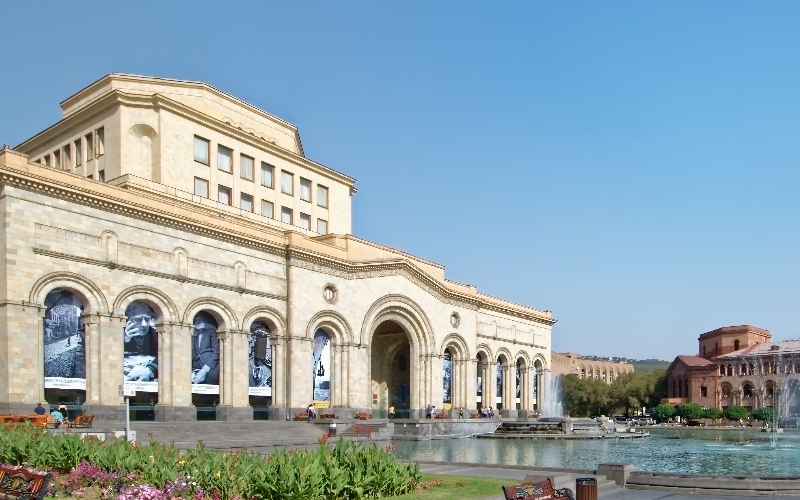
Republic Square is Yerevan's main square and one of the most important places in the capital. It is surrounded by government buildings, museums, hotels and fountains. At night, the square becomes even more beautiful and lively, so it is worth passing through again at the end of the day.
The Cascade Complex is one of Yerevan's most famous attractions. The great staircase connects the lower part of the city to a higher area, with sculptures, gardens and a panoramic view of the capital. On clear days, Mount Ararat can appear in the background, making the view even more special.
The Cafesjian Center for the Arts is located in the Cascade Complex area. Even for those who don't go inside the museum, the outdoor area alone is worth the visit for its sculptures, gardens and pleasant atmosphere.
Northern Avenue is a pedestrian street connecting Republic Square to the Opera House area. It is one of the city's most modern areas, with shops, cafés, restaurants and plenty of activity.
The Opera House is one of Yerevan's main cultural buildings. The surrounding area is good for walking, eating and getting a feel for the capital's rhythm.
Mother Armenia can be added if there is time and energy left. The monument sits in a high area of the city and offers a view of Yerevan from above, along with a link to the country's Soviet history.
Yerevan's cafés are also part of the experience. The capital has a strong café and restaurant culture, so the first day is ideal for a relaxed dinner and starting the trip at an easy pace.
What I would prioritise on day 1
I would prioritise Republic Square, Northern Avenue, Opera House and the Cascade Complex. These places give a good first impression of Yerevan without making the day too heavy.
What can be optional on day 1
Mother Armenia can be optional on the first day. I would only include it if you arrive early or still have energy after walking through the centre.
Echmiadzin, Zvartnots and the Armenian Genocide Memorial
The second day of the itinerary can be dedicated to Echmiadzin, Zvartnots and a few important places in Yerevan. This is one of the easiest excursions from the capital, because the attractions are relatively close together and don't require a long transfer.
Echmiadzin is one of Armenia's most important religious centres and holds great value for the Armenian Apostolic Church. For anyone wanting to understand the country's Christian identity, this visit makes a lot of sense.
Echmiadzin Cathedral is one of the most important religious buildings in Armenia. It is an essential place for understanding the history of the Armenian Apostolic Church and the importance of Christianity in the country's culture.
The Echmiadzin area also has several historic churches linked to Armenian religious tradition. Depending on the time available, it is worth including more than one in the excursion, but without turning the day into a tiring sequence of churches.
The ruins of Zvartnots Cathedral are one of the most beautiful archaeological sites near Yerevan. The columns and ruins in an open area create a very photogenic landscape, quite different from the intact churches.
After the excursion, I would include the Armenian Genocide Memorial in Yerevan. This is one of the most important and moving visits in the capital. The site helps you understand a fundamental part of the history and identity of the Armenian people.
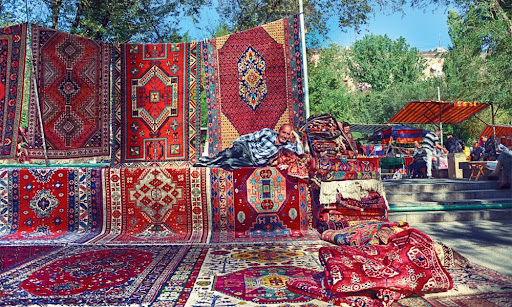
If there is still time, the Vernissage Market can be added at the end of the day. It is an open-air market ideal for finding crafts, souvenirs, paintings, carpets, jewellery, wooden objects and local products.
In the evening, it is worth returning to the centre, having dinner and walking again through Republic Square, Northern Avenue or the Opera House area.
What I would prioritise on day 2
I would prioritise Echmiadzin, Zvartnots and the Armenian Genocide Memorial. This combination makes the day strong on history, religion and cultural identity.
What can be optional on day 2
The Vernissage Market can be optional on this day. If the excursion runs long or you are tired, leave the market for the last day in Yerevan.
Garni, Symphony of Stones and Geghard
The third day is one of the best excursions from Yerevan. The itinerary combines Garni Temple, Symphony of Stones and Geghard Monastery, three attractions in the same direction that work very well together on the same day.
This is one of the most classic excursions for first-time visitors to Armenia. It shows a mix of ancient history, religious architecture, volcanic landscapes and mountains, without requiring a very heavy transfer from the capital.
Charent's Arch is a viewpoint on the road between Yerevan, Garni and Geghard. On clear days, it offers a beautiful view of Mount Ararat and the surrounding landscape. I would include this stop if visibility is good.
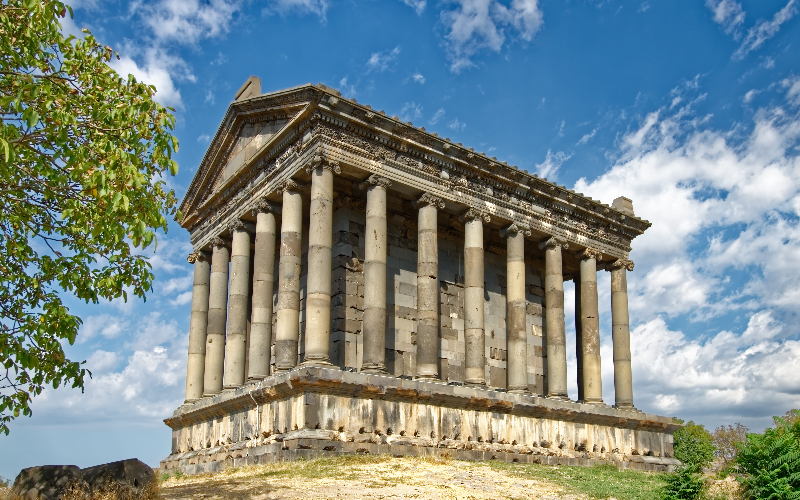
Garni Temple is one of Armenia's most famous monuments. The temple stands out for its classical columns and its different look compared to the country's churches and medieval monasteries.
Symphony of Stones is a natural basalt formation near Garni. The vertical stone columns resemble a huge natural organ and form one of Armenia's most unusual landscapes.
Garni Gorge, the area around Symphony of Stones, is also worth visiting for its volcanic landscape, rocky walls and different atmosphere.
Geghard Monastery is one of Armenia's most important monasteries. Part of the complex was carved into the rock, which makes the visit even more impressive. The road and the surroundings of the monastery are part of the experience, with mountains, valleys, cliffs and a more isolated feel.
After the excursion, the ideal is to return to Yerevan and use the evening for dinner or another walk through the centre.
What I would prioritise on day 3
I would prioritise Garni Temple, Symphony of Stones and Geghard Monastery. This is the combination that makes the day really complete.
What can be optional on day 3
Charent's Arch can be optional if the weather is overcast. The stop makes more sense when there is good visibility of Mount Ararat.
Khor Virap, Areni and Noravank
The fourth day is another essential excursion from Yerevan and one of the most beautiful on this 10-day Armenia itinerary. The route combines Khor Virap, Areni and Noravank, bringing together views of Mount Ararat, a wine region, caves, canyons and one of the country's most photogenic monasteries.
Khor Virap Monastery is one of Armenia's most iconic places. The monastery is near the border with Turkey and is famous for its view of Mount Ararat. Even though it lies outside Armenia's present-day borders, Ararat holds enormous symbolic importance for the country.
The Khor Virap area is one of the best places to photograph Mount Ararat. If the day is clear, I would set aside enough time to enjoy the landscape.
Areni Cave is an archaeological site near the village of Areni. It can be included as a short stop for anyone interested in history and ancient human habitation.
The Areni wine region is one of Armenia's best-known wine areas. Depending on the pace of the excursion, it is possible to do a quick tasting or visit a local winery.
Noravank Monastery is one of Armenia's most beautiful monasteries. Its location among red canyons makes it one of the most striking stops on the itinerary. The road to the monastery is also part of the experience, with rock formations, intense colours and a dramatic landscape.
After a full day, the ideal is to return to Yerevan, rest and prepare for the departure to Goris the following day.
What I would prioritise on day 4
I would prioritise Khor Virap and Noravank. If the sky is clear, the view of Mount Ararat from Khor Virap can be one of the most memorable moments of the trip.
What can be optional on day 4
Areni Cave and wine tasting can be optional, depending on the time available and your interest.
Goris, Tatev and Khndzoresk: Armenia's most impressive south
Goris deserves 2 nights on this Armenia itinerary. The town is the best base for exploring Tatev, Wings of Tatev and Khndzoresk without having to do a very tiring day trip from Yerevan.
This region shows a more remote and dramatic side of the country, with mountains, canyons, old villages, caves, scenic roads and one of Armenia's most famous monasteries.
Sleeping in Goris makes the itinerary more comfortable and lets you make the most of the south of the country. If you try to visit Tatev out and back from Yerevan on the same day, the trip can become too long.
Yerevan to Goris, Vardenyats Pass and Orbelian Caravanserai
The fifth day marks the transition between the Yerevan-based part of the itinerary and the deeper journey through Armenia's interior. Instead of trying to fit too many attractions into a single day, I would use this transfer between Yerevan and Goris as part of the experience.
The main route passes through Vardenyats Pass, also known as Selim Pass, and Orbelian Caravanserai. This way, the day stays interesting without becoming too tiring.
The road from Yerevan to Goris is one of the most important transfers of the trip. The route is long, but the landscape changes a great deal along the way, making the journey part of the itinerary.
Vardenyats Pass, also known as Selim Pass, is a mountain crossing connecting the central region to southern Armenia. It is a scenic part of the trip, with mountains, scenic roads and a real sense of the interior.
Orbelian Caravanserai is an old caravan stop linked to historic trade routes. It is one of the most interesting visits on the road to Goris and helps you understand the importance of the ancient routes that once crossed the region.
The road has good scenic stops, especially in the mountainous areas. It is worth keeping some flexibility for photos and breaks.
Shaki Waterfall can be added as an optional stop if you leave early and have time. It works better as a flexible extra than as an obligation.
Jermuk can also be interesting, but I would leave it for an 11- or 12-day itinerary. On a 10-day trip, including Jermuk can make the transfer too heavy.
At the end of the day, the goal is to arrive in Goris calmly, check in, rest and get ready for Tatev and Khndzoresk the following day.
What I would prioritise on day 5
I would prioritise the road from Yerevan to Goris, Vardenyats Pass and Orbelian Caravanserai. The main goal of the day is to cover a long transfer without turning the trip into a rush.
What can be optional on day 5
Shaki Waterfall can be optional if there is time. I would leave Jermuk out of this 10-day itinerary to keep the trip more comfortable.
Tatev, Wings of Tatev and Khndzoresk
The sixth day is one of the highlights of this Armenia itinerary. It is dedicated to the Goris, Tatev and Khndzoresk region in the south of the country.
This part of the trip brings together some of Armenia's most dramatic scenery, with canyons, mountains, old villages, caves and one of the country's most famous monasteries.
Sleeping in Goris makes all the difference on this itinerary. Tatev is far from Yerevan, and visiting the region as a day trip from the capital can be too tiring. Setting off from Goris, the day becomes much more comfortable and well spent.
Goris is a peaceful town in southern Armenia and the best base for visiting Tatev and Khndzoresk. The surrounding region has rocky formations, mountains and beautiful landscapes.
Wings of Tatev is one of Armenia's most famous cable cars. It connects the Halidzor area to Tatev Monastery and offers wide views over the valley.
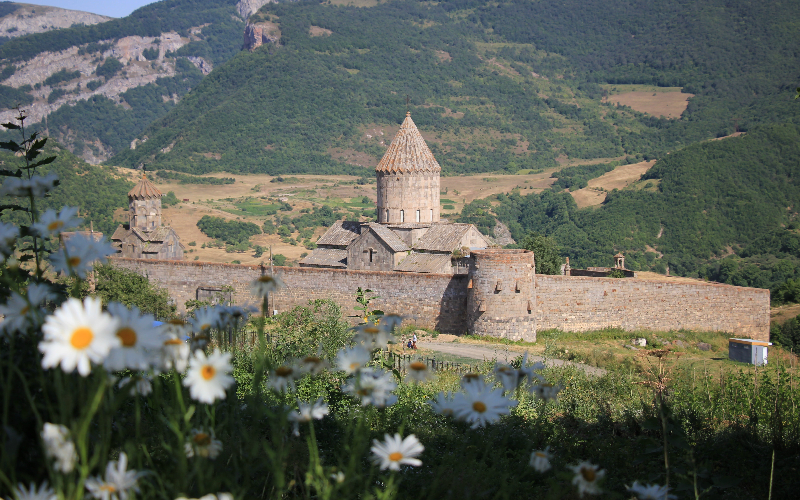
Tatev Monastery is one of Armenia's most important and impressive monasteries. Its location on the edge of a gorge makes the visit even more special.
Vorotan Gorge, the valley around Tatev, is one of the main reasons to include this region in the itinerary. The landscape is wide, dramatic and very different from the Yerevan area.
Old Khndzoresk Cave Village is an old cave village near Goris. The place shows a different side of Armenia's history and traditional life.
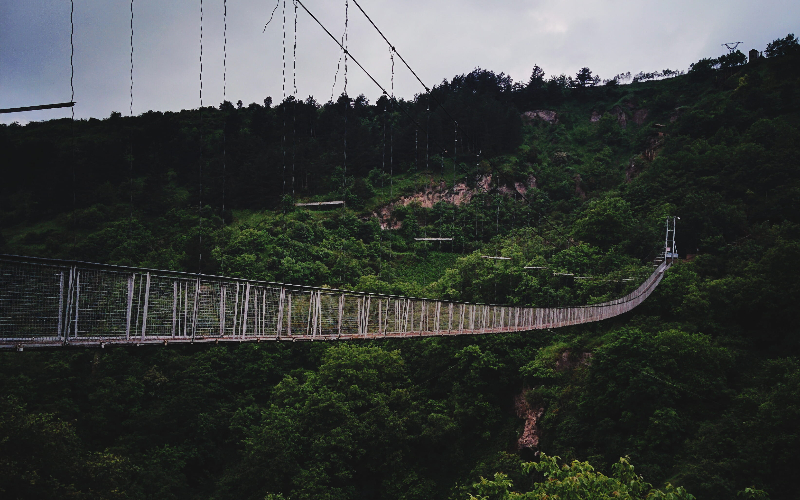
Khndzoresk Swinging Bridge is a pedestrian suspension bridge connecting parts of the old cave village area. It is one of the most unusual stops in southern Armenia.
If there is time left at the end of the day, it is worth stopping at a Goris viewpoint to see the town and the surrounding rock formations.
The second night in Goris avoids rushing and makes the itinerary more comfortable before the long journey north.
What I would prioritise on day 6
I would prioritise Wings of Tatev, Tatev Monastery, Vorotan Gorge and Old Khndzoresk Cave Village. These are the strongest highlights of southern Armenia.
What can be optional on day 6
Extra viewpoints in Goris can be optional if the day is running long or the weather is not cooperating.
Dilijan, Lake Sevan and forest monasteries: Armenia's green side
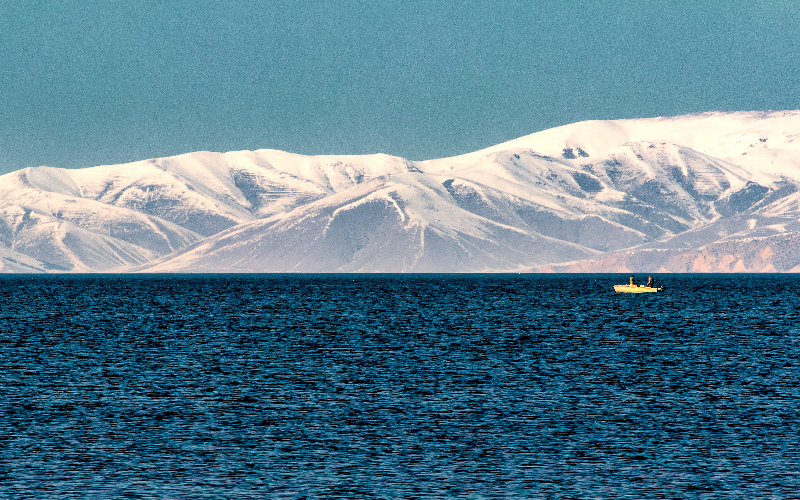
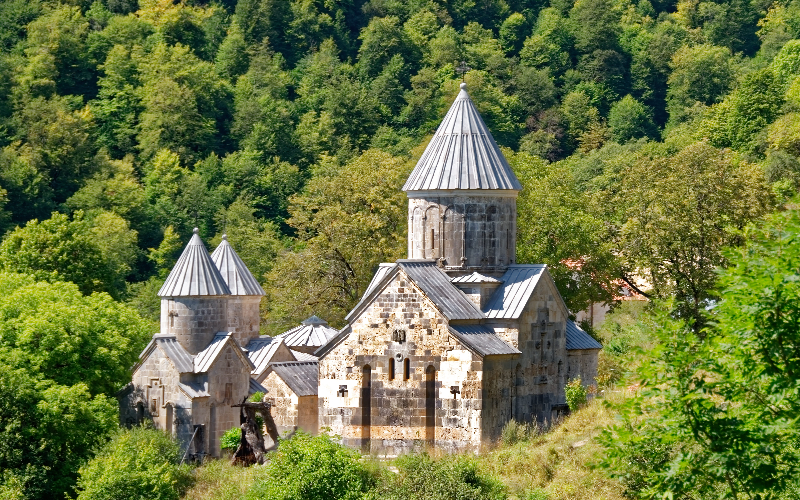
After the days in Yerevan and southern Armenia, Dilijan completely changes the pace of the trip. The town sits in a greener, more mountainous and tranquil region, with forests, lakes, monasteries, trails and a cooler climate.
Dilijan deserves 2 nights on this itinerary because it is one of the best bases for exploring Armenia's green side. The town combines very well with Lake Sevan, Sevanavank, Haghartsin, Goshavank, Parz Lake and Old Dilijan.
This part of the trip helps balance the itinerary. After long roads, canyons, dry landscapes and monasteries in open regions, Dilijan brings a calmer, more natural atmosphere.
Goris to Dilijan via Lake Sevan
The seventh day is one of the longest transfers on the itinerary, but it makes sense because it connects southern Armenia to the northern region without needing to go back to Yerevan.
The route can include Lake Sevan and Sevanavank Monastery before arriving in Dilijan. This day works best with a rental car or private driver, because by public transport the journey between Goris and Dilijan can require connections and become more complicated.
The road from Goris to Lake Sevan connects two very different regions of Armenia. The journey is long but interesting, especially because the landscape changes a great deal along the way.
Lake Sevan is Armenia's largest lake and one of the country's main natural landscapes. Its blue waters, cooler climate and surrounding mountains make it an essential stop.
Sevanavank Monastery sits on a peninsula on the shores of Lake Sevan. It is one of the country's best-known and most accessible attractions, with a very beautiful view of the lake.
Noratus Cemetery can be added as an optional stop if you leave early and have time. The cemetery is known for its khachkars, the traditional Armenian stone crosses.
At the end of the day, the itinerary arrives in Dilijan, one of Armenia's greenest and most tranquil regions. The town is known for its forests, mountains, fresher air and relaxed atmosphere.
The first night in Dilijan allows you to explore the region better the following day, rather than turning it all into a quick pass-through.
What I would prioritise on day 7
I would prioritise Lake Sevan, Sevanavank and arriving in Dilijan without rushing.
What can be optional on day 7
Noratus Cemetery can be optional if the journey is going smoothly. If the day is already long, I would not force this stop.
Dilijan, Haghartsin, Goshavank and Parz Lake
Dilijan is one of the best bases for exploring Armenia's greener, more tranquil side. After several days of monasteries, roads, canyons, dry valleys and dramatic landscapes, the town brings forests, lakes, mountains and a calmer pace.
The eighth day can be dedicated to the Dilijan region, including Haghartsin Monastery, Goshavank Monastery, Parz Lake and Old Dilijan. It is a lighter day, but still full of important attractions.
Old Dilijan is a small area with traditional-style buildings, cafés, craft shops and a pleasant atmosphere. It is a good area for an unhurried walk.
Haghartsin Monastery is one of the most beautiful monasteries near Dilijan. It is surrounded by mountains and forests, creating an atmosphere very different from monasteries in drier regions.
Goshavank Monastery is another important monastery in the Dilijan region, linked to the religious and educational history of medieval Armenia.
Parz Lake is a small lake surrounded by forest. It is a good stop for walking, taking photos and resting a little among nature.
Dilijan National Park, the area around the town, is part of a natural area with trails, forests and mountain landscapes.
The cafés in Dilijan also deserve some time. The town has a slower pace than Yerevan and is good for enjoying a relaxed afternoon or evening.
The second night in Dilijan makes the northern part of the itinerary less rushed and stops the town from being just a quick stop.
What I would prioritise on day 8
I would prioritise Haghartsin Monastery, Goshavank Monastery, Old Dilijan and Parz Lake, if the weather is good.
What can be optional on day 8
Parz Lake can be optional in case of rain or if you would rather spend more time in Old Dilijan. Dilijan National Park can also be explored at a more relaxed pace on a longer trip.
Haghpat, Sanahin, Akhtala and return to Yerevan
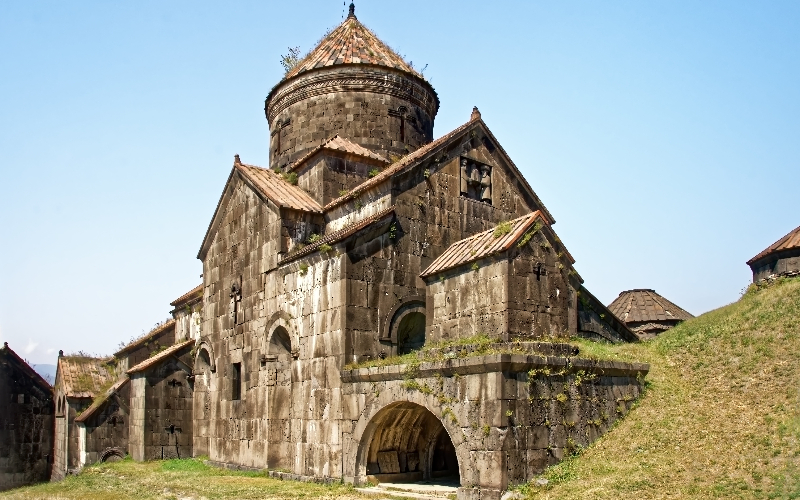
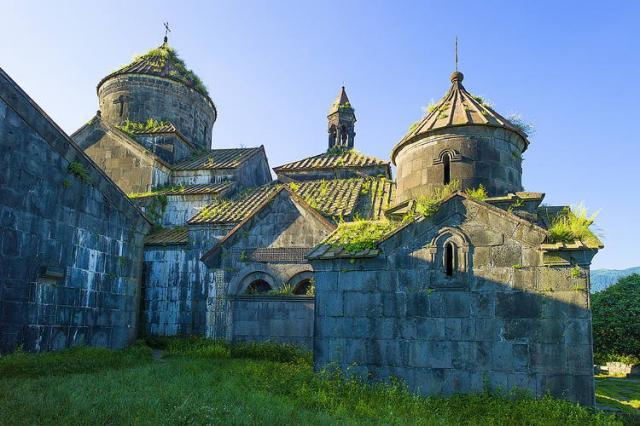
The ninth day connects Dilijan to the historic monasteries of northern Armenia before the return to Yerevan. It is a full day, but it makes geographical sense, because you will already be closer to the north than if you were setting off from the capital.
The main highlights are Haghpat and Sanahin, two of Armenia's most important monastic complexes. Akhtala can be added as an optional stop, if there is enough time and the day is not running too long.
This day closes out the historic and religious part of the itinerary very well, bringing together some of the finest examples of medieval Armenian architecture before heading back to Yerevan.
The road from Dilijan to northern Armenia passes through mountains, valleys, smaller towns and landscapes different from those seen on previous days.
Haghpat Monastery is one of the most important monasteries in northern Armenia. The complex is known for its medieval architecture, stone buildings and location in a mountainous region.
Sanahin Monastery is another major monastic complex in the north of the country. It can be visited on the same day as Haghpat and is one of the most important cultural stops in the region.
The mountain valleys of northern Armenia are part of the experience. The landscape around Haghpat and Sanahin has a more remote, mountainous climate, different from the areas close to Yerevan.
Akhtala Monastery can be added as an optional stop. It is known for its fortress-like appearance and historic religious paintings.
After visiting the northern monasteries, the itinerary returns to Yerevan for the last night of the trip. This final evening is a good opportunity for dinner downtown, a walk through Republic Square or rest before departure.
What I would prioritise on day 9
I would prioritise Haghpat and Sanahin. These two monasteries are the main reason to include this route through northern Armenia.
What can be optional on day 9
Akhtala can be optional if you are short on time or the day is already tiring.
Last day in Yerevan: markets, cafés and departure
The last day should be flexible. After several days on the road, I would not schedule another long excursion.
Yerevan works well as the final base because it has the airport, hotels, restaurants, cafés and easy transport. Sleeping in the capital on the last night reduces the risk of delays before the flight.
Use this day for markets, cafés, museums or somewhere you didn't have time to visit earlier.
Leaving the last day in Yerevan also avoids the risk of a long transfer on the same day as the flight.
Vernissage Market is one of the best places to buy souvenirs, crafts, paintings, carpets, jewellery and wooden objects.
GUM Market is a good stop for seeing local products, dried fruit, sweets, spices and Armenian flavours.
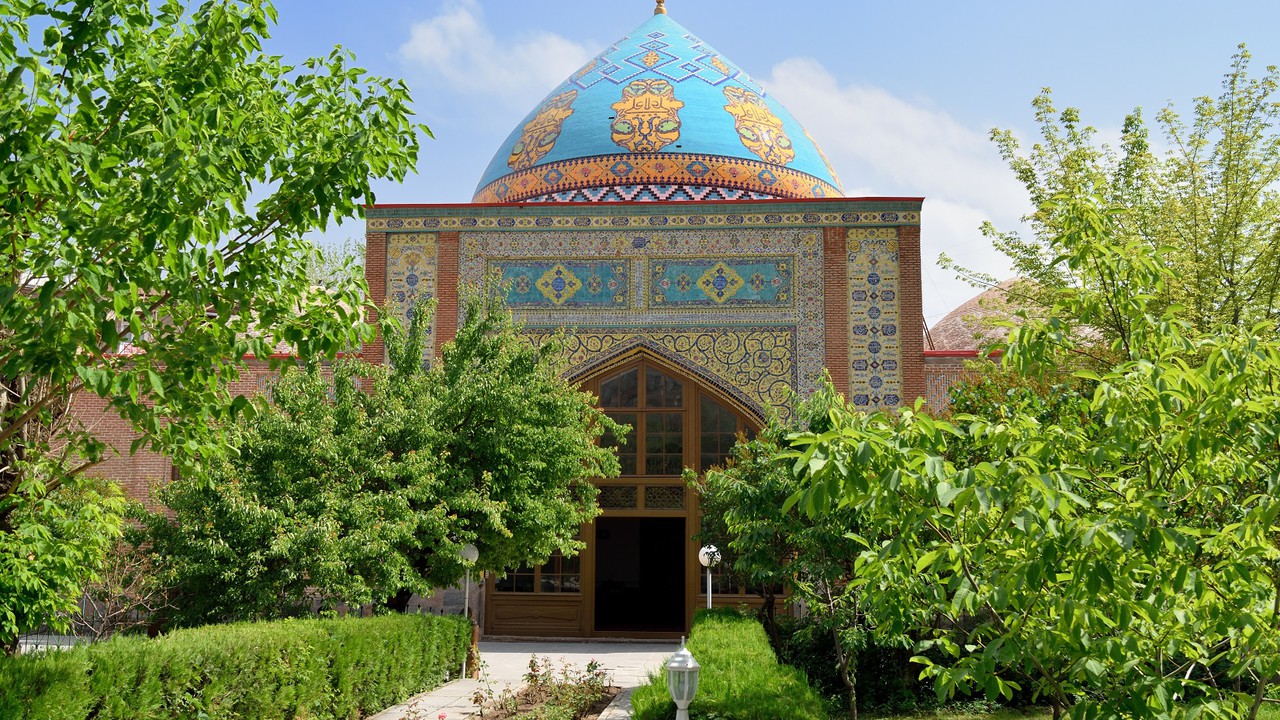
The Blue Mosque can be included in a gentle walk through central Yerevan.
If you enjoyed the Cascade Complex, the last day can also be a good time to return with more time to spare.
Republic Square is a good final stop before leaving Armenia, especially if you want to see the square one more time.
Yerevan's cafés and restaurants are also good choices for the last day. After an intense trip, it makes sense to end without rushing.
Departing from Yerevan is the most practical option because the capital has the airport and the best tourist infrastructure.
What I would prioritise on day 10
I would prioritise Vernissage Market, GUM Market, an easy walk through central Yerevan and enough time to get to the airport without stress.
What can be optional on day 10
Museums and extra stops in the city can be optional depending on the flight time.
Frequently asked questions about travelling to Armenia
Is Armenia worth visiting?
Yes, Armenia is very much worth visiting, especially for those who enjoy history, monasteries, mountain landscapes and cultural itineraries.
Armenia is not a destination of beaches or large modern metropolises. The country's great value lies in its ancient monasteries, scenic roads, traditional food, mountain views, religious history and landscapes that feel quite different from Western Europe.
For a first trip through the Caucasus, Armenia is a very strong choice. The country is compact enough to explore in 7 to 10 days, but varied enough to make for a complete trip.
How many days to spend in Armenia?
I recommend between 7 and 10 days for a first trip through Armenia.
With 7 days, you can visit Yerevan, Garni, Geghard, Khor Virap, Noravank, Lake Sevan, Dilijan and perhaps Tatev on a faster itinerary.
With 10 days, the trip becomes much better. You can include Yerevan, the main day trips, Goris, Tatev, Khndzoresk, Lake Sevan, Dilijan and the northern monasteries without rushing too much.
For those who want to include Jermuk, do more hiking or travel at a slower pace, 11 or 12 days would be even better.
Are ten days enough for Armenia?
Yes, 10 days are enough for a complete first trip through Armenia, as long as the itinerary is well planned.
The most important point is not to try to do everything as a day trip from Yerevan. Some regions are too far from the capital for that style of trip.
Sleeping in Goris and Dilijan makes the itinerary more comfortable and gives a better view of the country beyond the capital.
Which is the best base for exploring Armenia?
On a 10-day Armenia itinerary, the ideal is to split the trip between Yerevan, Goris, Dilijan and Yerevan again at the end.
Yerevan is the best base for the start of the trip, mainly for exploring the capital, Echmiadzin, Zvartnots, Garni, Geghard, Khor Virap, Areni and Noravank.
Goris is the best base for visiting Tatev, Wings of Tatev and Khndzoresk.
Dilijan is the best base for exploring Haghartsin, Goshavank, Parz Lake, Lake Sevan and the green region of the north.
Yerevan works well again on the last night, before departure.
Best way to get around Armenia
For this complete 10-day itinerary, the easiest option is to rent a car or hire a private driver.
Many of Armenia's best attractions are outside the cities, in mountain areas or along rural roads. Public transport exists between cities, but is not always practical for reaching monasteries, viewpoints and scenic stops.
Organised tours work well for the day trips from Yerevan, especially Garni, Geghard, Khor Virap, Noravank, Lake Sevan and Dilijan.
For the complete route through Goris, Tatev, Dilijan, Haghpat and Sanahin, a car or driver makes the trip much simpler.
Those travelling on a lower budget can use marshrutkas between cities combined with taxis or local tours, but this requires more planning and flexibility.
Best time to visit Armenia
The best time to visit Armenia is in spring and autumn.
April, May and June are good months for green landscapes, pleasant temperatures and road trips.
September and October are also excellent, with comfortable weather and beautiful autumn colours in some regions.
July and August can be hot in Yerevan and the lower areas, although Lake Sevan and Dilijan tend to be cooler.
Winter can be beautiful, but snow and cold can affect mountain roads and travel times.
For a first trip through Armenia, I would choose May, June, September or October.
Can you combine Armenia with another country?
Yes, Armenia combines very well with Georgia. Many travellers do both countries on the same Caucasus trip, combining Yerevan, Dilijan, Tbilisi, Kazbegi, Kakheti and other regions of Georgia.
It is also possible to combine Armenia with other destinations in the region, depending on flights and border conditions.
Even so, for a first trip, Armenia alone already has enough attractions to fill 7 to 10 days very well.
Where to stay in Armenia on a 10-day trip?
For a 10-day trip through Armenia, the most practical division is to spend 4 nights in Yerevan at the start, 2 nights in Goris, 2 nights in Dilijan and 1 final night in Yerevan before the flight.
Yerevan works as the main gateway and best base for the classic excursions.
Goris is the best base for the southern attractions.
Dilijan is the best base for the green northern region.
The last night in Yerevan avoids long transfers on the same day as departure.
Final summary of the 10-day Armenia itinerary
This 10-day Armenia itinerary is ideal for those visiting the country for the first time and who want to see the main places without rushing too much.
The route passes through Yerevan, Echmiadzin, Zvartnots, Garni, Geghard, Khor Virap, Areni, Noravank, Goris, Tatev, Khndzoresk, Lake Sevan, Dilijan, Haghartsin, Goshavank, Haghpat, Sanahin and Akhtala.
It is a complete and varied trip, combining the capital, ancient monasteries, religious heritage, volcanic formations, mountain roads, wine country, cave villages, lakes, forests and medieval buildings.
With 10 days, the ideal is to use Yerevan as the starting point, do the main excursions near the capital, sleep in Goris to visit Tatev and Khndzoresk, head to Lake Sevan and Dilijan, visit the northern monasteries and return to Yerevan at the end.
This way, the itinerary is logical, complete and much more comfortable than trying to do everything on day trips from the capital.
Travel planning for Armenia: essential tips
Before starting the Armenia itinerary, it is important to understand a few practical details of the trip. The country is not huge, but many attractions are spread across mountains, valleys, rural roads and remote regions. For this reason, organising the bases well makes a big difference.
Transport and car
- Rental car: recommended for those who want to do the itinerary with freedom and flexibility
- Private driver: a great option for those who don't want to drive on mountain roads
- Tours: useful for Garni, Geghard, Khor Virap, Noravank, Lake Sevan and Dilijan
- Marshrutkas: cheap and useful between cities, but not always practical for attractions
- Taxis: useful in Yerevan and for short trips
- Avoid driving at night in rural areas and mountain regions
Where to stay
- Yerevan: best base for arrival, departure, the capital and classic day trips
- Goris: best base for Tatev, Wings of Tatev, Khndzoresk and southern Armenia
- Dilijan: best base for forests, Haghartsin, Goshavank, Parz Lake and the north of the country
- Yerevan at the end: best option for a safer, more relaxed departure
How to pay
- Currency: Armenian dram
- Cards: accepted at many hotels, restaurants and larger establishments in Yerevan
- Cash: important for small towns, taxis, markets, entry fees and local restaurants
- ATMs: easy to find in Yerevan and larger cities
- Bring cash for rural areas, monasteries, small cafés and road stops
Best season
- April, May and June: great weather, green landscapes and a good time for road trips
- September and October: pleasant temperatures and beautiful autumn colours
- July and August: the hottest months, especially in Yerevan
- Winter: cold, with possible snow in mountainous regions
- Lake Sevan and Dilijan: tend to be cooler than Yerevan, especially at night