Last updated: August 2026
Yerevan is Armenia's capital and the best base for starting a trip through the country. The city combines monumental squares, cafés, museums, markets, pink stone architecture, urban life and easy access to some of the most important places in Armenia.
Even though many travellers use Yerevan only as a gateway, the capital deserves at least 4 days within an Armenia itinerary. This time allows you to explore the city centre at a relaxed pace and still do the main historic, religious and natural day trips from the capital.
This 4-day Yerevan itinerary is ideal for first-time visitors to Armenia who want to combine the capital with ancient monasteries, views of Mount Ararat, a pagan temple, volcanic formations, markets and wine country without having to change hotel in the first few days.
The idea is to use Yerevan as a strategic base before heading to other regions of the country, such as Goris, Tatev, Lake Sevan and Dilijan. This way, the start of the trip is more practical, organised and comfortable.
How this Yerevan itinerary was planned
This itinerary was designed to enjoy Yerevan without rushing and, at the same time, fit in the main excursions around the capital.
The first day is dedicated to central Yerevan, with squares, cafés, walking areas and urban viewpoints.
The second day focuses on the religious and historic side closest to the capital, with Echmiadzin, Zvartnots and the Armenian Genocide Memorial.
The third day combines Garni, Symphony of Stones, Garni Gorge and Geghard, one of the most classic routes from Yerevan.
The fourth day heads to Khor Virap, Areni and Noravank, one of the most beautiful routes in the region, with views of Mount Ararat, red canyons and wine tradition.
This order works well because it avoids mixing attractions from different directions on the same day and keeps the itinerary more logical.
4-day Yerevan itinerary: what to do day by day
Day by day itinerary
- Day 1: Yerevan centre, Republic Square, Northern Avenue, Opera House, Cascade Complex, Mother Armenia and cafés
- Day 2: Echmiadzin, Zvartnots, Armenian Genocide Memorial, Vernissage Market and a walk around Yerevan
- Day 3: Garni Temple, Symphony of Stones, Garni Gorge, Charent's Arch and Geghard Monastery
- Day 4: Khor Virap, view of Mount Ararat, Areni Cave, the Areni wine region and Noravank Monastery
Is it worth staying 4 days in Yerevan?
Yes, it is very much worth staying 4 days in Yerevan, especially if this is your first trip through Armenia.
With 4 days, you can explore the capital without rushing and still do three of the main day trips from Yerevan. This makes the itinerary very complete, because it combines the city, history, religion, natural landscapes, monasteries and views of Mount Ararat.
I would not use these 4 days just for central Yerevan. The capital itself can be explored in 1 or 2 days, but the real value of staying longer lies in the day trips. Garni, Geghard, Khor Virap, Noravank, Echmiadzin and Zvartnots are essential for understanding Armenia better.
Yerevan centre, squares and cafés
The first day in Yerevan should be lighter. This is the best way to start the trip at an easy pace, especially just after arriving by air or while still adjusting to the country.
I would use this day to walk through the centre, get to know the capital's main areas, see the pink stone architecture, take breaks in cafés and get a feel for the city's pace before heading out for the longer excursions on the following days.
Morning
Republic Square
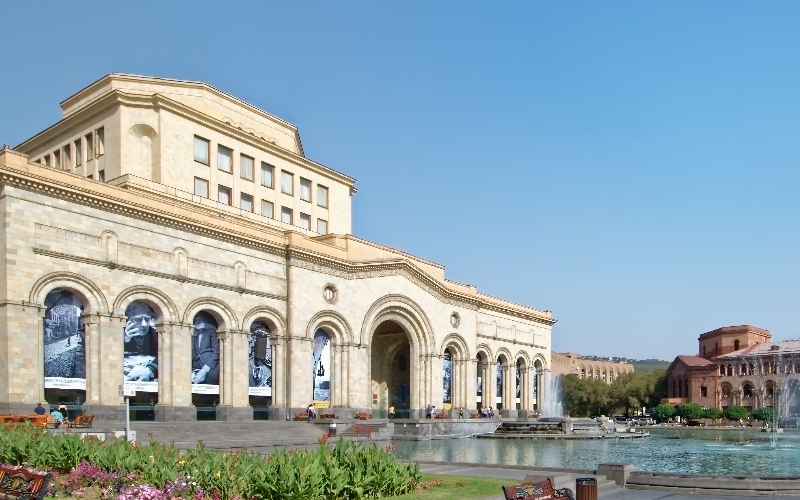
Republic Square is Yerevan's main square and one of the most important places in the capital of Armenia. It is surrounded by government buildings, museums, hotels and fountains, forming one of the city's best-known settings.
The square is a great starting point for getting to know Yerevan. During the day, the area has constant activity, while at night the lighting makes the place even more beautiful.
For first-time visitors to the city, Republic Square is a must-see stop. As well as being one of the most photogenic areas of the capital, the square also works as a reference point for finding your way around the centre.
From here, it is easy to head to other important areas, such as Northern Avenue, Opera House and the Cascade Complex.
Northern Avenue
Northern Avenue is a pedestrian street connecting Republic Square to the Opera House area. It is one of Yerevan's most modern areas, with shops, cafés, restaurants, hotels and plenty of activity.
Walking along Northern Avenue helps you notice the more urban and contemporary side of the capital. It is not a historic attraction like Armenia's monasteries, but it works very well on the first day for walking, taking a break and getting a feel for the city's rhythm.
For those who have just arrived in the country, this area is good for an unhurried start. There are restaurants, cafés and shops all around, which makes the walk simple and comfortable.
Afternoon
Opera House
The Opera House is one of Yerevan's main cultural buildings. The surrounding area is pleasant for walking, with squares, open spaces, cafés and plenty of local life.
Even for those not planning to attend a performance, it is worth passing through the area to see one of the most traditional parts of the centre.
The visit pairs well with Northern Avenue and the Cascade Complex on the same day. The Opera House area also helps show the cultural side of the city. It is a good area for an unhurried walk, watching the activity and taking a break before heading to the Cascade.
Cascade Complex
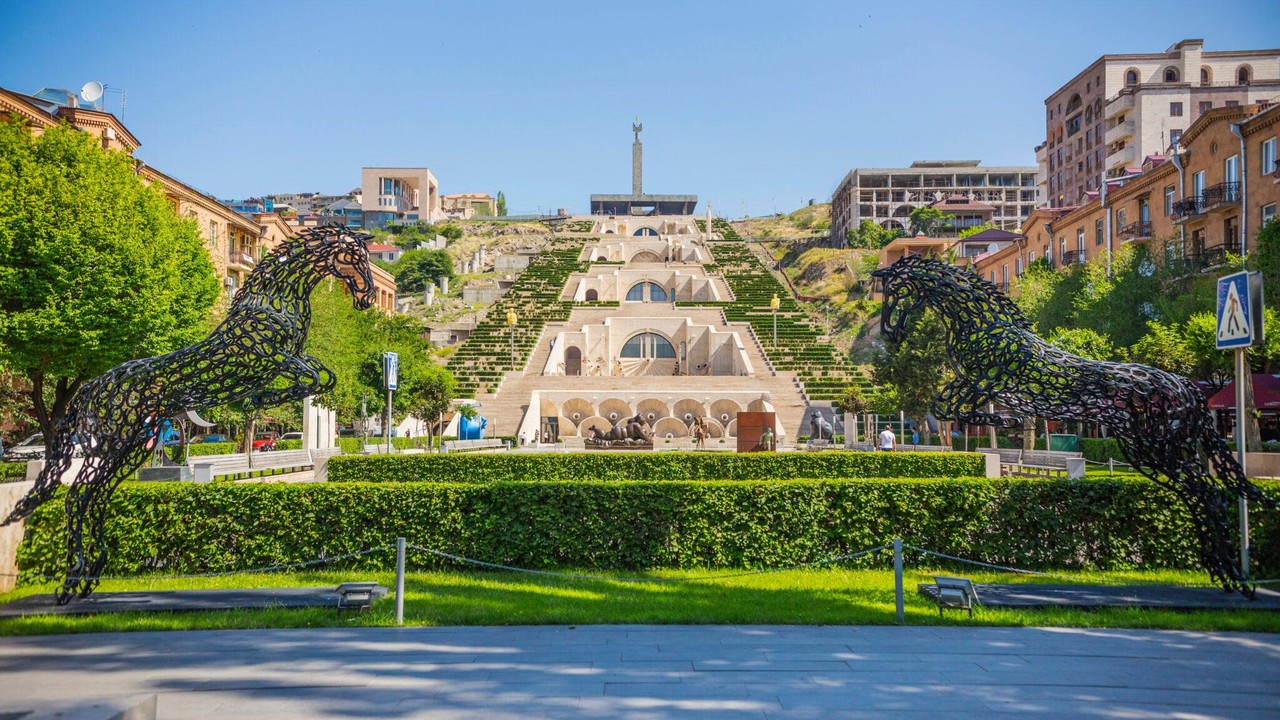
The Cascade Complex is one of Yerevan's most famous attractions. The great staircase connects the lower part of the city to a higher area, with sculptures, gardens, art spaces and a panoramic view of the capital.
The climb can be a little tiring, but the view is worth it. On clear days, the Cascade area can also offer a beautiful view of Mount Ararat in the background, making it one of Yerevan's best photo spots.
Beyond the view, the Cascade is interesting for its combination of art, architecture and open spaces. It is an essential stop on the first day, especially in the late afternoon, when the light tends to make the city even more beautiful.
Cafesjian Center for the Arts
The Cafesjian Center for the Arts is located in the Cascade Complex area and brings together exhibitions, sculptures and modern art works.
Even for those not visiting the inside of the museum, the outdoor area alone is worth the visit. The open-air sculptures and gardens make the walk more interesting, especially for those who enjoy photography, urban architecture and cultural spaces.
As it sits right next to the Cascade, it is easy to include in the same itinerary.
Late afternoon and evening
Mother Armenia
Mother Armenia is a large monument located in a high area of Yerevan. If time allows, it is a good stop to see the city from above and learn a little about Armenia's Soviet history.
The visit can be combined with the late afternoon, especially for those who want a different panoramic view from the Cascade area.
The monument and the surrounding park help show another side of the capital, more connected to historical memory and the Soviet period.
Cafés and restaurants in Yerevan
Yerevan has a strong café and restaurant culture. After walking through the centre, it is worth ending the day with a relaxed dinner in the capital.
This is a good way to start the Armenia itinerary without rushing, leaving the following days for the more historic and scenic excursions.
The centre has good options for dinner, coffee, an evening walk and enjoying the city's urban atmosphere.
What I would prioritise on day 1
I would prioritise Republic Square, Northern Avenue, Opera House and the Cascade Complex.
These places give a good first impression of Yerevan and work well for an unhurried first day.
What can be optional on day 1
Mother Armenia can be optional if you are tired or arrived late in the city.
The interior of the Cafesjian Center for the Arts can also be optional. Even seeing just the outdoor area, the walk through the Cascade is already very worthwhile.
Echmiadzin, Zvartnots and Armenian Genocide Memorial
The second day of the itinerary can be dedicated to Echmiadzin, Zvartnots and a few important places in Yerevan.
This is one of the easiest excursions from the capital, because the attractions are relatively close together and don't require a long transfer. It is also an important day for understanding the religious, historical and cultural side of Armenia better.
Morning
Echmiadzin Cathedral
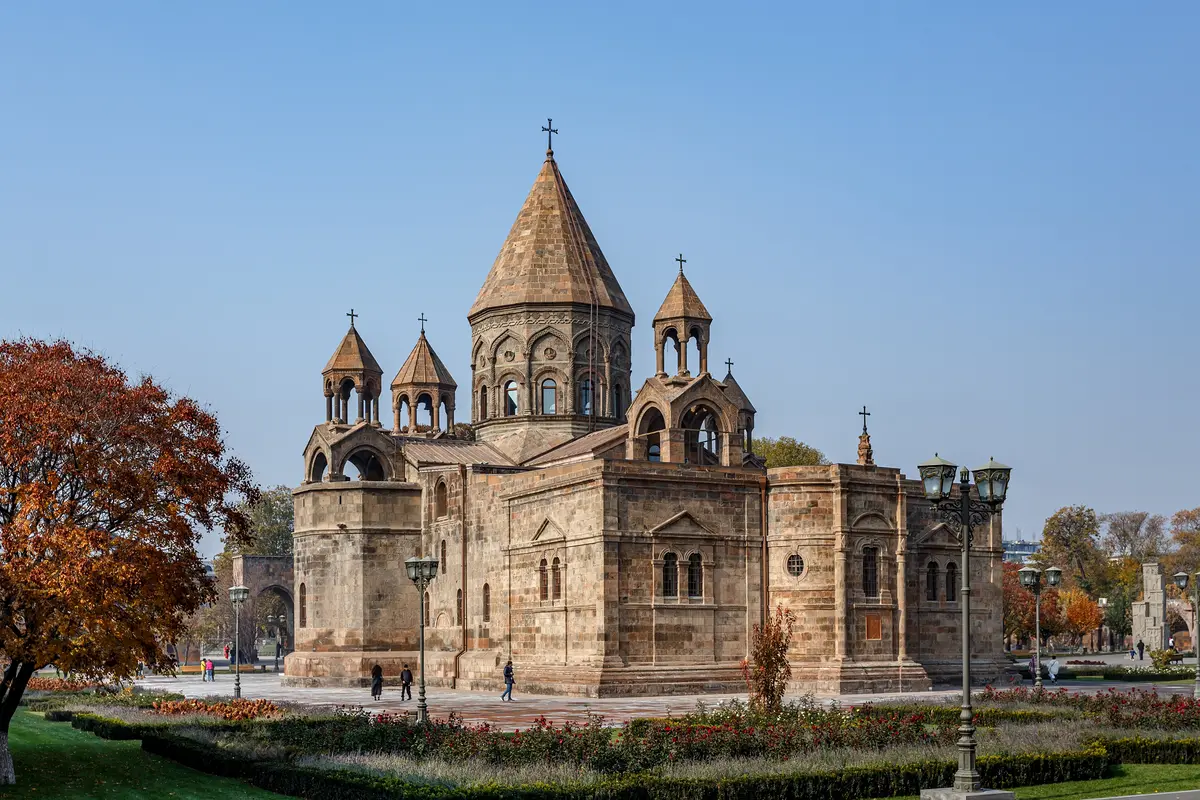
Echmiadzin Cathedral is one of the most important religious buildings in Armenia. The site holds enormous value for the Armenian Apostolic Church and helps you understand the country's Christian identity.
The visit is very relevant for those wanting to explore the historical and religious side of Armenia. The complex is one of the most important stops near Yerevan and pairs well with other churches in the area.
Echmiadzin is often regarded as one of the country's most important spiritual centres. Including this stop early in the itinerary therefore helps you better understand the weight of religion, monasteries and Christian architecture in Armenian culture.
Echmiadzin churches
The Echmiadzin area has several historic churches linked to Armenian religious tradition. Depending on the time available, it is worth including more than one stop in the excursion.
These churches help show the importance of religious architecture in Armenia and work as a good introduction to the monasteries that appear throughout the rest of the trip.
For those who enjoy history and religious heritage, this is one of the most important days of the itinerary. Even if some visits are brief, the overall picture helps build a good foundation for understanding the country.
I would just avoid turning the day into a tiring sequence of churches. The ideal is to choose the most important ones and keep time for Zvartnots and the memorial in Yerevan.
Afternoon
Ruins of Zvartnots Cathedral
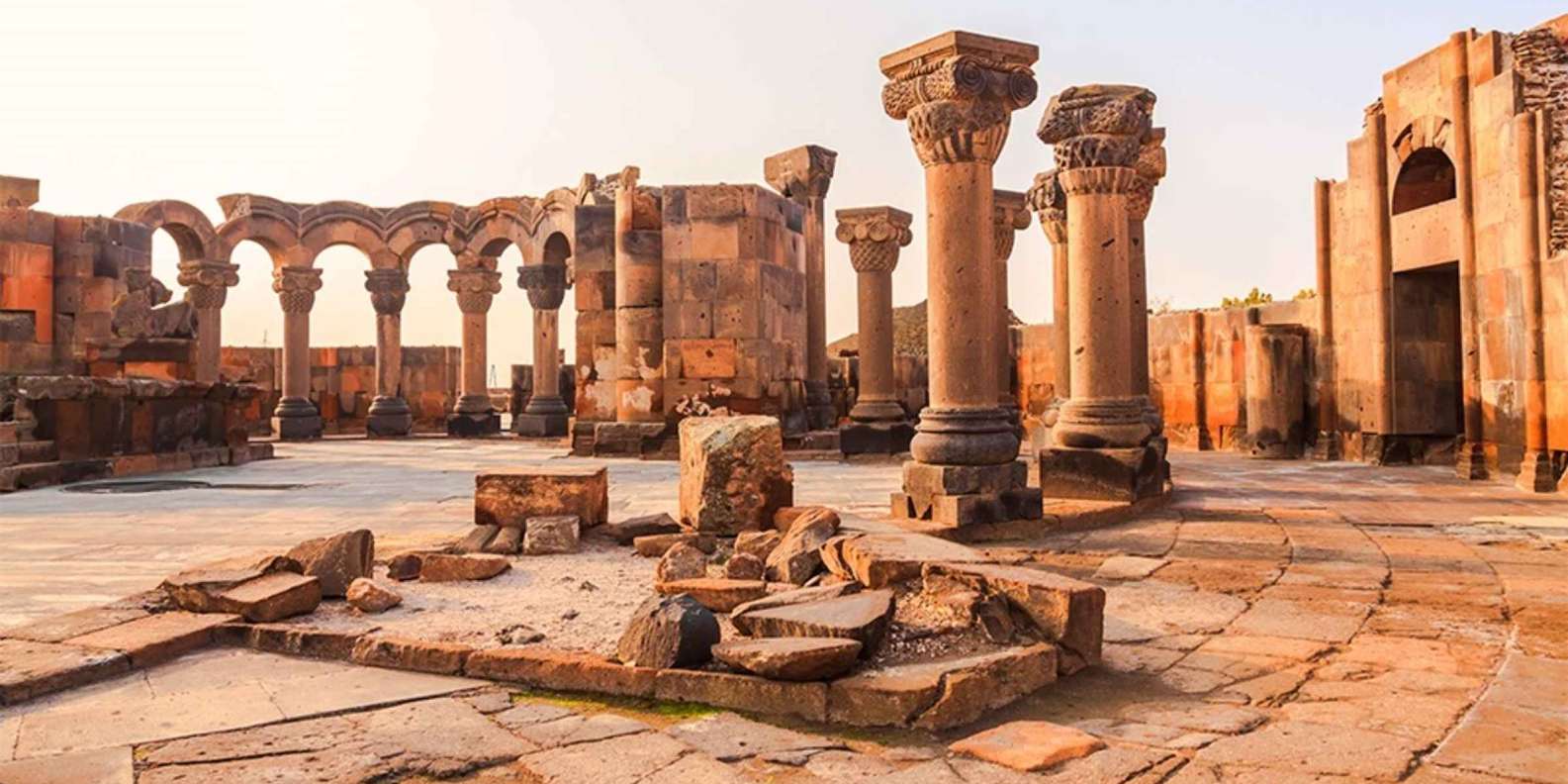
The ruins of Zvartnots Cathedral form one of the most beautiful archaeological sites near Yerevan. The columns, arches and open area create a very photogenic setting, especially on clear-sky days.
Zvartnots is a quick but very memorable visit. The place combines history, architecture and landscape, making it one of the best stops for those doing a cultural itinerary from the capital.
The visit is also interesting because the setting is quite different from enclosed churches and monasteries. The ruins in an open area give a broader sense of the original building and make for good photos.
Armenian Genocide Memorial
On the way back to Yerevan, it is worth including the Armenian Genocide Memorial. This is one of the most important and moving visits in the capital.
The site helps you understand a fundamental part of the history and identity of the Armenian people. It is a serious and highly meaningful stop, so it is worth visiting with time and respect.
Even on an itinerary focused on attractions, landscapes and monasteries, this visit is essential for understanding present-day Armenia better.
The memorial adds historical depth to the trip and shows an important part of the country's collective memory.
Late afternoon and evening
Vernissage Market
Vernissage Market is an open-air market in Yerevan, ideal for finding crafts, souvenirs, paintings, carpets, jewellery, wooden objects and local products.
It is a good stop after the Echmiadzin and Zvartnots excursion, especially for those who want to buy souvenirs or see a more artisan side of the capital.
The market is also good for observing traditional products and chatting with local sellers. Even without buying anything, it is worth walking through the area and seeing the type of crafts found in Armenia.
Evening walk in Yerevan
After the excursion, it is worth returning to the centre, having dinner and walking again through Republic Square, Northern Avenue or the Opera House area.
Yerevan is very pleasant at night, especially in the central areas, where there are cafés, restaurants and plenty of activity.
This lighter end to the day balances out a journey marked by historic and religious visits.
What I would prioritise on day 2
I would prioritise Echmiadzin Cathedral, the Zvartnots ruins and the Armenian Genocide Memorial.
This combination makes the day complete and helps you understand the importance of religion and history in Armenian identity.
What can be optional on day 2
The Vernissage Market can be optional if the excursion runs long. It can also be visited on the last day in Yerevan or during a free late afternoon.
Garni, Symphony of Stones and Geghard
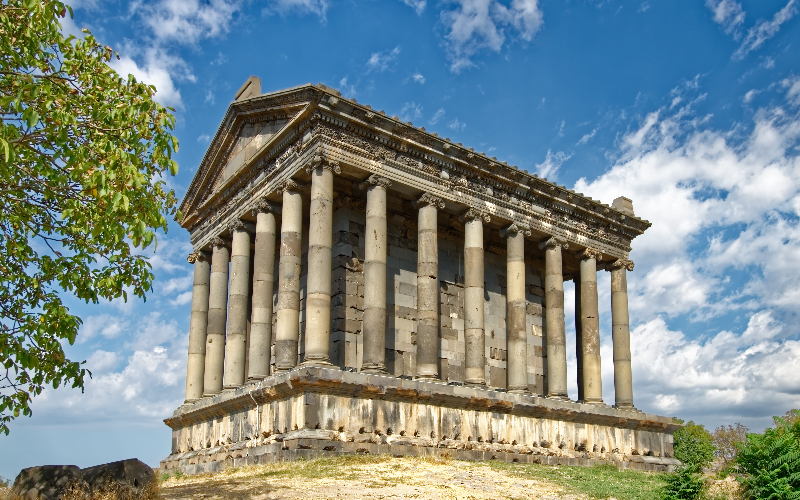
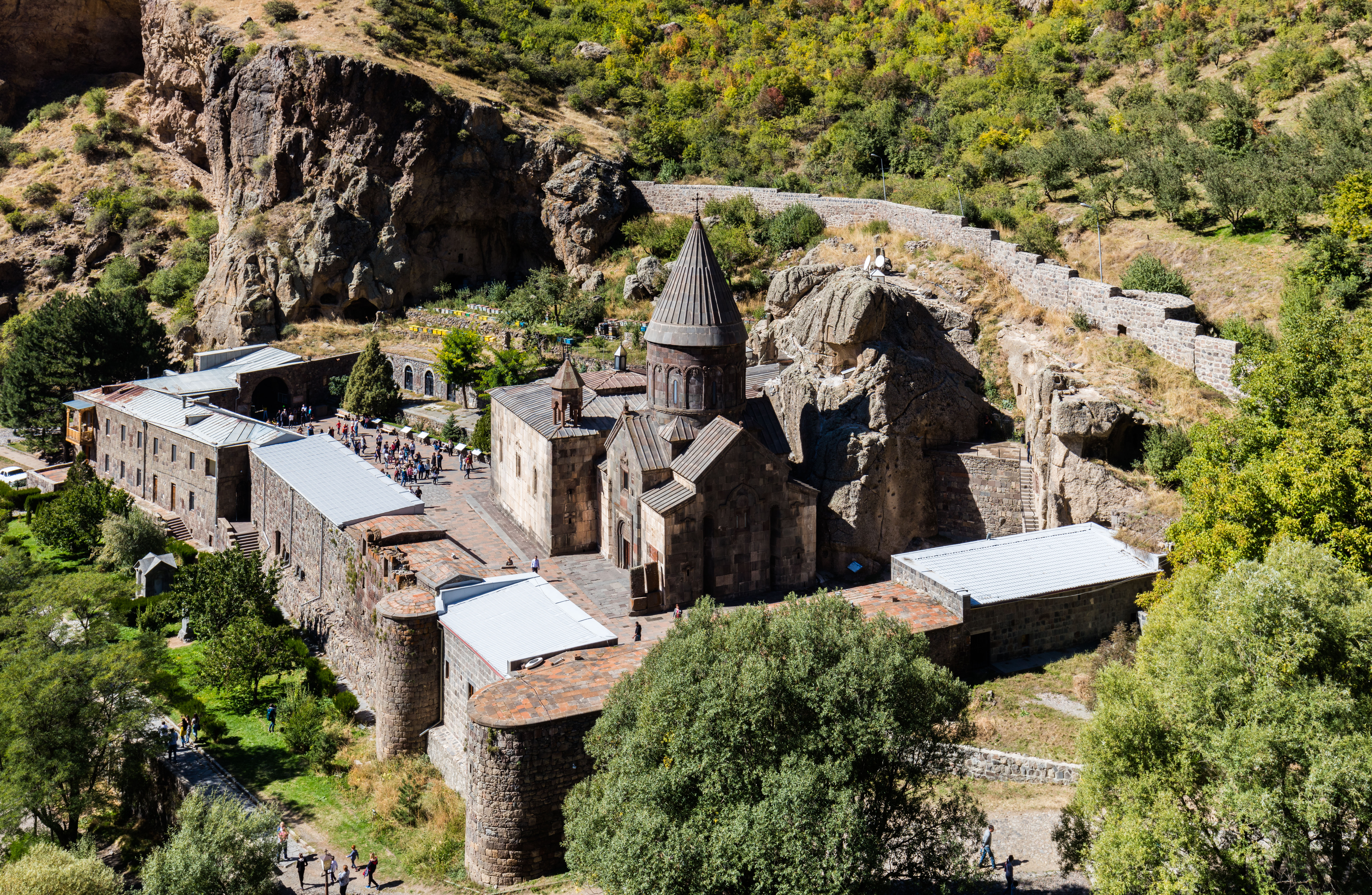
The third day is one of the best excursions from Yerevan. The itinerary combines Garni Temple, Symphony of Stones, Garni Gorge, Charent's Arch and Geghard Monastery.
This route is one of the most classic for first-time visitors to Armenia. It mixes ancient history, religious architecture, volcanic landscapes and mountains, without requiring too heavy a transfer from the capital.
Morning
Charent's Arch
Charent's Arch is a viewpoint on the road between Yerevan, Garni and Geghard. On clear days, it offers a beautiful view of Mount Ararat and the surrounding landscape.
The stop is usually quick, but very worthwhile for photos and for starting the day with one of Armenia's most symbolic views.
This viewpoint works well as a first stop because it is right on the way and doesn't take much time. On days with good visibility, it can be one of the best places to see Mount Ararat during the itinerary.
If the weather is overcast, the stop loses some of its appeal. In that case, I would not spend much time here.
Garni Temple
Garni Temple is one of Armenia's most famous monuments. The temple stands out for its classical columns and its very different appearance compared with the country's medieval churches and monasteries.
The visit to Garni is one of the most important near Yerevan. The temple sits in a beautiful position, in a region of mountains and canyons, which makes the place even more interesting for photos.
Garni also helps show that Armenia's history is not limited to Christian monasteries. The temple's architecture creates a strong contrast with the religious complexes visited on other days.
I would place Garni as a must-see stop on this 4-day Yerevan itinerary.
Afternoon
Symphony of Stones
Symphony of Stones is a natural basalt formation near Garni. The vertical stone columns resemble a huge natural organ and form one of Armenia's most unusual landscapes.
The visit pairs very well with Garni Temple, as the two attractions are close together. For those who enjoy unusual landscapes, it is one of the most interesting stops of the day.
This is one of the best places near Yerevan to see unusual natural formations. The volcanic landscape creates an experience quite different from churches, squares and monasteries.
Garni Gorge
Garni Gorge is the area around Symphony of Stones. The volcanic landscape, rocky walls and more natural setting make the excursion even more complete.
Even if the visit is brief, it is worth including the area in the itinerary rather than just seeing the temple and heading straight to Geghard.
The combination of Garni Temple, Symphony of Stones and Garni Gorge makes the day nicely varied, mixing history, architecture and nature.
Geghard Monastery
Geghard Monastery is one of Armenia's most important monasteries. Part of the complex was carved directly into the rock, which makes the visit even more impressive.
The monastery is surrounded by mountains and cliffs, creating a very special atmosphere. It is one of the most striking attractions near Yerevan and one of the most important places for understanding Armenian religious architecture.
Geghard tends to be one of the highlights of the itinerary. The mix of stone, mountain, silence and medieval architecture creates a visit that is very powerful both visually and culturally.
I would leave enough time to visit the complex without rushing, because this is one of the most special places near the capital.
Late afternoon
Return to Yerevan
After visiting Garni, Symphony of Stones and Geghard, the ideal is to return to Yerevan and end the day with a relaxed dinner.
This excursion is complete, but it is usually not as tiring as the longer routes to southern Armenia. Because of this, it works very well in the middle of the Yerevan stay.
What I would prioritise on day 3
I would prioritise Garni Temple, Symphony of Stones and Geghard Monastery.
Charent's Arch is also very worthwhile if the sky is clear and there is good visibility of Mount Ararat.
What can be optional on day 3
Charent's Arch can be optional on cloudy days.
Garni Gorge can be quicker if the itinerary is tight, but I would try to keep Symphony of Stones because it makes the day feel more distinctive.
Khor Virap, Areni and Noravank
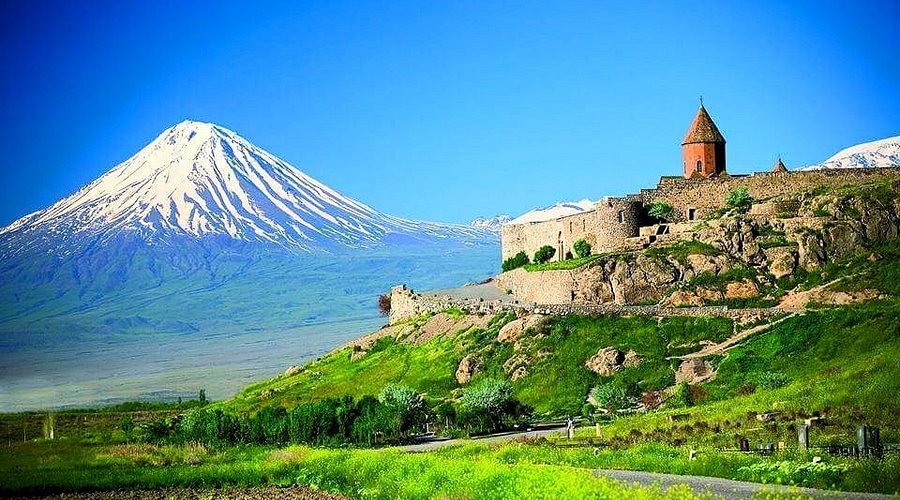
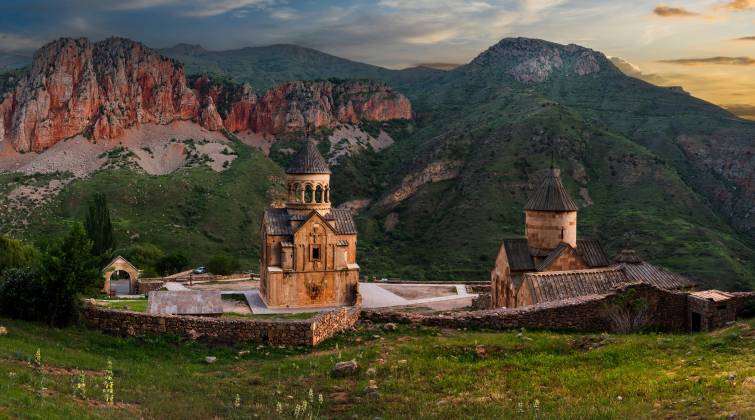
The fourth day is one of the most beautiful on this 4-day Yerevan itinerary. The route combines Khor Virap, views of Mount Ararat, Areni Cave, the Areni wine region and Noravank Monastery.
This is a longer day than the previous ones, but well worth it. It brings together some of Armenia's most symbolic images, with a monastery, a mountain, wine, red canyons and medieval architecture.
Morning
Khor Virap Monastery
Khor Virap Monastery is one of Armenia's most iconic places. The monastery is near the border with Turkey and is famous for its view of Mount Ararat.
This is one of the country's most symbolic images. Even though Mount Ararat lies outside Armenia's current borders, it holds enormous historical, cultural and emotional importance for Armenians.
The visit to Khor Virap is especially powerful because it combines religion, landscape and national symbolism.
For many travellers, it is one of the most memorable places near Yerevan.
View of Mount Ararat
The Khor Virap area is one of the best places to photograph Mount Ararat. On clear days, the combination of the monastery with the mountain in the background forms one of Armenia's most beautiful landscapes.
For this reason, it is worth trying to visit Khor Virap in the morning, when visibility can be better and the light tends to favour photos.
Even when the weather isn't perfect, the place is still worth visiting for its historical weight and surrounding landscape. But if the sky is clear, this can be one of the most beautiful moments of the whole trip.
Afternoon
Areni Cave
Areni Cave is an archaeological site near the village of Areni. It can be included as a short stop for those interested in history, ancient human habitation and archaeological finds.
The visit doesn't need to be long, but it helps make the day more varied, combining landscape, history and culture.
Areni is a good stop between Khor Virap and Noravank, mainly to break up the transfer and add an archaeological side to the excursion.
Areni wine region
Areni is one of Armenia's best-known wine areas. Depending on the pace of the excursion, it is possible to do a quick tasting or visit a local winery.
This stop brings a different side to the itinerary, showing that Armenia is not just made up of monasteries and mountains, but also of wine tradition and local production.
For those who enjoy gastronomic and cultural experiences, Areni can be one of the most interesting parts of the day. Even a short stop already helps add variety to the itinerary.
Noravank Monastery
Noravank Monastery is one of Armenia's most beautiful monasteries. Its location among red canyons makes it one of the most striking stops on the itinerary.
The surrounding landscape is an essential part of the visit. The rock formations, intense colours and dramatic setting make Noravank one of the most photogenic places in the country.
Noravank closes the 4 days in Yerevan and surroundings very well. The monastery combines medieval architecture, nature and one of the most impressive landscapes in this part of Armenia.
I would place Noravank as one of the priorities of the itinerary, especially if you want to see a setting different from the monasteries closer to the capital.
Late afternoon
Return to Yerevan
After a full day, the ideal is to return to Yerevan, rest and get ready for the departure to Goris the following day, if you are following a longer Armenia itinerary.
If the trip is just to Yerevan and surroundings, this fourth day rounds off the experience very well with one of the most beautiful routes from the capital.
What I would prioritise on day 4
I would prioritise Khor Virap, the view of Mount Ararat and Noravank.
Areni Cave and the wine region make the day more complete, but the strongest highlights are Khor Virap and Noravank.
What can be optional on day 4
Areni Cave can be optional if the day is running long.
Wine tasting can also be optional, especially if you are short on time or don't want to extend the return to Yerevan.
Frequently asked questions about Yerevan
Is Yerevan worth visiting?
Yes, Yerevan is very much worth visiting. The capital is the best gateway to Armenia and works very well as a base for exploring some of the country's most important places.
Yerevan combines urban life, cafés, squares, museums, markets, restaurants and easy access to monasteries, temples, viewpoints and historic regions.
Even though Armenia's most impressive landscapes are outside the capital, Yerevan is essential for organising the trip well.
For first-time visitors to Armenia, the city helps you understand the country better before heading to more distant regions. On top of that, the capital's infrastructure makes the logistics of the first few days much easier.
How many days to stay in Yerevan?
The ideal is to stay at least 3 to 4 days in Yerevan.
With 1 day, you can explore the capital's centre.
With 2 days, you can include Echmiadzin and Zvartnots.
With 3 days, Garni and Geghard fit well into the itinerary.
With 4 days, you can also visit Khor Virap, Areni and Noravank.
For a complete Armenia trip, 4 nights in Yerevan at the start of the itinerary work very well. This division avoids unnecessary hotel changes and lets you do the most important excursions at an easy pace.
If time is short, 2 days is enough to see the basics. But to make the most of the capital and its surroundings, 4 days is the most balanced choice.
Are 4 days in Yerevan enough?
Yes, 4 days in Yerevan are enough to explore the capital and the main nearby excursions.
This amount of time lets you visit the city centre, Echmiadzin, Zvartnots, Garni, Geghard, Khor Virap, Areni and Noravank without turning the trip into a rush.
With less time, you will need to cut some excursions. With more time, you can add extra visits, museums, restaurants, markets and even do the excursions at a slower pace.
For those putting together a longer Armenia itinerary, 4 days in Yerevan work very well before heading to Goris, Tatev, Lake Sevan and Dilijan.
Can you see Yerevan in 1 day?
Yes, you can see the basics of Yerevan in 1 day.
On a short itinerary, focus on Republic Square, Northern Avenue, Opera House, the Cascade Complex, cafés and a walk through the centre.
However, 1 day is not enough to see the main excursions from the capital. For that, the ideal is to stay at least 3 or 4 days.
If you only have 1 day in Yerevan, use that time to see the city itself. Garni, Geghard, Khor Virap and Noravank should be left for a trip with more days.
Is Yerevan a good base for exploring Armenia?
Yes, Yerevan is the best base for the first few days of an Armenia trip.
From the capital, you can do excursions to Echmiadzin, Zvartnots, Garni, Geghard, Khor Virap, Areni, Noravank and other nearby destinations.
However, Yerevan should not be the only base if the itinerary includes more distant places, such as Tatev, Goris, Khndzoresk, Dilijan and Haghpat.
For these destinations, it is worth sleeping in other towns. The best strategy is to use Yerevan at the start of the trip, head to Goris in the south, then to Dilijan in the north, and return to Yerevan at the end before the flight.
What are the best day trips from Yerevan?
The best day trips from Yerevan include Echmiadzin, Zvartnots, Garni, Geghard, Khor Virap, Areni and Noravank.
Garni and Geghard form one of the most classic excursions near the capital.
Khor Virap, Areni and Noravank form one of the most beautiful routes, with views of Mount Ararat, wine country and red canyons.
Echmiadzin and Zvartnots are ideal for those wanting to understand Armenia's religious and historical side better.
For a 4-day itinerary, these three excursions combine very well with the first day dedicated to central Yerevan.
Do you need to rent a car in Yerevan?
It is not mandatory to rent a car to explore Yerevan and the main excursions.
Organised tours, private drivers, taxis and apps can work well for those who don't want to drive.
Even so, renting a car can be useful for those who want more freedom and plan to continue the trip to other regions of Armenia, such as Goris, Tatev, Lake Sevan and Dilijan.
For those who prefer convenience, tours from Yerevan cover the main excursions well. For those wanting to build a complete route around the country, a rental car or private driver makes the itinerary more flexible.
Where to stay in Yerevan?
For first-time visitors to Yerevan, the ideal is to stay near Republic Square, Northern Avenue, Opera House or the Cascade Complex.
These areas make walking around easier, have a good choice of restaurants and let you make the most of the city centre.
Staying too far from the centre can make the itinerary less practical, especially for those with few days. Since many tours and drivers depart from the capital, being in a central area helps a great deal.
Republic Square is one of the most practical locations. The Cascade and Opera House areas are also good options for those who want to be close to cafés, restaurants and pleasant areas for walking.
Which destinations does Yerevan combine well with?
Yerevan combines very well with Garni, Geghard, Echmiadzin, Zvartnots, Khor Virap, Areni, Noravank, Lake Sevan, Dilijan, Goris and Tatev.
On a longer Armenia itinerary, the capital works as the starting point for the first few days. After that, it is worth heading to Goris to explore the south of the country and to Dilijan to discover Armenia's greener, more mountainous side.
Yerevan also combines well with a longer trip around the Caucasus, especially alongside Georgia, depending on the time available and the chosen route.
Final summary of the 4-day Yerevan itinerary
Yerevan is the best city to start a trip through Armenia. The capital has good infrastructure, cafés, restaurants, markets, squares, museums and easy access to the country's main excursions.
With 4 days in Yerevan, the ideal is to dedicate the first day to the capital's centre, with Republic Square, Northern Avenue, Opera House, the Cascade Complex and cafés.
The second day can be used for Echmiadzin, Zvartnots and the Armenian Genocide Memorial.
The third day combines Garni, Symphony of Stones and Geghard.
The fourth day closes with Khor Virap, Areni and Noravank.
This itinerary is complete for those who want to see Yerevan and its surroundings without changing hotel every day. After these 4 days, it is worth heading to Goris, Tatev, Lake Sevan and Dilijan if the Armenia trip continues.
Practical tips for visiting Yerevan
Yerevan is an easy city to use as a base, but the day trips require organisation. Some attractions are close to the capital, while others require more road time. It is therefore worth splitting the days by area to avoid unnecessary transfers.
How to get around
- Yerevan centre: can be explored on foot
- Taxis and apps: useful for longer distances within the capital
- Tours: a good option for Garni, Geghard, Khor Virap, Areni and Noravank
- Private driver: ideal for those who want more control over the pace
- Rental car: useful for longer Armenia itineraries
- Day trips: organise by direction to avoid wasting time on the road
Entry fees
- Republic Square, Northern Avenue, Cascade Complex (external area), Opera House (external area), Mother Armenia (external area): free access
- Garni Temple: paid entry
- Symphony of Stones: a local access fee may apply
- Geghard Monastery: generally free access
- Echmiadzin and historic churches: generally free
- Zvartnots: paid entry
- Khor Virap and Noravank: generally free access
- Areni Cave: paid entry
Best time
- Republic Square: late afternoon and evening for the lighting
- Cascade Complex: late afternoon for beautiful light and city views
- Garni Temple: morning or afternoon with good light
- Geghard Monastery: morning for a more relaxed visit
- Khor Virap: morning to try to see Mount Ararat with better visibility
- Noravank: afternoon to see the canyon colours better
- Vernissage Market: best during the day
How to pay
- Currency: Armenian dram
- Cards: accepted at hotels, restaurants and larger establishments in Yerevan
- Cash: important for entry fees, markets, taxis, small cafés and areas outside the capital
- ATMs: easy to find in Yerevan
- Bring cash for day trips, especially in villages, monasteries and road stops