Last updated: June 2026
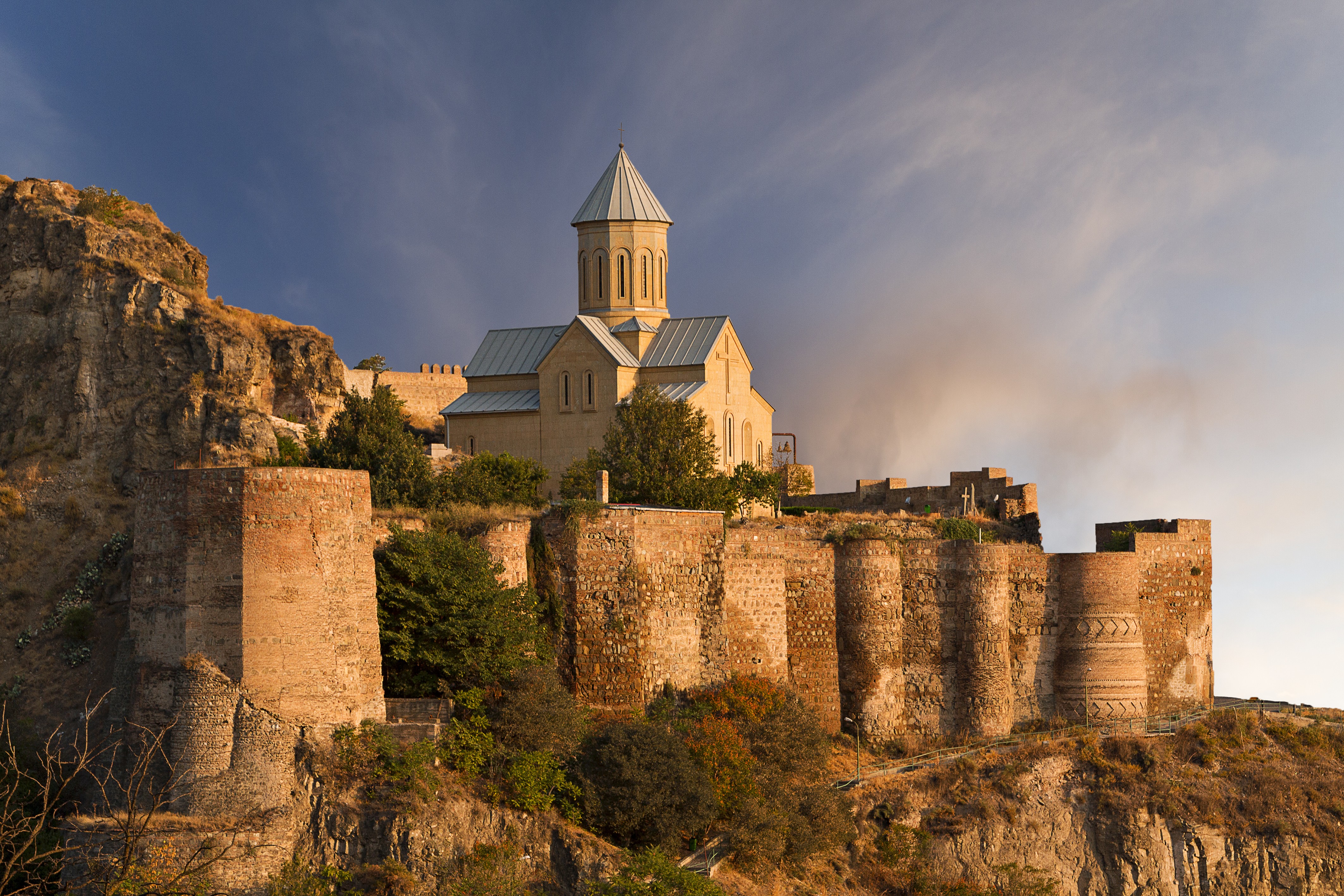
Narikala Fortress stands on a hill above Old Tbilisi, overlooking Abanotubani, the historic centre, the Mtkvari River and the Bridge of Peace. Its elevated position makes it one of the city's most recognisable historic structures.
The hill can usually be combined with the Rike Park cable car, the Mother of Georgia statue and a walk through Old Tbilisi. Before visiting, check the latest restoration status and confirm which paths and areas are open.
Important update on visiting in 2026
According to the latest information available in 2026, the interior of Narikala Fortress and its walls remained closed during restoration work. Do not assume that entering the fortress or walking along the walls will be possible.
The Rike Park cable car is still a way to reach the upper part of the hill. Even with the fortress closed, it is still possible to visit the Mother of Georgia area and enjoy the nearby viewpoints, as long as the paths are open.
The situation may change as the work progresses. Confirm access conditions shortly before your visit and respect all barriers, signage and safety areas.
Quick facts
- Status in 2026: interior of the fortress temporarily closed for restoration as of the latest update
- Visit duration: between 45 minutes and 1h30 for the cable car, viewpoints and Mother of Georgia
- Location: hill between Old Tbilisi, Abanotubani and the Botanical Garden
- Best time: morning or late afternoon
- Difficulty: easy using the cable car; moderate walking up or down
- Access to the fortress: free when open, but temporarily closed as of the latest update
- Rike Park–Narikala cable car: 2.50 GEL per trip (approximately €0.85)
The conversion to euros is approximate and may vary with the exchange rate.
Is Narikala Fortress worth visiting?
Yes, but the experience depends on the state of the restoration work. Narikala remains one of Tbilisi's main symbols, and the hill offers one of the most recognisable perspectives of the Georgian capital.
While the interior of the fortress is closed, the visit should mainly be planned around the cable car ride, the outdoor viewpoints and the walk to the Mother of Georgia statue. It is still worth the trip, but it is important not to expect a full circuit through the ruins or the walls.
Those with little time can take the cable car up, take in the city from above and walk on to the Mother of Georgia. Afterwards, depending on which paths are open and the state of the terrain, it is possible to take the cable car back down or walk down towards Old Tbilisi and Abanotubani.
What is Narikala Fortress?
Narikala is an ancient fortress built in a strategic position above the historic part of Tbilisi. The earliest defensive structures on the site date back to the 4th century, when the region was under Persian influence.
The fortress was expanded and modified by different rulers over the centuries. Persians, Arabs, Georgians and other groups that controlled Tbilisi used the hill to protect the city and the routes near the Mtkvari river.
Much of the structure was damaged in the 19th century. Today, the complex consists of walls and ruins from different historical periods.
Inside the fortress stands St Nicholas Church. The current church was built in the 1990s on the foundations of a 13th-century medieval building. While the fortress area remains closed, access to the church may also be unavailable.
How to get to Narikala Fortress
Cable car from Rike Park
The cable car departing from Rike Park is the easiest way to reach the upper part of the hill. The lower station is near the Bridge of Peace, in an area that can be reached on foot from different points in Old Tbilisi.
The ride is short and offers a panoramic view during the ascent. The upper station is close to Narikala Fortress and the Mother of Georgia statue.
The official fare checked for the Rike Park–Narikala cable car is 2.50 GEL per trip (approximately €0.85). Confirm the current price, payment methods and operating conditions at the station on the day of your visit.
Walking up through Old Tbilisi
There are also paths connecting Old Tbilisi and Abanotubani to the upper part of the hill. The climb has steps, slopes and stretches that can get slippery after rain.
During the restoration work, some routes may be blocked off or rerouted. Follow only the open paths and do not cross barriers to try to reach the fortress.
The walk suits those used to climbing and wearing sturdy footwear. In summer, avoid the hottest times of day, as some sections are exposed to the sun with little shade.
Taxi or Bolt
A taxi or Bolt can help you reach areas close to the upper part, but the exact drop-off point depends on the barriers and the state of the roads. Even by car, some walking may still be necessary.
This option does not guarantee direct access to the fortress entrance. Confirm with the driver how far the vehicle is allowed to go.
How to plan the visit
The most practical combination is to start the visit at Rike Park and take the cable car up. During the ride, take in the Bridge of Peace, the Mtkvari river, the Presidential Palace and the rooftops of Old Tbilisi.
After getting off, head to the open viewpoints and walk to the Mother of Georgia. The statue stands in the same elevated area and represents the hospitality and defensive spirit of the Georgian people, holding a cup of wine in one hand and a sword in the other.
If the paths are open and conditions are safe, you can walk down towards Abanotubani. This combination lets you continue the itinerary through the sulphur baths, the Jumah Mosque and Tbilisi's historic area.
Anyone who would rather avoid steps or uneven descents can return to the station and take the cable car again. As the fare is charged per trip, factor in the cost of both the ascent and the descent.
What you can see from the top
Even when the interior of the fortress is not accessible, the hill offers different perspectives of Tbilisi.
- Old Tbilisi: view of the rooftops, balconies and streets of the historic area
- Mtkvari river: panorama of the river running through the centre of the capital
- Bridge of Peace and Rike Park: contrast between the old areas and contemporary architecture
- Metekhi Church: a church set on raised ground on the opposite bank of the river
- Sameba Cathedral: the cathedral visible from different points in the city
- Abanotubani: the sulphur baths area at the foot of the hill
- Mother of Georgia: a monument just a few minutes from the upper cable car station
Tickets and prices
- Interior of Narikala Fortress: free access when open, but temporarily closed for restoration as of the latest 2026 update
- Open outdoor viewpoints: free access
- Mother of Georgia: free access
- Rike Park–Narikala cable car: 2.50 GEL per trip (approximately €0.85)
Prices and the conversion to euros were checked in July 2026. Exchange rates, fares and access conditions may change. Confirm the information before your visit.
How long to spend
Allow between 45 minutes and 1h30 to ride the cable car up, take in the city and walk to the Mother of Georgia. This can take longer if you decide to walk down to Abanotubani or continue on to another nearby attraction.
Once the interior of the fortress reopens, consider allowing 1 to 2 hours to include the walls and St Nicholas Church, provided all areas are open.
Best time to visit
Morning
The morning tends to have a more pleasant temperature and can be a good choice for those planning to walk up or down. It also allows you to continue the visit through Abanotubani and Old Tbilisi for the rest of the day.
Late afternoon
Late afternoon offers beautiful light over the city and is one of the most popular times to visit. Check the cable car's operating hours on the day, especially if you also plan to use it to come back down.
Evening
The upper part offers an interesting view of illuminated Tbilisi, but paths, steps and uneven stretches require extra care after dark. Avoid isolated routes and unlit areas.
Practical tips
- Check whether the fortress has reopened before planning your visit
- Do not cross barriers or areas cordoned off for the restoration work
- Confirm the cable car's operation and fare on the day of your visit
- Wear comfortable shoes with good grip
- Bring water during the warmer months
- Avoid walking up during periods of intense heat
- Keep your distance from edges and unprotected areas
- Combine the visit with the Mother of Georgia, Abanotubani, the Jumah Mosque, the Bridge of Peace and Rike Park
- If you take the cable car up and plan to walk down, check first whether the path is open and safe