Last updated: August 2026
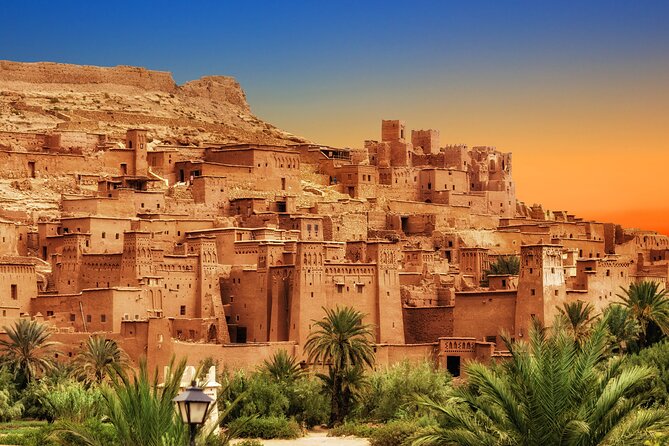
Ait Ben Haddou is a historic cluster of earthen buildings raised on a hillside in the Ounila Valley, in Ouarzazate province. Its walls, towers, and dwellings form a landscape known both for its architecture and for the film productions shot in the area.
Although it is often called Kasbah Ait Ben Haddou in searches and travel itineraries, the technically correct name is Ksar Ait Ben Haddou. A ksar brings together different dwellings and communal spaces inside a fortified area, while a kasbah is usually a fortified residence or a compound tied to a single family or authority.
The site was added to the UNESCO World Heritage List in 1987 as an example of earthen architecture from the pre-Saharan regions of southern Morocco. UNESCO also notes its historical link to old trade routes between inland Africa and Marrakech.
A visit lets you walk through the ksar's passageways, look closely at the building techniques, climb the hillside, and see the Ounila Valley from an elevated point. The stop pairs well with Ouarzazate or with the wider route between Marrakech and the south.
Quick facts
- Visit time: 1h30 to 3 hours
- Location: Ounila Valley, Ouarzazate province
- Reference distance: approximately 30 kilometers from Ouarzazate
- Recognition: UNESCO World Heritage Site since 1987
- Type of attraction: architecture, historical heritage, and cultural landscape
- Entrance: no official general ticket to walk the public passageways
- Extra costs: private interiors, guides, and parking may charge separately
- Best time: morning or late afternoon, mainly because of the heat
- Access: paved road to the modern village and a footbridge for pedestrians
- Accessibility: limited inside because of ramps, steps, and uneven ground
Is Ait Ben Haddou worth visiting?
Ait Ben Haddou is worth the visit for anyone interested in earthen architecture, the history of southern Morocco's trade routes, or the film sets used across the site. The ksar's silhouette against the hillside also creates a striking contrast with the valley and mountains around it.
The visit does not require a full day. In roughly two hours you can cross the footbridge, walk the main passageways, and climb to the highest point. Anyone interested in photography, architecture, or history may want to allow more time.
The location makes it easy to combine with Ouarzazate, the Ounila Valley, and the road toward the Tizi n'Tichka pass. Tours between Marrakech and the desert usually include a stop here too, though the time available varies by itinerary.
Is Ait Ben Haddou a kasbah or a ksar?
Ait Ben Haddou is a ksar. The word describes a traditional cluster of dwellings and communal areas protected by walls and towers.
A kasbah is a different type of structure. The term is usually applied to a fortified residence or a compound linked to a single family or authority.
Inside a ksar there can be buildings that look similar to small kasbahs, but that does not turn the whole settlement into a single residence.
The phrase Kasbah Ait Ben Haddou has become common in tourism and in English-language searches. That is why it appears in this page's title, while the text itself uses the correct architectural term.
History of Ait Ben Haddou
Ait Ben Haddou sat close to old routes that connected inland Africa to Marrakech through the Draa Valley and the Tizi n'Tichka pass.
According to UNESCO, the oldest buildings currently identified in the ksar do not appear to predate the 17th century. The building techniques used, however, had already existed in the valleys of southern Morocco for a long time before that.
The settlement includes dwellings, communal areas, a mosque, spaces linked to grain storage, a square, and cemeteries tied to the history of the region's communities.
Economic and social change led many residents to move to the village built on the other side of the river. Some parts of the ksar are still maintained, used, or adapted, while others show more wear.
UNESCO World Heritage status
Ksar Ait Ben Haddou was inscribed as a World Heritage Site in 1987, under UNESCO cultural criteria IV and V.
The recognition considers the ensemble a significant example of southern Moroccan architecture and of traditional earthen settlement in the pre-Saharan areas.
The buildings depend on frequent upkeep, since earth and wood are vulnerable to rain, erosion, and neglect. Conservation work aims to preserve the layout, the materials, and how the ksar sits within the landscape.
World Heritage status does not mean every building is restored or open. During a visit you will see both well-kept sections and stretches marked by wear.
How to get to Ait Ben Haddou
Ait Ben Haddou lies approximately 30 kilometers northwest of Ouarzazate, reached via the P1506 road off the N9.
The most practical options are:
- Own or rented car: gives you the flexibility to combine the visit with Ouarzazate and the Ounila Valley
- Taxi: can be arranged in Ouarzazate, including waiting time and the return trip
- Driver or transfer: an option for those who would rather not drive
- Organized tour: common on routes between Marrakech, Ouarzazate, and the desert
- Staying in the area: lets you see the ksar before or after the main tour groups
Agree on the total transport price in advance and confirm whether the return trip is included. Download the map for offline use before leaving Ouarzazate.
Travelers coming from Marrakech cross the High Atlas via the N9. Travel time varies with traffic, mountain conditions, roadworks, and stops, so Ait Ben Haddou works better as part of a longer itinerary than as a quick visit.
How the visit works
The modern side of the river has parking areas, places to stay, restaurants, and viewpoints facing the ksar. From there, a footbridge leads to the entrance of the historic settlement.
After crossing, visitors follow the internal passageways and climb gradually up the hillside. The path includes ramps, steps, stones, and uneven stretches.
There is no single required route, but the most common path crosses the lower section, passes through the internal buildings, and continues up to the elevated area where the old communal granary stands.
On the way down, you can cross back over the same footbridge and view the ensemble from different points on the opposite bank. Set aside a few minutes for this outside view, since it makes the layout of the ksar on the hillside easier to understand.
Crossing the Ounila River
The footbridge is the simplest way to cross the Ounila River and reach the ksar. It removes any dependence on water levels and offers a more stable crossing.
At certain times, informal crossings over the riverbed or stepping stones may appear. Do not rely on this option, since water volume and ground conditions change throughout the year.
After heavy rain, follow local guidance and use only the crossings considered safe.
What to see inside
The ksar's passageways reveal earthen walls, wooden doors, decorated towers, and different types of dwellings. Some areas are plain, while others have more elaborate facades.
There are also communal spaces tied to the settlement's history, including the square, the mosque, storage areas, and defensive structures.
Some interiors function as homes, shops, small exhibition spaces, or private property. Only enter where there is a clear sign of visiting access or permission.
The climb ends at the top of the hillside, near the old communal granary. From this point, you can see the Ounila Valley, the modern village, and how the buildings are arranged below.
Ait Ben Haddou in film and television
The architecture and landscape of Ait Ben Haddou have made it a filming location for a number of film and television productions.
Titles associated with the ksar or the surrounding area include Lawrence of Arabia, The Mummy, Gladiator, Kingdom of Heaven, and episodes of Game of Thrones.
Filming carried out at different times may have used temporary structures, specific areas, or nearby landscapes. Not everything seen in these productions still exists on site.
The visit is not set up as a theme park or a film exhibition. The main interest remains the architectural heritage and the ksar's relationship with the Ounila Valley.
Tickets and costs
There is no official general ticket to walk the public passageways of the ksar.
Some houses, terraces, exhibition spaces, or interiors kept up by families may charge a contribution or their own entry fee. Guides and parking are also separate services.
Before entering a private space or accepting company, ask the price in Moroccan dirhams and confirm exactly what is included.
Conditions can change, so do not treat individual charges as a general ticket covering the whole site.
Do you need a guide?
Hiring a guide is not required to walk the main passageways of Ait Ben Haddou. The route can be done independently by anyone who wants to look at the architecture and climb to the top.
A guide can add context on building techniques, communal spaces, trade routes, and the films shot in the area.
If you choose this service, agree on the price, the length, and the language of the visit beforehand.
How long to spend
Set aside 1h30 to 2 hours to cross the footbridge, walk the interior, climb to the top, and return.
With 2 to 3 hours, you can look closer at the architectural details, visit an open interior, and photograph the ksar from the opposite bank.
Add more time if you plan to have lunch, visit the Ounila Valley, or combine the stop with attractions in Ouarzazate.
Best time to visit
Mornings tend to be cooler and let you visit the interior before the hottest hours. They also leave time to continue the route toward Ouarzazate or the High Atlas.
In late afternoon, lower light can bring out the tones of the earthen buildings seen from the opposite side of the river. Allow enough time to descend and cross the footbridge before dark.
Midday can be hot, especially in summer, and tends to coincide with tour groups passing through.
Best season to visit
Spring and autumn tend to offer more comfortable temperatures for walking the ksar's slopes.
Summer can bring intense heat during the day. In that season, favor early morning or late afternoon, and carry water and sun protection.
In winter, mornings and nights can be cold. Rain can also affect the river's water level and the condition of some paths.
Check the forecast before visiting, especially during unsettled weather in the High Atlas.
Accessibility
The outside view of the ksar can be enjoyed from the modern village without making the full climb.
The footbridge offers a more stable crossing, but the interior has ramps, steps, stones, and uneven ground. The climb to the top is not suitable for everyone with reduced mobility.
Those who cannot complete the walk can still see the architecture from the opposite bank and explore the areas closest to the footbridge, depending on access conditions.
Preservation and respect for residents
Ait Ben Haddou is a historic site that includes public spaces, private property, and areas still used by the community.
Ask permission before photographing residents, interiors, or people at work. Do not enter homes, terraces, or courtyards without a clear sign that they are open to visitors.
Avoid touching the walls or removing fragments. The earthen buildings depend on constant upkeep and are vulnerable to erosion.
When buying crafts or hiring a service, confirm the price before completing the purchase.
Practical tips
- Use the footbridge to cross the river
- Carry water, a hat, and sun protection
- Wear sturdy shoes for ramps, stones, and steps
- Set aside time to view the ksar from the opposite bank
- Download the map for offline use
- Carry cash in Moroccan dirhams for local services
- Confirm prices before entering private spaces
- Ask permission before photographing residents
- Avoid the hottest hours in summer
- Combine the visit with Ouarzazate or the Ounila Valley
Final tip
Start the visit by viewing Ait Ben Haddou from the modern village. This angle shows how the walls and towers occupy the hillside above the Ounila River.
Cross the footbridge, walk the internal passageways, and climb to the top at your own pace. On the way back, take a few minutes to view the ensemble again from the opposite side.
Between 1h30 and 3 hours is enough to see the ksar without rushing. The visit gains more context when combined with Ouarzazate, the Ounila Valley, or the crossing of the High Atlas.