Last updated: August 2026
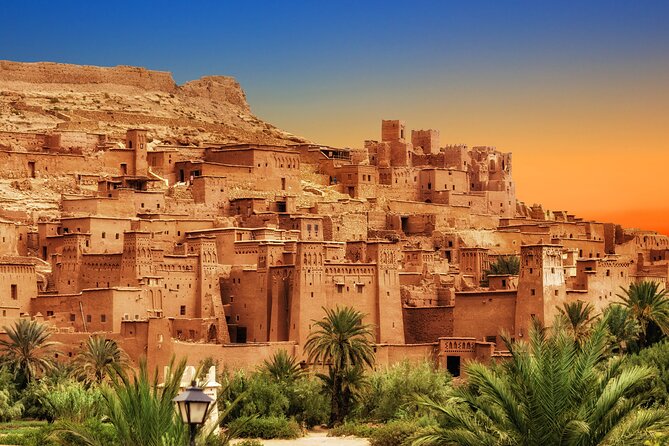
Ait Ben Haddou is one of the best-known stops on the road between Ouarzazate and Marrakech. Its earthen buildings, walls, and towers form a fortified settlement that represents the traditional pre-Saharan architecture of southern Morocco.
Although it is often called a kasbah in tourism materials, Ait Ben Haddou is technically a ksar, a fortified community made up of different buildings inside a shared wall. Ksar Ait Ben Haddou has been part of the UNESCO World Heritage List since 1987.
This itinerary is a professional recommendation based on research into the site's heritage, access, and the logistics of the route between Ouarzazate and Marrakech. It is not presented as personal experience, since I have not yet visited this part of Morocco.
How this Ait Ben Haddou itinerary was planned
The schedule assumes an early departure from Ouarzazate and puts the first part of the day into Ait Ben Haddou. Kasbah Taourirt and Atlas Film Studios were left out, since they have their own separate itinerary and would leave little time for the ksar.
The visit includes crossing to the historic area, walking the alleyways, and climbing toward the highest section. The pace should be adjusted for heat, crowds, path conditions, and the time needed to continue to Marrakech.
Departure from Ait Ben Haddou should not happen late. The High Atlas road is long and winding, and conditions can change because of weather, roadworks, and traffic. The goal is to cross the mountains in daylight and reach Marrakech without depending on a strict schedule.
Ait Ben Haddou in 1 day: itinerary overview
Ait Ben Haddou: historic ksar and the High Atlas crossing
Departure from Ouarzazate
Leave Ouarzazate in the morning to keep enough time for the visit and for the road to Marrakech. The distance to Ait Ben Haddou is relatively short, but the final schedule depends on traffic, the route, and the exact location of your accommodation.
Kasbah Taourirt and Atlas Film Studios should stay in the dedicated Ouarzazate itinerary. Trying to visit them the same morning can delay arrival at the ksar and push the High Atlas crossing into the late part of the day.
Before leaving, check the route, fill up the vehicle, and download the map for offline use. Also confirm road conditions toward Marrakech, especially during rain, cold, or snow at higher elevations.
If you have a driver, agree in advance on the time available at Ait Ben Haddou and an approximate time to continue the journey. The schedule needs room for changes, not just an arrival time calculated by an app.
Arrival and access to the ksar
The modern side of Ait Ben Haddou sits across the river from the historic settlement. After parking or getting out of your transport, head to a regular access point used by both residents and visitors.
A permanent footbridge makes it easy to reach the ksar. Avoid improvising a crossing over the riverbed when there is water, current, or slippery stones.
River conditions vary with the weather and the time of year. Use whichever access point is safest at the time and follow any local guidance.
Entry to the public streets of the settlement does not work as a single attraction with a standard general ticket. Some interior spaces, homes, or small viewing points may ask for a separate payment. Ask the price before entering and do not accept a charge without understanding what it covers.
Understanding Ait Ben Haddou
Ait Ben Haddou is a ksar, not a single kasbah. The term describes a fortified settlement made up of houses and other buildings grouped inside defensive walls.
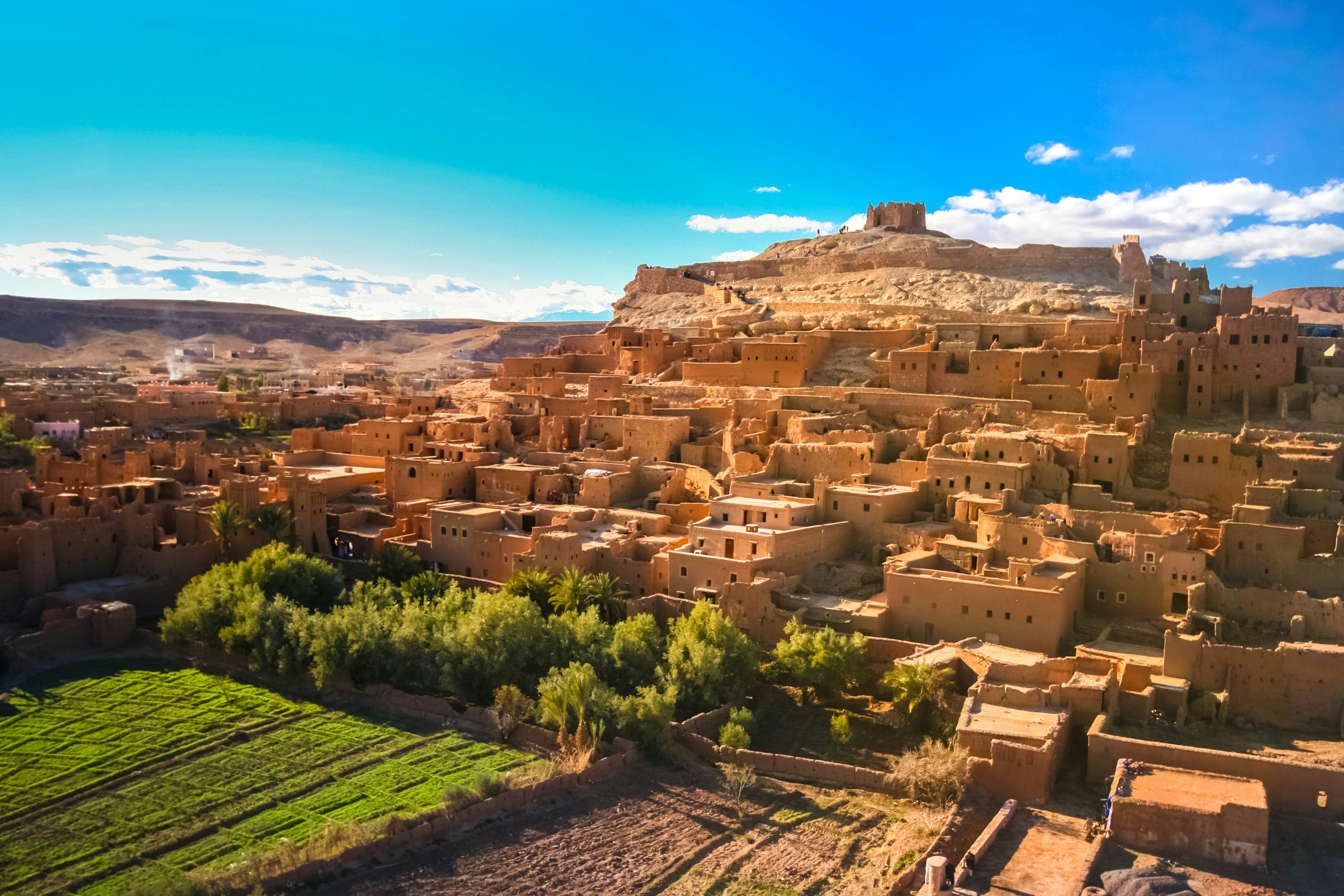
UNESCO describes the site as a striking example of southern Moroccan architecture. The buildings use traditional earth construction techniques and need constant upkeep because of rain, erosion, and the passage of time.
World Heritage status does not turn the place into an empty film set. Some families and local activities are still connected to the settlement and the surrounding area.
During the visit, respect closed doors, private areas, and blocked paths. Ask permission before photographing residents, and avoid treating homes or workspaces as though they were only a tourist backdrop.
Walking through the alleyways
The best way to see the ksar is to walk through the passageways between the buildings, taking in the towers, the earthen walls, and how the settlement follows the hillside.
The route includes sloped sections, steps, and uneven surfaces. Wear shoes with good grip, carry water, and take breaks during the hottest periods.
Some shops, workshops, and interiors may be open during the visit. Only go in where there is a clear invitation, and confirm in advance whether there is a charge.
You do not need to follow everyone who offers a tour or an alternative route. Anyone who prefers historical context can hire a guide, but should agree on the price, the length, and what is included beforehand.
Take time to look at the details without blocking the passageways. On busy days, narrow paths can get crowded with visitors and groups.
Climbing to the top
The climb toward the highest section offers a wide view of the settlement, the river, the cultivated areas, and the arid landscape around it.
The path takes more effort than the lower area. Reaching the very top is not required to enjoy the visit, since there are worthwhile views at different levels along the way.
Anyone with limited mobility, little time, or sensitivity to heat can limit how far they climb and turn back once the path stops feeling comfortable.
Take care on the way down, especially on worn steps and stretches of loose sand or earth. Avoid getting close to edges just to get a photograph.
The view depends on visibility and weather. There is no need to wait for a specific quality of light to consider the visit complete.
Film history and heritage
Ait Ben Haddou has been used as a filming location for film and television productions, which helped raise its international profile. Even so, the site's value is not limited to its connection with those productions.
During the walk, look first at the architecture, the layout of the settlement, and how the buildings adapted to the environment. Information about films can add to the visit, but should not replace the historical and cultural context.
Not every building or space in the ksar corresponds to a specific known film scene. Avoid repeating unconfirmed claims about films or following improvised markers that promise an exact filming spot.
Atlas Film Studios, near Ouarzazate, offers a different experience centered on built sets and behind-the-scenes production. Ait Ben Haddou is a historic site recognized by UNESCO and should be understood on those terms.
Lunch and departure for Marrakech
After the walk, take a lunch break in the modern area before continuing the journey. Choosing a restaurant nearby avoids starting the mountain stretch in a rush or without a proper meal.
Confirm the estimated time to Marrakech right before leaving. The route shown by a navigation app can change because of roadworks, traffic, and weather.
Avoid dragging out shopping or lunch if the day is already running late. It is better to skip an optional activity and start the drive with daylight to spare.
Carry water in the vehicle and plan a rest stop along the way. Anyone prone to motion sickness on winding roads should prepare before entering the sections with more curves.
The High Atlas and Tizi n'Tichka
The road to Marrakech crosses the High Atlas and passes through the Tizi n'Tichka area. The route brings curves, changes in altitude, villages, and landscapes very different from the arid areas near Ouarzazate.
Stop only in areas with enough space to park without blocking the road. A spot with other vehicles stopped is not automatically safe.
Conditions can change quickly during rain, fog, cold, or snow. If there is a closure or restriction, follow official guidance and do not try unfamiliar detours.
Treat travel time as an estimate. Trucks, roadworks, stops, traffic, and weather can all extend the journey.
If you are driving, stay alert throughout and avoid overtaking without clear visibility. If you have a driver, enjoy the scenery without asking for stops in unsuitable spots.
Arrival in Marrakech
Arriving in Marrakech closes out the leg through southern Morocco's landscapes. After a day of walking and mountain driving, check in and keep the first night simple.
If your accommodation is inside the medina, confirm in advance how close a vehicle can get. Some streets do not allow car access, and the last stretch may need to be done on foot or with help carrying luggage.
Arrange a meeting point with your accommodation when the address is not directly reachable. This avoids searching for the riad with luggage through narrow streets after a long day.
Save Marrakech's main sights for the following days. A meal nearby and a night of rest are enough to close out this leg of the trip.
What I would prioritize on this Ait Ben Haddou itinerary
I would prioritize an early departure from Ouarzazate, walking the main areas of the ksar, and reaching at least one elevated point to take in the view.
I would also set aside time to understand Ait Ben Haddou as a historic site, rather than limiting the visit to films shot in the area.
Departure for Marrakech would happen in the early or mid-afternoon, depending on the season and road conditions.
Kasbah Taourirt and Atlas Film Studios would stay in the Ouarzazate itinerary, to avoid overloading the morning.
What can be optional
Reaching the very top of the ksar is optional. There are good views at intermediate levels.
Hiring a guide is also optional. It can add to the visit when the price, length, and content are agreed on in advance.
Entering every open building is not necessary. Choose only the spaces that genuinely add something to the visit.
Frequent stops in the High Atlas are optional. One or two safe spots are enough to rest and take in the scenery.
Sleeping in Ait Ben Haddou can be worthwhile for anyone who wants to photograph the settlement early or late in the day, but it is not necessary for this itinerary between Ouarzazate and Marrakech.
Mistakes that can make the itinerary tiring
The main mistake is trying to visit Kasbah Taourirt, Atlas Film Studios, and Ait Ben Haddou, and still cross the High Atlas to Marrakech, all in the same day.
Another problem is leaving Ait Ben Haddou late while relying only on the time shown by a navigation app.
Avoid calling the whole settlement a single kasbah. Understanding that Ait Ben Haddou is a ksar helps you make better sense of the heritage you are visiting.
Do not cross the river by an improvised route when a regular, safe crossing exists.
Also avoid entering homes, private areas, or paid spaces without permission and without confirming the price.
Do not stop the vehicle on curves or narrow shoulders to photograph the mountains.
Finally, do not turn the climb into an obligation. Adjust the walk to the heat, your fitness, and the time available.
Trip planning for Ait Ben Haddou: essential tips
Heritage and respect
- Remember that Ait Ben Haddou is a ksar
- Respect homes and private areas
- Ask permission before photographing residents
- Confirm prices before entering paid spaces
Walking and climbing
- Wear shoes with good grip
- Carry water and sun protection
- Take breaks during the heat
- Climbing all the way to the top is optional
The road and conditions
- Check the route before leaving
- Cross the High Atlas during daylight
- Stop only in safe spots
- Follow guidance if there is a restriction
Arrival in Marrakech
- Confirm how close a vehicle can get
- Arrange a meeting point with your accommodation
- Plan how to handle your luggage
- Save the main sights for the following days