Last updated: August 2026
Casablanca shows a different side of Morocco than the medinas of Fez and Marrakech. It's a large, spread-out city tied to the country's economic life, with busy avenues, 20th-century architecture, and a long stretch facing the Atlantic.
For those arriving through Mohammed V International Airport, one day is enough to see the Hassan II Mosque and combine a few areas of the city without delaying the rest of the trip. The main thing to watch is the order of the visits: Casablanca doesn't have a compact tourist center, and poorly organized travel between stops can eat up much of the day.
This is a professional planning suggestion, not an account of a visit I made myself. I work on building itineraries, and I put this plan together based on the mosque's guided tour times, the location of the neighborhoods, and the time needed to continue on to Rabat, Fez, or another destination the next day.
How this Casablanca itinerary was planned
The Hassan II Mosque comes first because the interior visit happens on guided tours at fixed times. Starting with it reduces the risk of missing the main attraction because of a delay in another neighborhood.
After the mosque, the route passes through the central area and continues to the Habous Quarter. This order avoids heading straight to the Corniche and then crossing back across the city toward the interior.
The Ain Diab Corniche is left for late afternoon, when a walk by the sea tends to be more pleasant. Rick's Café appears as an option for lunch or dinner, not as a mandatory stop.
This itinerary assumes a full day and a night in Casablanca. Anyone arriving in the afternoon should trim the schedule and protect the mosque's time slot. Anyone with only a few hours between flights should weigh traffic and distance to the airport before heading out.
Casablanca in 1 day: itinerary overview
Casablanca: Hassan II Mosque, Habous, and the Corniche
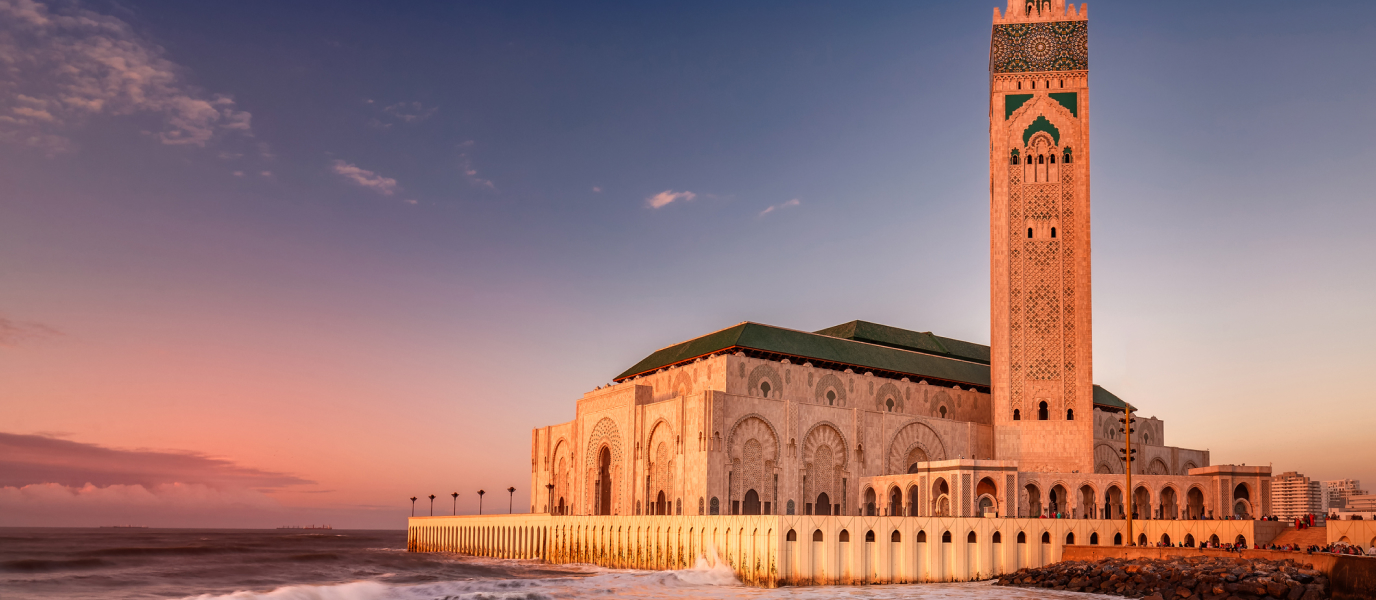
Morning: Hassan II Mosque
Start the day at the Hassan II Mosque, Casablanca's main architectural landmark. Built on the shore of the Atlantic, it brings together woodwork, marble, stucco, copper, tadelakt, and zellige crafted by Moroccan artisans.
The interior is visited on a guided circuit at set times. The schedule can vary depending on the season, Fridays, Ramadan, and religious celebrations. Check with the Hassan II Mosque Foundation before your trip and arrive early.
The official rules require clothing that covers the shoulders, torso, and legs below the knees. Shoes are removed before entering the prayer hall and carried by the visitor in a bag provided on site.
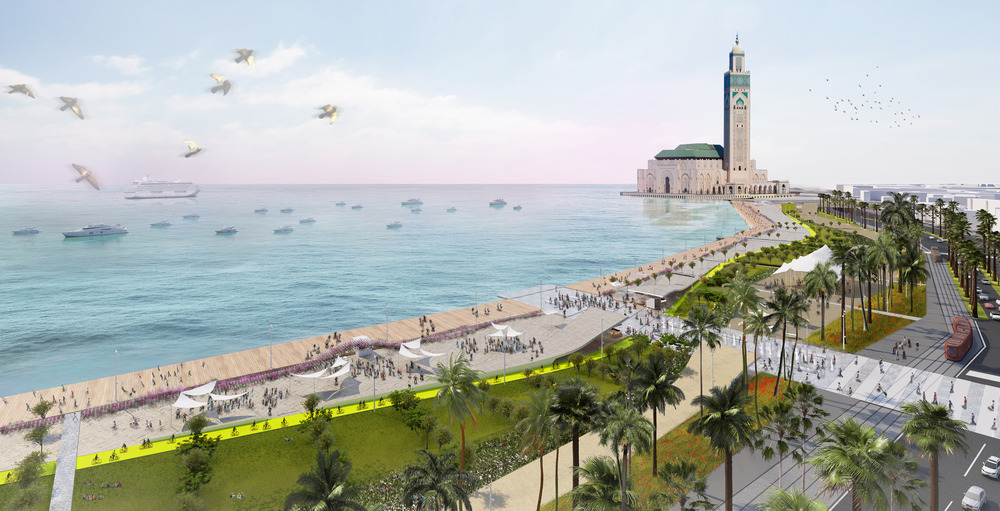
Set aside some time for the esplanade too, and for how the building relates to the sea. Even those who can't do the interior tour can still take in the exterior, but the area remains a religious space and should be visited respectfully.
I wouldn't schedule another fixed-time attraction right after this one. The tour, the wait, and the walk around the outdoor area can take up a good part of the morning.
Late morning: downtown Casablanca
After the mosque, head to the central area. Casablanca is spread out, so a petit taxi is usually more practical than trying to cover the whole route on foot. Confirm the driver is using the meter, or agree on a price beforehand if needed.
Mohammed V Square brings together administrative buildings and offers a look at the urban architecture developed during the French Protectorate period. The stop can be short and works better as part of the route between other points than as an attraction worth several hours.
Anyone interested in architecture can walk a few central blocks and take in façades with Art Deco and neo-Moorish elements. Pick a concentrated area rather than crossing several avenues just to check buildings off a list.
Downtown shows the everyday, commercial Casablanca. The interest lies in the contrast with the historic cities elsewhere on the itinerary, not in looking for a medina similar to the one in Fez.
Early afternoon: Habous Quarter
Continue to the Habous Quarter, also called the New Medina. The neighborhood was developed during the Protectorate period and combines references to traditional Moroccan architecture with a more organized layout.
Walk through the commercial passages, bookshops, and shops selling local products. It's a simpler area to explore than the big medinas, but it's still a neighborhood used by residents and merchants, not just a tourist backdrop.
Mahkama du Pacha is in the Habous area and has a striking façade. Interior access can depend on administrative operations and authorizations. Don't build your itinerary counting on getting inside; treat the exterior as the guaranteed part of the visit and confirm any access close to your travel date.
The Royal Palace of Casablanca is also in the area, but it doesn't function as an attraction open for a regular visit. The exterior can be viewed discreetly, respecting barriers, security, and any photography restrictions.
Habous is a good spot for lunch, coffee, or a specific purchase. If the morning runs late, I would keep a short walk through the neighborhood and drop the stops outside the palace.
Late afternoon: Ain Diab Corniche
End the itinerary at the Ain Diab Corniche. This stretch of coast brings together a promenade, restaurants, cafés, hotels, and spaces facing the Atlantic.
The Corniche is not next to the Hassan II Mosque. Both belong to the coastal strip, but travel between them should be by taxi, car, or suitable transport when time is limited.
Use the late afternoon to walk a stretch of the seafront and unwind after the day's city visits. You don't need to cover the whole coastal avenue. Choose a safe area to start and end the walk.
On days with strong wind, rain, or low visibility, the Corniche can be shortened or swapped for more time in Habous and downtown.
Evening: where to end the day
Anyone planning to have dinner at the Corniche will find several options in the area and avoid another trip before heading back to the hotel.
Rick's Café is an option for those interested in the setting inspired by the film Casablanca. The restaurant is not the place where the film was shot and shouldn't be presented as a historic attraction. It's a themed venue aimed mainly at visitors.
The venue accepts reservations for lunch and dinner. Check the official website for hours, availability, any closures, and current rules. If you choose Rick's Café, keep in mind you'll need to leave the Corniche area.
Spend the night in Casablanca if the itinerary continues the next day. To make departure easier, prioritize accommodation with convenient access to the train station, the road, or transport to the airport, depending on the next leg of your trip.
What I would prioritize in this 1-day Casablanca itinerary
The guided tour of the Hassan II Mosque would be my top priority. It's the attraction that requires the most attention to timing, and the one that best justifies setting aside part of the day for Casablanca.
After that, I would keep a walk through the Habous Quarter to see an urban area different from the coast and the administrative center.
The Corniche works well as a closer, but how much it matters depends on the weather and the time of day. On a very short day, I would protect the mosque and Habous ahead of the seafront.
I would also leave margin for getting between stops. Casablanca shouldn't be planned as a city where every attraction is a few minutes' walk from the last.
What can be skipped
Mohammed V Square can be just a quick pass-through. It appeals more to those who want to take in the architecture and layout of the central area.
The exterior of the Royal Palace doesn't need to be included when time is tight. The visit is limited, and Habous is more worthwhile for a walk.
Rick's Café is entirely optional. Choose the restaurant only if the connection to the film and the themed setting appeal to you.
A second walk along the Corniche at night is also skippable. After a full day, having dinner near your accommodation can be the more practical call.
Mistakes that can make the itinerary tiring
The main mistake is arriving at the Hassan II Mosque without checking the guided tour times. The exterior can still be viewed, but that doesn't automatically make up for missing the interior visit for anyone who wanted to see the whole building.
Another problem is zigzagging the route, going from the mosque to the Corniche, back downtown, and then out to Habous. Leave the Ain Diab coast for the end of the day.
Also, don't try to cover every stretch on foot. The distances are longer than they look, and some avenues don't make for a pleasant tourist walk.
Avoid treating the Royal Palace as an open attraction or assuming you'll get inside the Mahkama du Pacha. Administrative and security rules can limit these visits.
If Casablanca is just a connection, don't leave the airport without accounting for immigration, baggage claim, traffic, and buffer time for your next flight.
Finally, don't use your arrival day to fit in both Casablanca and Rabat when the flight lands late. It's better to sleep in the city and start the trip without turning the first few hours into a rush.
Travel planning for Casablanca: essential tips
Casablanca demands more attention to logistics than cities built around a single medina. Set the mosque's time slot first and build the rest of the day around that booking.
Getting around
- Walk only within each area of the itinerary
- A petit taxi makes it easier to move between the mosque, downtown, Habous, and the Corniche
- Confirm the meter or agree on a price when needed
- Leave margin for traffic during busier hours
Tickets
- The interior visit to the Hassan II Mosque is guided and paid
- Times change depending on the season, Fridays, and the religious calendar
- Rick's Café works best with a reservation
- Don't count on interior access to the Royal Palace or the Mahkama du Pacha
Best time
- Hassan II Mosque at the earliest slot that fits your schedule
- Downtown and Habous between late morning and afternoon
- Corniche in the late afternoon
- Avoid building the day with attractions at opposite ends of the city
How to pay
- The official currency is the Moroccan dirham
- Cash is useful for taxis, cafés, and small purchases
- Cards are common at hotels and larger venues
- Don't rely on a single card for the whole trip