Last updated: August 2026
Rabat brings together two important parts of Morocco's history in the same capital: the monuments and ramparts of the old city, and the urban planning developed in the 20th century. This meeting of past and modernity is part of the site recognized as a UNESCO World Heritage Site and helps explain why the city deserves more than a quick stop between Casablanca and Fez.
On a 1-day Rabat itinerary, you can see the Kasbah des Oudaias, walk through the medina, visit Hassan Tower and the Mausoleum of Mohammed V, and end the historical part at Chellah. The attractions, though, aren't all next to each other. For the day to work, you need to combine walking with at least one or two taxi or public transport trips.
This itinerary is a suggestion built from up-to-date research and my work planning trips. It is not an account of a personal visit. The goal is to lay out a realistic sequence, explain what deserves priority, and show what can be dropped if time is limited.
How this Rabat itinerary was planned
The morning starts at the Kasbah des Oudaias, when the residential streets and viewpoints tend to be more pleasant for walking. The Andalusian Gardens and the view over the Bou Regreg River are in the same area, avoiding unnecessary trips.
Afterward, the itinerary continues through the Rabat Medina, which can also serve as a lunch stop. Hassan Tower and the Mausoleum of Mohammed V come together in the afternoon since they occupy the same monumental area.
Chellah is separate from this cluster and requires more travel time. Because of that, it should be the last major visit of the day, but it can't be left for the evening. The archaeological site has an entrance fee and closing hours that vary by season.
Mohammed V Avenue appears as an optional stop. It makes more sense for anyone arriving or leaving through Rabat Ville station, staying downtown, or with time left after the historical attractions.
Anyone planning to arrive from Casablanca the same morning should factor in train time, the trip to their accommodation, and luggage storage. A day in Rabat works best when you're already staying in the city or arrive early without relying on a tight connection.
Rabat in 1 day: itinerary overview
Day by day
Rabat: Kasbah des Oudaias, the historic center, and the capital's monuments
Morning: Kasbah des Oudaias and the Andalusian Gardens
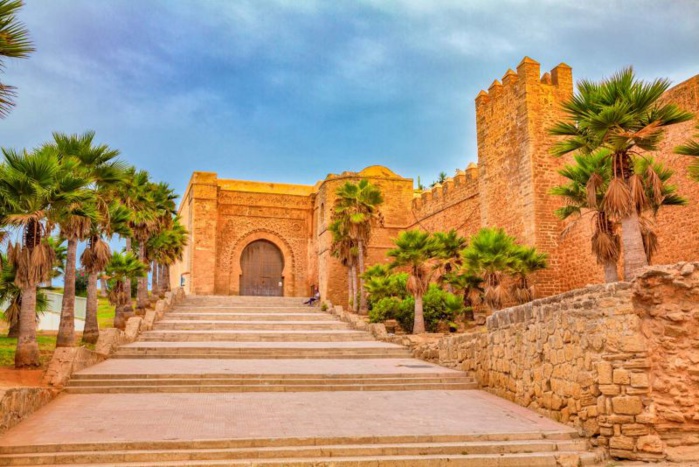
The Kasbah des Oudaias is the best place to start the itinerary. The fortification sits on raised ground near where the Bou Regreg River meets the Atlantic and brings together ramparts, historic gates, residential streets, and white and blue buildings.
Entering through Bab Oudaia helps convey the monumental scale of the complex. After the gate, the most interesting thing to do is walk through the interior streets without trying to follow a rigid circuit. The area remains residential, so photograph discreetly, respect closed doors, and don't turn house entrances into a backdrop without residents' permission.
Set aside some time for the viewpoints facing the Bou Regreg, Salé, and the coastline. They help convey Rabat's position between the river and the ocean and offer a break before continuing the walk.
The Andalusian Gardens are right by the kasbah area and can be visited on the same walk. The space brings together paths, plants, and elements with Hispano-Moorish influence. It's a relatively short stop, but it makes sense since it doesn't require another trip.
Hours for the gardens and interior areas of the kasbah can change during maintenance, official events, or religious holidays. Confirm they're open before visiting, especially if your trip falls during Ramadan.
Late morning: Rabat Medina and a lunch break
The Rabat Medina connects the Oudaias area to the center and works well as the next stop. Instead of trying to cover every street, choose a route that crosses the commercial areas and lets you take in everyday life, crafts, and architecture without eating up most of the day.
Rue des Consuls can be part of the walk for anyone looking for crafts and traditional products. Even so, leave a margin for detours, since busy streets, shopping, and small breaks can make the route take longer than it looks on the map.
Have lunch during this part of the itinerary or somewhere near the center. A real break is more useful than trying to squeeze in another attraction while eating quickly. Two important historical clusters are still ahead in the afternoon.
Mohammed V Avenue is optional. The street shows a different side of the capital, with administrative buildings, shops, and the connection to Rabat Ville station. Include it if it's naturally on the way from your accommodation or the station. Don't cross the center just to check off this stop.
Early afternoon: Hassan Tower and the Mausoleum of Mohammed V
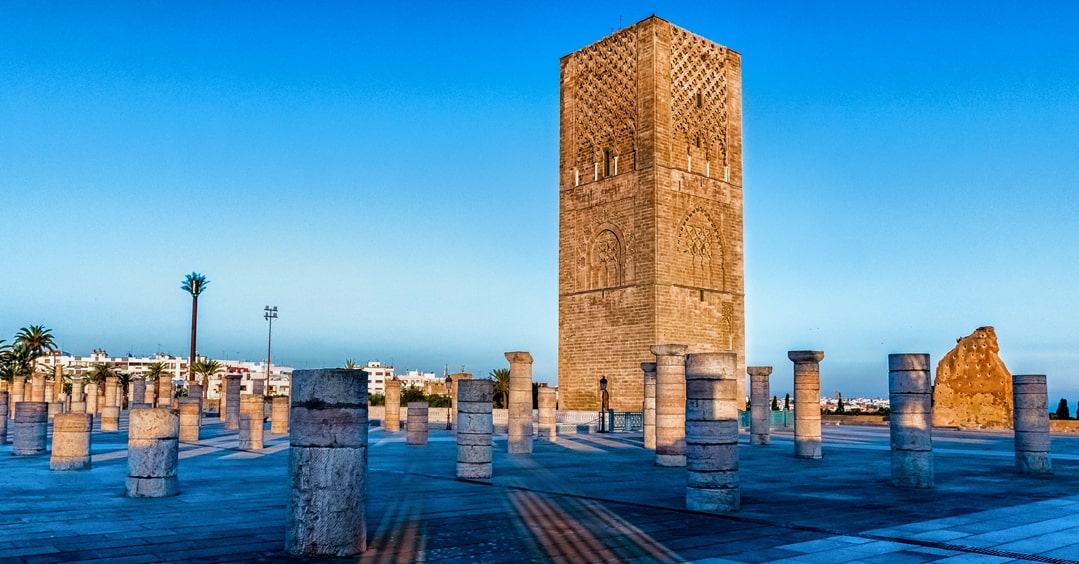
Hassan Tower is the minaret of a great mosque begun during the Almohad period, in the late 12th century, but never completed. The columns spread across the esplanade indicate the scale planned for the original project and make the space easier to understand when viewed at a relaxed pace.
The visit takes place mainly on the esplanade. Don't plan your itinerary counting on climbing the tower. The site's value lies in the architecture, the historical context, and the visual relationship with the mausoleum located in the same complex.
The Mausoleum of Mohammed V sits facing the esplanade and holds the tombs of Mohammed V, Hassan II, and Prince Moulay Abdallah. The building was constructed in the 20th century and uses marble, worked wood, mosaics, and other elements of Moroccan architecture.
This is a space of national tribute and should be visited respectfully. Wear appropriate clothing, keep your voice low, and follow the guidance on circulation and photography. Although the mausoleum is usually open to the public, ceremonies, official events, or maintenance work can temporarily limit access.
Hassan Tower and the mausoleum should be treated as a single stop. Splitting them into different time slots creates unnecessary travel and doesn't improve the itinerary.
Late afternoon: the Chellah archaeological site
Chellah brings together different layers of Rabat's history, with ancient remains, medieval structures, and a Marinid necropolis surrounded by walls and gardens. The visit adds an archaeological context that doesn't appear in the same way at the kasbah or the Hassan Tower esplanade.
The site is farther from the previous attractions. To save time, use a petit taxi or combine public transport with a short walk. Don't rely only on walking between Hassan Tower and Chellah if you still want to explore the interior at a relaxed pace.
Chellah has a paid entrance and seasonal hours. The visit needs to start with enough time to explore the site before closing. Check the official website the day before, since hours can change during summer, winter, Ramadan, cultural events, or conservation work.
If you arrive late in Rabat or spend too long in the medina, don't try to enter Chellah in the final minutes. In that case, drop Mohammed V Avenue, cut down on shopping, or choose between Chellah and a longer walk through the center.
Evening: back to the center and rest
After Chellah, head back to the central area or to your accommodation. The evening doesn't need another major attraction. Use this time for dinner, organizing the next day's travel, and resting.
Anyone continuing to Meknes or Fez should check the train or transport schedule before going to bed. Adding another city to the same day as Rabat tends to turn the itinerary into a string of transfers, with little time for the monuments.
What I would prioritize in this 1-day Rabat itinerary
I would prioritize the Kasbah des Oudaias early in the morning, combining Hassan Tower with the Mausoleum of Mohammed V, and a visit to Chellah with enough time before closing.
I would also keep a walk through the Rabat Medina, since it connects different parts of the itinerary and shows an everyday side of the capital that doesn't come through in the standalone monuments.
If the day were very hot, I would start even earlier and use a taxi for the stretches between the center, the Hassan Tower area, and Chellah. Saving energy on those trips helps you get more out of the visits that really call for walking.
What can be optional
Mohammed V Avenue can be dropped when it's not on the way to the station or your accommodation.
A long shopping walk through the medina is also optional. For a single-day itinerary, it's worth covering part of the commercial area and saving time for the monuments.
Museums and interior spaces at the Kasbah des Oudaias can be left for a longer stay, especially when the hours don't match the rest of the route.
Crossing to Salé, boat trips on the Bou Regreg, and other modern Rabat attractions should go on a second day. Adding them to this itinerary would likely require dropping Chellah or cutting the historical visits too short.
Mistakes that can make the itinerary tiring
The most common mistake is assuming every attraction is close together and trying to do the whole day on foot. The kasbah and the medina form a relatively connected cluster, but Hassan Tower and Chellah require transport planning.
Another problem is treating Chellah as a nighttime attraction. The archaeological site has closing hours and should be visited during the day, with enough margin to get in and explore the area.
Avoid arriving at the Mausoleum of Mohammed V with a rigid schedule and no backup plan. Ceremonies and official activities can affect access even when the attraction shows as open.
Don't spend the whole morning photographing the residential streets of the Oudaias. Beyond throwing off the rest of the itinerary, this can bother residents. Walk respectfully and ask permission before photographing people or private entrances.
It's also not a good idea to combine Casablanca, Rabat, and Meknes in the same day. The time you seem to save tends to get lost in stations, luggage, taxis, and waiting between transfers.
Travel planning for Rabat: essential tips
Getting around
- Explore the Kasbah des Oudaias and the medina on foot
- Hassan Tower and the Mausoleum of Mohammed V are in the same cluster
- Use a petit taxi or public transport for longer stretches
- Confirm the meter is used or agree on a price before setting off
- Don't rely only on walking to reach Chellah
Tickets and hours
- The kasbah's streets, the medina, and public spaces don't require a ticket
- Chellah has a paid entrance and seasonal hours
- Monuments can have altered access due to ceremonies or maintenance
- Check the official websites the day before your visit
- Hours can be reduced during Ramadan
Best time
- Visit the Oudaias in the morning, before the strongest heat
- Leave Hassan Tower and the mausoleum for early afternoon
- Arrive at Chellah with good margin before closing
- In summer, cut down on walking during the hottest part of the day
- Save the evening for dinner and rest
How to pay
- The currency used is the Moroccan dirham
- Carry cash for taxis, cafés, and small purchases
- Cards are more common at hotels and larger venues
- Don't rely on cards inside the medina
- Use bank ATMs in busy areas