Last updated: August 2026
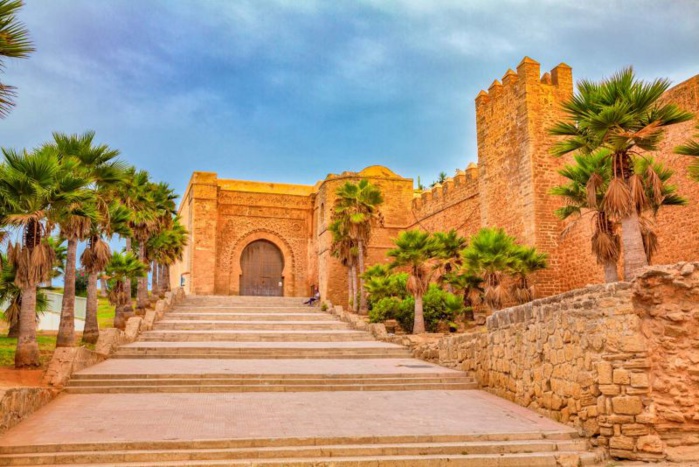
The Kasbah des Oudaias is a fortified historic neighborhood set above the mouth of the Bouregreg River, between the Atlantic Ocean and the city of Salé. Its blue and white lanes, the monumental gate, the Andalusian Garden, and the viewpoints make it one of Rabat's most worthwhile visits.
The area brings together buildings from different periods of the city's history. The fortifications and the great gate are tied to the Almohad expansion of the 12th century, while other parts were added or transformed in later centuries.
The Kasbah remains a residential neighborhood. The visit should respect residents' routines, house entrances, and religious spaces. This guide is a professional recommendation based on historical, tourist, and practical information. It is not presented as a personal experience report, since I have not yet visited the attraction.
Quick facts
- Visit time: 1h30 to 3 hours
- Location: the northern tip of Rabat's medina, by the mouth of the Bouregreg River
- Best time: morning or late afternoon
- Entrance to the Kasbah's streets: free
- Andalusian Garden: usually free, subject to opening hours
- National Jewelry Museum: 30 MAD (approximately US$3) at the standard rate
- Difficulty: easy to moderate, with ramps, level changes, stones, and some steps
How to fit the Kasbah des Oudaias into a Rabat itinerary
The Kasbah can be combined with the Rabat medina, the Rue des Consuls, and the banks of the Bouregreg. This is the simplest plan for anyone wanting to explore the area on foot.
Set aside at least 1h30 to walk the streets, see the Andalusian Garden, and reach the viewpoint. Anyone planning to visit the National Jewelry Museum or take a break at Café des Oudayas should allow 2 to 3 hours.
Hassan Tower and the Mausoleum of Mohammed V can also fit into the same day, but they're on another part of the Bouregreg riverbank. The walk usually takes about 25 to 30 minutes, depending on the route and pace.
Anyone short on time can visit the Kasbah first, continue through the medina, and take a taxi to reach the Hassan Tower complex. This cuts down on effort and avoids turning the itinerary into one continuous walk.
What is the Kasbah des Oudaias?
The area where the Kasbah now stands was used as a fortified position before the Almohad period. In the 12th century, the Almohads expanded the site and built major structures, including the monumental gate known as Bab Oudaya or Bab El Kebir.
In the following centuries, the fortification went through new occupations and transformations. Andalusian refugees, corsairs tied to the Bouregreg region, and later officials of the Alaouite dynasty were all part of the site's history.
The current name is tied to the Oudaya tribe, but the name became firmly associated with the Kasbah only after the fortification's earliest phases. Because of this, the complex's origin shouldn't be attributed solely to this tribe's arrival.
Today, the Kasbah brings together residential streets, a former mosque, gardens, a museum, and viewpoints facing the river and the ocean.
The Kasbah des Oudaias is part of the site "Rabat, Modern Capital and Historic City: a Shared Heritage," inscribed on the UNESCO World Heritage List in 2012.
How to get to the Kasbah des Oudaias
The Kasbah sits at the northern tip of the medina and can be reached on foot, by taxi, or by a combination of tram and walking.
The most practical options are:
- From the medina: head toward the northern part, through the Rue des Consuls area and the river
- From central Rabat: walk approximately 15 to 25 minutes, depending on your starting point
- By petit taxi: a direct option for anyone far from the medina or with reduced mobility
- By tram: use a convenient central stop and complete the trip on foot or by taxi
- From Hassan Tower: walk approximately 25 to 30 minutes through the Bouregreg area or take a taxi
The tram doesn't drop you inside the Kasbah. Check the official Rabat-Salé Tramway map to choose a stop and calculate the final stretch.
Ask the driver to continue to the entrance of the Kasbah des Oudaias or to an accessible point nearby. Depending on traffic and local restrictions, you may need to cover part of the way on foot.
Save the location of the entrance and the point where you plan to find transport for the return.
Suggested route for visiting the Kasbah des Oudaias
Entering through the monumental gate
Start at the gate known as Bab Oudaya or Bab El Kebir. The structure is tied to the Almohad project from the late 12th century and features stone-carved decoration.
Take in the gate before entering, but don't block the passage. The access is also used by residents, staff, and other visitors.
Depending on your arrival point and which areas are open, the entrance to the Andalusian Garden and the museum may follow a different route from the one used to reach the residential streets.
Andalusian Garden
The Andalusian Garden was created during the 1920s, drawing inspiration from Hispano-Moorish gardens. The space brings together paths, trees, fountains, and shaded areas.
Access is usually free, but it's subject to hours, maintenance, events, and operational decisions. Confirm it's open on the day of your visit.
Walk only in the open areas and respect temporary barriers. The garden can get busier on weekends and during peak visiting periods.
National Jewelry Museum
The former space known as the Oudaias Museum reopened in 2023 as the National Jewelry Museum, after restoration work.
The exhibition presents ornaments, jewelry, clothing, and objects related to Morocco's different regional traditions. The visit helps convey materials, techniques, and meanings tied to personal adornment throughout history.
The museum usually operates from 10am to 6pm and is closed on Tuesdays, according to the National Foundation of Museums. Hours can change on holidays, during events, or for operational reasons.
The standard rate is 30 MAD (approximately US$3). The Foundation also publishes a reduced rate of 15 MAD (approximately US$1.50), a daily pass of 50 MAD (approximately US$5), and free entry for children under 6.
Confirm at the ticket office the criteria for the reduced rate, the daily pass's validity, and the documents required.
Blue and white streets
After the garden and the museum, continue through the residential streets of the Kasbah's upper section. The blue and white façades, the doors, and the narrow passages form one of Rabat's most recognizable images.
Keep your voice low and don't block doors, stairs, or passages. Ask permission before photographing residents, shops, or the inside of homes.
Some streets have uneven ground, slopes, and steps. Wear comfortable shoes and watch your step, especially when the ground is wet.
Viewpoint over the Bouregreg
In the Kasbah's upper section, head to the observation platform facing the mouth of the Bouregreg. The view takes in the river, the Atlantic Ocean, the beach, and the city of Salé on the opposite bank.
Wind can be strong, and barriers should be respected. Children need to stay accompanied near the edges of the viewpoint.
Visibility and the colors of the landscape vary with the weather and time of day. Clouds, haze, or wind can completely change the experience.
Café des Oudayas
Café des Oudayas, also known by its historic name Café Maure, can be an optional stop near the Andalusian Garden.
The setup is simple, with drinks and sweets served in an area facing the Bouregreg and Salé. Check the menu and confirm prices before ordering.
Hours, access, and table availability can change. During busier periods, you may need to wait or continue the visit without this stop.
Entrance and prices
Access to the Kasbah des Oudaias's streets and public viewpoints is free.
The Andalusian Garden usually has free access during opening hours, but it can change due to maintenance, events, or local decisions.
The official prices checked for the National Jewelry Museum are:
- Standard rate: 30 MAD (approximately US$3)
- Reduced rate: 15 MAD (approximately US$1.50)
- Daily pass: 50 MAD (approximately US$5)
- Children under 6: free entry
The dollar conversions were calculated in August 2026 and are approximate. The final amount may change depending on the exchange rate and payment fees.
Guided tours, café purchases, shopping, and transport are paid separately.
How long to spend
Set aside between 1h30 and 3 hours.
With about 1h30, you can walk the main streets, see the Andalusian Garden, and reach the viewpoint.
Add at least 45 minutes if you want to visit the National Jewelry Museum. A break at Café des Oudayas can also add to the total.
Avoid scheduling another attraction right afterward. The museum's hours, foot traffic on the streets, and a wait at the café can all affect the total time needed.
Best time to visit
Each period offers different conditions:
- Morning: generally more pleasant temperature, a good option to combine with the museum
- Midday: can bring strong sun and little shade on the upper streets
- Late afternoon: softer light over the river and ocean
- Weekend: possibly more activity from residents and visitors
- Night: not the best time for a first visit to the streets and viewpoints
Anyone planning to visit the museum should plan around the official hours and the Tuesday closure.
Late afternoon works better for anyone prioritizing the streets and the viewpoint. Arrive while there's still natural light and confirm the garden's hours before leaving this visit for the end of the day.
Accessibility
The Kasbah has ramps, narrow streets, uneven stones, slopes, and some steps. Not the whole route is easy for people with reduced mobility.
Access to the garden and the museum may follow a different route from the one used to reach the upper section. Contact the museum before your visit to confirm accessibility, restrooms, and assistance.
A taxi or transfer to the nearest point cuts down on the distance covered, but it doesn't eliminate every level change.
Wheelchair users should confirm which areas will be accessible and consider bringing a companion.
Photography and respecting residents
The blue and white streets and the viewpoints offer many photo opportunities, but the Kasbah remains a residential neighborhood.
Don't photograph people up close without permission. Avoid pointing your camera into the inside of homes, and don't use private doors as props or backdrops.
Keep passageways, stairs, and entrances clear. When there's a shop, ask before photographing the products or the seller.
Drones and professional equipment may require authorization. Check local rules before bringing this kind of equipment.
Safety and approaches
Walk through the public areas and respect any barrier or signage. Don't enter corridors, courtyards, or stairs that appear to belong to residences.
You may encounter offers of guidance, photos, henna designs, or product sales. Ask the price before accepting any service.
Keep your phone, wallet, and camera secure in busy areas. Don't leave items unattended in the garden, the café, or the viewpoint.
If you're unsure about a route or a closure, check with an identified staff member, museum personnel, or your accommodation.
Practical tips
- Wear comfortable shoes for ramps, stones, and steps
- Bring water and sun protection
- Confirm whether the Andalusian Garden is open
- Check the National Jewelry Museum's calendar
- Remember the museum is closed on Tuesdays
- Ask permission before photographing people or shops
- Respect doors, stairs, and residential entrances
- Factor in strong wind at the viewpoint
- Set aside MAD for the museum, the café, and small purchases
- Combine the Kasbah with the medina or Hassan Tower on the same day
Final tip
Start at the Kasbah's monumental entrance and visit the Andalusian Garden while it's open. If you're interested in jewelry, clothing, and Moroccan material culture, set aside time for the National Jewelry Museum.
Then walk through the blue and white streets to the observation platform over the Bouregreg. Take the visit at a relaxed pace and respect house entrances.
Finish with an optional stop at Café des Oudayas or continue through the Rabat medina. To see Hassan Tower and the Mausoleum of Mohammed V on the same day, walk along the riverbank or take a taxi between the two areas.