Last updated: August 2026
Hassan Tower and the Mausoleum of Mohammed V sit on the same esplanade and can be seen in a single visit. On one side stands the unfinished minaret of a great 12th-century Almohad project. On the other, a royal mausoleum built in the 20th century with marble, carved wood, zellige, and other elements of Moroccan craftsmanship.
The visit helps convey two different periods of Rabat's history. The columns and remains of the former mosque show the scale of the project begun under Sultan Yacoub al-Mansour, while the mausoleum is tied to Morocco's independence and the memory of the royal family.
The ensemble still carries religious and institutional importance. Access can be modified during prayers, official ceremonies, holidays, or security operations. This guide is a professional recommendation based on historical, tourist, and practical information. It is not presented as a personal experience report, since I have not yet visited the attraction.
Quick facts
- Visit time: 1 hour to 1h30
- Location: Boulevard Mohamed Lyazidi, Hassan district, Rabat
- Best time: morning or late afternoon
- Entrance to the esplanade: usually free
- Entrance to the Mausoleum of Mohammed V: usually free
- Published hours for Hassan Tower: daily, 9am to 6pm
- Published hours for the mausoleum: 8am to 6pm on weekdays, 8:15am to 5:45pm on weekends
- Difficulty: easy, open area, stone ground, and little shade
Hours can change during Ramadan, holidays, ceremonies, prayers, or official decisions. Confirm they're open on the day of your visit.
How to fit Hassan Tower and the mausoleum into a Rabat itinerary
Hassan Tower and the Mausoleum of Mohammed V sit side by side. There's no need to book separate time slots or arrange transport between the two monuments.
The visit combines well with the medina, the Kasbah des Oudaias, and the banks of the Bouregreg River. Anyone following a 1-day Rabat itinerary can see the Kasbah in the morning and then head to the Hassan Tower complex.
The walk between the Kasbah des Oudaias and Hassan Tower usually takes about 25 to 30 minutes, depending on the route and pace. It's doable, but it can be tiring on hot days or for anyone with reduced mobility.
In that case, use a petit taxi between the two areas. This saves time and lets you focus the walking within each attraction.
Set aside between 1 hour and 1h30 to walk the esplanade, view Hassan Tower, enter the mausoleum when access is available, and see the nearby gardens.
What is Hassan Tower?
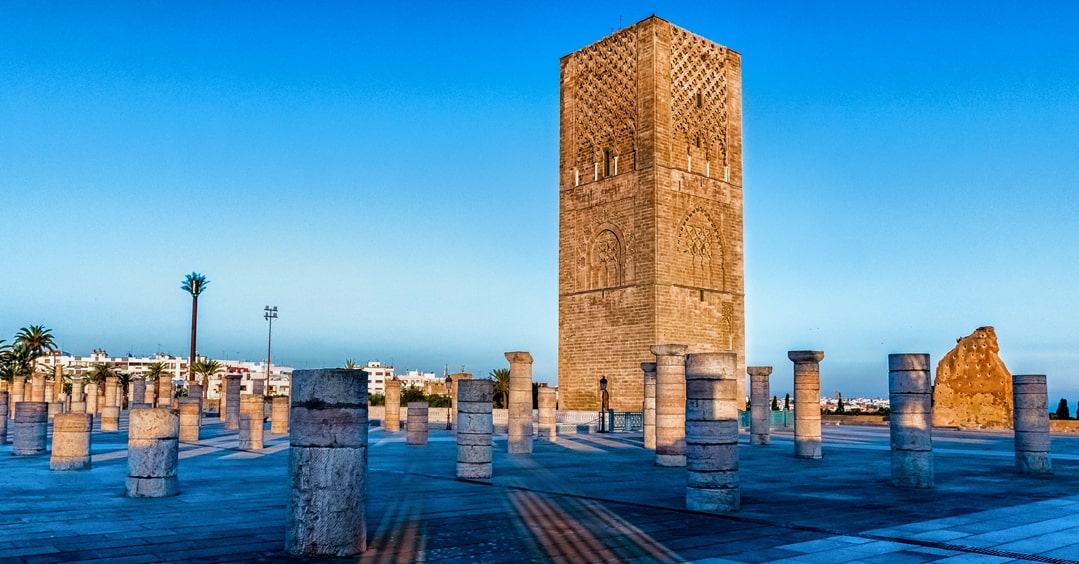
Hassan Tower is the unfinished minaret of the former Hassan Mosque. The project was developed under the Almohad sultan Yacoub al-Mansour in the late 12th century, as part of Rabat's expansion.
Work stopped after the sultan's death in 1199. The mosque was never completed, and earthquakes, neglect, and changes over the centuries affected other parts of the complex.
The tower stands approximately 44 meters tall. Its faces feature different decorative patterns, with geometric elements and arches associated with Almohad architecture.
Rows of columns and pillars remain on the esplanade, part of the prayer hall designed for the mosque. These remains help convey the scale of the building that was meant to occupy the site.
Climbing Hassan Tower isn't allowed. The visit takes place around the structure and across the esplanade.
What is the Mausoleum of Mohammed V?
The Mausoleum of Mohammed V was built between 1962 and 1971. The building sits on raised ground facing the esplanade of the former mosque and was developed using traditional Moroccan architectural and craft techniques.
The monument holds the tombs of King Mohammed V, King Hassan II, and Prince Moulay Abdallah.
Mohammed V is directly tied to the process that led Morocco to regain its independence in 1956. Because of this, the mausoleum carries historical, religious, and institutional importance for the country.
The exterior is marked by white marble and a green roof. Inside, there's carved wood, zellige, worked plaster, gilded elements, and the central tomb in white onyx.
Visitors of different faiths can usually enter through the designated public route. Access to the interior areas can be suspended during prayers, official ceremonies, or security measures.
How to get there
The complex is in the Hassan district, near the Bouregreg River and central Rabat.
The most practical options are:
- By petit taxi: a direct option from the medina, Rabat Ville station, the Kasbah, or your accommodation
- By tram: use a stop convenient to the complex, such as Place du 16 Novembre or Pont Hassan II, and complete the trip on foot
- From Rabat Ville station: continue by tram, taxi, or on foot, depending on the weather and your energy
- From the medina: the walk can take approximately 20 to 30 minutes, depending on your starting point
- From the Kasbah des Oudaias: allow approximately 25 to 30 minutes on foot, or take a taxi
The tram doesn't drop you inside the esplanade. Check the official Rabat-Salé Tramway map to choose the most convenient stop and calculate the final stretch.
When taking a taxi, say "Tour Hassan" or "Mausolée Mohammed V." Confirm the drop-off point before starting the trip.
Suggested route for visiting Hassan Tower and the mausoleum
Entering the esplanade
Enter through the area open to the public and start by taking in the ensemble from the esplanade. The layout of Hassan Tower, the columns, and the mausoleum helps convey how structures from such different periods came to share the same space.
Walk only in the open areas and don't cross barriers. Some parts may be temporarily off-limits.
Columns of the former Hassan Mosque
The remaining columns and pillars help convey the layout of the former mosque. Although the building was never completed, the arrangement of the elements shows the scale planned for the prayer hall.
Walk through the permitted areas without climbing on the stones. Beyond protecting the heritage site, this care reduces the risk of falls on uneven surfaces.
The best angle depends on the sun's position. During the morning and late afternoon, the shadows cast by the columns can better highlight the layout of the esplanade.
Hassan Tower
Get closer to Hassan Tower to take in the decorative patterns on its faces. Each side shows differences in the arches, reliefs, and geometric compositions.
The tower stands approximately 44 meters tall and remains unfinished. There's no tourist access to the top, so the visit is limited to the exterior.
Step back a few meters to view the tower alongside the columns. The scale of the ensemble becomes clearer when the minaret is seen from different points on the esplanade.
Mausoleum of Mohammed V
After Hassan Tower, head to the Mausoleum of Mohammed V. Entry is usually free, but all visitors should follow staff and guard instructions.
Wear respectful clothing, covering shoulders and knees. Keep your voice low, and remove hats or caps if that guidance is posted at the entrance.
Inside, follow the marked route. The area set aside for visitors lets you take in the decoration and the tombs without entering the monument's restricted sections.
Don't lean on the barriers, and avoid loud conversations. The mausoleum isn't just a tourist attraction, but also a space of national memory and solemnity.
Royal guards and the mausoleum's exterior
Royal guards in ceremonial uniform are usually stationed at the mausoleum's entrances. Their presence and position can change depending on the time and official schedule.
Don't block the entrance to take photos. For close-up portraits, ask permission or follow the guidance posted on site.
Also take in the exterior of the building, including the white marble, the arches, and the green roof. The mausoleum's architecture creates a clear contrast with the ochre stone of Hassan Tower.
Gardens and view over the Bouregreg
If access is available, round out the visit with the gardens near Hassan Tower. The area has paths, fountains, and points facing the Bouregreg River.
The gardens work as an optional extension of the visit. Openings, access, and available areas can vary due to maintenance or events.
Entrance and hours
Visiting the Hassan Tower esplanade and the Mausoleum of Mohammed V is usually free and doesn't require buying a ticket.
Rabat's official tourism body publishes the following hours:
- Hassan Tower: daily, 9am to 6pm
- Mausoleum on weekdays: 8am to 6pm
- Mausoleum on weekends: 8:15am to 5:45pm
Since the mausoleum remains tied to religious and official ceremonies, last-minute changes can occur. During Ramadan and holidays, confirm the hours before setting out.
Arrive a bit early, especially if entering the mausoleum is a priority for your itinerary.
Private guides, transport, and other services are charged separately.
How long to spend
Set aside between 1 hour and 1h30 to see the complex.
With about an hour, you can walk the esplanade, view Hassan Tower, and enter the mausoleum when it's open.
Add more time if you want to photograph the columns at a relaxed pace, take in the details of the façades, or walk through the nearby gardens.
If visiting in the late afternoon, check the mausoleum's hours before starting your walk through the esplanade.
Best time to visit
Each period offers different conditions:
- Morning: generally more pleasant temperature and good light for viewing the mausoleum's details
- Midday: stronger sun and little shade on the esplanade
- Late afternoon: softer light on the tower and the columns
- Weekends: possibly more visitors
- During ceremonies or prayers: interior access subject to restrictions
Morning tends to be the simplest choice for anyone wanting to enter the mausoleum and continue their Rabat itinerary.
Late afternoon works well for photographing the esplanade, but you'll need to check the closing time and arrive with enough margin.
Accessibility
Much of the esplanade is open and relatively flat, but the route has stone ground, small irregularities, level changes, and areas exposed to the sun.
Access to the mausoleum can involve ramps, thresholds, or changes in circulation. People with reduced mobility should confirm with on-site staff which entrance is available.
A taxi or transfer to the entrance cuts down on the distance covered. The tram requires an additional walk.
Wheelchair users should check in advance which route into the mausoleum is open and whether assistance is available.
Photography and behavior
Photography is usually allowed in the public areas, but restrictions can apply inside the mausoleum or during ceremonies.
Don't use flash where it's prohibited. Avoid photographing people at prayer, staff, or guards up close without permission.
Tripods, professional equipment, and drones may require permission. Check local rules before bringing this kind of equipment.
Keep quiet inside the mausoleum, respect the barriers, and don't touch the decorative elements.
Practical tips
- Wear clothing that covers the shoulders and knees
- Bring water and sun protection
- Confirm the hours on the day of your visit
- Wear comfortable shoes for the stone ground
- Combine the visit with the Kasbah des Oudaias or the medina
- Use a taxi if you want to cut down on walking between attractions
Final tip
Start at the esplanade and take in the layout of the columns before approaching Hassan Tower. Walk around the minaret to compare the different decorative patterns on its faces.
Then head to the Mausoleum of Mohammed V and enter only through the marked route. Take a few minutes to look at the marble, wood, zellige, and decorated plaster work.
Finish at the nearby gardens or continue toward the banks of the Bouregreg. To combine the complex with the Kasbah des Oudaias on the same day, walk through the Bouregreg area or take a petit taxi if you'd rather cut down on travel time.