Last updated: August 2026
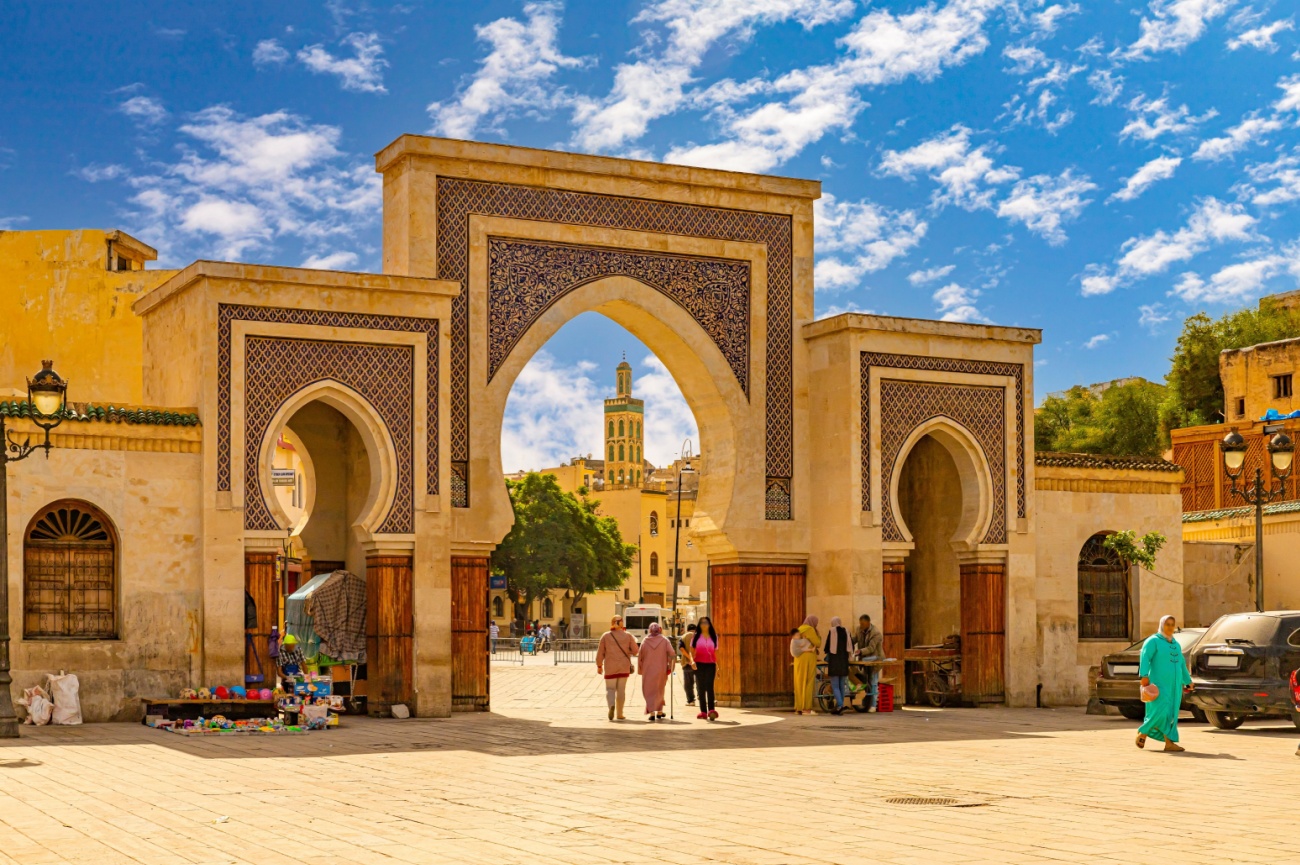
Meknes usually comes up in itineraries as a stop between Rabat and Fez, but its significance goes beyond its position on the map. Founded as a military settlement in the 11th century, the city became the capital under Sultan Moulay Ismail's rule, between the 17th and 18th centuries. The medina, the walls, the monumental gates, and the old imperial area form the ensemble recognized as a UNESCO World Heritage Site.
It's possible to see the essential points of Meknes in 1 day and continue to Fez in the late afternoon. For this combination to work, though, you need to leave Rabat early, decide in advance where to leave your luggage, and avoid adding distant attractions, like Volubilis, to the same route.
This itinerary is a suggestion built from up-to-date research and my work planning trips. It is not an account of a personal visit. The goal is to lay out a realistic stop, show what deserves priority, and keep the drive between Rabat and Fez from turning the day into a rushed string of attractions.
How this Meknes itinerary was planned
The itinerary starts with the trip from Rabat to Meknes. Train and private transport are both options, but they work differently. The train requires attention to luggage and getting between the station and the historic center. A driver makes the stop easier, especially since bags can stay in the vehicle during the visits.
Bab Mansour, El Hedim Square, and the medina entrance form the first cluster of the day. Their proximity lets you cover a good part of the morning on foot, without constantly switching between taxi and sightseeing.
The Meknes Medina and the Bou Inania Madrasa come before lunch. Afterward, the itinerary crosses into the imperial area, where the Mausoleum of Moulay Ismail is located. Other monuments, like the former royal granaries and stables, are optional because they require more travel and access can depend on construction or hours.
Departure for Fez should happen while there's still daylight and time to spare. Anyone staying inside the Fez medina needs to arrange the meeting point with their accommodation in advance, since taxis and cars can't reach many of the interior streets.
Volubilis wasn't included. While it's an important nearby visit, combining it with departure from Rabat, central Meknes, and arrival in Fez would make the day overly dependent on timing and travel.
Meknes in 1 day: itinerary overview
Meknes: historic city, imperial area, and arrival in Fez
Morning: the drive from Rabat to Meknes and sorting out luggage
Leave Rabat early, especially if you're taking the train. Check the updated schedule on the ONCF website and choose an option that leaves margin for delays, the trip to the station, and arrival in central Meknes.
Anyone with a driver has simpler logistics, since bags can stay in the vehicle while heading straight to the Bab Mansour area. Even so, confirm beforehand whether the service includes waiting time in Meknes and continuing on to Fez.
If traveling by train, don't assume luggage storage will be available at the station. Confirm this before the day of the trip, or arrange storage with an accommodation, a local company, or a previously verified service. Walking through the medina with large bags isn't a practical solution.
On arrival, use a petit taxi for the stretch between the station and the historic area. Confirm the meter is being used or agree on a price before setting off. The modern center and the old monuments shouldn't be treated as if they occupy the same compact area.
Late morning: Bab Mansour and El Hedim Square
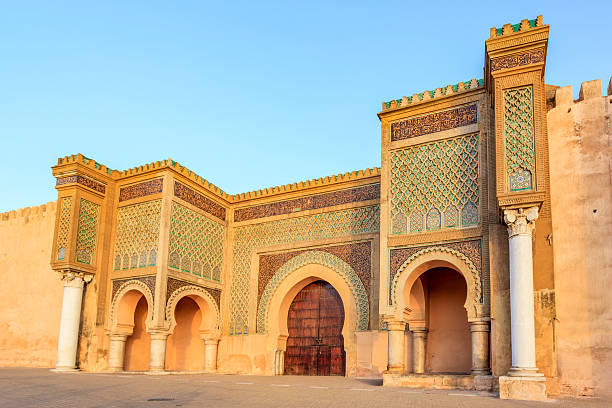
Bab Mansour is Meknes's main visual landmark and sits at the passage between El Hedim Square and the old imperial area. The gate was begun under Moulay Ismail's rule and completed in the 18th century, standing out for its scale, its mosaics, and the ornamentation of its façade.
View Bab Mansour from the square to better take in its scale. The visit doesn't depend on going through the gate or entering an interior area. Even when a passage is closed or there's maintenance nearby, the façade remains the central element of this stop.
El Hedim Square sits facing the gate and marks the transition between the medina and the imperial city. During the day, it works as a space for circulation, commerce, and meeting up. In the late afternoon, it usually gets busier, but this itinerary shouldn't wait until night to continue the trip.
Use the square as an orientation point, not just a photo stop. From there, you can head into the medina, take a coffee or lunch break, and organize the rest of the walk.
Late morning and lunch: Meknes Medina and the Bou Inania Madrasa
The Meknes Medina preserves commercial streets, workshops, markets, religious buildings, and residential areas within the historic ensemble recognized by UNESCO. On a short itinerary, there's no need to cover every street. The most efficient approach is choosing a route that lets you take in everyday life and loops back to the El Hedim Square area without a long detour.
Walk carefully through the commercial areas and respect the residential ones. Ask permission before photographing people, artisans at work, or private entrances. If you want to buy something, compare prices calmly and confirm the amount before agreeing to packaging or additional services.
The Bou Inania Madrasa can be included if it's open and the timing fits your visit. The former religious school offers a different architectural context from the square and the imperial area. Since hours, tickets, and restoration periods can change, confirm the conditions on the day itself.
Have lunch in the medina or near El Hedim Square. Avoid a long meal if you still want to visit the mausoleum and an optional attraction in the imperial area before heading to Fez.
Early afternoon: Mausoleum of Moulay Ismail
The Mausoleum of Moulay Ismail is one of the most important visits for understanding the period when Meknes was turned into an imperial capital. The complex brings together courtyards, woodwork, stucco, mosaics, and spaces related to the sultan's burial site.
The mausoleum is a religious space. Visitor access may be allowed only in certain areas and can change during prayers, ceremonies, religious holidays, or maintenance work. Wear appropriate clothing, speak quietly, follow local guidance, and remove your shoes if asked before entering an interior area.
Don't plan the day around an old schedule found on a blog as your only reference. Check local information on arrival, since different sources can show different hours, especially on Fridays and during Ramadan.
If the mausoleum is closed, don't wait indefinitely for it to reopen. Use the time to take in the imperial area, stretches of the city walls, or another attraction confirmed to be open.
Mid-afternoon: walls and imperial area
The walls of Meknes don't need to be treated as a single attraction with a start and an end. They appear in different parts of the city and help convey the historical separation between the medina and the imperial complex.
Take in the stretches you naturally come across between Bab Mansour, the mausoleum, and the other monuments. Trying to walk long stretches of the walls takes up time without adding a proportionally better visit.
The former royal granaries and stables, often associated with the names Heri es-Souani or Hri Souani, can be added if there's time, transport, and confirmed access. They sit outside the more compact core of the square and the medina, so don't fit them in without considering the trip back to collect your luggage and continue to Fez.
The Dar Jamaï Museum and other historic sites are also options, not obligations. Choose just one additional visit and confirm it's open. Meknes is undergoing restoration projects, and access to certain monuments can change even when older maps and guides show normal hours.
Late afternoon: the drive to Fez
Start heading to Fez before you're tired or dependent on the day's last transport option. Check the updated ONCF schedule if traveling by train, and leave time to get back to the station, collect your luggage, and find the platform.
Anyone driving or with a driver should also factor in traffic entering Fez. Save your accommodation's address and confirm whether drop-off will be at the door or at a meeting point near the medina.
Don't plan a full visit to the Fez Medina for that night. After the drive and check-in, just take a short walk in a familiar area or have dinner near your accommodation.
If your riad is inside Fez el-Bali, ask for clear instructions and, when available, someone to meet you at a gate or parking area. Many streets are narrow, don't allow car access, and can be hard to find for the first time at night.
What I would prioritize in this 1-day Meknes itinerary
I would prioritize Bab Mansour, El Hedim Square, a focused walk through the medina, and the Mausoleum of Moulay Ismail.
I would also sort out luggage before leaving Rabat. That decision has more impact on how the day runs than adding another attraction to the itinerary.
If the Bou Inania Madrasa is open and the timing works, it would be my first additional visit. After that, I would choose just one point in the imperial area before continuing to Fez.
What can be optional
The royal granaries and stables can be dropped when transport is limited, there's construction, or the day is already running late.
The Dar Jamaï Museum is optional and should only be included with confirmed opening hours.
A long walk along the walls isn't necessary. The stretches seen along the way already help convey the scale of the fortifications.
Volubilis deserves its own visit or a plan with a driver and more available time. I wouldn't add it to the same day as leaving Rabat, visiting Meknes, and needing to reach Fez.
Sleeping in Meknes is also optional. It can be worthwhile for a slower trip, but it isn't necessary to follow this specific itinerary.
Mistakes that can make the itinerary tiring
The main mistake is arriving in Meknes with large bags and no plan for where to leave them. This can disrupt the walk and force a full change of plans on arrival.
Another problem is trying to see both Meknes and Volubilis before continuing to Fez in the same day, especially relying only on public transport. The number of connections cuts into the time available at each stop.
Don't assume every monument will be open just because it appears that way on a map. Restoration work, religious hours, and temporary closures can affect access.
Avoid spending most of the day shopping in the medina and then rushing the mausoleum visit. Set an approximate time to leave the commercial area.
Also, don't leave departure for Fez until the last minute. Collecting your luggage, reaching the station, finding your accommodation, and entering the Fez medina all require a margin that doesn't show up in the estimated transport time.
In religious spaces, don't enter talking loudly, photographing people, or ignoring instructions about footwear and circulation. A short, respectful visit is better than trying to access restricted areas.
Travel planning for Meknes: essential tips
Transport and luggage
- Check schedules on the official ONCF website
- Decide where to leave your bags before leaving Rabat
- A petit taxi makes the trip between the station and the historic center easier
- With a driver, confirm waiting time in Meknes and continuation to Fez
- Don't rely on the day's last available departure
Getting around
- Bab Mansour, El Hedim Square, and the medina can be combined on foot
- The mausoleum and the imperial area require attention to distances
- Use a taxi for farther attractions or when time is short
- Don't try to walk the full length of the walls
- Save time to get back to your luggage and continue to Fez
Access and hours
- The exterior view of Bab Mansour doesn't require a ticket
- El Hedim Square and the medina streets are public spaces
- Madrasas, museums, and monuments may charge admission
- The mausoleum may have limited access for religious reasons
- Confirm restoration status and hours on the day itself
Best time
- Leave Rabat early to avoid a rushed itinerary
- Visit the square and medina while shops are open
- Don't leave the mausoleum for the final minutes
- Start the drive to Fez while it's still late afternoon
- Arrange your arrival at your Fez accommodation in advance