Last updated: August 2026
Fez calls for more planning than a simple list of attractions. Its historic medina brings together narrow streets, markets, workshops, religious buildings, fountains, madrasas, and fondouks in an area where routes don't always follow the logic of modern maps. Founded in the 9th century and recognized as a UNESCO World Heritage Site, it preserves an important part of the cultural and spiritual role the city has developed over the centuries.
With 1 day in Fez, it's best to concentrate the itinerary on Fez el-Bali. The sequence starts at Bab Bou Jeloud, passes the Bou Inania Madrasa, and heads down the commercial streets toward the Al Quaraouiyine area, the Nejjarine Museum, and the Chouara Tannery. A viewpoint can close out the day, as long as there's still daylight and the trip there can be made safely.
This itinerary is a suggestion built from up-to-date research and my work planning trips. It is not an account of a personal visit. The goal is to explain a possible route, point out where access can be limited, and keep a first experience in the medina from being taken over by confusing travel or pushy sales pitches.
How this Fez itinerary was planned
Bab Bou Jeloud was chosen as the starting point because it's one of the easiest entrances to identify in Fez el-Bali. The Bou Inania Madrasa is nearby and should be visited before crowds build up or access gets interrupted.
After that, the route follows Talaa Kebira or Talaa Seghira toward the deeper parts of the medina. You don't need to walk either street in full. They work as orientation axes between markets, workshops, and monuments.
The Nejjarine and Al Quaraouiyine area comes in the middle of the route. Access to the inside of religious spaces can be restricted, so the itinerary doesn't depend on getting into the mosque or the university to work.
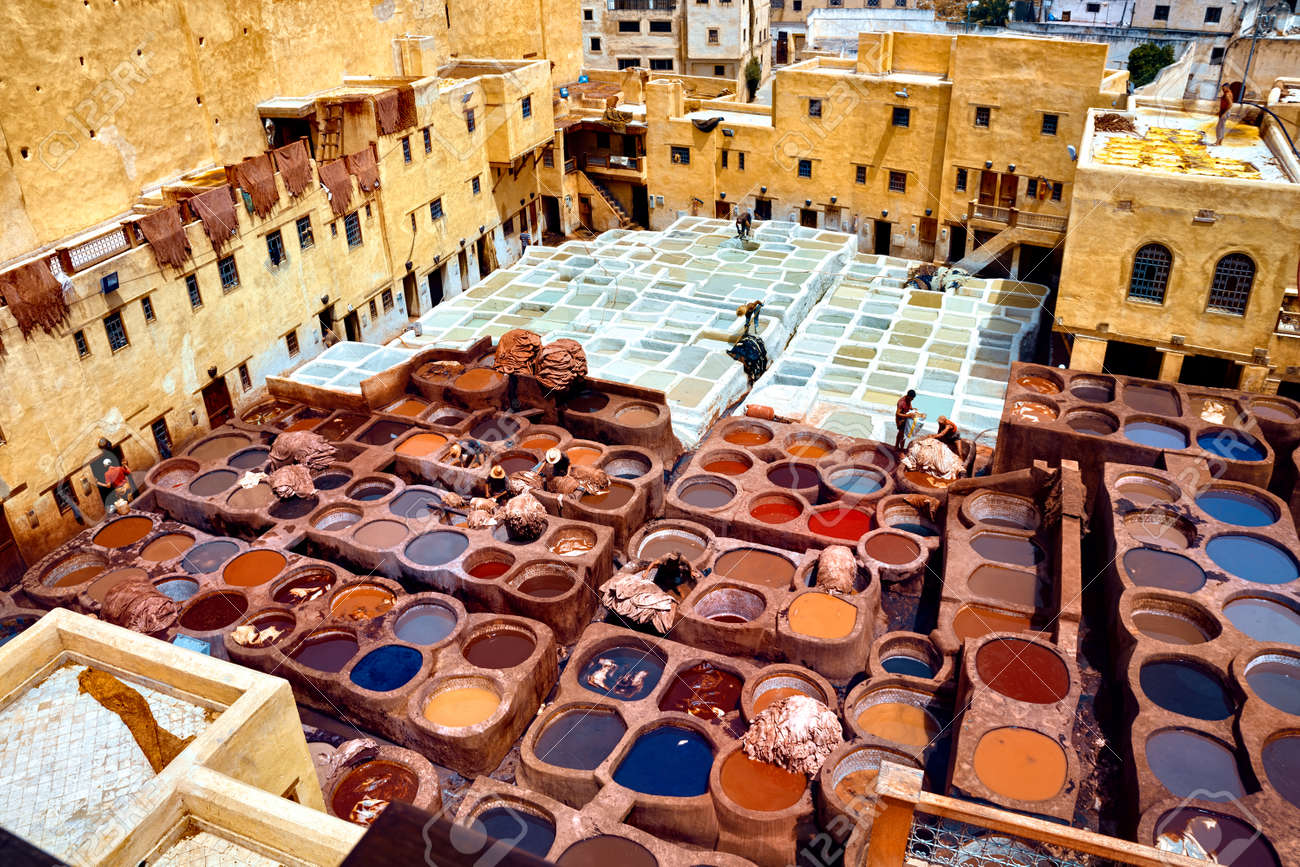
The Chouara Tannery appears before lunch or in the early afternoon, while there's still activity and good light on the vats. Viewing usually happens from the terraces of leather shops, which means confirming beforehand whether there's a fee, an expected tip, or any condition attached to access.
The viewpoint is optional and comes at the end. After several hours walking narrow streets, seeing the medina from above helps convey its scale, but it shouldn't require crossing isolated areas on foot after dark.
For a first visit lasting just one day, an official guide can make navigation easier and add historical context. Hiring one isn't mandatory, but it should be arranged through accommodation, an agency, or a trusted service, with the duration, route, and price agreed in advance.
Fez in 1 day: itinerary overview
Fez: historic medina, tanneries, and main attractions
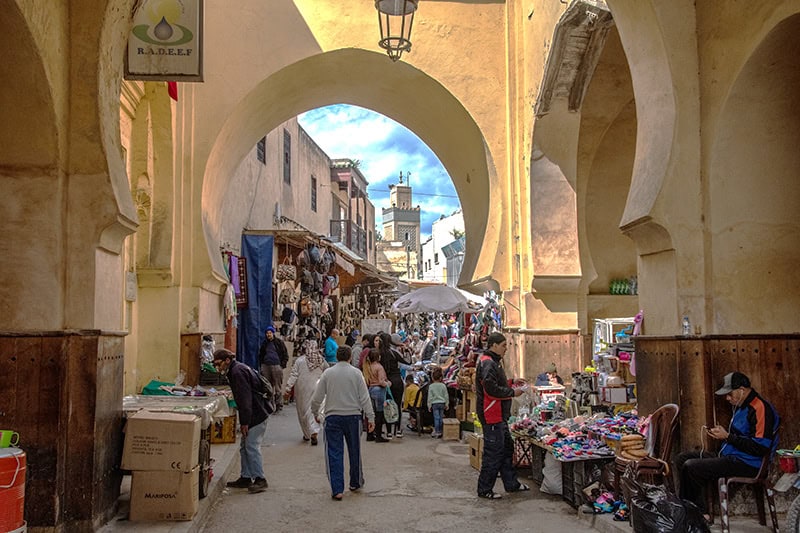
Morning: Bab Bou Jeloud and entering Fez el-Bali
Bab Bou Jeloud is one of the easiest landmarks to recognize at the entrance to the medina and serves as a reference point for starting the day. Before going through it, save the location of your accommodation, the gate, and the point where you plan to end the walk on your phone.
The current gate has blue-toned decoration on the outer face and green on the side facing the medina. The passage leads quickly into the commercial streets, so it's worth taking in the structure before entering, since afterward the monument becomes partly hidden by the crowds and buildings around it.
Fez el-Bali has to be explored on foot. The streets range from busy passages to covered stretches, staircases, and narrow areas used by residents, merchants, and pack animals. Move to the side when someone asks to get by, and avoid blocking workshops or residential entrances.
Map apps help, but they don't perfectly capture every passage. Choose a few landmarks, keep your accommodation's address on hand, and don't immediately accept help from people who show up claiming a certain street or attraction is closed.
Early morning: Bou Inania Madrasa
The Bou Inania Madrasa is close to Bab Bou Jeloud and should be one of the first stops. The former religious school dates to the Marinid period and lets you take in mosaics, carved wood, stucco, and the layout of an interior courtyard.
Confirm the hours and ticket price on the day itself. Historic buildings can close during religious periods, maintenance, or restoration, and outdated information stays published on various websites.
The madrasa remains a space of religious and architectural value. Wear appropriate clothing, speak quietly, and respect any area marked as restricted.
If it's closed, don't wait around for a possible reopening. Continue on through the medina and consider another indoor visit, such as the Nejjarine Museum or a madrasa confirmed to be open.
Mid-morning: commercial streets and workshops of the medina
After the Bou Inania Madrasa, follow one of the main commercial axes toward the historic center. Talaa Kebira and Talaa Seghira branch off into shops, workshops, and connections to different parts of the medina.
Don't try to go down every side street. On a 1-day itinerary, the goal is to take in the commercial activity while making progress toward the next monuments.
The medina remains a place of work and residence. Ask permission before photographing artisans, sellers, or residents. Don't step into workshops just to take photos, and avoid photographing children without a guardian's permission.
If you want to buy something, ask the price before agreeing to customizations, packaging, or lengthy demonstrations. A sales conversation can eat up a significant part of the itinerary when there's no real interest in buying.
Late morning: Al Quaraouiyine and the Nejjarine area
The Al Quaraouiyine Mosque and University represent a central part of Fez's religious and educational history. Non-Muslim visitors usually find access to the mosque's interior restricted, but can see some architectural elements from the entrances when this is allowed.
Don't block the doors, don't photograph people during prayer, and don't try to cross barriers. Think of the visit as passing by the edge of an active religious space, not as a guarantee of entry.
The Nejjarine Fountain and the square around it offer another landmark inside the medina. Nearby is the Nejjarine Museum of Wooden Arts and Crafts, set inside a former fondouk.
The museum can be included if it's open and there's interest in crafts, architecture, and woodworking. Confirm the ticket and hours on arrival. If time is short, take in the fountain and the building's exterior and continue toward the tannery.
Before lunch or early afternoon: Chouara Tannery
The Chouara Tannery is an active workplace, not an attraction organized like a conventional museum. The vats and the leather work are generally viewed from the terraces of shops set up around the tannery.
Before going up, ask clearly whether there's a charge for terrace access, whether a tip is expected, and whether the visit comes with any condition. Entering a shop doesn't create an obligation to buy bags, shoes, jackets, or other products.
The smell can be strong, especially during hotter periods. Some shops offer mint leaves, but a handkerchief can help too. Anyone sensitive to strong smells can make it a short visit or skip this stop.
Don't try to enter the working area, walk among the vats, or photograph workers up close without permission. Beyond safety, it's worth remembering the site still carries out a productive function.
The number of workers and the visible colors can vary depending on the day, the time, and the stage of leather processing. Don't expect to find exactly the same scene shown in promotional photos.
Lunch and early afternoon: a break inside or near the medina
After the tannery, take a real break for lunch. Choose a restaurant with visible prices or confirm the cost of the menu before ordering.
If you're with a guide, clarify beforehand whether lunch is part of the contracted time and whether you're free to choose the restaurant. You don't have to accept a specific commercial stop or restaurant just because it's part of the suggested circuit.
After lunch, gauge your pace. Anyone who has already visited the Bou Inania Madrasa, passed through Nejjarine, seen Al Quaraouiyine, and toured the tannery can use the afternoon to walk more slowly, return to an interesting area, or visit a single additional space.
Don't try to make up for delays by rushing through the streets. Stairs, uneven ground, pack animals, and busy stretches make hurrying impractical.
Mid-afternoon: souks and an optional visit
The souks of Fez aren't a single, separate attraction. They run along the medina's streets, historically organized by activity and product. During the itinerary, you'll pass through areas tied to food, textiles, metalwork, leather, and other crafts.
Set aside a specific window for shopping if you're interested. That way each sales pitch doesn't interrupt the flow of the walk.
For an optional indoor visit, pick just one option: the Nejjarine Museum, another madrasa that's open, or an accessible fondouk. The goal isn't to collect tickets, but to look more closely at one example of Fez's historic architecture.
Anyone feeling tired can head back to their accommodation or look for a familiar way out of the medina. A 1-day itinerary doesn't need to hit every possible attraction to be complete.
Late afternoon: panoramic view of the Fez Medina
A panoramic view helps convey the size of Fez el-Bali after a day spent inside its narrow streets. The area around the Marinid Tombs is known for its perspective over the medina, but access and site conditions should be confirmed.
Use a petit taxi, driver, or transport arranged in advance to reach a viewpoint. Don't walk alone through isolated areas with equipment exposed, and don't stay after dark if the spot is empty or lacks infrastructure.
Skip the viewpoint if there's little light left, bad weather, fatigue, or trouble arranging the return trip. It adds visual context, but it isn't more important than the visits inside the medina.
Afterward, head back to your accommodation or pick a nearby restaurant. If your riad is inside Fez el-Bali, agree on a known meeting point and keep the access instructions handy on your phone.
What I would prioritize in this 1-day Fez itinerary
I would prioritize the Bou Inania Madrasa, a guided walk along the medina's main axes, the Al Quaraouiyine and Nejjarine area, and viewing the Chouara Tannery.
I would also consider hiring an official guide for at least the first part of the day. On a short visit, saving time on navigation can be more useful than adding another attraction.
If access to the tannery feels uncomfortable or overly commercial, I would keep the visit brief and save time for the medina's architecture and workshops instead.
What can be optional
The Nejjarine Museum can be skipped when time is short or you have no specific interest in wood and crafts.
The viewpoint is optional and shouldn't be kept on the plan if the return trip would happen after dark.
A second madrasa or another museum can replace a closed attraction, but it doesn't need to be added to an already full itinerary.
Extended shopping is optional. Anyone planning to buy leather, rugs, or higher-value pieces should research materials, finishing, and prices before deciding.
Fez el-Jdid, the Mellah, and the exterior of the Royal Palace deserve a separate visit. Adding them to the same day cuts too much into the time available in Fez el-Bali.
Mistakes that can make the itinerary tiring
The main mistake is trying to see Fez el-Bali, Fez el-Jdid, the Royal Palace, the Mellah, and the viewpoints all in the same day. The distances and shifts between areas turn the walk into a sequence of entering and leaving the medina.
Another problem is following people who offer help without making clear they're acting as guides. When you want company, hire a professional through a trustworthy channel and agree on the route, duration, and price beforehand.
Don't agree to go up to a tannery terrace without understanding the conditions. The view can be presented as free and end in an uncomfortable situation involving charges or pressure to buy.
Avoid relying solely on your phone's map. Some passages look close together on screen but don't connect the way you'd expect.
Don't photograph residents, workers, or private interiors without permission. Fez shouldn't be treated as a backdrop set up exclusively for visitors.
Also, don't plan the day without breaks. The visual intensity, the noise, the smells, the negotiating, and the uneven ground make the medina more tiring than the distance covered would suggest.
Travel planning for Fez: essential tips
Orientation and guides
- Save Bab Bou Jeloud and your accommodation as reference points
- Digital maps don't perfectly capture every passage
- Hire an official guide through a trustworthy channel
- Agree on the route, duration, and price before starting
- Don't follow spontaneous offers of help without clarifying the service
Getting around
- Fez el-Bali should be explored on foot
- Wear footwear suited to uneven ground and stairs
- Give way to residents and pack animals
- Use a petit taxi for viewpoints and outlying areas
- Avoid carrying large bags or backpacks through the medina
Access and payments
- The medina and Bab Bou Jeloud don't require a ticket
- Madrasas and museums may charge admission
- Confirm the terrace conditions at the tannery in advance
- Carry dirhams in cash for entries and small expenses
- Religious spaces may restrict access
Photography and respect
- Ask permission before photographing people
- Don't block workshops, shops, or residential entrances
- Respect boundaries in mosques and religious spaces
- Don't enter the working area of the tanneries
- Avoid leaving equipment exposed in isolated areas