Last updated: August 2026
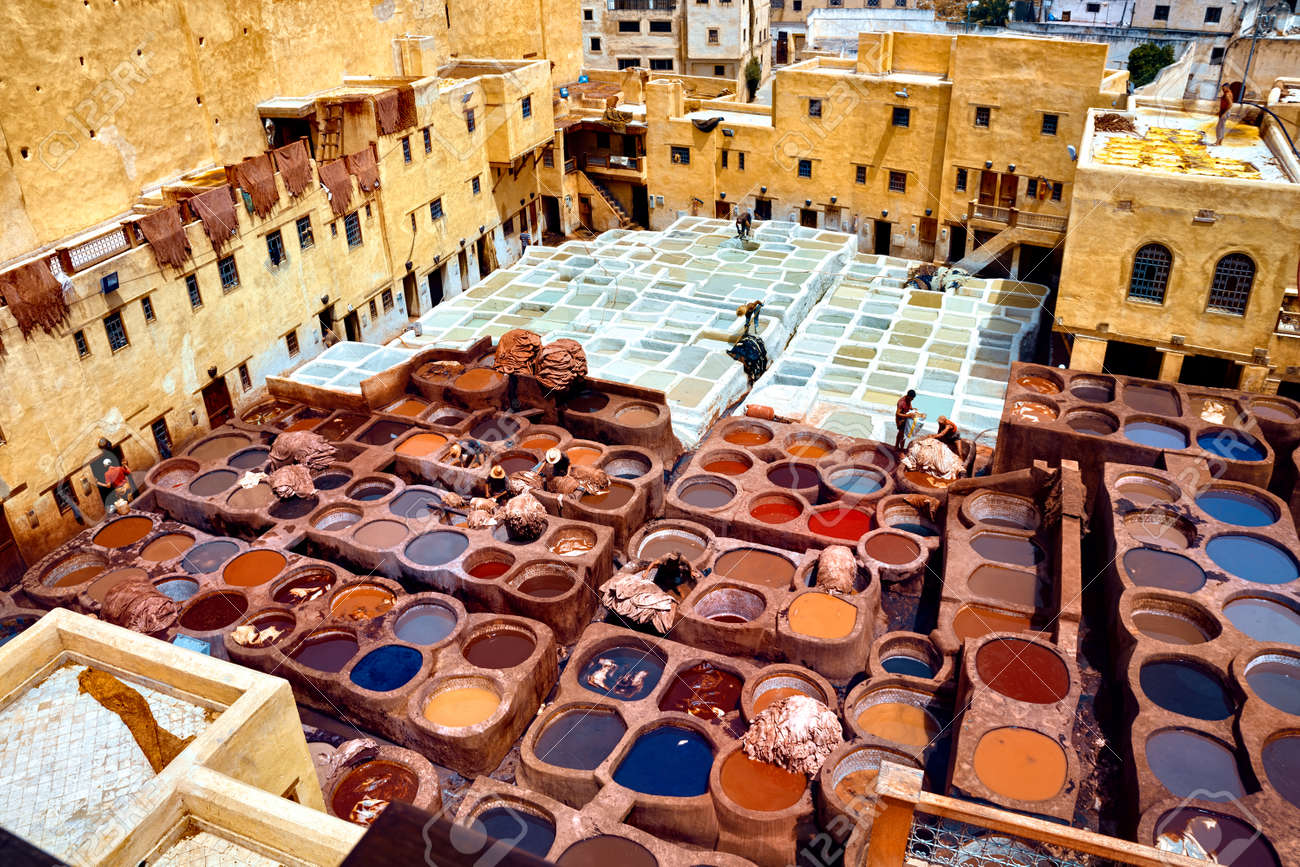
The Chouara Tannery is an active leather-production complex inside Fez el-Bali. The masonry vats, the hides laid out to dry, and the work carried out on site can mostly be seen from the terraces of the shops that surround the area.
The visit is different from stepping into a museum or a monument. There's no centralized tourist route, and access to the elevated viewpoints usually runs through private shops. The activity in the vats, the colors, and the visible stages of the process change depending on the work being done that day.
This guide is a professional recommendation based on research into the medina, how the tanneries operate, and the logistics of the visit. The content is not presented as personal experience, since I have not yet visited this attraction.
Quick facts
- Visit time: 30 minutes to 1 hour
- Location: Fez el-Bali, near the Seffarine Square area
- Best time: morning, when more stages of the work are usually underway
- Access to viewpoints: mainly through the terraces of private shops
- Entrance: there's no standardized official ticket for viewing the vats
- Smell: strong, especially closer to the work area
- Accessibility: limited by stairs, narrow passages, and uneven floors
How to fit the Chouara Tannery into a Fez itinerary
The tannery can fit into the same period set aside for the central part of Fez el-Bali. Its location makes it easy to combine with Seffarine Square, the Al Attarine Madrasa, the area around the Al Quaraouiyine Mosque and University, and other parts of the medina.
Set aside about 30 minutes to view the vats and get a sense of the main stages of the work. That time increases if there's a wait to get up to the terrace, explanations from a guide, or interest in the products sold in the shops.
Anyone visiting Fez for the first time can hire an authorized guide for the walk through the medina. That makes it easier to find the tannery and helps you understand the process, but it isn't required to enter the shops offering a view of the vats.
Since Chouara continues to function as a working site, the number of workers, the colors of the vats, and the hides being processed change throughout the day.
What is the Chouara Tannery?
Chouara is one of Fez's three historic tanneries and the best known among visitors. The complex sits in Fez el-Bali, within the medina's urban fabric and close to the watercourse that traditionally supplied the area's craft activities.
Leather production has been part of Fez's economic history for many centuries. The exact origin of the Chouara complex, however, is not documented precisely enough to establish a single founding date.
The Medina of Fez was listed as a UNESCO World Heritage Site in 1981. The designation covers its urban fabric, its monuments, and the continuity of the traditional knowledge and crafts found in the city.
The vats remain tied to leather production. Because of that, the activity seen from the terrace reflects real professional work, with a rhythm and stages that don't follow fixed tourist hours.
How the work at the tanneries functions
Leather goes through several processes before reaching the shops and workshops. Some of these stages can be seen from the terraces, while others happen in areas not accessible to visitors.
Preparing the hides
Hides need to be cleaned and prepared before dyeing. The lighter-colored vats are usually associated with the washing, cleaning, and softening stages.
Preparation can involve lime and organic substances. While several traditional techniques remain in use, materials and procedures have been adapted over time.
Dyeing
After preparation, the hides move to the dyeing vats. The visible tones depend on the material used, the type of leather, the stage of production, and the orders being worked on.
Traditional pigments are still part of Fez's craft tradition and can coexist with other types of dye. The intensity and variety of colors change depending on the work carried out that day.
Drying and finishing
After dyeing, the hides are taken out of the vats and laid out to dry. From the terraces, you may be able to see pieces spread over walls, rooftops, or other surfaces around the complex.
Cutting, stitching, and finishing happen later in workshops. The bags, shoes, belts, jackets, and other products found in the shops are the result of a chain of work that goes well beyond the vats seen during the visit.
How to get to the Chouara Tannery
The area has to be reached on foot, since the streets of Fez el-Bali are narrow and don't allow regular car traffic.
An offline map helps, but navigation inside the medina can lose accuracy in covered passages, alleys, and streets that run very close together. Save your location before heading out, and use Seffarine Square and the Al Attarine Madrasa as reference points for the approach.
Signs and directions to the tanneries appear at different points. When someone spontaneously offers a shortcut or to walk you there, ask beforehand whether there's a charge. Help initially presented as free can end with a request for payment.
Anyone who'd rather avoid that kind of approach can arrange an authorized guide in advance through their accommodation, a licensed agency, or a trusted tour service.
How the visit works
The best-known view of the Chouara Tannery is from the upper floors of the leather shops set up around the complex.
Choosing a terrace
There's no single central public viewpoint. Different shops have balconies and terraces offering different angles on the vats.
Before going up, ask whether there's a charge, an expected contribution, or any condition attached to using the space. That avoids arguments on the way out and lets you decide whether the access on offer makes sense.
Going up through the shop
The path usually runs through the inside of a shop and includes narrow stairs. Some terraces are on high floors with no elevator.
Along the way, staff may explain stages of the work or show products. The quality and depth of these explanations vary between shops.
Viewing the vats
On the terrace, take in the layout of the vats, the hides laid out to dry, and the movement of the workers. The wider view helps you understand how the different stages occupy specific areas of the complex.
Don't lean over the parapets, don't try to access the working area, and respect any limits set by whoever runs the terrace.
Passing through the sales area
The way out usually goes back through the shop's showroom. Entering the establishment doesn't obligate you to buy, though it's common for staff to show bags, shoes, jackets, and other leather goods.
If you're not interested, thank them and decline clearly. If you want to buy, take your time to examine the product and negotiate without rushing.
Entrance and possible charges
There's no standardized official ticket for viewing the Chouara Tannery from the surrounding terraces.
The viewpoints sit inside commercial properties, and each shop can organize access differently. Some shops let you go up with no formal charge, while others may ask for a contribution or expect the visitor to browse the sales area.
Ask about any charge before going up. If there is one, confirm the total price in Moroccan dirhams and decide before entering.
There's also no fixed price for a guide's services. When hiring one, agree in advance on the duration, the route, the language, and the total amount in MAD.
How long to spend
Between 30 minutes and 1 hour is usually enough to find a terrace, view the vats, hear a brief explanation, and pass through the sales area.
Set aside more time if the visit is part of a guided tour of the medina or if you plan to buy leather goods.
You don't need to visit several shops to understand how it all works. A terrace with a wide view usually lets you see the main areas of the complex.
Best time to visit
Morning usually offers a better chance of catching different stages of the work in progress. That doesn't mean every vat will be in use or that the colors will be more vivid at a specific time.
In the afternoon, activity may slow down, but a visit can still be worthwhile as long as the shops and terrace access remain open.
On Fridays, during Ramadan, holidays, and religious dates, the pace of work and the shops' opening hours can change. It's worth checking with your accommodation or a local guide close to your visit.
Light also changes depending on the terrace's position and the time of year. For photography, it's more useful to choose a spot with a clear view than to rely on a time presented as ideal.
Smell and comfort during the visit
The hide-preparation process produces a strong smell that can be noticed even before reaching the terrace.
Some shops offer visitors sprigs of mint, but this depends on the shop. Mint can make the smell more bearable for some people, though it doesn't eliminate the odor.
Anyone sensitive to strong smells can wear a mask, spend less time on the terrace, and leave the spot if they feel uncomfortable.
Wear closed shoes with good grip. The stairs can be narrow, and parts of the medina floor are uneven.
Accessibility
Visiting the terraces can be difficult for people with reduced mobility. The route usually involves stairs, narrow passages, and no elevator.
Before going, ask whether a shop has a lower viewing point or an alternative with fewer steps. Conditions vary between shops.
The working area isn't part of the regular visitor route. Viewing happens mainly from the buildings around it.
Photography and respect for the workers
Wide shots of the vats are usually allowed on the terraces, according to each shop's rules.
For close-up portraits or images that clearly identify the workers, ask for permission. The tannery is a working environment, and the people there are not part of a tourist performance.
Avoid blocking passageways, resting equipment in circulation areas, or standing somewhere that makes it hard for other people to use the terrace.
How the vats look depends on the work in progress. A visit may show fewer colors or less activity than the photos found online.
Buying leather
Nearby shops sell bags, belts, wallets, shoes, jackets, and other leather goods in different finishing standards.
Before buying, check the stitching, zippers, lining, edge finishing, and smell of the item. Ask which leather was used and confirm the total price in MAD.
Negotiating is common, but it should happen without rushing. Compare products and prices if you're unsure, especially for higher-value purchases.
Ask for a receipt when available, and check any baggage or customs rules that apply to bringing animal-based products into another country.
Watch out for approaches and guides
Near the tanneries, some people may offer to help you find the way, get you to the best terrace, or get you in without paying.
Ask clearly whether there's a charge before accepting any help. Don't hand over cash, your phone, or documents to strangers.
If a situation feels uncomfortable, step into a busy shop or look for a clearly identified establishment. Anyone with a hired guide should confirm in advance which services and entries are included.
Practical tips
- Download an offline map of Fez el-Bali
- Use Seffarine Square and the Al Attarine Madrasa as reference points
- Ask about charges before going up to a terrace
- Wear comfortable shoes for the streets and stairs
- Bring a mask if you're sensitive to strong smells
- Ask permission before photographing workers up close
- Don't enter the operational area of the vats
- Confirm the price in MAD before hiring a guide or buying leather
- Only take time to negotiate if you're genuinely interested
- Combine the visit with other nearby attractions in the medina
Final tip
Fit the Chouara Tannery into the time you set aside for Fez el-Bali. Start around the Al Attarine Madrasa and Seffarine Square, head to a shop with terrace access, and confirm the conditions before going up.
On the terrace, take a few minutes to watch the movement in the vats, the hides laid out to dry, and how the different stages are organized. Then continue exploring the streets and workshops in this part of the medina.
Between 30 minutes and 1 hour is usually enough to view the complex and browse the shop without rushing. Just leave some margin in your schedule to find the entrance and wait for terrace access.