Last updated: August 2026
Erg Chebbi is a vast dune field next to Merzouga, in southeastern Morocco. How close the inhabited areas are to the sand means you can experience the landscape without necessarily needing a long expedition or a 4x4 vehicle.
The visit can be simple, with a walk near the edge of the dunes, or it can include sunset, sunrise, a camel ride, and a night at a camp. Each format calls for different planning, especially around heat, transport, and the meeting point with the operator.
Tourist camps aren't always literally in the middle of the dunes. Many sit on the perimeter of Erg Chebbi or in the desert areas around it, reached by camel or 4x4. Check the exact location before booking.
This guide is a professional recommendation based on information about access, accommodation, and how activities are organized in Merzouga. I have not personally visited Erg Chebbi, so the content is not presented as a firsthand account.
Quick facts
- Visit time: 2 hours to a full night
- Location: Merzouga, Drâa-Tafilalet region, southeastern Morocco
- Type of landscape: dune field shaped by wind
- General access: there's no single ticket office for walking in the public areas
- Best time of year: October to April, with attention to the cold at night
- Best light: close to sunrise and sunset
- Camel ride: optional, booked separately or as part of a camp package
- Access to camps: possible by camel or 4x4
- Difficulty: walking in loose sand takes more effort than walking on firm ground
Is it worth visiting Erg Chebbi?
Erg Chebbi is worth visiting for anyone wanting to add a dune landscape to a route through southern Morocco. Its proximity to Merzouga makes it easy to adapt the outing to the time available and to each traveler's comfort level.
Anyone who doesn't want to sleep at a camp can visit the edge of the dunes, walk during the late afternoon, and head back to a hotel or riad in Merzouga. This option also works for anyone who prefers a private bathroom, a pool, air conditioning, or easier access to their room.
A night at camp adds another experience to the trip, but it's not mandatory. How it turns out depends a lot on the location, the number of guests, the tent setup, whether the generator works, and the activities the establishment organizes.
What are the Erg Chebbi Dunes?
The word "erg" refers to a large concentration of dunes formed by wind-carried sand. Erg Chebbi stretches for approximately 20 kilometers north to south and is about 5 kilometers wide at its broadest points.
The tallest formations can reach approximately 150 meters. Since the ridges shift with the wind and each accommodation uses a different access point, the effort required to climb varies quite a bit.
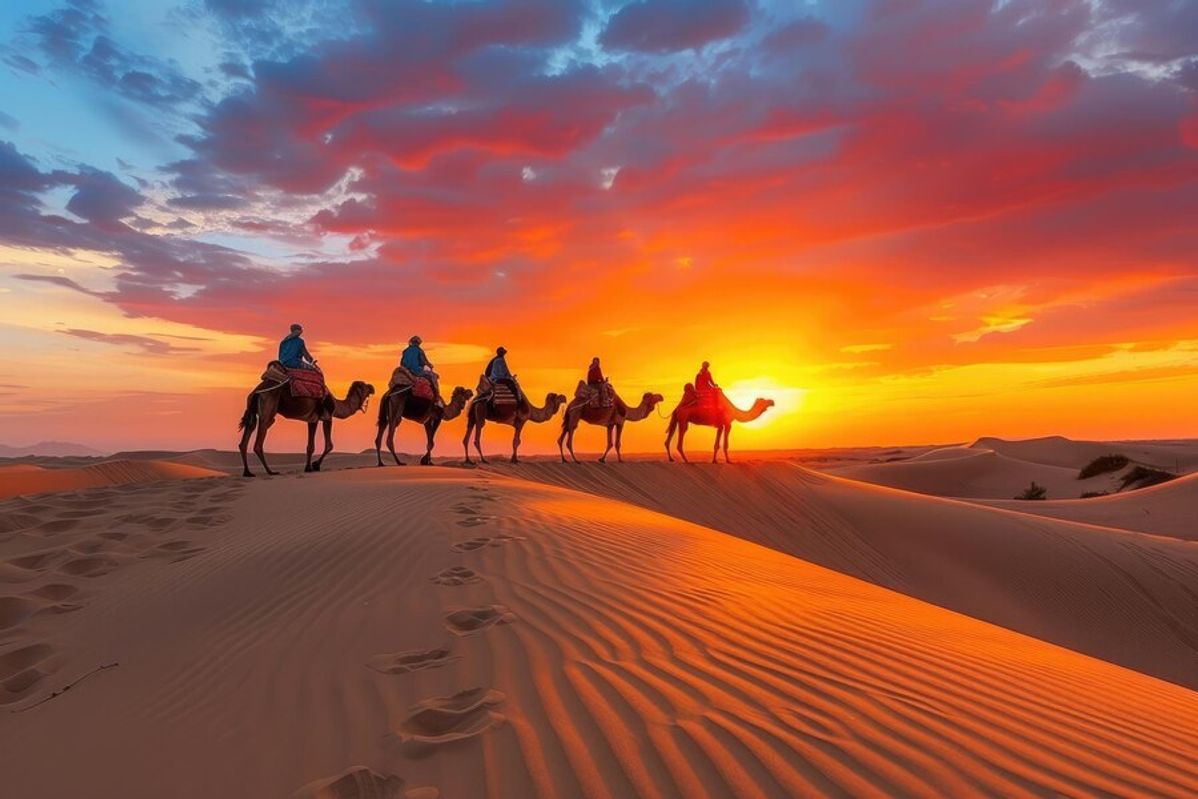
How the sand looks also changes throughout the day. Low light usually brings out golden, orange, and reddish tones, but the colors vary depending on the weather, dust, wind, and the sun's position.
Merzouga, Hassilabied, and other accommodation areas follow different stretches of Erg Chebbi's edge. Because of this, two hotels advertised as close to the dunes can offer quite different access points and views.
How to fit Erg Chebbi into your itinerary
The most comfortable plan is to arrive in Merzouga during the day, check in, and leave the dune activities for the late afternoon, the night, and the following morning.
Anyone coming from Fez covers approximately 460 to 470 kilometers by road. Even without long stops, the trip takes up a good part of the day because of stops, traffic, and road conditions.
Between Marrakech and Merzouga, the road distance is usually between 530 and 560 kilometers, depending on the route. The trip works better split across more than one day, with stops in places like Ouarzazate, Ait Ben Haddou, the Dades Valley, or the Todra Gorge.
Avoid planning a long road trip and a sunset outing with no buffer between the two. A delay during travel can make you miss the agreed time with the camp or the operator running the activity.
How to get to Merzouga and the dunes
The main road reaches Merzouga and other nearby localities without requiring a 4x4. A regular car can handle getting around town and reaching accommodations located along the paved roads.
The main options are:
- Rental car: offers the freedom to plan stops and choose your accommodation
- Private driver: reduces the strain of the long roads between Fez, Marrakech, and Merzouga
- Bus: there are services to Merzouga or Rissani, depending on your city of origin and the current schedule
- Organized tour: usually bundles transport, accommodation, meals, and a dune activity
- Camp transfer: used to reach establishments outside the urban area
Confirm bus schedules directly with the company, since frequency, route, and final stop can change.
If driving a rental car, don't drive onto sand tracks without the rental company's authorization and without experience on that kind of terrain. Many camps offer a meeting point with parking and handle the final stretch in an appropriate vehicle.
How the visit works
There's no single gate for entering Erg Chebbi. Access depends on where you're staying and the activity you choose.
The most common options are:
- a walk from the edge of the dunes
- a guided sunrise or sunset outing
- a camel ride
- a 4x4 transfer
- sandboarding, offered by some operators
- a night at a tourist camp
Before setting out, confirm the meeting point, duration, return time, and what's included in the price.
Sunrise and sunset
Light close to sunrise and sunset brings out the curves and shadows of the dunes. The exact time changes throughout the year and should be checked for the date of your visit.
At sunrise, leave with enough time to walk to a viewing point without rushing. Bring a flashlight or use your phone's light during the first few minutes, especially near uneven ground.
At sunset, also plan for the return. The landscape darkens quickly, and wind can erase footprints in the sand.
Clouds, dust, and wind can completely change visibility. The same goes for stargazing, which depends on the weather and how much light is around the camp.
Walking the dunes
A short walk lets you take in the landscape without booking another activity. Start from an area close to your accommodation and keep a visual reference for your way back.
Loose sand makes the climb more tiring. A distance that looks short can take a while, especially in the heat or on steep stretches.
You don't need to climb one of the tallest formations to get a good view. The first ridges already let you see different layers of sand and watch the light change.
Avoid walking alone toward remote areas, especially in the late afternoon. Wind can erase tracks and make it harder to find your way back.
Camel ride
The animals used in Merzouga are dromedaries, though the activity is often advertised as a camel ride. Taking part is optional, and many operators offer a 4x4 transfer as an alternative.
The animal's motion can be uncomfortable for people with back, hip, or knee pain. Long pants help reduce friction with the saddle, and loose items should be kept secure during the ride.
Before booking, look at the condition of the animals and ask about the ride's duration. Choose an operator that provides water, rest, food, and proper equipment for the dromedaries.
Don't take part if an animal has open wounds, trouble walking, or clear signs of exhaustion. Also avoid operators who overload the animals or keep the dromedaries working during the hottest part of the day.
Anyone not comfortable with the activity can walk a nearby stretch instead or use the 4x4 transfer. A camel ride isn't necessary to experience Erg Chebbi.
How to choose a camp
Camps range from simple setups with a shared bathroom to larger tents with a bed, electricity, and a private bathroom.
Before booking, confirm:
- the exact location on the map
- the distance between the camp and the dunes
- the meeting point in Merzouga
- round-trip transport
- whether access is by camel or 4x4
- luggage limits
- dinner and breakfast
- shared or private bathroom
- hot water availability
- heating or ventilation
- whether electricity is working
- number of tents
- music or other nighttime activities
- cancellation policy
Some listings use phrases like "inside the dunes" or "in the heart of the Sahara" loosely. Check the map and ask the establishment for a clear explanation of the location.
The nighttime experience varies by location. Music, generators, vehicles, and other camps can be noticeable in busier areas.
Star visibility also depends on clouds, wind, dust, and the amount of light around the area.
Tickets and prices
There's no general ticket for walking in the public areas leading to the dunes. Costs relate to activities, transport, and accommodation.
As a reference for August 2026:
- Short camel ride: approximately 200 to 350 MAD per person, about US$20 to US$35
- Package with one night at a standard camp: approximately 600 to 1,200 MAD per person, about US$60 to US$120
- Camp with upgraded facilities or a private bathroom: from approximately 1,500 MAD per person, about US$150
- 4x4 transfer: may be included in the accommodation or charged separately
- Sandboarding: may be included at the camp or have its own charge
These amounts are approximate and can change depending on the season, comfort level, group size, and included services.
Before paying, confirm whether the price is per person, per tent, or for the full package. Also ask for a list of what's included, especially transport, meals, the camel ride, and a private bathroom.
The dollar conversion is only a reference and was calculated based on an approximate exchange rate. Check the current rate before your trip.
How long to spend
With 2 to 3 hours, you can walk near the edge of the dunes and watch the late afternoon.
Half a day lets you include a guided activity, a short camel ride, or more time for photography.
One night offers a fuller experience, with sunset, dinner, accommodation, and sunrise. Even so, the camp can be swapped for a hotel in Merzouga without giving up the visit to the dunes.
Two nights are useful for anyone who wants to rest after the long roads, add another activity, or explore the surrounding localities.
Best season to visit
The months between October and April tend to offer more suitable temperatures for outdoor activities. Spring and fall balance milder days with less cold nights.
During winter, the temperature can drop a lot after sunset. Bring layers, even when the forecast calls for a sunny day.
In summer, midday heat can make walks and extended activities uncomfortable or unsafe. Schedule outings for early morning or late afternoon and follow local recommendations.
Strong wind and sandstorms can occur at different times of year. Check the forecast and weather alerts before an activity.
What to bring
- enough water for the activity
- sunscreen
- a hat or cap
- sunglasses
- a scarf to protect your face from wind
- long pants for the camel ride
- comfortable shoes
- warm clothing for the night
- a flashlight
- a portable phone charger
- personal medication
- a small bag for what you'll need
Confirm with the camp how larger luggage will be transported. Some outings only allow a small backpack during the camel ride.
Safety on the dunes
Heat, dehydration, and losing your bearings are the main risks during an independent visit.
Bring water even for short walks. Don't rely solely on drinks provided by an operator.
Download the map for offline use and let your accommodation know which area you plan to visit. For longer routes, use a guide who knows the terrain.
Don't walk toward remote areas shortly before dark. Wind quickly changes the marks in the sand, and the dunes can look similar on the way back.
Rain is uncommon, but it can cause flooding and affect access tracks. Check the forecast and follow local guidance when there's a rain, strong wind, or storm alert.
Accessibility
Loose sand makes it difficult for wheelchairs, strollers, and people with reduced mobility to get around.
Some accommodations and camps can arrange a 4x4 approach, cutting down on the need to walk or ride a camel. Confirm in advance how far the vehicle can go.
Also ask about steps, walkways, lighting, an adapted bathroom, and the distance between the tent and common areas. Even camps advertised as luxurious can have loose sand, steps, and long distances between structures.
Responsible visiting
Take back all the trash produced during the outing. Don't leave bottles, packaging, or food scraps in the sand.
Choose operators that manage waste disposal and water use responsibly. Ask how the camp handles sewage and reduces disposable plastic use.
Avoid driving over vegetation or off the routes used by local operators. The desert environment looks resilient, but its recovery can be slow.
During camel activities, respect the animal's limits and choose another form of transport if the conditions you observe aren't adequate.
Practical tips
- Confirm the exact location of your accommodation on the map
- Ask whether the price is per person or per tent
- Check which meals are included
- Arrange the meeting point before arriving
- Leave margin for road delays
- Don't plan the sunset right after a long drive
- Check the current sunrise and sunset times
- Bring clothing for the cold at night
- Don't walk alone toward remote areas
- Choose between camel, walking, or 4x4 based on your comfort
- Confirm how luggage will be transported
- Read recent reviews of the camp and operator
Final tip
Arrive in Merzouga with enough time to check in and confirm the meeting point for your activity. In the late afternoon, walk a nearby stretch or join a previously booked outing.
Anyone choosing a camp should check the location, transport, meals, and tent setup before finalizing the booking. If you prefer more comfort, stay in the village and head back to the dunes before sunrise.
It's possible to experience Erg Chebbi without doing the camel ride or sleeping at a camp. What matters most is choosing a plan that fits the weather, the time you have, and the kind of experience you actually want.