Last updated: August 2026
Merzouga is a small town in eastern Morocco used as a base for exploring Erg Chebbi, the dune field that forms one of the country's main desert experiences. The region lets you walk over the sand, watch the light change, sleep at a camp, and also explore rocky areas and communities outside the dunes.
In this itinerary, "1 day in Merzouga" means arriving during the day, staying one night, and leaving after sunrise and breakfast the next morning. Trying to fit the drive from Fez or Ifrane, a 4x4 excursion, sunset, a night at camp, and an immediate departure into the same window produces a tight schedule that depends too heavily on timing.
This itinerary is a suggestion built from up-to-date research and my work planning trips. It is not an account of a personal visit. The goal is to explain what should be confirmed before booking, present alternatives to the camel ride, and prevent incorrect expectations about camps, weather, and location.
How this Merzouga itinerary was planned
Arrival was planned to happen ahead of sunset. Anyone coming from Ifrane, Midelt, or another stage of the trip needs to start early and keep a margin for stops, traffic, and road conditions.
Before entering the desert, travelers should reach the meeting point indicated by the camp. That's usually where you leave the car, sort out your bags, and use the transport that's included or booked separately.
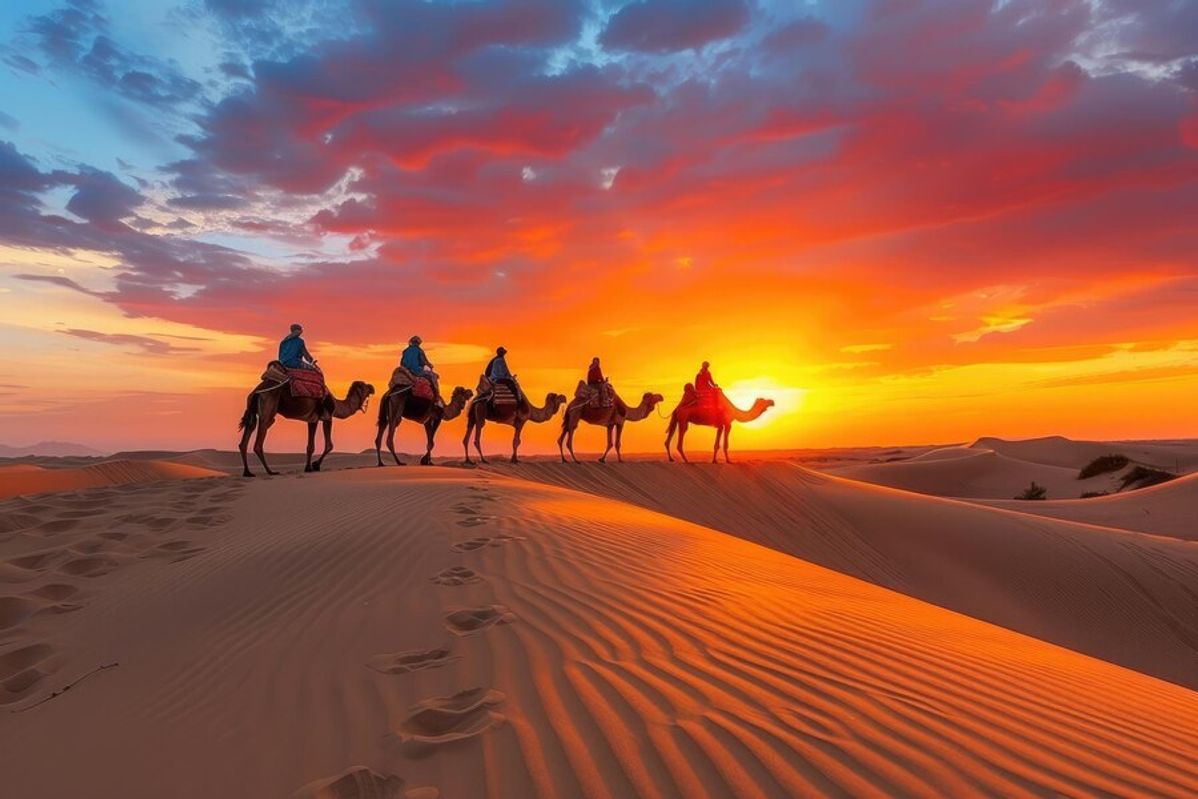
The activity commercially called a "camel ride" usually uses dromedaries, single-humped animals. It's optional. Anyone who doesn't want to ride, or can't find an operator with good animal welfare standards, can reach the camp by 4x4 instead.
Sunset, the night sky, and sunrise all depend on weather conditions. Clouds, wind, and sandstorms can change or cancel activities, so this itinerary doesn't treat any natural phenomenon as guaranteed.
The 4x4 excursion around Merzouga was left as optional. It works better for anyone arriving early or staying a second night. Adding it after a long drive can eliminate the rest needed before heading out to the camp.
The following morning includes sunrise, when conditions allow, breakfast, and the return to the meeting point. These moments are part of the same one-night experience and don't represent a full second day in Merzouga.
Merzouga in 1 day: itinerary overview
Merzouga: the Erg Chebbi dunes and a night in the desert
Morning: the drive to Merzouga
Anyone leaving Ifrane, Midelt, or another stage of the Middle Atlas should start the trip early. The road to Merzouga is long and can include high-altitude areas, arid stretches, towns, and stops along the Ziz Valley.
Don't calculate your arrival based only on the minimum time shown on the map. Build in margin for refueling, meals, roadwork, traffic checks, and driver breaks.
If you have a driver, confirm the departure time, planned stops, and the endpoint of the service. Not every booking includes waiting overnight or transport to the camp.
Anyone driving should refuel before the more isolated stretches and avoid reaching the area after dark for the first time. The final approach to the camp can require an appropriate vehicle and knowledge of the tracks.
Don't try to drive a regular car onto the dunes or find the camp without guidance. Follow your accommodation's instructions and use the indicated parking area or meeting point.
Early afternoon: arrival and getting settled at camp
On reaching the Merzouga area, check in at the hotel, agency, or meeting point given in your booking. Confirm again the time and method of transfer to the camp.
Bring only a small bag for the night, with documents, medication, water, toiletries, sand protection, and appropriate clothing. Large bags can stay in the vehicle or at the base only when the operator offers secure storage.
Before setting out, confirm what's included:
- round-trip transport;
- camel ride or 4x4 transfer;
- dinner;
- breakfast;
- water;
- private or shared bathroom;
- towels and bedding;
- electricity and charging;
- heating or ventilation;
- return time;
- cancellation rules for bad weather.
Terms like "luxury," "premium," or "inside the dunes" don't follow a single standard. Ask for recent photos, the approximate location, and an objective description of the setup.
Some camps sit in the desert areas around Erg Chebbi, not literally among the tall dunes. That doesn't make the experience worse, but the location should be understood before booking.
Mid-afternoon: rest and first contact with Erg Chebbi
After the drive, set aside time to rest, change clothes, and drink water. Don't launch into a string of activities right after arriving.
Erg Chebbi is the dune field near Merzouga. The landscape changes with the light, the wind, and the visitor's position, so a short walk can be enough for a first impression.
Avoid walking on the sand during the hottest part of the day. Ground temperature and sun exposure can make an apparently simple activity much more tiring.
Don't wander off alone without a reference point, especially in strong wind or low visibility. Follow guidance from the camp or a guide and keep water within reach.
Entering the dune landscape doesn't mean every service is free. Visitors pay for the activities, transfers, guides, and accommodation they book.
Late afternoon: transfer to the camp
The transfer can happen by 4x4 or camel ride, depending on your booking. Confirm the option before paying, since it isn't always included in the base price.
Anyone choosing the camel ride should observe the animals' condition and how the handlers behave. Don't take part if you see animals that are very thin, limping, with visible wounds, saddles causing injury, or rough handling.
Ask whether the animals have access to water, food, rest, and shade. Avoid operators who keep dromedaries tied up for long periods in strong heat or run continuous rides during the hottest hours.
Riders should be able to mount safely and should disclose any mobility limitations, back pain, pregnancy, or other relevant conditions. When in doubt, choose the 4x4 transfer instead.
You don't need to ride an animal to have a complete Merzouga experience. Walking through a safe area of the dunes and using motorized transport to the camp are valid alternatives.
Sunset over the dunes
When the weather cooperates, the late afternoon brings longer shadows and more pleasant temperatures on the dunes. The operator may stop at a point to watch the sunset before continuing to the camp.
There's no guarantee of a clear sky. Clouds, wind, dust, or a sandstorm can reduce visibility or require an earlier return.
Bring only the gear you need and protect your camera and phone from sand. Don't leave loose items at the top of the dunes, since wind can carry them away quickly.
Avoid running down steep slopes or getting separated from the group. Distance perception changes in the desert, and the way back may not be as obvious as it looks.
Sunset is part of the experience, not a race to reach the tallest dune. A safe, accessible spot is better than an exhausting climb after a long drive.
Night: camping in the desert
On reaching the camp, locate your tent, the bathroom, the dining area, the emergency exit, and the meeting point. Ask how to get help during the night.
Setups vary a lot. Some camps offer a bathroom inside the tent, while others use shared facilities. Heating, ventilation, outlets, and hot water shouldn't be assumed either.
Dinner may be included, but confirm drinks, dietary restrictions, and meal timing in advance. Bring medication and specific foods if you have a medical need.
Music, a campfire, and cultural activities depend on how the camp operates, the weather, and local rules. Don't treat these as a guaranteed show, and don't pressure staff to arrange something outside the program.
Quiet also varies. Generators, vehicles, music from other camps, and groups can be noticeable even in a desert region. Anyone seeking a calmer experience should ask about size, distance between tents, and noise policy.
Night sky and desert conditions
The sky can offer good visibility when clear, but clouds, dust, moonlight, and camp lighting all affect what you can see.
To see better, move just a few meters away from the lit area and stay in an authorized, familiar spot. Don't walk alone across the dunes at night.
Bring a flashlight or use appropriate lighting, but avoid pointing a strong beam at other tents or people.
Temperatures can drop after sunset, especially during certain times of year. In other periods, tents may stay warm. Check the forecast and bring layers suited to the season.
Don't take sand, plants, fossils, or other natural elements. Collect all your trash, cut down on water use, and avoid disposable products whenever possible.
The next morning: sunrise and breakfast
Sunrise time changes throughout the year. Confirm with the camp when to wake up and how long it will take to reach the viewing point.
Don't climb a tall dune in the dark without guidance. A nearby, safe area usually offers a good view when the sky is clear.
Like sunset, sunrise can be obscured. Even without perfect visibility, the shift in light and temperature offers another way to experience the landscape.
Afterward, head back for breakfast and gather your belongings. Check the tent, the bathroom, and the common area so you don't leave documents, chargers, or trash behind.
Confirm whether the return will be by 4x4 or camel and the arrival time at the meeting point. Don't plan your next leg of travel with a tight connection.
Return and continuing the itinerary
On returning to Merzouga, collect your luggage and check that you have water, fuel, and cash for the next stage.
Anyone continuing to Tinghir, the Todra Gorge, or another city should factor in the full length of the drive and take proper breaks.
A 4x4 excursion around Merzouga can fit into this morning only for those staying another night. For anyone continuing their trip, adding the activity tends to delay the whole schedule.
Don't drive tired after a night with little sleep. If needed, leave later, switch drivers, or hire transport.
What I would prioritize in this 1-day Merzouga itinerary
I would prioritize arriving with time to spare, a camp booking with clearly listed inclusions, and enough time to take in the dunes without starting the activity under pressure.
I would also confirm the camp's location, the type of bathroom, round-trip transport, and how the animals are treated before making any payment.
Sunset and sunrise would be moments I hope for, not conditions for calling the experience a success. The weather can't be controlled.
What can be optional
The camel ride is entirely optional. A 4x4 transfer lets you reach the camp without using animals.
The 4x4 excursion around the region should be dropped when you arrive after a long drive or when you're leaving the next morning.
Sandboarding and other dune activities aren't necessary. Before taking part, confirm the equipment, guidance, difficulty, and environmental impact.
Music and a campfire depend on the camp and shouldn't determine your choice of accommodation.
The seasonal Dayet Srij lake should only be included after checking current conditions. The presence of water and birds varies with rainfall and the time of year.
A second night can be worthwhile for anyone wanting to explore communities, rocky landscapes, and other points in the region without cramming everything between two long drives.
Mistakes that can hurt the experience
The main mistake is booking based only on photos, without confirming the location, the setup, and everything included in the service.
Another problem is arriving close to sunset after a long drive. A small delay can eliminate any rest and turn the transfer into a rush.
Don't assume "private bathroom" necessarily means a bathroom inside the tent. Ask for a clear description.
Don't drive a regular vehicle onto the dunes or try to find the camp alone on an unmarked track.
Avoid taking part in rides with injured, exhausted, or roughly handled animals. The activity can be declined and swapped for the 4x4.
Also, don't expect absolute silence, a fully starry sky, or a cultural performance every night. These depend on the location, the weather, and how the camp operates.
Don't leave cash, documents, medication, or important equipment inside a bag in storage without confirming the site is secure.
Travel planning for Merzouga: essential tips
Choosing a camp
- Confirm the location and operating license
- Ask whether the bathroom is inside the tent
- Check dinner, breakfast, and water
- Confirm electricity, heating, and ventilation
- Read recent reviews about cleanliness and transport
Transport and luggage
- Use the meeting point given by the camp
- Don't try to drive a regular car onto the dunes
- Confirm parking and luggage storage
- Bring only a small bag for the night
- Check the timing and method of the return trip
Animals and alternatives
- The camel ride isn't mandatory
- Decline animals with wounds, exhaustion, or rough handling
- Ask about water, food, shade, and rest
- Avoid rides during the strongest heat
- Use a 4x4 transfer as an alternative
Weather and gear
- Check the heat, wind, and sandstorm risk
- Bring clothing suited to nighttime temperatures
- Protect your camera and phone from sand
- Carry water, medication, and a flashlight
- Don't count on a clear sky or a visible sunset