Last updated: June 2026
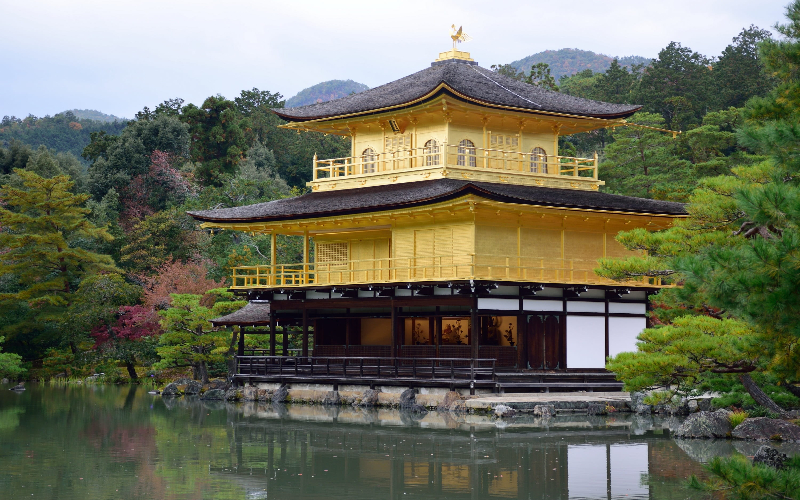
Kinkaku-ji, known as the Golden Pavilion, is one of Kyoto's most famous attractions and one of Japan's most recognisable images. The temple draws attention with its golden structure reflected in the pond, surrounded by traditional gardens that create one of the city's most photogenic scenes.
For a first visit to Kyoto, I would include Kinkaku-ji among the main attractions. The visit is relatively quick, admission is reasonably priced and the golden pavilion looks genuinely different from the city's other temples.
At the same time, it is important to understand that Kinkaku-ji is a very popular attraction. The route is well organised, but it tends to be busy. Because of this, the experience works best when you go at the right time and combine the temple with other nearby attractions, instead of crossing Kyoto just for an isolated visit.
Quick info
- Visit duration: 45 minutes to 1 hour
- Location: northern Kyoto
- Best time: early morning
- Difficulty: easy
- Adult price: ¥500, about US$3.30
- Price for elementary school children: ¥300, about US$2
- Hours: 9am to 5pm
- Open: every day
Is Kinkaku-ji worth visiting?
Yes, especially if it is your first time in Kyoto. Kinkaku-ji is one of the city's most recognisable attractions, with the golden pavilion reflected in the surrounding pond.
I would not call it a long or deep visit like other Kyoto temples. Kinkaku-ji is more visual. You go in, follow the path around the pond, observe the pavilion from different angles, pass through the gardens and finish the visit in about 1 hour.
Even so, I would keep it in the itinerary because it is one of Japan's most important postcard images. For anyone who wants to see the classic side of Kyoto, Kinkaku-ji makes sense.
Why visit Kinkaku-ji?
The main reason to visit Kinkaku-ji is the visual. The pavilion covered in gold tones, the pond in front and the garden around it create a very beautiful composition, especially on clear days.
Unlike other temples where the highlight might be the interior, the history or the rituals, here the strength of the visit lies in the scenery. The temple is seen mainly from outside, and the route was designed to show the Golden Pavilion from different perspectives.
It is rewarding to photograph, but it also shows how Kyoto brings architecture, nature and garden design together within a compact space.
How to get to Kinkaku-ji
Kinkaku-ji sits in northern Kyoto, a bit away from the more central areas such as Kyoto Station, Gion and Kawaramachi. Because of this, the journey needs to be planned well.
The most common way to get there is by bus. Leaving from central areas, the journey usually takes about 30 to 45 minutes, depending on traffic and your starting point. The urban bus within the flat-fare zone costs ¥230, about US$1.50.
You can also go by taxi, especially if you are in a group or want to save time. This option is more comfortable, but naturally more expensive.
I would not place Kinkaku-ji on the same day as very distant attractions like Fushimi Inari or Arashiyama, unless your itinerary is well planned. It pairs better with other spots in northern Kyoto, such as Ryoan-ji and Ninna-ji.
How the visit works
Entry to Kinkaku-ji is paid. The adult ticket costs ¥500 (about US$3.30). Elementary school children pay ¥300 (about US$2). The temple opens from 9am to 5pm and operates every day.
After entering, you follow a set path through the complex. The route passes the pond, viewpoints of the Golden Pavilion, gardens and secondary areas of the temple.
You cannot enter the interior of the pavilion. The visit happens from the outside, observing the temple from a distance. Because of this, the pace is simple and quick.
Even on busy days, the organised path helps manage the flow of visitors. Even so, it is common to find many people stopped at the first photo spots, especially near the pond.
What to see at Kinkaku-ji
Golden Pavilion
The Golden Pavilion is the main point of the visit. It sits on the edge of the pond and is the complex's most famous image.
The best angle is usually right at the start of the route, when the pavilion appears reflected in the water. This is also the most sought-after spot for photos.
I recommend being patient in this part. Since many people stop to take photos, the crowd can feel intense, but you can usually find space if you wait a little.
Kyoko-chi Pond
The pond in front of the pavilion is essential to Kinkaku-ji's beauty. On days with little wind, the temple's reflection in the water makes the scene even more beautiful.
This is one of the reasons the site is so impressive in photos. The temple alone already draws attention, but the pond creates the complete image.
Traditional gardens
After the first view of the Golden Pavilion, the path continues through the complex's gardens. The visit continues along organised trails, trees, rocks, small viewpoints and quieter areas.
The gardens are not huge, but they help create the temple's atmosphere. They also keep the visit from depending only on the first photo of the pavilion.
Viewpoints along the route
Along the way, you will see Kinkaku-ji from different angles. Some spots show the pavilion up close, others let you see the temple together with the pond and the surrounding garden.
This variety matters because the visit is short. Instead of expecting a long sequence of buildings, the ideal is to enjoy the different angles and observe how the scenery changes as you walk.
How much does it cost to visit Kinkaku-ji?
- Adult ticket: ¥500, about US$3.30
- Elementary school children: ¥300, about US$2
- Bus within Kyoto's flat-fare zone: ¥230, about US$1.50 per ride
The total cost for a simple visit from central Kyoto can come to around ¥960, about US$6.50, considering the ticket and two bus rides. This amount can change depending on your route and the exchange rate.
How long to spend at Kinkaku-ji?
The ideal is to set aside about 45 minutes to 1 hour to visit Kinkaku-ji.
- With 45 minutes, you can do the main route, see the pavilion, take photos and walk through the gardens.
- With 1 hour, you can visit more calmly, wait for better photo angles and not feel rushed.
I would not set aside half a day just for Kinkaku-ji. It works best as part of a broader itinerary through northern Kyoto.
Best time to visit Kinkaku-ji
The best time is early in the morning, right after opening. The temple opens at 9am, so arriving close to that time helps you avoid some of the group crowds.
In the afternoon, the site can get busier, especially in high season. Even so, the visit remains manageable because the route is well organised.
On sunny days, the gold of the pavilion stands out more strongly. On cloudy days, the scenery is still beautiful, but the visual impact can be smaller.
I would avoid arriving too close to closing time, because the temple closes at 5pm and the visit can feel rushed.
What to combine with Kinkaku-ji on the same day
Kinkaku-ji pairs very well with Ryoan-ji, known for its rock Zen garden. Both sit within a similar regional logic and make sense on the same day.
It can also be combined with Ninna-ji, another important temple in northern Kyoto. This combination creates an itinerary more focused on classic temples and quieter areas of the city.
For a first trip, a good sequence would be Kinkaku-ji in the morning, Ryoan-ji right after and then a more central area of Kyoto at the end of the day.
I would avoid combining Kinkaku-ji with Fushimi Inari in the same block of the day, because they sit on different sides of the city and the transfer can make the itinerary less efficient.
What I would prioritise on the visit
If time is short, I would prioritise the classic view of the Golden Pavilion reflected in the pond and the main walk through the gardens. This is not an attraction where you need to search for many hidden details. The strength lies in the overall visual.
If you enjoy photography, arrive early, be patient at the first viewpoint and enjoy the different angles along the route.
What can be optional
- Buying souvenirs at the end of the visit can be optional.
- Spending a lot of time trying to get the perfect photo can also be optional, especially if the temple is crowded.
- Combining several temples in the same day can be optional. To avoid fatigue, I would choose only one or two nearby attractions.
Mistakes to avoid at Kinkaku-ji
The first mistake is expecting a long visit. Kinkaku-ji is beautiful, but the route is relatively short. It works best as part of a larger itinerary through northern Kyoto.
Another mistake is arriving at peak time expecting a peaceful experience. The temple is one of Kyoto's most visited attractions and usually receives many tour groups.
It is also worth avoiding crossing the city just to see Kinkaku-ji and then heading back to another distant area. It is better to combine it with nearby attractions, such as Ryoan-ji.
Another mistake is feeling frustrated about not being able to enter the pavilion. The visit is external, and the beauty of the place lies precisely in the view of the temple together with the pond and the gardens.
Practical tips for visiting Kinkaku-ji
- Arrive early to find smaller crowds.
- Set aside about 1 hour for the visit.
- Bring cash or a card for the ticket, but confirm payment methods on the day.
- Wear comfortable shoes, even though the walk is easy.
- Avoid planning a day with too many temples, because Kyoto can feel repetitive if the itinerary lacks balance.
- Combine it with Ryoan-ji to make better use of the trip to northern Kyoto.
- Do not leave it until close to 5pm, because the temple closes early.