Last updated: June 2026
Putting together a 10-day Japan itinerary means choosing your base cities well and organising transfers with logic. The country has countless incredible places, but on a first trip the most important thing is not to squeeze in too many destinations and end up losing time with hotel changes, huge stations and long transfers.
For this itinerary, the suggested sequence is Tokyo, Hakone, Kyoto, Nara and Osaka. This order works well because it starts at the main international gateway, moves towards western Japan and avoids backtracking on the map. It also allows you to combine different sides of the country: the modern energy of Tokyo, the Mount Fuji landscape, the tradition of Kyoto, the historic atmosphere of Nara and the food scene of Osaka.
The goal here is not just to list famous tourist spots. The idea is to organise the days in a practical way for anyone planning a real trip, showing what fits together on the same day, what can be optional and where the itinerary can become tiring if you try to do too much.
How this itinerary was planned
This itinerary was created with practical trip planning in mind. The order of the destinations takes into account train transfers, the location of the attractions and the time needed to enjoy each city without making the trip too rushed.
For a first trip to Japan, I would prioritise Tokyo, Kyoto, Nara, Osaka and an experience in the Mount Fuji region. These places deliver a good mix of modern city, historic temples, traditional neighbourhoods, nature, street food and urban life.
The biggest mistake in a 10-day Japan itinerary is trying to fit in too many cities and changing hotels all the time. Japanese transport is very efficient, but the stations are large, the cities demand a lot of walking and every transfer takes more time than it seems. That is why this itinerary works with few bases and days organised by region.
10-day Japan itinerary: overview
Itinerary summary
- 3 days in Tokyo, with Asakusa, Shibuya, Harajuku, Shinjuku, Tsukiji, Ginza and Tokyo Skytree.
- 1 day in Hakone and the Mount Fuji region, with Lake Ashi, the Hakone Ropeway and Owakudani.
- 3 days in Kyoto, with Fushimi Inari, Gion, Arashiyama, Kinkaku-ji, Ryoan-ji and Higashiyama.
- 1 day in Nara, with Nara Park, Todai-ji and Kasuga Taisha.
- 2 days in Osaka, with Osaka Castle, Dotonbori, Umeda, Shinsekai and Tennoji.
Tokyo: start with the most intense city of the itinerary
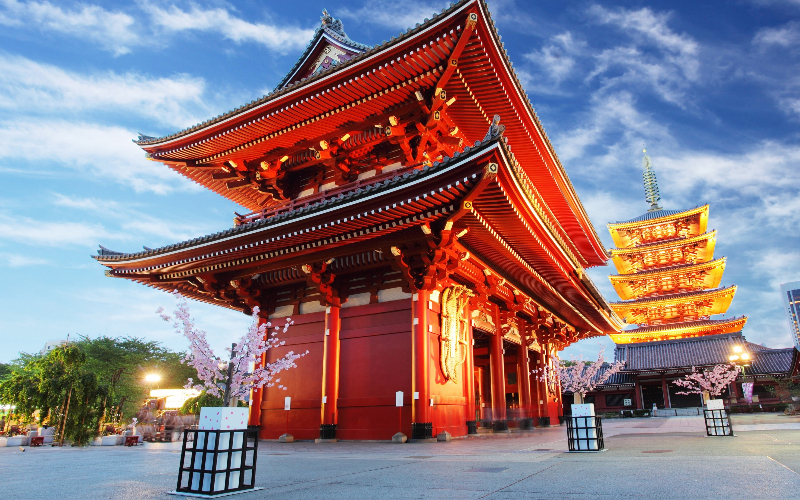
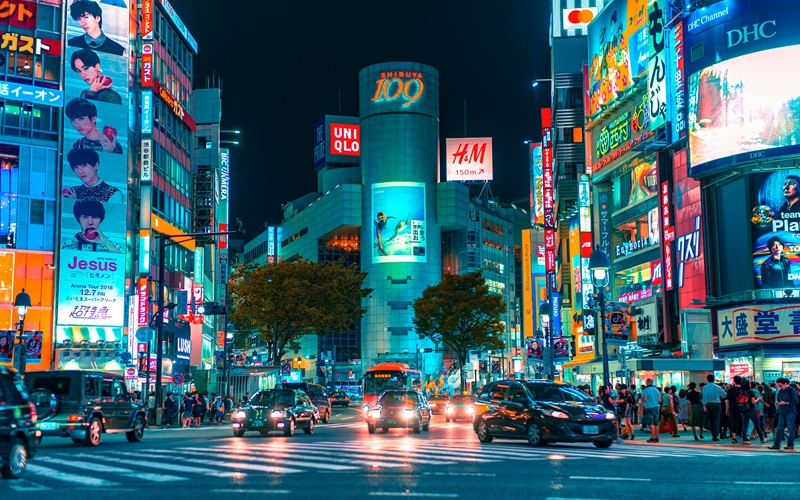
Tokyo is a practical place to begin because it is the main arrival point for many international visitors. The city is enormous, but dividing each day by area makes it much easier to navigate.
I would not try to cross Tokyo several times in the same day. The best approach is to organise the city into blocks. One day for the more traditional east side of the city, one day for modern districts like Shibuya, Harajuku and Shinjuku, and a third day for Tsukiji, Ginza and Odaiba.
Tokyo deserves at least 3 days on a first trip. With less than that, the itinerary becomes far too tight and you end up spending more time in transit than enjoying the neighbourhoods.
Asakusa, Ueno, Akihabara and Tokyo Skytree
I would start the itinerary with Asakusa because it is one of Tokyo's most traditional areas and works very well as a first impression of the city. Senso-ji Temple is the main highlight of the area and is worth placing early in the itinerary, before the biggest crowds arrive.
Nakamise Street, which leads up to the temple, is a good stop for souvenir shops, traditional sweets and small handcrafted products. Even though it is touristy, it helps create a first connection with the older side of Tokyo.
After Asakusa, Ueno fits in well because of the proximity. Ueno Park is a calmer area, with museums, a zoo and green spaces. For anyone who enjoys unhurried walks, it is a good pause before heading to a busier district.
In the afternoon, Akihabara completely changes the mood of the day. The district is known for electronics, anime, manga, games and themed cafés. I would place Akihabara after Ueno because the logistics make sense and because the neighbourhood works better when you have free time to explore shops and smaller streets.
At night, the Tokyo Skytree can close the day with a panoramic view of the illuminated city. It can be optional if your budget is tighter, but for a first trip it is one of the most memorable ways to understand the size of Tokyo.
What to prioritise on this day
If time is short, I would prioritise Senso-ji, Akihabara and Tokyo Skytree. Ueno can be done more quickly or left as optional, depending on the pace of the trip.
What to avoid on this day
Avoid adding Shibuya or Shinjuku to this same day. They are important areas, but they belong to a different part of the itinerary. Mixing everything into one day can make the trip unnecessarily exhausting.
Shibuya, Harajuku, Meiji Shrine and Shinjuku
The second day should be dedicated to Tokyo's more modern and fast-paced side. The logic here is to start in Shibuya, move on to Harajuku and finish in Shinjuku, which becomes more interesting in the late afternoon and at night.
Shibuya Crossing is one of the best-known spots in the city. I would place it at the start of the day because Shibuya Station connects well with other areas and because the Hachiko statue is right by the station exit.
Harajuku then comes in as a transition between the urban side and a quieter side. Meiji Shrine sits inside a wooded area and offers a break from the intense pace of the city. Right after, Takeshita Street shows another side of Tokyo, with youth fashion, creative shops and street food.
For the end of the day, Shinjuku is the best choice. The area combines skyscrapers, neon signs, restaurants, tiny bars and famous spots like Kabukicho and Golden Gai. I would leave Shinjuku for the evening because that is when the district comes alive.
What to prioritise on this day
For a first trip, I would prioritise Shibuya Crossing, Meiji Shrine and Shinjuku at night. Harajuku can be quicker if you are not that interested in shops and youth fashion.
What to avoid on this day
Avoid adding Asakusa or Odaiba to this same day. They are interesting areas, but they are in another part of the city and can make the day far too long.
Tsukiji, Ginza and Odaiba
The third day in Tokyo can be lighter and more varied, starting with food, passing through a sophisticated area and ending at the bay.
I would start with Tsukiji, especially the outer market area. Even though the main wholesale market has moved, the area is still interesting for tasting seafood, quick bites and browsing traditional shops. It makes more sense to visit in the morning, when the food scene is at its liveliest.
Ginza fits in well next because of the proximity. It is a sophisticated area, with designer stores, cafés, modern architecture and wide avenues. Even if you have no plans to shop, it is worth walking around to see the contrast with other parts of Tokyo.
In the afternoon, Odaiba can wrap up the Tokyo days. The artificial island in the bay has views of the city, shopping areas, interactive museums and the famous life-size Gundam robot. I would treat Odaiba as a lighter part of the itinerary, good for finishing Tokyo without too much rushing around.
What can be optional
Odaiba can be dropped if you prefer more time in central neighbourhoods or want to shop at a slower pace. For anyone who enjoys architecture, technology and urban views, it is worth keeping.
Hakone and Mount Fuji: the transition between Tokyo and Kyoto
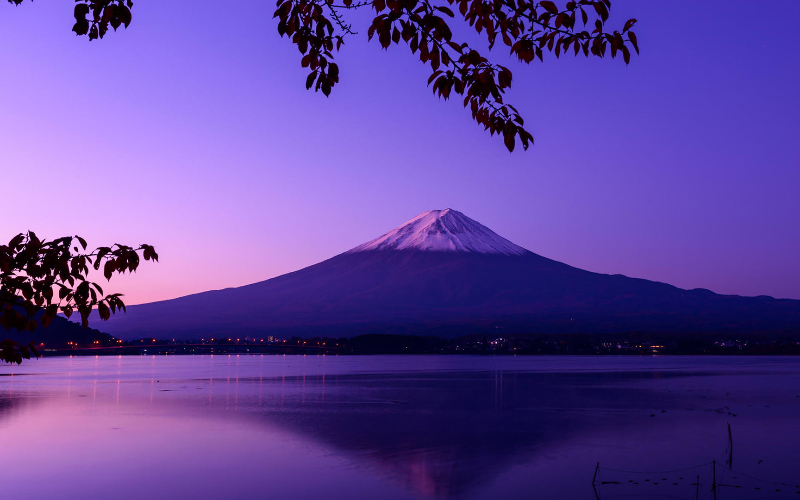
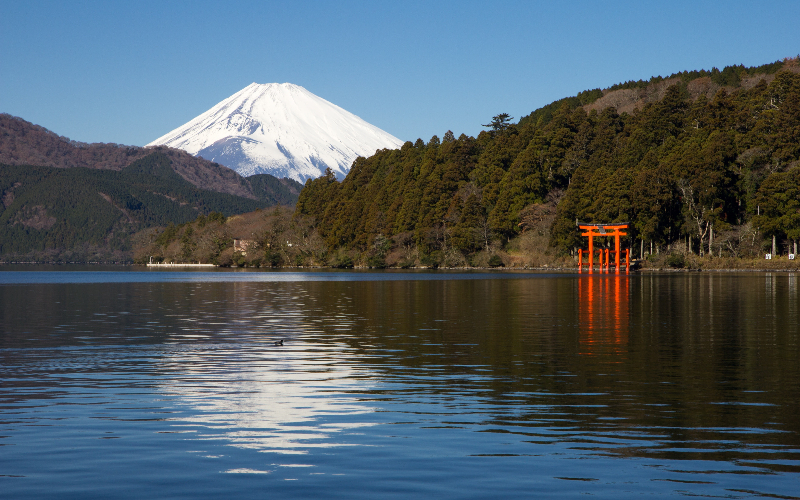
Hakone fits into this itinerary very well as a transition between Tokyo and Kyoto. Instead of doing a day trip and returning to Tokyo, a more efficient alternative is to leave Tokyo early, visit Hakone during the day and continue to Kyoto in the evening from Odawara.
This logic avoids backtracking on the map and makes better use of the journey towards western Japan. Hakone is also one of the most practical ways to include a Mount Fuji experience without climbing the mountain.
It is important to remember that the Mount Fuji view depends heavily on the weather. On cloudy days, you may not see the mountain at all. That is why I would treat Hakone as a nature and landscape experience, not just as the day to see Fuji. Even without the perfect view, Lake Ashi, the ropeway and the volcanic area of Owakudani remain interesting.
What to do in Hakone
Lake Ashi is one of the best-known areas of Hakone. On clear days, you can get one of the classic views of Mount Fuji. The boat cruise across the lake is usually one of the most popular experiences in the region.
The Hakone Ropeway connects different points of the region and offers panoramic views over the volcanic valley. It also takes you to Owakudani, an area of volcanic activity with sulphur vapours and a landscape completely different from Japanese cities.
Owakudani is famous for kurotamago, eggs boiled in volcanic water. Even if you do not care about the food experience, the volcanic landscape alone makes the stop worthwhile.
At the end of the day, the best logic is to head to Odawara and take the Shinkansen to Kyoto. That way, you wake up the next day already in Kyoto and gain time in the itinerary.
What to prioritise in Hakone
If time is short, I would prioritise Lake Ashi, the Hakone Ropeway and Owakudani. If the weather is very bad and you have no interest in volcanic landscapes or onsen, you can consider going straight to Kyoto and gaining more time in the city.
Kyoto: the cultural heart of Japan
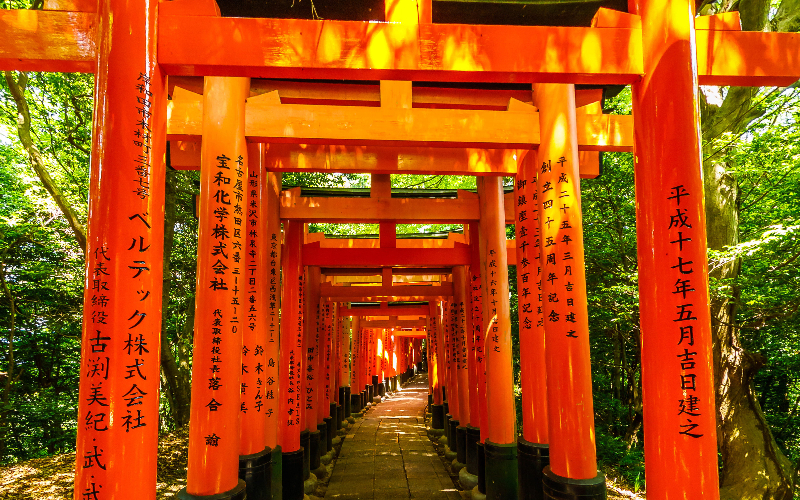
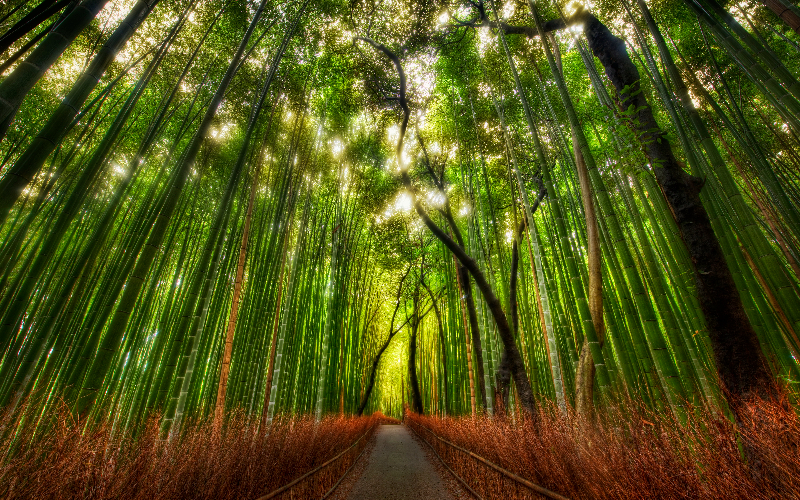
Kyoto is one of the most important parts of a first trip to Japan, but it is also a city that needs organisation. The attractions are spread out and, if the itinerary is put together without geographic logic, you can waste a lot of time on buses and transfers.
For this 3-day Kyoto itinerary, I would divide the city by region. One day for Fushimi Inari, Kiyomizu-dera, Higashiyama and Gion. One day for Arashiyama. One day for the classic temples of the north, such as Kinkaku-ji and Ryoan-ji.
This division makes the itinerary more practical, avoids crossing Kyoto several times in the same day and helps you enjoy the city at a calmer pace. On a first trip, I would prioritise Fushimi Inari, Gion, Arashiyama and Kinkaku-ji, because these places best showcase the traditional, historic and visually striking side of the city.
Fushimi Inari, Kiyomizu-dera, Higashiyama and Gion
I would start Kyoto with Fushimi Inari because it is one of the most striking places in Japan and also one of the busiest. Arriving early helps a lot, especially if you want to walk through the torii gate corridors with smaller crowds.
After that, the sequence towards Kiyomizu-dera and Higashiyama makes sense because it concentrates some of Kyoto's most traditional scenery. Kiyomizu-dera sits on a hillside and offers a wide view of the city. Higashiyama, in turn, is ideal for walking through historic streets, traditional shops and preserved areas.
At the end of the day, Gion is a good choice. The district becomes more beautiful at dusk, when the lanterns start to light up and the traditional streets gain more atmosphere. I would leave Gion for the evening because it pairs better with dinner and an unhurried walk.
What to prioritise on this day
If time in Kyoto is limited, I would prioritise Fushimi Inari, Higashiyama, Kiyomizu-dera and Gion. Together, they provide a strong introduction to the city on a first trip.
What to avoid on this day
Do not try to fit Arashiyama into this same day. Despite being one of Kyoto's most famous areas, it lies in another direction and deserves a separate day.
Arashiyama
Arashiyama should have its own day because it is further from the centre and has several attractions close to each other. Trying to squeeze the area in as a quick stop can make the visit far too rushed.
The Bamboo Grove is the best-known attraction, but the experience is better when combined with Tenryu-ji Temple and a walk along the Katsura River area. The ideal is to arrive early to avoid the biggest crowds in the bamboo forest.
Tenryu-ji Temple fits very well into the itinerary because it is right next to the bamboo grove and has an important Zen garden. Afterwards, walking along the river area makes the day more balanced, without relying only on temples.
In the evening, I would return to central Kyoto and choose Pontocho or Kawaramachi for dinner. These areas have good restaurant options and work best at the end of the day.
What to prioritise in Arashiyama
If time is short, I would prioritise the Bamboo Grove, Tenryu-ji and the Katsura River area. Other attractions in the region can be added, but they are not essential for a first trip.
Kinkaku-ji, Ryoan-ji and classic temples
The third day in Kyoto can be dedicated to the classic temples in the north of the city. Kinkaku-ji, known as the Golden Pavilion, is one of the most photographed temples in Japan and is usually a priority for first-time visitors to Kyoto.
Ryoan-ji is relatively close and is known for its rock Zen garden. I would place both on the same day because the combination makes geographic sense and avoids long transfers between opposite areas of the city.
This is a day that can become repetitive if you try to include too many temples. That is why I recommend choosing a few places and visiting them at a calmer pace. Kyoto has dozens of important temples, but in a 3-day itinerary it is better to prioritise the most representative ones.
What can be optional
Ryoan-ji can be optional if you are already tired of temples or would rather return to Higashiyama, Gion or a local market. Kinkaku-ji, for a first trip, I would keep as a priority.
Nara: sacred deer and Japan's first capital
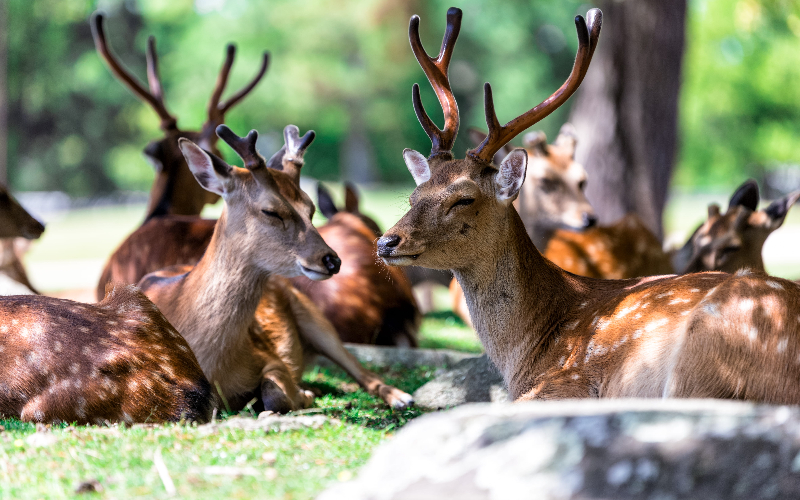
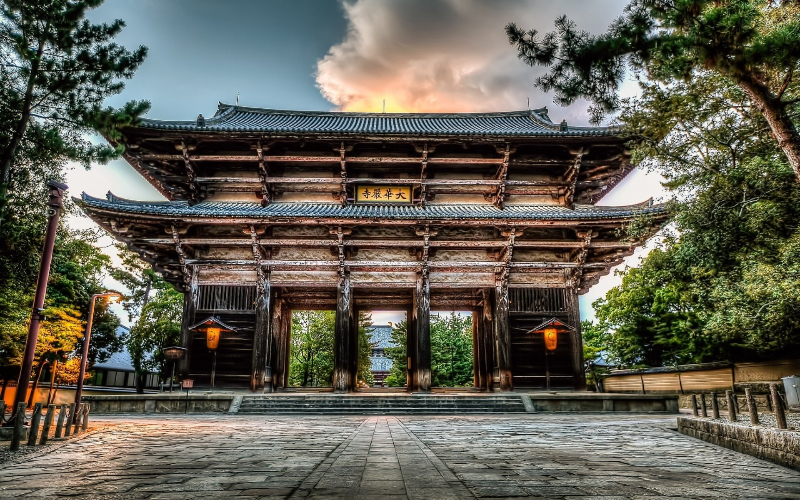
Nara works very well in this itinerary because it sits between Kyoto and Osaka. For a first 10-day trip, I would not include a night in Nara. The best approach is to visit during the day and continue to Osaka in the late afternoon.
The city was an ancient capital of Japan and has a historic atmosphere different from Kyoto. The focus of the day should be Nara Park, Todai-ji Temple and Kasuga Taisha Shrine.
Nara Park is known for the deer that roam freely. It is a memorable experience, but it is also a touristy area, so keep an eye on food, bags and small objects.
Todai-ji Temple is the city's main cultural attraction and houses an enormous bronze Buddha statue. For this itinerary, it should be the priority of the day in Nara.
Kasuga Taisha fits in very well as a complement, mainly for the path lined with stone lanterns. If the day is running long or you are tired, you can shorten the visit and focus on Nara Park and Todai-ji.
In the late afternoon, take the train to Osaka. This change of base makes sense because Osaka will be the last city of the itinerary.
What to prioritise in Nara
If you have little time, prioritise Todai-ji and Nara Park. Kasuga Taisha is a great complement, but it does not need to be forced in if the itinerary is getting tiring.
Osaka: food, nightlife and the end of the itinerary
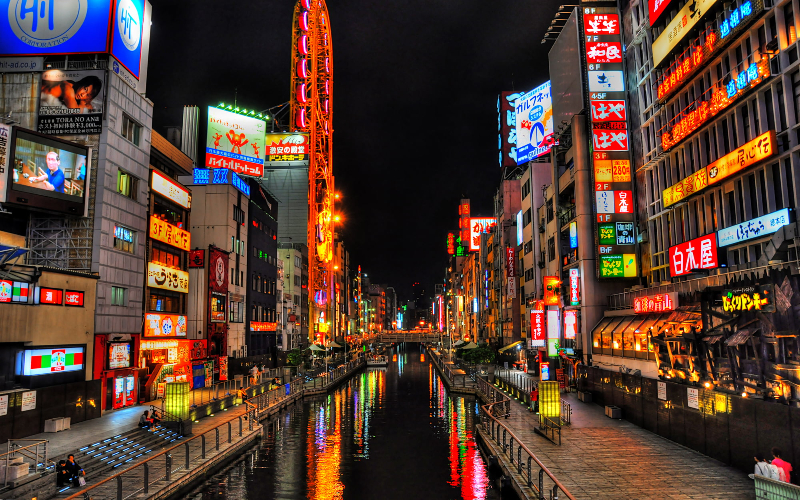
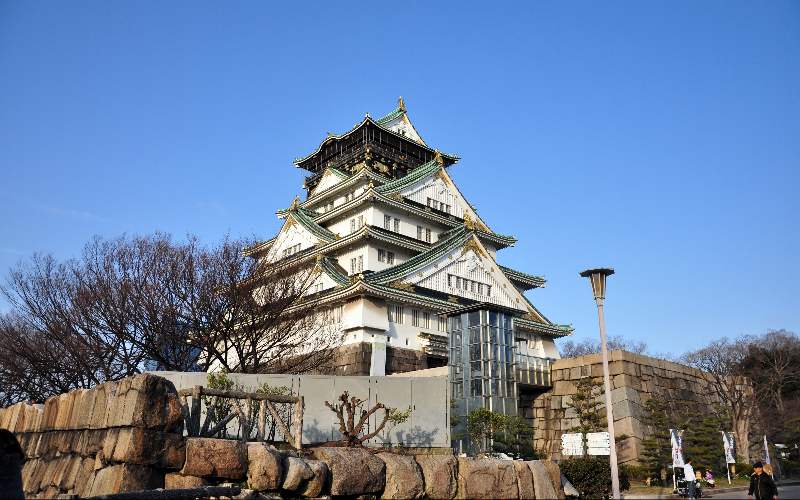
Osaka works well at the end of the trip, offering a more relaxed pace after busy days in Tokyo and Kyoto. The city is known for street food, nightlife and neighbourhoods with a distinct personality.
I would also leave Osaka for the final days for practical reasons. If your departure flight is from Kansai International Airport, the city is well positioned to close the trip.
Osaka Castle, Shinsaibashi and Dotonbori
On the first day in Osaka, I would start with Osaka Castle. The castle is one of the city's historic symbols and the surrounding park is large, pleasant and good for walking.
After that, Shinsaibashi comes in as a good transition to shopping and urban buzz. The area has commercial streets, covered arcades and an easy connection to Dotonbori.
Dotonbori should be left for the evening. That is when the area comes alive, with neon signs, restaurants, giant billboards and the famous Glico Running Man. For a first trip, Dotonbori is one of Osaka's most important stops.
What to prioritise on this day
I would prioritise Osaka Castle during the day and Dotonbori at night. Shinsaibashi can be quicker, especially if you are not interested in shopping.
Umeda, Shinsekai and Tennoji
The last day can be more flexible, depending on your flight time or next destination. If you have the whole day, a good sequence is Umeda, Shinsekai and Tennoji.
Umeda is a modern area, with large stations, shopping malls and the Umeda Sky Building. The Floating Garden Observatory offers a wide view of Osaka and can be a good way to start or end the day.
Shinsekai has a completely different vibe, more retro, with the Tsutenkaku tower and kushikatsu restaurants. It is an interesting area precisely because it contrasts with the modern side of Umeda.
Tennoji can close the itinerary with a lighter walk, shopping areas, a park and nearby attractions. If your flight is early or you are tired, Tennoji can be dropped without hurting the main itinerary.
What can be optional
The Umeda Sky Building can be optional if you have already visited observation decks in Tokyo. Tennoji can also be dropped if the last day is short. In my view, Dotonbori and Osaka Castle matter more than trying to do everything.
What I would prioritise in this 10-day Japan itinerary
If I had to reduce this itinerary to the essentials, I would keep Tokyo, Kyoto, Nara and Osaka. Hakone would come in as a very interesting extra experience to try to see Mount Fuji, but it depends more on the weather.
In Tokyo, I would prioritise Asakusa, Shibuya, Shinjuku and a panoramic view of the city. In Kyoto, I would keep Fushimi Inari, Higashiyama, Gion, Arashiyama and Kinkaku-ji. In Nara, the focus would be Todai-ji and Nara Park. In Osaka, Dotonbori and Osaka Castle would be the main stops.
The most important thing is not to try to fit in too many attractions. Japan is organised and efficient, but the distances within the cities can wear you out. An itinerary with fewer transfers and more time in each region tends to work better.
What can be optional in this itinerary
- The Tokyo Skytree can be replaced by another observation deck if you want to save money.
- Odaiba is interesting, but it can be dropped if you prefer more time in central Tokyo neighbourhoods.
- Hakone depends heavily on the weather. If the forecast is very bad and you have no interest in volcanic landscapes or onsen, you can go straight to Kyoto.
- Ryoan-ji can be optional if you have already visited many temples in Kyoto.
- Tennoji can be dropped on the last day if your flight is early or if you would rather shop at a slower pace.
Mistakes to avoid on this Japan itinerary
The first mistake is trying to fit in too many cities in just 10 days. Japan has excellent transport, but every city change involves check-out, station, train, arrival, transfer to the hotel and adjustment time.
Another common mistake is underestimating the size of the cities. Tokyo and Kyoto require planning by region. If you mix very distant neighbourhoods into the same day, the itinerary becomes tiring and inefficient.
It is also worth avoiding unnecessary hotel changes. For this itinerary, Tokyo, Kyoto and Osaka work as good bases. Hakone and Nara can be slotted in along the way without requiring extra nights of accommodation.
In Kyoto, the most common mistake is trying to visit too many temples in the same day. After a few visits, the itinerary can become repetitive. It is better to choose the main ones carefully and leave time to walk through the traditional neighbourhoods.
In Hakone, do not plan the day solely around the Mount Fuji view. The weather can change and the mountain may be covered. The ideal is to treat the region as a set of landscapes: lake, ropeway, volcanic area and a possible view of Fuji.
Planning your Japan trip: essential tips
Before starting your Japan itinerary, it is worth understanding some practical aspects of the trip. Despite being an extremely organised country, Japan has particularities around transport, payments and communication that make a real difference to the experience.
Essential apps
- Google Maps for getting around and public transport routes
- Google Translate for menus, signs and basic communication
- Suica or Pasmo for trains, subways, buses and small purchases
- Japan Travel by Navitime for more detailed train routes
Internet in Japan
- Having internet makes a big difference in stations and transfers
- An eSIM is more practical for anyone with a compatible phone
- Pocket Wi-Fi can work better for those travelling in a group
- Public Wi-Fi exists, but it is not fully reliable
How to pay
- Cash is still widely used, especially in smaller places
- Cards are accepted in many places, but not always in small restaurants
- Always carry yen for small expenses and attractions
- Suica and Pasmo also work for quick everyday payments
Transport between cities
- The Shinkansen is the main option between Tokyo, Kyoto and Osaka
- Fast, punctual and very efficient for long journeys
- Stations can be large, allow extra time for connections
- IC cards make all transfers within the cities easier