Last updated: June 2026
Osaka is one of Japan's liveliest cities and works well at the end of a wider trip through the country. After busy days in Tokyo and Kyoto, it offers a more relaxed pace, with street food, nightlife, shopping districts and attractions that are easy to combine.
With two days, organise Osaka by area to avoid wasting time on transport. Use the first day for Osaka Castle, Shinsaibashi, Namba and Dotonbori, then spend the second at the Umeda Sky Building, Shinsekai, Tsutenkaku and Tennoji.
The goal of this itinerary is not just to list tourist spots. The idea is to build a practical sequence, showing what fits together on the same day, what is worth prioritising and which attractions can be optional if time or budget is tighter.
How this itinerary was planned
This itinerary was created with practical trip planning in mind. Osaka is a big city, but the main tourist areas are relatively easy to combine when you organise the day by region.
The first day concentrates the historic side and the city's most famous area at night. Starting with Osaka Castle makes sense because the visit takes more time during the day. After that, Shinsaibashi, Namba and Dotonbori work well together because they are close to each other and can be explored on foot.
The second day shows another Osaka, with an observation deck, a retro neighbourhood, a historic tower, local food and the Tennoji area. It is a day with more contrast, ideal for anyone who wants to step a little outside the most obvious route.
2-day Osaka itinerary: overview
Itinerary summary
Osaka Castle, Shinsaibashi, Namba and Dotonbori
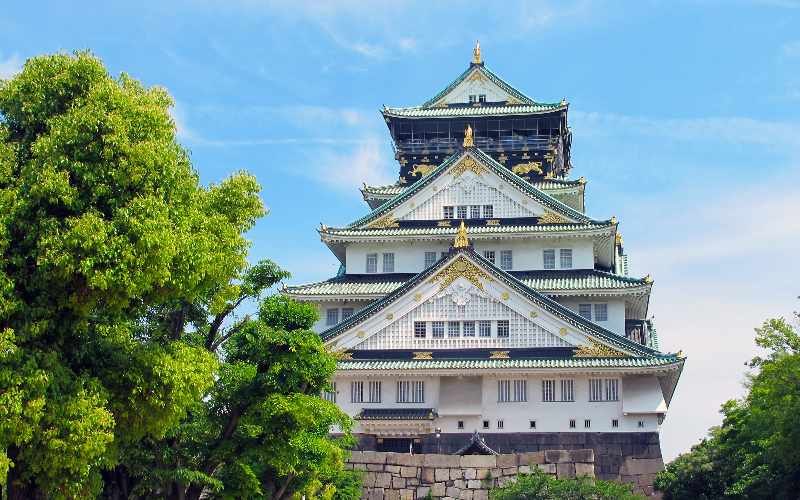
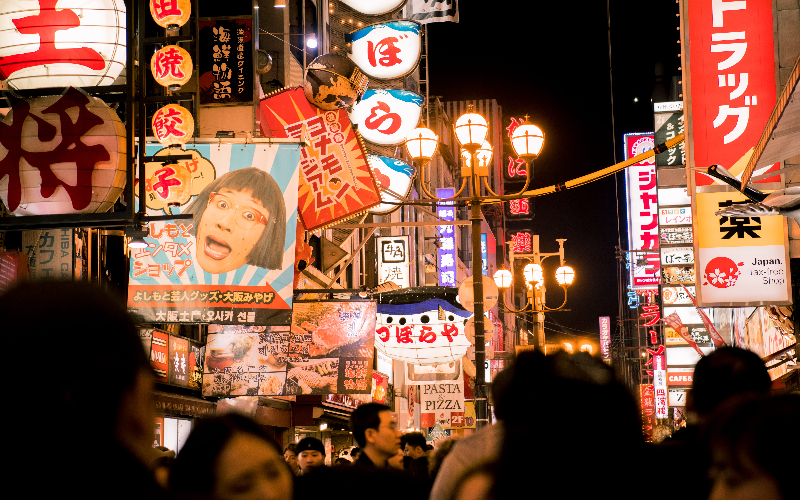
I would start Osaka with Osaka Castle because it is one of the city's most important historic attractions and works best during the day. After that, I would continue to Shinsaibashi and Namba, leaving Dotonbori for the evening, when the signs light up and the area comes alive.
This order is practical because it avoids going back and forth between distant neighbourhoods. The day starts with history and a park, passes through shopping and ends in the most famous area for eating and walking at night.
Morning at Osaka Castle
Osaka Castle is one of the city's main landmarks. The surrounding park is large, free and pleasant for walking, especially if you want to take exterior photos of the castle without rushing.
Entry to the park is free. The interior of the castle, which functions as a museum, is paid and costs ¥1,200 (about US$8) per adult. For anyone who enjoys history, it is worth going in. For those on a tighter budget or with little time, you can get a lot out of just the exterior area and the park.
I would place the castle in the morning because the area tends to be more pleasant before the biggest crowds. In addition, the visit can take up a good part of the morning if you enter the museum and walk through the park.
What to prioritise at Osaka Castle
If you have little time, prioritise the exterior view of the castle, the park and the main surrounding areas. Going into the museum is interesting, but it is not essential for every kind of traveller.
Afternoon in Shinsaibashi and Namba
After Osaka Castle, I would continue to Shinsaibashi and Namba. This part of the itinerary works well in the afternoon because it mixes shopping, covered streets, shops, cafés and plenty of urban buzz.
Shinsaibashi is one of Osaka's best-known shopping areas. It is good for anyone who wants to shop, browse Japanese and international brands, visit drugstores, look for electronics or simply walk through the shopping district.
Namba is nearby and works as a natural transition to Dotonbori. The area has many shops, restaurants, covered markets and fast food options. I would not put many formal attractions here. The charm lies in walking, watching the movement and wandering into the side streets.
Evening in Dotonbori
Dotonbori should be left for the evening. This is Osaka's most famous area, known for its neon signs, giant billboards, restaurants, bars and the famous Glico Running Man.
I would leave Dotonbori for the end of the day because the area becomes much more interesting when lit up. During the day it is already busy, but at night the most vibrant and gastronomic Osaka appears.
Here, eating is part of the itinerary. Do not treat Dotonbori as a quick photo stop. It is worth setting aside time to try takoyaki, okonomiyaki, ramen, desserts, or simply walk while watching the façades and the movement. Strolling through Dotonbori is free, the spending depends on what you eat or buy.
What to prioritise on this day
I would prioritise Osaka Castle in the morning and Dotonbori at night. Shinsaibashi and Namba come in as intermediate areas, good for shopping, walking and food, but they can be adjusted to your pace.
What can be optional
Going inside Osaka Castle can be optional if you are on a tight budget or not that interested in museums. Shinsaibashi can also be quicker if shopping is not a priority.
What to avoid on this day
Avoid adding Umeda, Shinsekai and Tennoji to the same day as the castle and Dotonbori. It can be done, but the itinerary becomes far too rushed. Osaka works better when you leave time to walk and eat without hurrying.
Umeda Sky Building, Shinsekai, Tsutenkaku and Tennoji
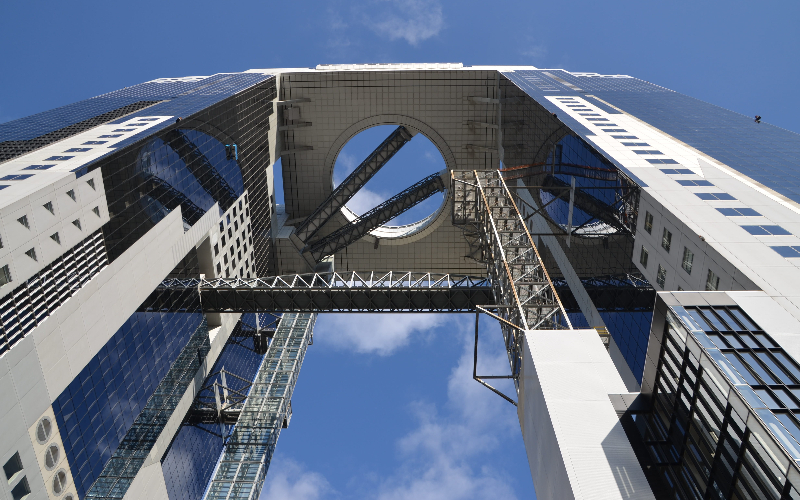
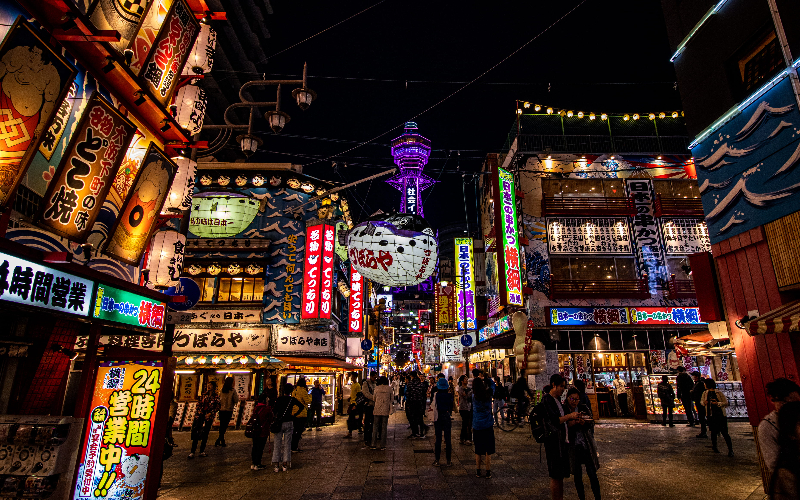
The second day reveals a different side of Osaka. Start in Umeda, continue to Shinsekai and Tsutenkaku, then finish in Tennoji or return to Dotonbori in the evening if you want another meal in the area.
This order works because Umeda is in a modern and busy area, while Shinsekai and Tennoji show a more local, retro Osaka with a different personality.
Morning at the Umeda Sky Building
The Umeda Sky Building is one of Osaka's best-known observation decks. The Floating Garden Observatory sits at the top of the building and offers a panoramic view of the city. The adult ticket costs ¥2,000 (about US$13). For anyone who enjoys observation decks, it is a good attraction, especially on clearer days.
I would place Umeda in the morning or in the late afternoon, depending on your interest. In the morning, it is usually more practical for starting the day. In the late afternoon, it can be better for anyone who wants to try to see the city in more beautiful light.
If you have already visited observation decks in Tokyo, such as the Tokyo Skytree, Shibuya Sky or the Shinjuku observatory, the Umeda Sky Building can be optional. But if Osaka is your last city and you still want a panoramic view, it is worth considering.
Afternoon in Shinsekai and Tsutenkaku
After Umeda, I would continue to Shinsekai. This neighbourhood has a retro, more working-class feel, very different from Osaka's modern areas. The area is known for the Tsutenkaku Tower, its kushikatsu restaurants and a more nostalgic atmosphere.
Shinsekai is a good area for walking and eating. Kushikatsu, a battered and fried skewer, is one of the neighbourhood's most traditional foods. For anyone who enjoys local food experiences, this stop makes a lot of sense.
The Tsutenkaku Tower has a paid entrance for the observatory, with a regular price of ¥1,500 (about US$10). If you have already done the Umeda Sky Building on the same day, I would think carefully before paying for another observation deck. In that case, it may be better to walk around Shinsekai, see the tower from outside and put the money towards food.
Tennoji in the late afternoon
Tennoji is close to Shinsekai and can come in as a complement on the second day. The area has a park, a shopping centre, a zoo and good infrastructure.
Tennoji Zoo costs ¥800 (about US$5) for adults and ¥200 (about US$1.30) for primary and secondary school children. For anyone travelling with children, it can be a good option. For anyone doing an itinerary more focused on the city, food and views, the zoo can be optional.
Tennoji also works well for closing the itinerary with a lighter walk or for shopping in the area's commercial centres.
Final evening in Osaka
On the last night, I would keep the itinerary flexible. You can return to Dotonbori, explore more of Namba, have dinner in Shinsekai or stay around Tennoji, depending on where you are staying. If it is your first time in Osaka, returning to Dotonbori on the last night can make sense; the area is touristy, but it is precisely there that Osaka shows one of its most famous faces.
What to prioritise on this day
I would prioritise the Umeda Sky Building if you want an observation deck, and Shinsekai if you want a more local and gastronomic experience. Tennoji works best as a complement, especially if you want a lighter late afternoon.
What can be optional
Tsutenkaku can be optional if you have already visited the Umeda Sky Building. Tennoji Zoo can also be optional if you are not travelling with children or have no interest in zoos.
What to avoid on this day
Avoid paying for two observation decks on the same day if the budget is tight. The Umeda Sky Building and Tsutenkaku are different experiences, but for many travellers one observation deck is already enough.
What I would prioritise in Osaka in 2 days
For a first trip, I would prioritise Osaka Castle, Dotonbori, Namba, Shinsaibashi, the Umeda Sky Building and Shinsekai.
Together, these places reveal Osaka's different sides. The castle represents its history, Dotonbori its nightlife and food culture, Shinsaibashi and Namba its shopping and urban energy, Umeda its modern skyline, and Shinsekai its retro, local character.
If time is short, I would keep Osaka Castle in the morning and Dotonbori at night. These two stops already give a good first impression of the city.
What can be optional in this itinerary
- The interior of Osaka Castle can be optional if you want to save money and visit only the park.
- The Umeda Sky Building can be optional if you have already done many observation decks in Japan.
- Tsutenkaku can be seen from outside if you do not want to pay for another observatory.
- Tennoji can be dropped if the last day is short.
- Tennoji Zoo is more worthwhile for those travelling with children or who enjoy this kind of attraction.
Mistakes to avoid in Osaka
The first mistake is treating Osaka only as a stopover between Kyoto and the airport. It has a life of its own and deserves at least 2 days if you want to feel the city's rhythm properly.
Another mistake is rushing through Dotonbori too quickly. The area is touristy, but it is an important part of the Osaka experience. It is worth going at night, eating calmly and walking without hurrying.
It is also worth avoiding filling the itinerary with shopping all day long. Shinsaibashi and Namba are great shopping areas, but if you spend hours in stores you may end up missing other interesting parts of the city.
Another mistake is paying for several similar attractions. If you have already chosen one observation deck, think about whether you really need to pay for another in the same itinerary.
Practical tips for visiting Osaka
Osaka is an easy city to explore, especially if you are staying in areas such as Namba, Shinsaibashi, Umeda or Tennoji. The subway works well and many tourist areas are connected.
Getting around
- The subway is the best way to move between the city's main areas
- For simple journeys, use an IC card such as ICOCA, Suica or Pasmo
- The Osaka Metro has a 26-hour pass for ¥1,000 (about US$6.50) and a 48-hour pass for ¥1,700 (about US$11)
- Dotonbori, Namba and Shinsaibashi can be explored on foot
Tickets and prices
- Osaka Castle: free park. Castle interior ¥1,200 (about US$8)
- Umeda Sky Building: ¥2,000 (about US$13) for adults
- Tsutenkaku: regular price ¥1,500 (about US$10)
- Tennoji Zoo: ¥800 (about US$5) for adults, ¥200 (about US$1.30) for children
- Dotonbori, Namba, Shinsaibashi and Shinsekai: free access
Best times to visit
- Osaka Castle: in the morning, before the biggest crowds
- Dotonbori: at night, when the signs are lit up
- Shinsaibashi and Namba: in the afternoon, for shopping and walking
- Umeda Sky Building: in the morning or late afternoon
- Shinsekai: in the afternoon or early evening, a good time for a kushikatsu dinner
What to eat
- Takoyaki: octopus balls made on a griddle, an Osaka speciality
- Okonomiyaki: a savoury pancake with varied fillings, prepared on the griddle
- Kushikatsu: battered and fried skewers, typical of Shinsekai
- Dotonbori, Namba and Shinsekai are good areas for making food part of the itinerary