Last updated: June 2026
Nara is one of the easiest and most interesting cities for a day trip from Kyoto or Osaka. The city was an ancient capital of Japan and brings together three things that work very well in a 1-day itinerary: historic temples, green areas and the famous deer that roam freely through the central park.
For a first trip to Japan, I would not include a night in Nara. The city works best as a 1-day trip, mainly because the main attractions are concentrated around Nara Park and can be visited on foot.
The goal of this itinerary is not just to see the deer and go back. The idea is to organise the day in a practical way, starting with the park, moving on to Todai-ji, continuing to Kasuga Taisha and leaving the historic centre or a final walk for the late afternoon.
How this itinerary was planned
This itinerary was created with practical trip planning in mind. Nara is compact for visitors, but it is still worth organising the order of the stops well to avoid unnecessary walking and make the most of the day.
I would start with the Nara Park area, because that is where the city's most famous experience appears right at the beginning. After that, I would continue to Todai-ji, which is the most important historic attraction of the itinerary. Next, Kasuga Taisha fits in well because it sits in a more wooded area and creates a beautiful walk between stone lanterns and traditional paths.
For anyone travelling between Kyoto and Osaka, Nara can also work as a transition stop. You can leave Kyoto in the morning, spend the day in Nara and continue to Osaka in the late afternoon. That way, you avoid an extra night and make the itinerary more efficient.
1-day Nara itinerary: overview
Itinerary summary
- Morning: journey to Nara, Nara Park and first encounters with the deer
- Midday: Todai-ji and the Great Buddha
- Afternoon: Kasuga Taisha, wooded paths and the historic centre
- Late afternoon: final walk through the park, coffee or return to Kyoto or Osaka
Nara Park, Todai-ji, Kasuga Taisha and the historic centre
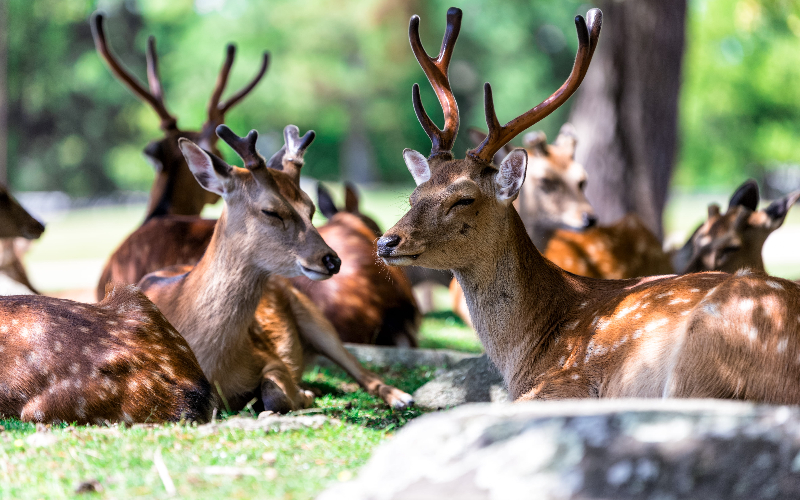
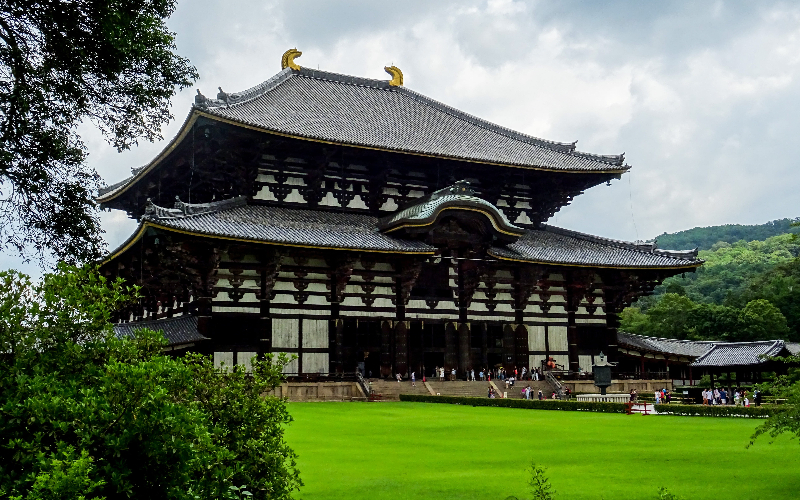
Nara is perfect for a 1-day itinerary because the main sightseeing happens in a relatively concentrated area. The ideal is to arrive early, especially if you want to enjoy the park before the biggest crowds and visit Todai-ji at a calmer pace.
Most of the itinerary can be done on foot. That is an advantage, because the trip does not depend on changing transport much during the day. At the same time, it is good to come prepared, because you will walk quite a lot between the park, temples, shrines and the streets near the station.
How to get to Nara from Kyoto or Osaka
From Kyoto, one of the most practical options is the Kintetsu Nara Line to Kintetsu Nara. The regular express train takes about 45 to 50 minutes and costs ¥760 (about US$5). Kintetsu Nara Station is usually convenient for sightseeing because it is closer to the park area.
There is also the Kintetsu limited express option, which is faster, taking about 35 minutes, but it costs more, around ¥1,280 (about US$8.50). For most travellers, the regular express train works just fine.
From Osaka Namba, the Kintetsu Nara Line is also one of the best options. The journey to Kintetsu Nara takes about 39 to 40 minutes and costs ¥680 (about US$4.50). If you are using a JR Pass or staying near a JR station, you can also consider JR routes. But for anyone who wants to arrive closer to the tourist area, Kintetsu Nara is usually very convenient.
Morning at Nara Park
Nara Park is the tourist heart of the city and the place where you find the famous Nara deer. They roam freely through the park and are one of the city's symbols.
I would start the itinerary here because this is Nara's most memorable experience. Within the first few minutes, you already understand why the city is so different from other day trips in Japan.
Entry to Nara Park is free. The most common expense is the special deer biscuits, called shika senbei. A pack of 10 costs ¥200 (about US$1.30). These biscuits are made for the animals and part of the price supports deer preservation efforts.
Care around the deer
Even though they are used to visitors, the deer are still animals. They can pull at bags, follow people carrying food, try to bite paper and become insistent when they notice the biscuits.
I would buy only one pack at a time and keep bags, maps, papers and any food well stored. I would also avoid teasing the animals by pretending to offer food. The interaction is fun, but it needs to be done with care and respect. Do not feed the deer human food. Use only the special biscuits sold in the park.
Midday at Todai-ji
After walking through the park, I would continue to Todai-ji. This is Nara's most important temple and should be the cultural priority of the day.
Todai-ji houses the Great Buddha of Nara, one of the most impressive images in Japan. The main building, called the Daibutsuden, is enormous and shows very clearly the city's historic importance.
Entry to the Great Buddha Hall costs ¥800 (about US$5) for adults. Children aged 6 to 12 pay ¥400 (about US$2.70). I consider this one of Nara's most worthwhile admission fees. I would visit Todai-ji just before or immediately after lunch, as it is one of the city's busiest attractions.
What to prioritise at Todai-ji
If you have little time, prioritise the Great Buddha Hall and the main area around the temple. The complex has other interesting spots, but on a 1-day trip the most important thing is not to turn the itinerary into a race.
Afternoon at Kasuga Taisha
After Todai-ji, I would continue to Kasuga Taisha. The path to the shrine passes through wooded areas and stone lanterns, which makes the walk very beautiful.
Kasuga Taisha is one of Nara's most important Shinto shrines. The outer area can be visited for free, while the special area of the main shrine costs ¥700 (about US$4.70).
The paid area can be worthwhile for visitors interested in shrines, traditional architecture and photography. On a tighter budget, the outer grounds and lantern-lined path still provide a rewarding visit. I would schedule Kasuga Taisha for the afternoon, when its quieter atmosphere offers a contrast to the busier park and Todai-ji.
What to prioritise at Kasuga Taisha
If you have energy and an interest in shrines, visit the special paid area. If the itinerary is already getting tiring, walk through the outer area, see the stone lanterns and then head slowly towards the centre.
Nara's historic centre
After visiting Kasuga Taisha, you can walk back towards the historic centre and the station. The area between the park and the station has small shops, cafés, restaurants and pleasant streets to explore.
This part works best as the closing of the itinerary. There is no need to create a huge list of attractions. The idea is to eat something, rest, buy a souvenir and head back calmly. If there is still time and energy, a good extra stop is Nigatsu-do, which is part of the Todai-ji area and has free access. The terrace offers a beautiful view of Nara and can be a good way to end the day in the late afternoon.
Late afternoon and return
In the late afternoon, I would keep the itinerary more open. You can walk a little more through Nara Park, have a coffee, return to the centre or head straight to the station.
If you are staying in Kyoto, return in the late afternoon and have dinner there. If your itinerary continues to Osaka, Nara works well as a stop between the two cities. You can visit Nara during the day and continue to Osaka in the late afternoon or early evening.
What I would prioritise in Nara in 1 day
For a first visit, I would prioritise Nara Park, Todai-ji and Kasuga Taisha. These three spots already deliver the essence of the city: the deer, the great historic temple and Nara's more sacred and wooded side.
If time is short, I would keep Nara Park and Todai-ji as the absolute priority. Kasuga Taisha would come in as a complement, especially if you still have energy for walking. If you enjoy views, I would try to fit in Nigatsu-do in the late afternoon, because it is free and can be one of the best ways to end the day.
What can be optional in this itinerary
- The inside of Kasuga Taisha can be optional if you are on a tight budget or would rather just walk through the outer area.
- Nigatsu-do can be optional if the day is very hot, rainy or if you are already tired.
- The historic centre can be quicker if the focus is only on the park and the temples.
- Buying shika senbei is also optional. You can watch the deer without feeding them.
Mistakes to avoid in Nara
The first mistake is thinking Nara is only the deer park. The deer are an important part of the experience, but Todai-ji and Kasuga Taisha help you better understand the city's historic and religious importance.
Another mistake is arriving too late. Since Nara is a 1-day trip, leaving early helps a lot. You enjoy the park more, find smaller crowds at the start of the day and visit the temples at a calmer pace.
It is also worth avoiding carrying visible food near the deer. They can become insistent and try to grab bags, papers or packaging.
Another mistake is trying to fit Nara and many Osaka or Kyoto attractions into the same day. Nara deserves its own day, even though it is compact. If you try to do everything quickly, the experience loses a lot.
Practical tips for visiting Nara
Nara is a calm and walkable city, but the itinerary requires stamina. You will spend a good part of the day walking through the park, temples and wooded paths.
Getting around
- Most of the itinerary can be done on foot from Kintetsu Nara
- From Kyoto: Kintetsu Nara Line, regular express ¥760 (about US$5), limited express ¥1,280 (about US$8.50)
- From Osaka Namba: Kintetsu Nara Line, about ¥680 (about US$4.50)
- If arriving at JR Nara Station, the walk to the park is a bit longer, but still doable
Tickets and prices
- Nara Park: free
- Shika senbei (deer biscuits): ¥200, about US$1.30 per pack of 10
- Todai-ji, Great Buddha Hall: ¥800 (about US$5) for adults, ¥400 (about US$2.70) for children aged 6 to 12
- Kasuga Taisha: free outer area. Special area ¥700 (about US$4.70)
- Nigatsu-do: free
Best times to visit
- Nara Park: in the morning, when the city is still quieter
- Todai-ji: before the peak of tour groups, in the late morning or early afternoon
- Kasuga Taisha: beautiful in the afternoon, along the wooded paths and lanterns
- Nigatsu-do: a good stop in the late afternoon for a more open view of the city
Best views
- The entrance to Todai-ji with the deer: Nara's most classic postcard
- The Kasuga Taisha path: hundreds of stone lanterns lined up in a wooded area
- Nigatsu-do: terrace with a panoramic view over Nara in the late afternoon