Last updated: June 2026
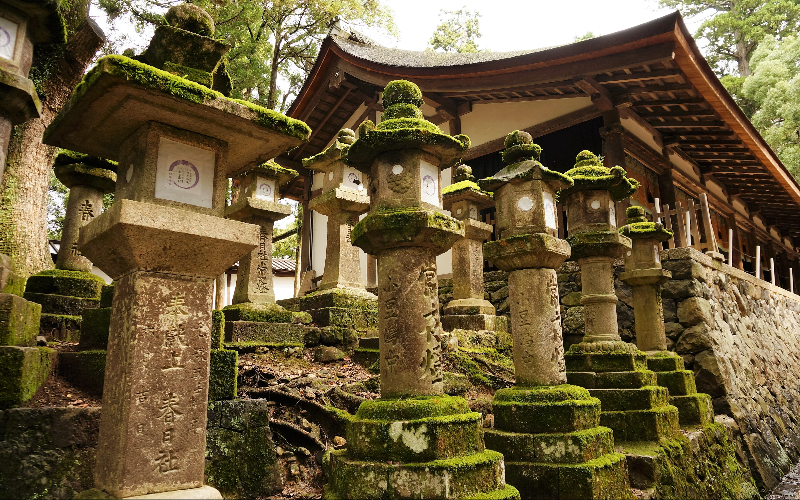
Kasuga Taisha is one of Nara's most important attractions and one of Japan's most beautiful Shinto shrines. Located within the Nara Park area, it is known for its wooded paths, stone lanterns and bronze lanterns that create an atmosphere very different from other visits in the city.
For anyone visiting Nara in 1 day, I would place Kasuga Taisha after Nara Park and Todai-ji. This order works well because you start with the city's most famous part, with the deer and the Great Buddha, and then move on to a quieter, greener and more contemplative area.
A visit to Kasuga Taisha does not need to be long, but it is worthwhile if you want to experience a quieter, more spiritual side of Nara. The approach is part of the visit, with stone lanterns, ancient trees and deer appearing along sections of the path.
Quick info
- Visit duration: 1 to 2 hours
- Location: Nara, Nara Park area
- Best time: early morning or late afternoon
- Difficulty: easy
- Outer area: free
- Special visit to the main shrine: ¥700, about US$4.70
- Kasugataisha Museum: ¥700, about US$4.70 for adults
- Hours March to October: 6:30am to 5:30pm
- Hours November to February: 7am to 5pm
- Inner area: usually 9am to 4pm
Is Kasuga Taisha worth visiting?
Yes, it is worth it, especially if you are already spending the day in Nara. Kasuga Taisha complements the itinerary very well because it offers an experience different from Todai-ji and Nara Park.
While Todai-ji impresses with the scale of the Great Buddha, Kasuga Taisha draws attention with its atmosphere. The walk among the lanterns, the forest and the traditional structures creates a calmer, more contemplative visit.
I would not make Kasuga Taisha the only reason to go to Nara. But within an itinerary with Nara Park and Todai-ji, it makes a lot of sense and makes the trip more complete.
Why visit Kasuga Taisha?
The main reason to visit Kasuga Taisha is the atmosphere of the place. The shrine has thousands of lanterns donated over the centuries, many of them spread along the approach path and the internal structures.
The walk to the shrine is one of the most beautiful parts of the visit. The path passes trees, stone lanterns and quieter areas of Nara Park. Even before reaching the main building, you already feel you have entered a more sacred and peaceful area.
Another reason is the contrast with other Nara attractions. Kasuga Taisha does not have the monumental impact of Todai-ji, but it has a more delicate beauty, tied to the details, the lanterns and the natural surroundings.
How to get to Kasuga Taisha
Kasuga Taisha sits within the Nara Park area and can be visited on foot from Nara's main stations.
From Kintetsu Nara Station, the walk takes about 25 to 30 minutes, depending on your pace and stops along the way. From JR Nara Station, the journey is a bit longer, but you can also walk or use a local bus.
I recommend fitting Kasuga Taisha in as a continuation of the visit to Nara Park. That way, you avoid making an isolated trip. First visit the deer and Todai-ji, then gradually continue through the park until you reach the shrine.
How the visit works
The outer area of Kasuga Taisha is free. You can walk along the lantern path, see the outer part of the shrine and enjoy the atmosphere without paying admission.
The special visit to the main shrine costs ¥700, about US$4.70. This area gives access to more inner sections, where the bronze lanterns and details not as visible on the outer visit are found.
For anyone on a tight budget, the free part is already worth the visit. For those who enjoy shrines, photography, traditional architecture and religious details, the paid area can make the experience more complete.
What to see at Kasuga Taisha
Path of stone lanterns
The approach path to Kasuga Taisha is one of the most beautiful parts of the visit. The stone lanterns line the trail, surrounded by trees and vegetation.
This section is free and already offers one of the shrine's most characteristic views. Walk it slowly rather than treating it merely as a route to the entrance.
Bronze lanterns
The bronze lanterns are found mainly in the inner areas and corridors of the shrine. They help create Kasuga Taisha's visual identity and are one of the reasons the place is known as the shrine of lanterns.
If you take the special visit, this part becomes more interesting, because you can better observe the details of the lanterns and the traditional structures.
Shrine architecture
Kasuga Taisha has traditional Shinto architecture, with wood, bold colours and details that contrast with the green of the surrounding forest.
The visit is not about a single enormous building, but about the whole: the path, the lanterns, the gates, the corridors, the nature and the spiritual atmosphere.
Forest and surrounding paths
The area around Kasuga Taisha is very pleasant for walking. Since it sits within the Nara Park area and close to the forest, the visit has a calmer rhythm than other busier parts of the city.
If you enjoy quieter places, this can be one of the best parts of Nara.
Lantern festivals
During specific festivals, Kasuga Taisha's lanterns are lit, creating an even more special scene. One of the best-known events is Mantoro, when thousands of lanterns illuminate the shrine.
If your trip coincides with these dates, the visit can be much more memorable. Outside the festivals, the shrine is still worth it, mainly for the lantern path and the forest atmosphere.
How much does it cost to visit Kasuga Taisha?
- Outer area: free
- Path of stone lanterns: free
- Special visit to the main shrine: ¥700, about US$4.70
- Kasugataisha Museum: ¥700, about US$4.70 for adults
The US dollar amount is approximate and can change with the exchange rate.
For a first visit, I would do this: if the budget is tight, visit the free outer area. If you want a more complete experience, pay for the special visit to the main shrine.
How long to spend at Kasuga Taisha?
The ideal is to set aside 1 to 2 hours to visit Kasuga Taisha calmly.
- With 1 hour, you can walk the lantern path, see the outer area of the shrine and enjoy the main setting.
- With 2 hours, you can enter the special area, better observe the bronze lanterns, walk more calmly and explore the surroundings without rushing.
If the Nara itinerary is already very full, I would set aside at least 1 hour. Less than that can make the visit feel too rushed.
Best time to visit Kasuga Taisha
Kasuga Taisha can be visited early in the morning or in the late afternoon.
In the morning, the area tends to be quieter and works well if you want to start the itinerary with a more peaceful area.
In the late afternoon, the lantern path can look very beautiful, especially as the light starts to change among the trees.
For a 1-day Nara itinerary, I would place Kasuga Taisha in the afternoon, after Todai-ji. This order makes the day more balanced, starting with the most famous attractions and ending in a more contemplative area.
What to combine with Kasuga Taisha
Kasuga Taisha naturally combines with Nara Park and Todai-ji. These three attractions form the base of a 1-day Nara itinerary.
A good sequence would be to arrive via Kintetsu Nara Station, walk through Nara Park, visit Todai-ji, continue to Kasuga Taisha and then return to the historic centre or the station.
If there is still time, you can include Nigatsu-do, which has a beautiful view of Nara and free access.
I would avoid visiting Kasuga Taisha in isolation. It is best to fit the shrine in as part of a longer walk through Nara's historic area.
What I would prioritise on the visit
If time is short, I would prioritise the path of stone lanterns and the outer area of the shrine.
With more time and budget, I would include the special visit to the main shrine.
If you enjoy photography, take your time along the approach path. Many of Kasuga Taisha's best images are found even before the main entrance.
What can be optional
- The special visit to the main shrine can be optional if the budget is tight.
- The Kasugataisha Museum can be optional on a 1-day Nara itinerary.
- Visiting during a lantern festival is a special experience, but not essential for the shrine to be worth it.
- Exploring every surrounding path can also be optional if you are already tired from walking through Nara Park.
Mistakes to avoid at Kasuga Taisha
The first mistake is thinking Kasuga Taisha is just another shrine. The strength of the visit lies in the whole: the lanterns, the forest, the paths and the atmosphere.
Another mistake is arriving in a hurry. The shrine suits a slow visit, observing the details of the path and the lanterns.
It is also worth avoiding leaving Kasuga Taisha for too late without checking the hours. The outer area can be more flexible, but the special visit to the main shrine has limited hours.
Another mistake is visiting Nara only for the deer and skipping attractions like Todai-ji and Kasuga Taisha. These places show why Nara has such historic and spiritual importance.
Practical tips for visiting Kasuga Taisha
- Wear comfortable shoes, because the visit involves walking through Nara Park.
- Combine it with Todai-ji and Nara Park on the same day.
- Set aside at least 1 hour for the shrine.
- Visit the free outer area if you want to save money.
- Pay for the special visit if you want to see more details of the shrine and the inner lanterns.
- Take your time along the path of stone lanterns.
- Check the hours if you want to enter the paid area.