Last updated: June 2026
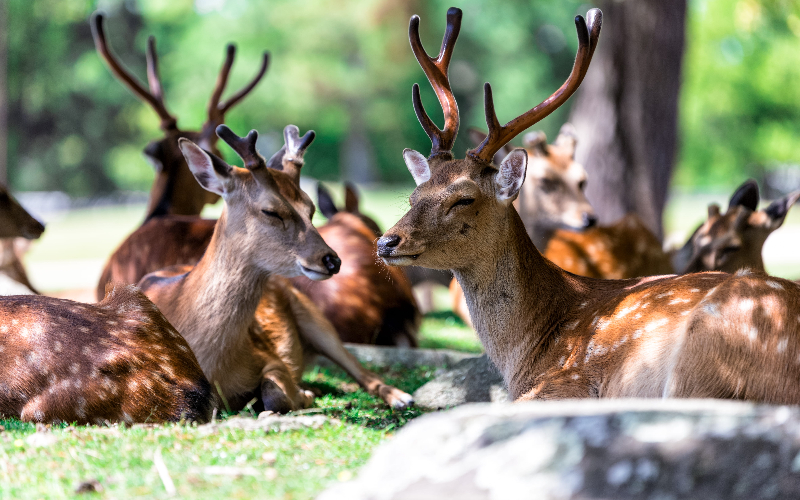
Nara Park is one of the most famous attractions in the Kansai region and one of the most distinctive experiences to include in a Japan itinerary. The park sits in the city of Nara and is known for the deer that roam freely among visitors, temples, wooded paths and green areas.
For anyone travelling through Kyoto or Osaka, I consider Nara Park one of the best day trip options. The visit is easy to organise, access by train is simple and the main attractions are concentrated in an area that can be explored on foot.
Nara Park is more than a place to see deer. It also provides access to some of the city's most important historic sites, including Todai-ji and Kasuga Taisha. Combining the park, respectful interaction with the deer and the nearby temples creates a much fuller visit.
Quick info
- Visit duration: 2 to 4 hours
- Location: Nara, Japan
- Best time: early morning
- Difficulty: easy
- Entry to Nara Park: free
- Shika senbei, deer biscuits: ¥200, about US$1.30
- Todai-ji: ¥800, about US$5
- Kasuga Taisha, special area: ¥700, about US$4.70
Is Nara Park worth visiting?
Yes, it is very much worth it, especially if you are in Kyoto or Osaka and want a different kind of 1-day trip. Nara Park combines nature, history and Japanese culture in an experience that does not feel repetitive compared to other places in Japan.
I would not treat the park as just a quick stop to see deer. The experience is better when you set aside a few hours to walk calmly, visit Todai-ji, continue to Kasuga Taisha and explore the surrounding areas.
For a first trip to Japan, Nara Park fits very well into the itinerary because it offers something highly visual, easy to understand and very memorable. The deer draw attention, but the temples nearby give the trip more cultural weight.
Why visit Nara Park?
The main reason to visit Nara Park is the combination of free-roaming deer and historic heritage. Few places in Japan offer this mix in such an accessible way.
The deer are considered special in local tradition and are part of Nara's identity. They roam through the park, cross paths, rest in the green areas and interact with visitors, especially when they notice the special biscuits sold on site.
The park is also close to very important attractions. Todai-ji, home to the Great Buddha of Nara, is one of the city's most striking visits. Kasuga Taisha, with its paths of stone lanterns, shows another side of Nara, more sacred and wooded.
How to get to Nara Park
The most common way is to arrive by train from Kyoto or Osaka. From Kyoto, the journey to Nara can take about 45 minutes, depending on the line chosen. Kintetsu Nara Station is usually one of the most practical for visiting the park, because it is closer to the tourist area.
From Osaka Namba, the journey via Kintetsu to Nara takes about 40 minutes. For anyone staying in Namba, this tends to be a very convenient option.
There is also the option of arriving via JR Nara Station. It is a bit further from the park than Kintetsu Nara, but it still works well. You can walk or use a local bus, depending on how you feel like getting there.
How the visit works
Entry to Nara Park is free and access is unrestricted. You do not need to buy a ticket to walk through the park, see the deer or move around the open areas.
What can have a cost are specific attractions inside or near the park, such as Todai-ji and some areas of Kasuga Taisha. The biscuits for feeding the deer are also paid.
The visit happens at your own pace. You can spend a short time just seeing the deer and walking through the park, or set aside half a day to include temples, shrines, viewpoints and nearby streets.
I would organise the visit by starting at the park, then continuing to Todai-ji, going on to Kasuga Taisha and leaving a final walk through central Nara for the end of the visit.
What to see at Nara Park
Free-roaming deer
The deer are the main image of Nara Park. They appear in several areas of the park and are a central part of the experience.
Even though they are used to visitors, it is important to remember they are still animals. Some are calm, others can be insistent, especially when they notice food or shika senbei.
The best way to enjoy it is to observe calmly, avoid teasing the animals and feed them only with the special biscuits sold in the park.
Shika senbei
Shika senbei are the special biscuits for feeding the deer. The pack costs ¥200 (about US$1.30). I would buy only one pack at a time. When the deer notice the biscuits, they can approach quickly and try to grab them from your hand or bag. The interaction is fun, but it needs to be done with attention.
Do not feed the deer regular food, snacks, bread, sweets or any human food. This can harm the animals.
Green areas and park paths
Nara Park is large and has open areas, wooded paths and quieter spaces for walking. Even though it is touristy, you can find calmer stretches if you move a little away from the busiest areas.
I would not stay only near the entrance or the first groups of deer. Walking further into the park makes the experience better and helps you see Nara in a more complete way.
Todai-ji
Todai-ji is one of Nara's most important attractions and fits naturally into a visit to the park. The temple houses the Great Buddha of Nara and is one of the most striking stops on the itinerary.
Entry to the Great Buddha Hall costs ¥800 for adults (about US$5). Children aged 6 to 12 pay ¥400 (about US$2.70).
If you have to choose just one paid attraction near Nara Park, I would choose Todai-ji. It adds much more historical depth to the trip and complements the deer experience well.
Kasuga Taisha
Kasuga Taisha is a very important Shinto shrine in Nara, known for its paths lined with stone lanterns and its more wooded atmosphere.
The outer area can be visited for free. The special area of the main shrine costs ¥700 (about US$4.70).
For anyone who enjoys photography, religion, traditional architecture and quieter paths, Kasuga Taisha is well worth it. If time is short, walking through the outer area and the lantern path already delivers a good experience.
How much does it cost to visit Nara Park?
- Park entry: free
- Deer in the park: free
- Shika senbei: ¥200, about US$1.30
- Todai-ji: ¥800, about US$5 for adults
- Kasuga Taisha, outer area: free
- Kasuga Taisha, special area: ¥700, about US$4.70
The total cost depends on what you include. If you want an economical trip, you can walk through the park, see the deer and visit the free areas. If you want a more complete experience, I would include at least Todai-ji.
How long to spend at Nara Park?
- For a simple visit, set aside 2 hours. This gives you time to walk through the park, see the deer and feel the atmosphere of the place.
- For a more complete visit, set aside 3 to 4 hours. That way you can include the deer, Todai-ji, Kasuga Taisha and a calmer walk through the green areas.
If you are doing Nara as a day trip, I would set aside half a day for the city. That avoids rushing through everything and leaves time to eat, rest and return to Kyoto or Osaka without hurrying.
Best time to visit Nara Park
The best time is early in the morning. The park tends to be quieter, the deer are easier to observe and you avoid some of the group crowds.
At midday, the area can get busier, especially near the main areas and the path to Todai-ji.
The late afternoon can also be beautiful, but if you still want to visit temples and shrines inside, you need to check the opening hours so you do not arrive too late.
For a day trip, I would leave Kyoto or Osaka early and arrive in Nara in the morning.
What to combine with Nara Park
Nara Park naturally combines with Todai-ji and Kasuga Taisha. This is the strongest base for a 1-day Nara itinerary.
If there is still time, you can walk through the historic centre, look for cafés, visit streets near the station or include Nigatsu-do, which has a beautiful view of the city.
I would avoid trying to combine Nara Park with too many Kyoto or Osaka attractions on the same day. Nara looks simple on the map, but the experience deserves time.
What I would prioritise on the visit
If it is your first time in Nara, I would prioritise the deer, Todai-ji and a walk to Kasuga Taisha. These three points show well what makes Nara special: nature, animals, history and religious tradition.
If time is short, I would keep the deer and Todai-ji as the priority. Kasuga Taisha comes in as a complement if you still have energy to walk.
What can be optional
- Buying shika senbei can be optional. You can watch the deer without feeding them.
- Entering the special area of Kasuga Taisha can be optional if your budget is tight.
- Nigatsu-do can be optional if the itinerary is already long.
- Covering every area of the park is also not mandatory. It is better to walk calmly than to try to cover everything quickly.
Mistakes to avoid at Nara Park
The first mistake is treating the deer like domestic animals. They are used to humans, but they are still animals and can bite, push or pull at bags.
Another mistake is feeding the deer human food. Use only shika senbei.
It is also worth avoiding leaving papers, maps, bags and food visible. The deer may try to grab them.
Another mistake is visiting only the deer and skipping the temples. Nara Park becomes much more interesting when combined with Todai-ji and Kasuga Taisha.
And finally, do not arrive too late. Since Nara is usually done as a day trip, starting early makes the day much more relaxed.
Practical tips for visiting Nara Park
- Arrive early in the morning to enjoy the park with smaller crowds.
- Wear comfortable shoes, because you will walk quite a lot.
- Buy only one pack of shika senbei at a time.
- Keep bags, papers and food well stored.
- Feed the deer only with the special biscuits.
- Do not tease the animals or hide food in front of them.
- Include Todai-ji in the itinerary if you want a more complete visit.
- Set aside at least half a day for Nara.