Last updated: June 2026
Mount Fuji is one of Japan's most famous images, but on a short trip the most important thing to understand is this: seeing the mountain depends heavily on the weather. On clear days, Hakone can deliver one of the most classic views of Fuji. On cloudy days, you may not see the mountain at all, even being in the right region.
That is why I would not build this itinerary around "seeing Mount Fuji" alone. The best way to enjoy Hakone is to treat the trip as a complete experience of nature, lake, ropeway, volcanic landscape and, if the weather cooperates, a view of Fuji.
Hakone is about 1h30 to 2 hours from Tokyo, depending on the train chosen and the connections. For anyone doing a longer itinerary through Japan, the region can also work as a transition between Tokyo and Kyoto, avoiding backtracking on the map.
How this itinerary was planned
This itinerary was created with practical trip planning in mind. Hakone has several attractions spread across the region, so the ideal is to follow an order that makes good use of the local transport.
For a 1-day trip, I would organise the itinerary with an early departure from Tokyo, arrival at Hakone Yumoto, a journey through the region to Lake Ashi, the boat cruise, the Hakone Ropeway and Owakudani. If there is time left, you can include an onsen or simply head back at a relaxed pace.
The biggest mistake on this trip is leaving Tokyo late. Mount Fuji usually shows itself better in the morning, before the clouds build up. In addition, Hakone involves train, bus, boat and ropeway, so the day needs to start early to avoid feeling rushed.
1-day Mount Fuji and Hakone itinerary: overview
Itinerary summary
- Morning: early departure from Tokyo, arrival in Hakone and Lake Ashi
- Midday: boat across Lake Ashi and views of Mount Fuji if the sky is clear
- Afternoon: Hakone Ropeway and Owakudani
- Late afternoon: optional onsen, viewpoints or return to Tokyo
Hakone, Lake Ashi, Hakone Ropeway and Owakudani
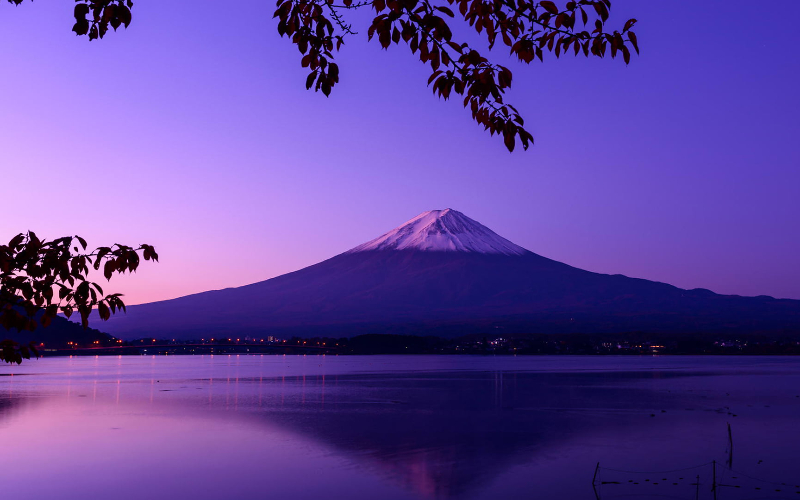
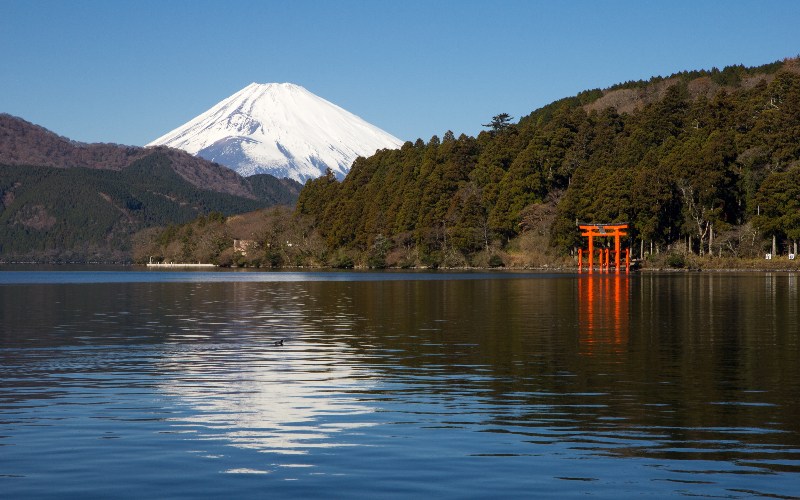
Hakone suits a one-day trip because it brings several different landscapes together within a relatively compact region. The classic circuit combines scenic transport, Lake Ashi, the ropeway and the volcanic area of Owakudani.
I would start the day as early as possible in Tokyo. The earlier you arrive in Hakone, the better your chances of enjoying Lake Ashi and Owakudani at a calmer pace. In addition, if Mount Fuji is visible, the morning usually offers the best chances of seeing the mountain before the sky closes in.
How to get to Hakone from Tokyo
The most practical option for many travellers is to leave from Shinjuku on the Odakyu line to Hakone Yumoto. The regular train can take close to 2 hours, while the Romancecar, which has reserved seats, takes about 80 to 85 minutes.
The 2-day Hakone Freepass from Shinjuku costs ¥7,100 (about US$47) for adults. Even though it is a 2-day pass, it can be worth it on a day trip, because it includes several forms of transport within the Hakone region and helps simplify the itinerary.
If you want to use the Romancecar, you need to pay an additional reserved seat fee. The Romancecar supplement between Shinjuku and Hakone Yumoto costs ¥1,200 (about US$8), on top of the regular ticket or the pass.
Is the Hakone Freepass worth it?
For most 1-day Hakone itineraries, I would consider the Hakone Freepass. It makes things much easier because it covers several forms of transport used on the classic circuit, such as train, bus, ropeway and boat, depending on the section chosen.
The advantage is not only financial. It is also practical. Instead of buying separate tickets at every step, you cover most of the journey with the same pass.
If you only plan to go to Hakone Yumoto and back, the pass may not be that necessary. But if the idea is to do Lake Ashi, the boat, the ropeway and Owakudani, it usually makes more sense.
Morning at Lake Ashi
Lake Ashi is one of the most famous areas of Hakone. On clear days, this is where one of the most classic images of Mount Fuji appears, with the mountain in the background and the lake in the foreground.
I would place Lake Ashi in the first part of the itinerary because Fuji's visibility tends to be better earlier. If the weather is good, it is worth prioritising this area before moving on to other attractions.
The boat cruise across Lake Ashi is one of the region's best-known experiences. The one-way ticket costs ¥1,700 (about US$11) for adults. The round-trip ticket costs ¥3,000 (about US$20). For anyone doing the circuit with the Hakone Freepass, the boat may be included in the pass, depending on the route used.
What to prioritise at Lake Ashi
If Mount Fuji is visible, prioritise the lake cruise and the area's viewpoints. This is the most important moment of the day for classic Hakone photos.
If Fuji does not appear, the lake cruise is still worth doing if you want to follow the full circuit. But in that case, I would not spend too much time waiting for the mountain to show. I would move on to the ropeway and Owakudani.
Afternoon on the Hakone Ropeway
The Hakone Ropeway is the cable car that connects different areas of the region and passes over a volcanic landscape very different from the rest of the trip.
The route overlooks the mountains and valleys, with possible views of Mount Fuji on clear days. The reference price for the ropeway is about ¥2,000 one way (about US$13) or ¥3,000 round trip (about US$20).
If you have the Hakone Freepass, the ropeway is usually part of the circuit covered by the pass. That is why, for anyone using the boat and the ropeway on the same day, the pass tends to be more practical than paying for everything separately.
Owakudani
Owakudani is an active volcanic area, known for the sulphur vapours rising from the ground and its more dramatic scenery. It is one of the most distinctive points of the itinerary and helps make Hakone worthwhile even when Mount Fuji does not appear.
I would place Owakudani after Lake Ashi because the sequence works well within the classic Hakone circuit. First you enjoy the lake and the possible Fuji views, then you move on to a completely different landscape.
The area is also famous for kurotamago, eggs boiled in volcanic water. They are a simple but traditional experience for anyone passing through Owakudani.
What to prioritise in Owakudani
If the weather is good, enjoy the viewpoints and the ropeway. If the sky is overcast, the visit is still worth it for the volcanic landscape.
Access to Owakudani can change due to volcanic conditions, weather or maintenance. Before going, it is worth checking whether the ropeway and the area are operating normally on the day.
Onsen in Hakone
Hakone is also famous for its onsens, the Japanese hot spring baths. For anyone who wants to turn the trip into a more relaxing experience, you can include an onsen at the end of the day, especially if you are not in a hurry to return to Tokyo.
One well-known example is Hakone Yuryo, near Hakone Yumoto. The public bath costs about ¥1,700 to ¥1,800 on weekdays (about US$11 to US$12) and ¥2,000 to ¥2,200 on weekends and holidays (about US$13 to US$14.50). Children aged 6 to 12 pay ¥1,000 (about US$6.50).
I would treat the onsen as optional. For anyone doing the full circuit with Lake Ashi, boat, ropeway and Owakudani in just 1 day, adding a hot spring bath can feel rushed. But if the day is cold or you want to return to Tokyo later, it is worth considering.
Hakone Open Air Museum
The Hakone Open Air Museum can be a good option if you enjoy art, open-air sculptures and gardens. It is not essential on a 1-day itinerary focused on Mount Fuji, but it can come in if the weather is bad or if you would rather swap out part of the circuit.
The ticket costs ¥2,000 at the box office (about US$13) for adults. Buying online, the price drops to ¥1,800 (about US$12). The museum opens from 9am to 5pm, with last entry 30 minutes before closing.
I would leave the museum as optional. For a first itinerary in Hakone, I would prioritise Lake Ashi, the ropeway and Owakudani. The museum fits in better if you have more time or if the weather really spoils the views.
Late afternoon and return
In the late afternoon, you can return to Hakone Yumoto and take the train back to Tokyo. If you are using the Romancecar, it is worth reserving the seat in advance, especially on weekends and holidays.
If you are doing Hakone as a transition between Tokyo and Kyoto, a practical option is to head to Odawara and take the Shinkansen towards Kyoto. This logic avoids returning to Tokyo just to leave again the next day.
What I would prioritise in Hakone in 1 day
For a first visit, I would prioritise Lake Ashi, the Hakone Ropeway and Owakudani. These three spots show the best of the region in a short time: lake, volcanic landscape, ropeway and a possible view of Mount Fuji.
If Mount Fuji is visible, I would give more time to Lake Ashi and the viewpoints. If it is covered, I would follow the itinerary normally, but without waiting too long for the mountain.
If there is time left, I would choose between an onsen or the Hakone Open Air Museum. I would not try to fit both into the same day, because it can make the itinerary far too rushed.
What can be optional in this itinerary
- The Hakone Open Air Museum can be optional if the focus is Mount Fuji, Lake Ashi and Owakudani.
- An onsen can be optional if you are only doing a short day trip.
- The Romancecar can be optional if you want to save money and do not mind a slightly longer journey.
- The boat cruise can be reconsidered if the weather is very bad, but it is normally part of the classic Hakone experience.
- Staying overnight in Hakone can be optional on a short itinerary. With just 1 day, it can be done from Tokyo.
Mistakes to avoid in Hakone
The biggest mistake is assuming that seeing Mount Fuji is guaranteed. Even in Hakone, the mountain can be hidden by clouds. That is why the itinerary needs to be worthwhile also for the lake, the ropeway, Owakudani and the nature experience.
Another mistake is leaving Tokyo late. Hakone involves several forms of transport and the day can become rushed if you arrive after mid-morning.
It is also worth avoiding adding too many attractions. In 1 day, Lake Ashi, the Hakone Ropeway and Owakudani already form a strong itinerary. Museum, onsen and extra stops should only come in if there is time.
Another mistake is not checking transport operations. The ropeway, the boat and some areas can be affected by weather, maintenance or volcanic activity.
Practical tips for visiting Hakone
Hakone is the most popular nature destination near Tokyo, but the trip requires planning. The region involves several forms of transport and the itinerary works much better when you start early and follow a logical order.
Getting around
- Odakyu Line from Shinjuku to Hakone Yumoto: regular train about 2h, Romancecar about 80 to 85 minutes
- 2-day Hakone Freepass from Shinjuku: ¥7,100, about US$47, covers several forms of local transport
- Romancecar supplement between Shinjuku and Hakone Yumoto: ¥1,200, about US$8
- Classic circuit: train, bus, boat on Lake Ashi and ropeway
Tickets and prices
- Lake Ashi boat: ¥1,700 one way (about US$11) or ¥3,000 round trip (about US$20)
- Hakone Ropeway: about ¥2,000 one way (about US$13) or ¥3,000 round trip (about US$20)
- Hakone Open Air Museum: ¥2,000 at the box office (about US$13) or ¥1,800 online (about US$12)
- Hakone Yuryo, public bath: ¥1,700 to ¥1,800 on weekdays (about US$11 to US$12), ¥2,000 to ¥2,200 on weekends (about US$13 to US$14.50)
Best times to visit
- Leave Tokyo early: Mount Fuji usually shows itself better in the morning, before the clouds build up
- Lake Ashi works best in the morning if the goal is to try to see Fuji
- Owakudani can be visited at midday or in the afternoon, depending on the transport order
- An onsen pairs best with the end of the day, before returning to Tokyo
Best base for visiting Hakone
- For a 1-day trip, Tokyo is the most common base
- Hakone also works as a stop between Tokyo and Kyoto: leave Tokyo early, spend the day in Hakone and continue to Kyoto from Odawara
- Anyone who wants to sleep in Hakone can consider a ryokan with an onsen for a more relaxing experience