Last updated: June 2026
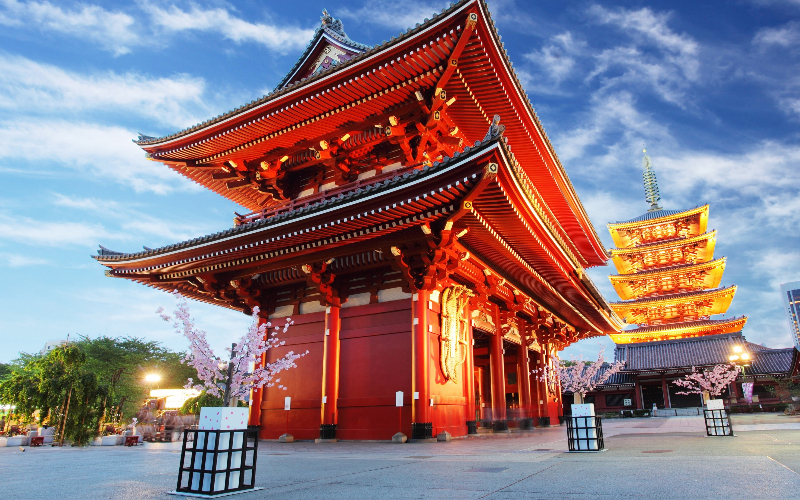
Senso-ji Temple is one of Tokyo's most important attractions and one of the best gateways to the traditional side of the city. Located in Asakusa, it combines a historic temple, Buddhist rituals, old shops, street food and one of Japan's most recognisable images: the Kaminarimon gate with its giant red lantern.
For a first visit to Tokyo, I would schedule Senso-ji near the beginning of the itinerary. It is easy to reach, free to visit and surrounded by Asakusa, a neighbourhood that contrasts sharply with modern areas such as Shibuya, Shinjuku and Ginza.
The experience is not only about the temple itself. The path to it is also part of the visit. You pass through the Kaminarimon, cross Nakamise Street, see traditional shops, smell the incense and reach the main hall, where locals and tourists pray throughout the day.
Quick info
- Visit duration: 1 to 2 hours
- Location: Asakusa, Tokyo
- Best time: early morning or at night
- Difficulty: easy
- Price: free
- Omikuji: ¥100, about US$0.70
- Main hall: 6am to 5pm from April to September, and 6:30am to 5pm from October to March
- Outer temple grounds: open at all times
Why visit Senso-ji Temple?
Senso-ji is worth the visit because it shows a side of Tokyo that is very different from the city's futuristic districts. Within a few minutes, you leave the subway, pass through busy streets and arrive at one of the most traditional temples in the Japanese capital.
I would not treat Senso-ji as just a quick photo stop. The most interesting part is walking the full route calmly, from the Kaminarimon to the main hall, observing Nakamise Street, the purification rituals, the incense and the activity around the temple.
It is easy to include in a Tokyo itinerary. Senso-ji combines well with Ueno, Akihabara or the Tokyo Skytree on the same day because these areas form a practical route across the eastern side of the city.
Is Senso-ji Temple worth visiting?
Yes, it is definitely worth visiting, especially on a first trip to Tokyo. Senso-ji is free, easy to reach and offers a vivid introduction to Japanese tradition within an enormous modern city.
In my view, it is one of the capital's most important attractions because it brings together history, culture, religion, traditional commerce and local life in the same area.
If you have little time in Tokyo, I would keep Senso-ji in the itinerary. It works better than many paid attractions because it shows an essential part of the city without requiring reservations, tickets or complicated transfers.
How to get to Senso-ji Temple
The simplest way to reach Senso-ji is to go to Asakusa Station. The area is served by lines such as the Ginza Line, Asakusa Line, Tobu Skytree Line and Tsukuba Express, depending on your starting point.
From Asakusa Station to the temple, the walk takes about 5 minutes. The most classic approach is through the Kaminarimon Gate, which marks the start of Nakamise Street and creates the traditional path to the main hall.
I recommend arriving from that side because the entrance is already part of the experience. You see the giant red lantern, pass through the corridor of shops and reach the temple gradually, instead of entering directly from the side.
How to organise the visit
The visit to Senso-ji follows a very natural path. Start at the Kaminarimon Gate, which is one of Asakusa's best-known symbols. Then walk along Nakamise Street until you reach the second gate and the temple's main hall.
Along the way, it is worth observing the shops, trying a typical sweet and soaking up the atmosphere of the area without rushing. Even though it is a touristy area, it still has a very distinctive character.
When you get close to the main hall, you will see the large incense burner. Many people waft the smoke towards their bodies as part of the local tradition. There is also a purification fountain, used to wash hands before prayer.
Entry to the temple is free and there is no set time for visiting the outer grounds. The main hall has opening hours, so if you want to go inside, it is better to visit during the day.
What to see at Senso-ji Temple
Kaminarimon Gate
The Kaminarimon is Senso-ji's most famous entrance. The great red lantern suspended in the centre of the gate is one of the most photographed images in Tokyo.
I would place this spot at the start of the visit, because it clearly marks the transition between the modern city and the more traditional atmosphere of Asakusa.
Nakamise Street
Nakamise Street is the corridor of shops that connects the Kaminarimon to the temple. It has souvenirs, Japanese sweets, traditional products, quick snacks and small keepsakes.
This street tends to get crowded during the day, but it is part of the experience. If you want to walk more calmly, arrive early. If you want to see the area at its liveliest, go at midday or in the late afternoon.
Main hall
The main hall is the religious centre of Senso-ji. This is where many people pray and take part in traditional rituals.
Even for those who do not follow the religion, it is worth observing respectfully. Speak quietly, do not disturb those who are praying and avoid turning the area into just a photo spot.
Five-storey pagoda
The five-storey pagoda is one of the most beautiful structures in the complex. It helps compose the classic Senso-ji scenery and looks especially beautiful when seen together with the gates and the main hall.
Purification fountain
The purification fountain is part of the traditional ritual before prayer. Visitors wash their hands and, in some cases, rinse their mouths following the local custom.
Even if you do not perform the ritual, it is worth watching how it works and respecting the space.
Omikuji
The omikuji is the fortune-telling paper found at many Japanese temples. At Senso-ji, it usually costs ¥100 (about US$0.70). You insert the coin, draw a numbered stick, find the corresponding drawer and take the paper with your fortune. If you get a bad fortune, it is common to tie the paper at the designated spots in the temple.
It is a simple, cheap and interesting experience for anyone who wants to understand a bit more about Japanese traditions.
How much does it cost to visit Senso-ji Temple?
Visiting Senso-ji Temple is free.
- Temple entry: free
- Outer grounds: free
- Main hall: free
- Nakamise Street: free to walk through
- Omikuji: ¥100, about US$0.70
The main spending goes on food, souvenirs and keepsakes along Nakamise Street. Since this part depends heavily on what you buy, I would treat it as optional spending.
How long to spend at Senso-ji Temple?
To visit Senso-ji calmly, set aside 1 to 2 hours. With 1 hour, you can pass through the Kaminarimon, walk along Nakamise, see the main hall, the incense, the pagoda and the temple's main area.
With 2 hours, you can walk without rushing, try something on Nakamise, take photos, do the omikuji and explore the streets near Asakusa.
If you want to combine it with the Asakusa neighbourhood, the Sumida River or the Tokyo Skytree, I would set aside half a day for the area.
Best time to visit Senso-ji
The best time depends on the kind of experience you want.
- Early morning: the temple is quieter and the visit is better for photos and calm walks
- Midday: the area gets busier, with more shops open and more energy along Nakamise Street
- Late afternoon: the light is usually beautiful for photos and the area starts to change mood
- At night: the illuminated complex looks very beautiful and more contemplative, but many Nakamise shops may already be closed and the main hall may not be open
If it is your first time, I would try to visit early in the morning or in the late afternoon. If you have time in Tokyo, it is worth returning at night to see the temple lit up.
What to combine with Senso-ji on the same day
Senso-ji pairs very well with other attractions on Tokyo's east side. I would place Asakusa and Senso-ji in the morning, then continue to Ueno or Akihabara in the afternoon. At the end of the day, the Tokyo Skytree can close the itinerary well, especially if you want a panoramic view of the city.
Another option is to walk along the Sumida River area, which is nearby, and then continue to the Skytree. This combination works well because it avoids crossing the city unnecessarily.
What I would prioritise on the visit
If you have little time, I would prioritise the Kaminarimon, Nakamise Street, the main hall and the five-storey pagoda. These spots already deliver the core Senso-ji experience. If there is time left, do the omikuji, explore Asakusa's side streets and walk a little around the area.
What can be optional
- Buying souvenirs on Nakamise can be optional if you are on a tight budget or want to avoid very touristy shops.
- The omikuji is also optional, but it costs little and can make the visit more interesting.
- Returning at night is optional, but very worthwhile if you are staying nearby or want to see the temple with smaller crowds.
Mistakes to avoid at Senso-ji Temple
The first mistake is arriving at midday expecting to find the temple empty. Senso-ji is one of Tokyo's most visited attractions and is usually crowded.
Another mistake is rushing through the visit. Even though it is an easy attraction, the best of the experience lies in the path, the details, the rituals and the atmosphere of Asakusa.
It is also worth avoiding photographing people in prayer in an invasive way. The temple is touristy, but it is still a religious space.
Another mistake is visiting only the temple and leaving the area immediately. Asakusa deserves at least a walk through the nearby streets, because the neighbourhood helps complete the experience.
Practical tips for visiting Senso-ji Temple
- Wear comfortable shoes, because the visit involves walking along Nakamise, through the temple complex and the streets of Asakusa.
- If you want photos with fewer people, arrive early.
- If you want open shops and more buzz, go during the day.
- If you want a more beautiful and peaceful atmosphere, consider returning at night.
- Carry cash for small purchases, sweets, omikuji and souvenirs.
- Respect the local rituals and keep your voice low near the main hall.