Last updated: June 2026
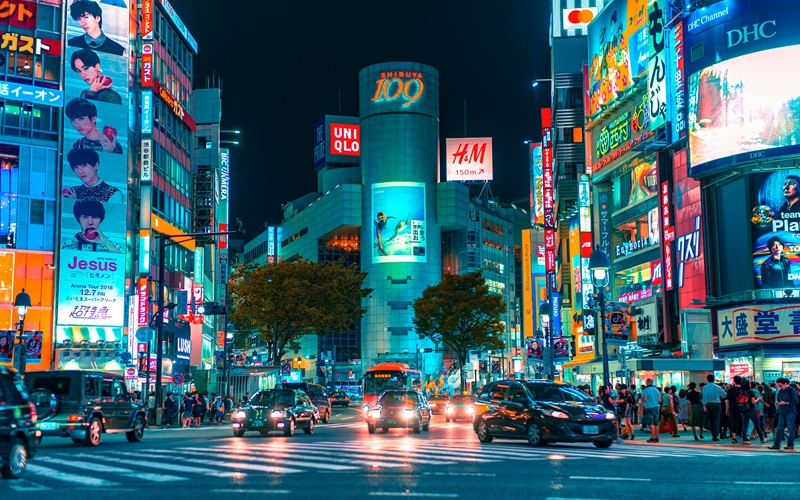
Shibuya Crossing is one of Tokyo's most famous images and probably the most famous pedestrian crossing in the world. Located right in front of Shibuya Station, it became known for its simultaneous crossing in multiple directions, with hundreds or thousands of people crossing at once when the signal turns.
Although it is ultimately a pedestrian crossing, it remains a memorable stop on a first trip to Japan. The flow of people, giant screens and illuminated buildings capture the energy and organisation of central Tokyo.
I would not treat Shibuya Crossing as an attraction that fills many hours of the itinerary. It works best as part of a larger visit to the Shibuya neighbourhood, combining the crossing with the Hachiko Statue, shops, shopping centres, restaurants and, budget permitting, an observation deck such as Shibuya Sky.
Quick info
- Visit duration: 30 minutes to 1 hour
- Location: Shibuya, Tokyo
- Best time: late afternoon and night
- Difficulty: easy
- Crossing price: free
- Hachiko Statue: free
- Shibuya Sky online until 2:59pm: ¥2,700, about US$18
- Shibuya Sky online from 3pm: ¥3,400, about US$23
- Shibuya Sky at the counter until 2:59pm: ¥3,000, about US$20
- Shibuya Sky at the counter from 3pm: ¥3,700, about US$25
Is Shibuya Crossing worth visiting?
Yes, it is worth it, especially if it is your first time in Tokyo. Shibuya Crossing is a quick, free and highly symbolic visit. It shows the urban, modern and intense side of the city in a way few places manage to.
The experience is simple: cross, observe, take photos and feel the movement. Even so, in person the crossing tends to be more impressive than it seems in photos or videos.
In my view, Shibuya Crossing is most worthwhile when you do not treat the place as an isolated attraction. The ideal is to include the crossing within a Shibuya itinerary, also exploring Hachiko, Shibuya Center Gai, shops, cafés, restaurants and a viewpoint from above.
Why visit Shibuya Crossing?
The main reason to visit Shibuya Crossing is to see one of Japan's most famous urban scenes happening live. When the signal stops the cars and turns for pedestrians, people cross in several directions at once, creating a very distinctive image of Tokyo.
Unlike temples, parks or observation decks, here the attraction is the city itself in motion. It is a place that shows how Tokyo manages to be intense, busy and organised at the same time.
It is also an easy visit to fit in. Since it sits right in front of Shibuya Station, you do not need to make a big detour. You can pass through it as part of an itinerary that includes Harajuku, Omotesando, Shinjuku or other spots in western Tokyo.
How to get to Shibuya Crossing
The simplest way is to go to Shibuya Station. The station is one of Tokyo's busiest and is served by several train and subway lines, including the JR Yamanote Line, Ginza Line, Hanzomon Line, Fukutoshin Line, Tokyu Toyoko Line and other connections.
The most classic exit for the crossing is the Hachiko Exit area. Coming out that way, you will already find the Hachiko Statue and Shibuya Crossing right ahead.
I recommend arriving through this exit because it creates the most traditional experience: first Hachiko, then the crossing, then the busy streets of Shibuya.
How the visit works
Shibuya Crossing is a public space. There is no ticket, set time or access control. You simply arrive, wait for the signal to turn and cross along with the crowd.
The visit can be done in two ways. The first is to cross the intersection, which is the most direct experience. The second is to watch the movement from a higher vantage point nearby, such as cafés, commercial buildings or observation decks.
I would do both. First, I would cross to feel the energy of the place. Then, I would look for an elevated spot to watch the crossing from above. This second perspective helps you better understand the sheer scale of the crowd flow.
What to see at Shibuya Crossing
The main crossing
The main crossing is the most famous point of the visit. It sits right in front of Shibuya Station and works as a large diagonal crossing, with people crossing in several directions at the same time.
The best moment is when the signal turns for pedestrians and the flow begins. Within a few seconds, the street fills with people, then settles back down once the signal changes again.
Hachiko Statue
The Hachiko Statue sits near the station exit and is one of Tokyo's most famous meeting points. The statue honours the dog Hachiko, a symbol of loyalty in Japan. The visit is quick and free. Since it sits right next to the crossing, it is worth stopping by before or after crossing.
LED panels and giant screens
The illuminated panels and giant screens around the crossing help create Shibuya's atmosphere. At night, this part becomes even stronger, with lights, advertising, movement and urban sounds.
That is why I find the crossing more interesting in the late afternoon or at night. During the day, it is still famous, but it loses some of its visual impact.
View from above
Seeing the crossing from above completely changes the experience. From up high, you can watch the flow of people forming and dissolving with each turn of the signal.
Some viewpoints can be free, others sit inside cafés, shops or paid observation decks. The most famous and complete one in the area is Shibuya Sky, which is not exactly built just for viewing the crossing, but offers one of the best panoramic views of Tokyo.
How much does it cost to visit Shibuya Crossing?
Shibuya Crossing is free.
- Crossing: free
- Hachiko Statue: free
- Shibuya streets: free
- Shibuya Sky online until 2:59pm: ¥2,700, about US$18
- Shibuya Sky online from 3pm: ¥3,400, about US$23
- Shibuya Sky at the counter until 2:59pm: ¥3,000, about US$20
- Shibuya Sky at the counter from 3pm: ¥3,700, about US$25
If you only want to see the crossing, you do not need to spend anything. Spending only comes in if you decide to eat, buy something or go up a paid observation deck.
Is it worth paying for Shibuya Sky just to see the crossing?
Shibuya Sky is worth it if you want a panoramic view of Tokyo, not just of Shibuya Crossing. It sits at the top of Shibuya Scramble Square and offers one of the city's most famous observation deck experiences.
You do not need to pay simply to see the crossing, as several free or inexpensive viewpoints overlook the area. Shibuya Sky can still be worthwhile if you also want an open view of the city, the sunset and Tokyo's skyline.
If your budget is tight, visit the crossing for free, see Hachiko, walk through Shibuya and save the money for another attraction. If you want a more memorable experience, buy Shibuya Sky tickets in advance, especially for late afternoon time slots.
How long to spend at Shibuya Crossing?
To see only the crossing, 30 minutes is enough. You can cross, take photos, see Hachiko and watch the movement for a few minutes.
To explore the area better, set aside 1 to 2 hours. That way you can walk through Shibuya Center Gai, browse shops, see the illuminated panels, eat something and soak up the neighbourhood's atmosphere.
If you include Shibuya Sky, set aside more time. In that case, I would allow at least half a day for Shibuya, especially if you want to combine shopping, dinner and the observation deck.
Best time to visit Shibuya Crossing
The best time is at night, when the panels are lit up and the area's movement becomes more intense. The visual experience is much stronger.
The late afternoon is also great, because you get to see the transition from daytime city to illuminated city. This time slot pairs very well if you plan to go up Shibuya Sky.
During the day, the crossing is still worth visiting, but the impact is smaller. On the other hand, it can be better for anyone who wants clearer photos and less sense of chaos.
I would avoid rushing through at peak hours if you do not like crowds. Shibuya is a very busy area and can feel exhausting at certain moments.
What to combine with Shibuya Crossing on the same day
Shibuya Crossing pairs very well with Harajuku, Meiji Shrine, Omotesando and Shinjuku. This western area of Tokyo works well in a single day if you organise the itinerary logically.
A good sequence would be to start with Meiji Shrine and Harajuku, walk through Omotesando, continue to Shibuya in the late afternoon and end the night at the crossing or at Shibuya Sky.
You can also combine Shibuya with shopping and nightlife. In that case, leave the neighbourhood for the final part of the day, when the lights and movement make the experience more interesting.
What I would prioritise on the visit
If it is your first time, I would prioritise crossing the intersection, seeing the Hachiko Statue, walking through Shibuya Center Gai and watching the illuminated panels at night.
If the budget allows, I would add Shibuya Sky in the late afternoon. If not, I would do just the free part and still consider the visit very worthwhile.
What can be optional
- Shibuya Sky can be optional if your budget is tight or if you are already visiting another observation deck in Tokyo.
- Shopping in Shibuya can be optional if you do not enjoy shops or want to save time.
- Spending a long time standing and watching the crossing is also optional. After crossing a few times and observing from above or from the sidewalk, the main experience is already complete.
Mistakes to avoid at Shibuya Crossing
The first mistake is expecting a traditional attraction. Shibuya Crossing is not a temple, museum or monument. It is an urban experience. The value lies in the movement, the light, the rhythm and the feeling of being inside Tokyo.
Another mistake is going only early in the morning and finding it unimpressive. The crossing exists all day, but the experience is much stronger in the late afternoon and at night.
It is also worth avoiding stopping in the middle of the crossing to take a photo. It sounds obvious, but many people do it. The crossing is busy and you need to cross attentively.
Another mistake is visiting the crossing and leaving Shibuya immediately. The neighbourhood has much more to offer, so it is worth walking a little through the surrounding streets.
Practical tips for visiting Shibuya Crossing
- Go at night if you want the most impactful experience.
- Use the Hachiko Exit to arrive directly at the crossing.
- Cross at least once to feel the experience.
- Then watch the crossing from a higher vantage point, if possible.
- Do not stop in the middle of the street to take photos.
- Combine the visit with Harajuku, Omotesando or Shinjuku.
- If you want to go up Shibuya Sky, buy tickets in advance, especially for the late afternoon.