Last updated: August 2026
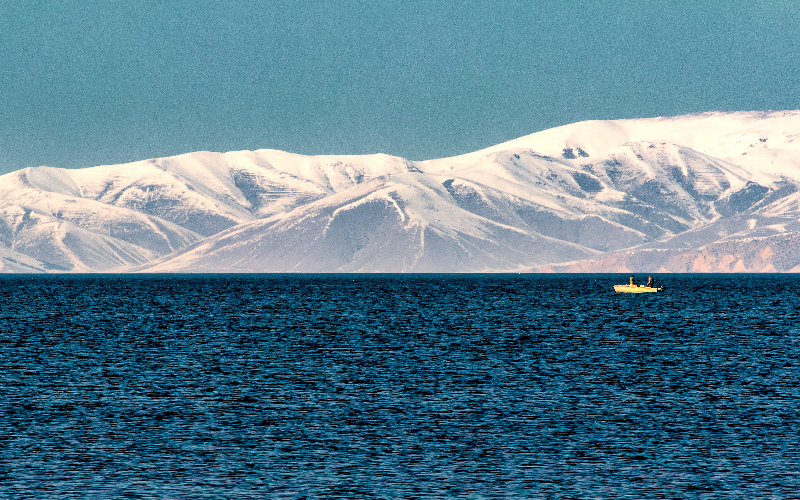
Lake Sevan is one of Armenia's most important natural landscapes and an essential stop on any complete itinerary through the country. Located at about 1,900 metres of altitude, it is Armenia's largest lake and one of the best-known places to see the combination of blue water, mountains, monasteries and a cooler climate.
The lake draws attention for its contrast with other regions of the country. After Yerevan, the canyons of the south, Goris, Tatev and Khndzoresk, Lake Sevan changes the scenery of the trip. The blue waters, the openness of the landscape and the altitude create a different feeling, wider and brighter.
The most famous stop in the region is Sevanavank Monastery, a 9th century monastery located on a peninsula with a panoramic view of the lake. The dark stone churches atop the hill form one of Armenia's most classic images.
Another point worth considering is Noratus Cemetery, known for its khachkars, the traditional Armenian stone crosses. This stop adds a historic and cultural side to the excursion, showing one of the most important expressions of medieval Armenian art.
Lake Sevan works very well as a stop on the way between Goris and Dilijan. Instead of doing the lake only as a day trip from Yerevan, I would fit Sevanavank and Noratus into the journey north through Armenia. This way, the itinerary becomes more linear, beautiful and efficient.
Quick facts
- Visit duration: 2 to 3 hours
- Altitude: about 1,900 metres above sea level
- Distance from Yerevan: about 65 km
- Driving time from Yerevan: about 1 hour
- Distance from Dilijan: about 40 km
- Driving time from Dilijan: about 50 minutes
- Lake Sevan entry: free
- Sevanavank Monastery: generally free access
- Noratus Cemetery: generally free access
- Best season: June to September for a more pleasant climate
- Pairs well with: Sevanavank, Noratus, Dilijan, Haghartsin, Goshavank and Parz Lake
Is it worth visiting Lake Sevan?
Yes, it is very much worth visiting Lake Sevan. This is one of Armenia's most beautiful landscapes and a stop that helps balance the country itinerary very well.
The lake offers a type of scenery different from the canyon monasteries, the dry mountains of the south and the urban environment of Yerevan. Here, the highlight is the blue water, the altitude, the cooler climate and the open view of the mountains.
The visit becomes even better when combined with Sevanavank Monastery and Noratus Cemetery. That way, Lake Sevan doesn't become just a photo stop, but an excursion with nature, history, religious architecture and Armenian culture.
I would place Lake Sevan as an almost mandatory stop in a 10-day Armenia itinerary, especially on the road between Goris and Dilijan.
What is Lake Sevan?
Lake Sevan is Armenia's largest lake and one of the country's most important natural areas. It is located in the Gegharkunik region, in an elevated area, surrounded by mountains and open landscapes.
Because of the altitude, the region's climate tends to be cooler than in Yerevan, even in summer. This makes the lake a popular destination for Armenians in the hotter months.
Besides its natural importance, Lake Sevan also has great cultural and tourist value. Around it are monasteries, historic cemeteries, beaches, restaurants, villages and rest areas.
For those travelling through Armenia, the lake works as a visual pause in the itinerary. It is a place to walk, take photos, visit Sevanavank, eat local fish and continue the journey to Dilijan or return to Yerevan.
Why visit Lake Sevan?
The main reason to visit Lake Sevan is the landscape. The blue of the water, the surrounding mountains and the view from Sevanavank create one of the country's most beautiful images.
Another reason is the location. The lake can be visited as a day trip from Yerevan, but it also fits very well into the road between the south and north of Armenia.
Lake Sevan also lets you vary the itinerary. After many monasteries and transfers through mountainous regions, the stop at the lake makes the trip lighter.
Besides that, the region combines nature, history and gastronomy. You can visit Sevanavank, get to know Noratus, walk near the water and try fish at restaurants on the lakeshore.
How to get to Lake Sevan
Lake Sevan is about 65 km from Yerevan, and the drive takes approximately 1 hour, depending on traffic and the exact point of the lake.
Leaving from Dilijan, the distance to the Sevanavank area is about 40 km, with a journey of approximately 50 minutes.
Leaving from Goris, the journey is longer, but it makes sense within a complete Armenia itinerary. The idea is to leave early, stop at Lake Sevan and Sevanavank, maybe include Noratus, and arrive in Dilijan at the end of the day.
The most practical way is to travel by rental car, private driver or organised tour. By public transport, it is possible to reach the town of Sevan from Yerevan, but you may then need to take a taxi to the monastery or other points around the lake.
For those planning a more complete itinerary, I would prioritise a car or driver for this part of the trip. That way, it is easier to include Sevanavank, Noratus and continue to Dilijan without depending on connections.
How the visit works
A visit to Lake Sevan can be simple or more complete, depending on the time available.
On a quick stop, the essential is to visit Sevanavank Monastery, admire the view of the lake and take a few photos.
On a more complete visit, it is worth combining Sevanavank with Noratus Cemetery, a stop on the lakeshore and lunch at a restaurant in the region.
In summer, the shores of Lake Sevan get busier, with beach areas, cafés, restaurants and leisure activities. Outside the season, the climate can be colder and windier, but the landscape tends to be calmer.
I would treat Lake Sevan as a half-day stop, especially if it is on the way to Dilijan. That way, you enjoy the best of it without making the transfer too heavy.
What to see at Lake Sevan
Lake Sevan
The lake itself already justifies the visit. The blue water, the vastness of the landscape and the surrounding mountains create one of Armenia's most beautiful natural scenes.
Even a short stop is already worthwhile to feel the difference in climate and scenery compared to Yerevan and the south of the country.
I recommend stopping at least at one point with a good view of the water, walking a little and taking in the landscape without rushing. Lake Sevan works very well as a pause in the itinerary.
Sevanavank Monastery
Sevanavank Monastery is Lake Sevan's most famous point and one of Armenia's best-known images.
The monastery sits on a peninsula, atop a hill, with a panoramic view of the lake and the mountains. The climb requires some effort, but it is not long, and the view makes up for it.
The dark stone churches contrast very well with the blue of the lake. This contrast is what makes Sevanavank so photogenic.
I would place Sevanavank as the main priority of the Lake Sevan visit. Even if you have little time, this is the point that should not be left out.
Panoramic view from the peninsula
The view from the Sevanavank peninsula is one of the most beautiful parts of the visit.
From above, Lake Sevan looks much larger, and the landscape opens up in several directions. On clear days, the blue of the water becomes even stronger.
This is one of the best points for photographing the lake. It is also a good stop for understanding the scale of the place and why it is so important in the Armenian landscape.
Noratus Cemetery
Noratus Cemetery is a very interesting stop for those who want to add more history to the Lake Sevan excursion.
The site is known for its khachkars, the Armenian stone crosses carved with religious symbols, geometric patterns and ornamental details.
Noratus is less visited than Sevanavank, but has a very special atmosphere. The field of khachkars works almost like an open-air museum of medieval Armenian art.
I would include Noratus if you have enough time and are travelling by car or with a driver. The visit helps make the day more complete and less focused only on the lake's landscape.
Armenian khachkars
Khachkars are one of the most important forms of Armenian religious art. They appear in several of the country's monasteries, cemeteries and historic sites.
At Noratus Cemetery, the concentration of these stone crosses is the great highlight. Each piece has its own details, with crosses, patterns, rosettes, symbols and inscriptions.
For those who enjoy history and culture, this stop is very worthwhile. It helps you better understand Armenia's visual and spiritual identity.
Shores of Lake Sevan
The shores of Lake Sevan can be a good stop, especially in summer.
In some stretches, there are beaches, restaurants, cafés, rest areas and points to observe the water up close.
If you are travelling between June and September, it may be worth setting aside a bit more time to walk near the lake, have something to drink or have lunch in the region.
Outside high season, the experience is colder and quieter, but still beautiful.
Restaurants and lake fish
The Lake Sevan region is known for its fish restaurants, especially the ishkhan, the traditional trout associated with the lake.
For those who enjoy local gastronomy, having lunch on the shore of Lake Sevan can be a good way to complete the excursion.
I would include this stop if the schedule allows. After visiting Sevanavank and perhaps Noratus, having lunch near the lake makes the day more pleasant before continuing to Dilijan.
What to combine with Lake Sevan
Lake Sevan combines very well with Sevanavank Monastery and Noratus Cemetery on the same day.
For those going from Goris to Dilijan, a good sequence would be to leave Goris early, continue to the Lake Sevan area, visit Sevanavank, include Noratus if there is time and arrive in Dilijan at the end of the day.
For those in Yerevan, the lake can be done as a day trip. In that case, it is possible to combine Sevanavank, Noratus, Hayravank or Dilijan, depending on the pace of the excursion.
In a complete Armenia itinerary, I would fit Lake Sevan into the road to Dilijan, because the route becomes more logical.
Lake Sevan and Sevanavank on the same day
Yes, Lake Sevan and Sevanavank should be visited together.
The monastery is the region's main historic attraction and offers one of the best views of the lake.
Even if you have only a few hours, it is worth climbing up to Sevanavank, walking through the complex and taking in the landscape from above.
This combination is simple, beautiful and very efficient within the itinerary.
Lake Sevan, Sevanavank and Noratus on the same day
Yes, it is very much worth combining Lake Sevan, Sevanavank and Noratus on the same day.
This sequence mixes natural landscape, medieval monastery and historic khachkars.
The ideal is to do this combination with a car, driver or tour, because Noratus requires an extra transfer from the Sevanavank peninsula.
If the day is long or if you are coming from Goris, Noratus can be optional. But if the itinerary is flowing well, I would try to include it.
Lake Sevan as a stop between Goris and Dilijan
Lake Sevan works very well as a stop between Goris and Dilijan.
This is one of the smartest ways to fit the lake into a complete Armenia itinerary. You avoid going back to Yerevan, make good use of the transfer and still get to know one of the country's most important landscapes.
Since the journey from Goris is long, the ideal is to leave early. That way, you can visit Sevanavank, maybe pass by Noratus and continue to Dilijan calmly.
I would not add too many extra attractions on this day, because the transfer is already substantial. The focus should be Lake Sevan, Sevanavank and, if time allows, Noratus.
Lake Sevan as a day trip from Yerevan
It is also possible to visit Lake Sevan as a day trip from Yerevan.
This option works well for those with fewer days in Armenia or not sleeping in Dilijan. The journey from the capital is relatively short, and many tours include Sevanavank, Noratus or Dilijan in the same excursion.
Even so, in a 10-day Armenia itinerary, I prefer to fit the lake into the road to Dilijan. The trip becomes more linear and you avoid repeating transfers from Yerevan.
How much does it cost to visit Lake Sevan?
- Access to Lake Sevan is free
- Sevanavank Monastery generally has free access
- Noratus Cemetery generally has free access
There may be costs for parking, restrooms, restaurants, activities on the lakeshore, transport, taxi, driver or tour.
If you have lunch in the region, the price will depend on the restaurant chosen.
If it is summer and you want to use beach facilities, water activities or private areas, there may be a separate charge.
I would bring cash in Armenian dram for small expenses, even though many restaurants accept cards.
How long to stay at Lake Sevan?
To visit Sevanavank and make a quick photo stop at the lake, set aside about 1h30 to 2 hours.
To include Noratus Cemetery and have lunch in the region, set aside 3 hours or a bit more.
If the idea is to enjoy the beach, rest or summer activities, Lake Sevan can occupy half a day or even a full day.
On an itinerary between Goris and Dilijan, I would set aside 2 to 3 hours for the region, without overdoing it. That way, the day remains balanced.
Best time to visit Lake Sevan
- Morning: the light tends to be softer, there is less activity and Sevanavank is calmer
- Late afternoon: can be very beautiful, with golden light over the lake and the churches
- Midday in summer: works for beaches and restaurants, but Sevanavank can get busier
- Off season: the lake can be colder and windier, but the landscape remains beautiful and the experience tends to be calmer
If you are coming from Goris and continuing to Dilijan, the timing will depend on the transfer. In that case, the most important thing is to leave early so as not to arrive too late.
Best season to visit Lake Sevan
The best season to visit Lake Sevan is between June and September, when the climate is more pleasant, the shores are busier and there is more leisure infrastructure.
In summer, the lake works as a rest area for locals and visitors, with beaches, restaurants and outdoor activities.
In spring and autumn, the climate can be cooler, but the landscape remains beautiful. These periods are good for those who want less activity.
In winter, the region gets cold, with wind and the possibility of snow in the surrounding area. The experience changes considerably, but it can be interesting for those who enjoy emptier, more dramatic landscapes.
What I would prioritise on the visit
I would prioritise Sevanavank Monastery, the panoramic view of the lake and a stop on the shore to see the water up close.
If there is time, I would include Noratus Cemetery.
If the itinerary is tight, I would leave Noratus as optional and keep Sevanavank as the priority.
If travelling in summer, I would also consider having lunch on the lakeshore.
What can be optional
Noratus Cemetery can be optional if the transfer is long or if you are coming from Goris.
Beaches and water activities can be optional, especially outside summer.
Lunch on the lakeshore can be optional if the itinerary is running late.
Hayravank Monastery can also be optional on a longer visit to the region.
The important thing is not to turn the day into too long a list of stops. Lake Sevan works best when there is time to take in the landscape.
Mistakes to avoid at Lake Sevan
The first mistake is visiting Lake Sevan too much in a rush. Even though it is a stop along the way, the landscape deserves time.
Another mistake is climbing up to Sevanavank just for a quick photo and leaving. The view from above is one of the best in the region, so it is worth taking it in calmly.
It is also worth avoiding underestimating the weather. Because of the altitude, Lake Sevan can be cooler and windier than Yerevan.
Another mistake is packing too many attractions into the same day, especially if you are coming from Goris and continuing to Dilijan.
If including Noratus, organise the route well to avoid unnecessary transfers.
Practical tips
- Combine Lake Sevan with Sevanavank Monastery
- Include Noratus Cemetery if you have time and are travelling by car or with a driver
- Bring a light jacket, even in summer, because the altitude makes the climate cooler
- Wear comfortable shoes for climbing up to Sevanavank
- Bring cash in Armenian dram for small expenses
- If eating in the region, consider trying the ishkhan, the trout associated with Lake Sevan
- In summer, the shores are livelier and can be busier
- Outside the season, expect more cold, wind and less infrastructure running
- The best angle of Sevanavank is not always just from the top, it is also worth observing the monastery from lower points, near the water
- If it is on the way to Dilijan, leave early so as not to arrive too late
Is it worth visiting Lake Sevan from Yerevan?
Yes, it is worth visiting Lake Sevan from Yerevan, especially if you have few days in Armenia.
The journey is relatively short, and you can do a day trip including Sevanavank and maybe Noratus or Dilijan.
But if you are doing a complete itinerary through the country, I think it is better to fit Lake Sevan into the road to Dilijan. That way, the trip becomes more logical and you avoid returning to the capital several times.
Is Lake Sevan worth it in winter?
Yes, Lake Sevan can be worth it in winter, but the experience is different.
In summer, the lake is livelier, with beaches, restaurants and outdoor activities. In winter, the scenery becomes colder, emptier and quieter.
The visit is still beautiful, especially for those who enjoy dramatic, less touristy landscapes. However, it is important to go prepared for wind, cold and possible changes on the road.
If the idea is beach and rest, summer is better. If the idea is landscape and silence, winter can also be interesting.
Where to stay near Lake Sevan?
For most Armenia itineraries, it is not mandatory to sleep at Lake Sevan.
If you are doing a 10-day trip, I would use the lake as a stop on the road between Goris and Dilijan, sleeping in Dilijan at the end of the day.
Sleeping near Lake Sevan can make sense in summer, if the idea is to rest, enjoy the beach or do water activities.
For those who want to explore Armenia's green north, Dilijan tends to work better as a base.
Final summary of Lake Sevan
Lake Sevan is one of Armenia's most beautiful and important landscapes.
The combination of blue water, mountains, altitude, Sevanavank Monastery and Noratus Cemetery creates a very complete stop within the country itinerary.
The lake can be visited as a day trip from Yerevan, but it works even better as a stop between Goris and Dilijan.
In a few hours, you can visit Sevanavank, admire the view, walk a little along the shores and, if there is time, include Noratus.
For those doing a complete trip through Armenia, Lake Sevan helps connect the dramatic south with the green north in a natural and beautiful way.
Final tip
Lake Sevan is one of the best stops for balancing an Armenia itinerary.
I would visit Sevanavank in the morning, take in the lake calmly, include Noratus if time allows and finish with lunch in the region before continuing to Dilijan.
The sequence Lake Sevan, Sevanavank, Noratus and Dilijan works very well because it mixes natural landscape, medieval history, Armenian art and a smart transfer through the country.