Last updated: September 2026
Planning a 10-day Turkey itinerary means choosing the regions carefully and organising your travel with a clear logic. The country is large, and trying to fit in too many destinations can turn the trip into a sequence of airports, roads and hotel changes.
For this itinerary, the suggested sequence is Istanbul, Cappadocia, Ephesus and Pamukkale. This combination works very well for a first trip because it brings together four completely different sides of the country: Istanbul's history and urban life, Cappadocia's rock formations, the ruins of Ephesus and Pamukkale's white terraces.
The goal isn't just to list famous attractions. The idea is to show how to organise 10 days in Turkey, what fits well on the same day, where it's worth spending more time, and which transfers need to be planned in advance.
How this Turkey itinerary was planned
This itinerary is built to make the most of 10 days without switching cities constantly. The suggestion is to set aside 3 days for Istanbul, since the city is huge and its attractions are spread across different areas.
Next, another 3 days go to Cappadocia. Besides having plenty to see, the hot-air balloon ride depends on weather conditions. Having more than one morning available makes the itinerary less vulnerable to a possible cancellation.
The final stretch heads to western Turkey. After Cappadocia, the plan is to fly to Izmir and continue to Selçuk, which serves as a base for visiting Ephesus. After two nights in Selçuk, the itinerary continues to Pamukkale and Hierapolis, with the last night in the Pamukkale/Denizli area before the flight back to Istanbul.
Turkey in 10 days: overview
- Days 1 to 3: Istanbul, with Sultanahmet, Hagia Sophia, the Blue Mosque, Topkapi Palace, the Basilica Cistern, the Grand Bazaar, Galata and the Bosphorus.
- Days 4 to 6: Cappadocia, with Göreme, the hot-air balloon ride, Uçhisar, an underground city and some of the main valleys.
- Day 7: Cappadocia → Izmir → Selçuk, with a flight to western Turkey and the 1st night in Selçuk.
- Day 8: Ephesus, with a visit to the archaeological site and the 2nd night in Selçuk.
- Day 9: Selçuk → Pamukkale and Hierapolis, with a visit to both places and 1 night in Pamukkale/Denizli.
- Day 10: Denizli → Istanbul, to connect with your international flight or continue the trip.
Istanbul in 3 days: Sultanahmet, Galata and the Bosphorus
Istanbul works very well as a first base, since it will usually be the trip's main international gateway. The city is huge, but it has efficient public transport, so there's no need to rent a car during these three days. It's best to organise the attractions by area and avoid crossing the city several times on the same day.
Sultanahmet, Hagia Sophia and the Blue Mosque
Sultanahmet is one of the best areas to start the trip, since it concentrates some of Istanbul's best-known monuments. The main attractions sit relatively close to one another, letting you see much of the historic centre on foot without losing too much time on transfers.
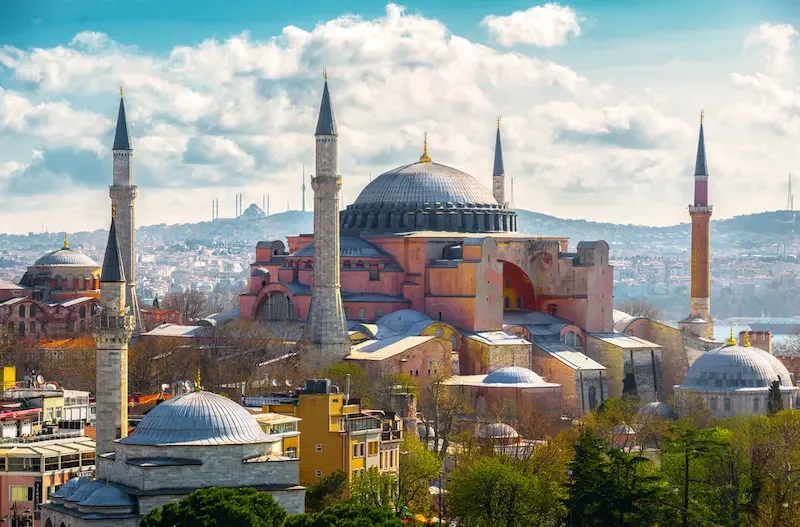
Hagia Sophia is one of Istanbul's most important monuments and gathers centuries of Byzantine and Ottoman history. Its architecture, scale and transformations over time make it one of the most important visits for understanding the city's history.
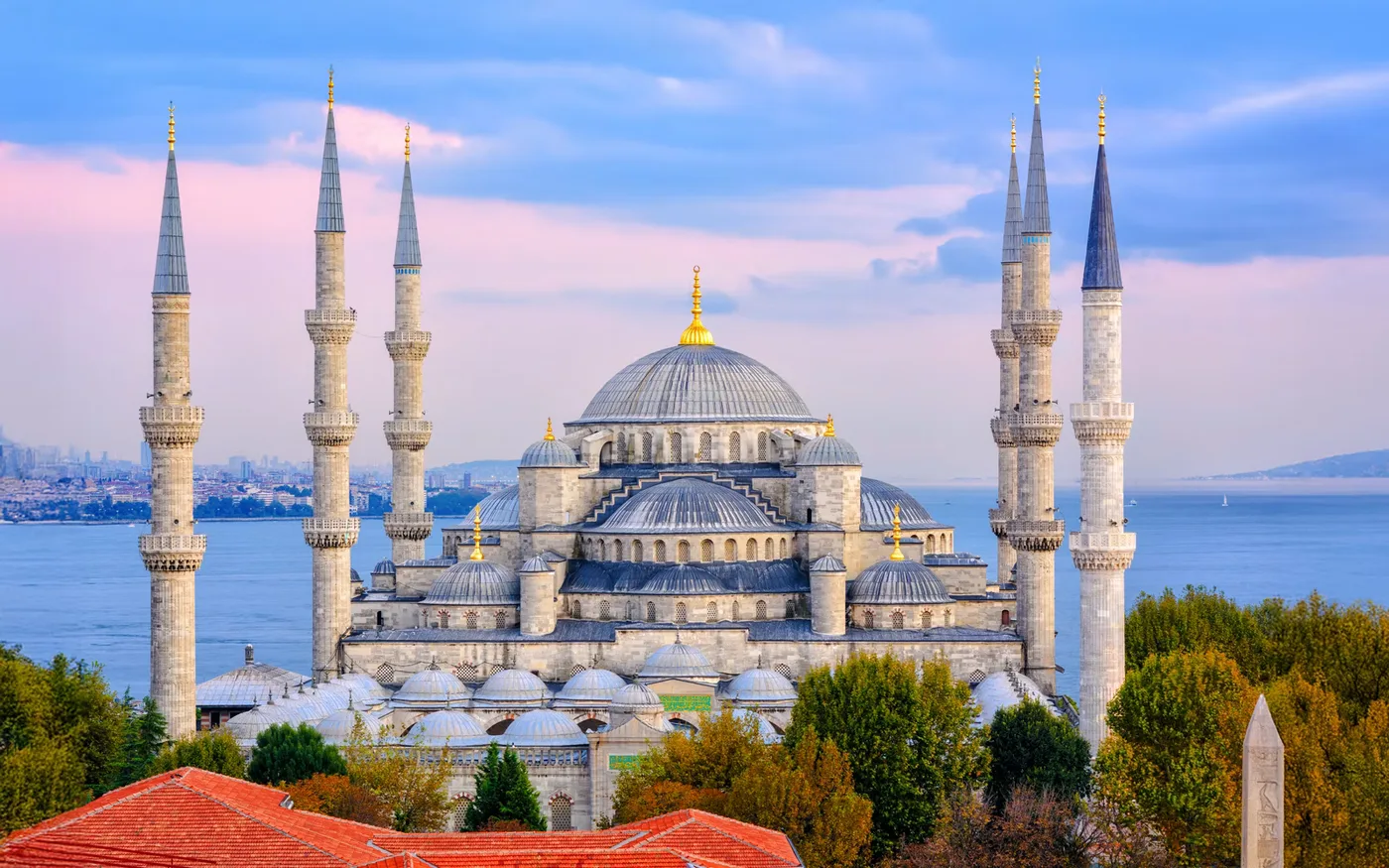
Blue Mosque sits almost directly across from Hagia Sophia and, together with it, forms one of Istanbul's most striking architectural pairings. Besides the exterior dominated by domes and minarets, the visit lets you see one of the city's best-known religious spaces.
Sultanahmet Square occupies the area between Hagia Sophia and the Blue Mosque and works as a natural link between the day's main attractions. The area also holds traces of the old Hippodrome of Constantinople, adding another historical layer to the walk.
Eminönü can close out the first day after a walk through the historic centre. The area sits right by the Bosphorus and offers a first taste of the ferries, the bridges and the busier part of Istanbul's historic area.
Topkapi Palace, the Basilica Cistern and the Grand Bazaar
Topkapi Palace, the former residence of the Ottoman sultans, can take up much of the first half of the day. The complex has several courtyards, halls, exhibitions and open areas with views over the Bosphorus, so it isn't an attraction to rush through.
Basilica Cistern fits very well into the itinerary after Topkapi Palace and offers a completely different experience from Sultanahmet's outdoor attractions. The huge underground reservoir is held up by rows of columns and has an atmosphere that makes it one of the historic centre's most distinctive visits.
Grand Bazaar can close out the afternoon and works best when you don't feel obliged to see every passage. The market has thousands of shops, so it's worth wandering calmly, taking in different sections, and enjoying the atmosphere without turning the visit into a rush.
Galata Tower, Istiklal, the Bosphorus and the Asian side
The third day shows a different side of Istanbul, leaving the historic centre for busier, more modern parts of the city.
The area around Galata Tower works well as the starting point for day three. The nearby streets mix old buildings, cafés, shops and sloping lanes leading toward the busier part of Beyoğlu.
Istiklal Avenue is one of Istanbul's busiest pedestrian avenues and can be walked after Galata. Along the way you'll find shops, restaurants, historic buildings and the well-known red tram that runs along part of the avenue.
Bosphorus: it's worth setting aside part of the day to see Istanbul from the water. A boat trip or ferry ride lets you see the city from another angle and better understand the divide between the European and Asian sides.
Üsküdar is a good choice on the Asian side for anyone looking for a calmer atmosphere and views back toward the European side. The area can work especially well in the late afternoon, when Istanbul's skyline takes on another perspective.
Kadıköy is another option on the Asian side, offering a livelier experience with restaurants, markets and plenty of local life. Since Üsküdar and Kadıköy offer different experiences, it's worth choosing just one when time is short.
Where to stay: Istanbul.
Cappadocia in 3 days: balloons, valleys and underground cities
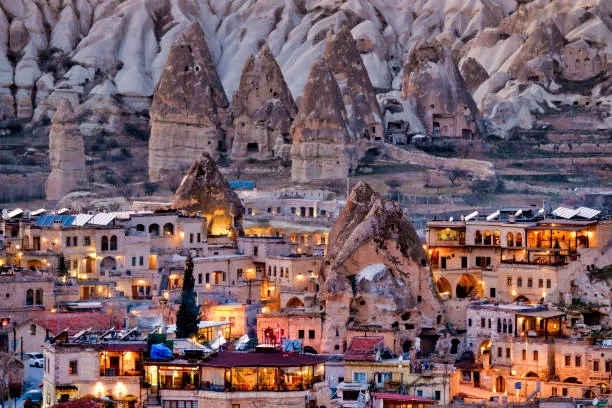
Cappadocia completely changes the pace of the trip. This isn't a single city, but a region made up of small towns, villages, valleys, volcanic formations, rock-cut churches and ancient underground cities.
Göreme tends to be one of the most practical bases for a first trip to Cappadocia. The location makes it easy to reach several attractions, while the town centre concentrates hotels, restaurants, tour agencies and much of the region's tourist infrastructure.
Getting around Cappadocia
In Cappadocia, it isn't a good idea to build your itinerary relying on Uber or similar apps. The attractions are spread across the region, and many are outside urban centres.
Three options work best:
- renting a car, picking it up at the airport and returning it when you leave Cappadocia;
- hiring a private driver to handle your day-to-day travel;
- booking private or organised tours or transfers.
For anyone who prefers independence, picking up a car at the Nevşehir or Kayseri airport and heading straight to Göreme tends to be a practical solution. Anyone who doesn't want to drive can book the airport-to-hotel transfer in advance and hire a private driver or tour for the days spent visiting more distant attractions.
Flight to Cappadocia and arrival in Göreme
Nevşehir or Kayseri are the two airports normally used to reach the Cappadocia region from Istanbul. Nevşehir is closer to Cappadocia's central area, while Kayseri also tends to offer good flight options and can be used depending on the schedules and prices found.
Göreme: after arriving at the airport, the itinerary continues to this stage's main base. The first day can be calmer, with a walk around the centre, a first look at the rock formations and perhaps a viewpoint in the late afternoon.
If the hot-air balloon ride is booked for the following morning, it's worth confirming the departure time before going to sleep.
Balloon ride, Göreme Open Air Museum and Uçhisar
Göreme at sunrise and sunset: on days when flights are authorised, the balloons usually rise shortly before sunrise and can be seen from various points around town. Anyone staying at a hotel with a rooftop can watch the balloons directly from the terrace, but another great option is heading up to the Göreme Viewpoint, also known as Sunset Point, which sits above the town and offers a wide view of the valleys and the balloons. The same viewpoint is worth a second visit in the late afternoon, when it works very well for watching the sunset over Göreme.
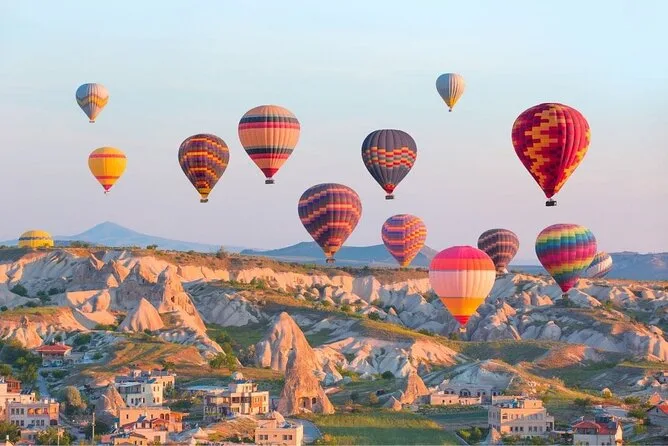
Hot-air balloon ride: if weather conditions allow, the day starts very early with one of Cappadocia's most sought-after experiences. Flights happen close to sunrise, when dozens of balloons can appear over the valleys, creating one of the region's most iconic sights. Even anyone not planning to fly can enjoy this morning by watching the balloons from the hotel or one of Göreme's viewpoints.
Göreme Open Air Museum is one of Cappadocia's main cultural attractions and works very well after the balloon ride and breakfast. The complex brings together churches, chapels and former religious spaces carved directly into the rock, some preserving paintings and frescoes from the Byzantine period.
Uçhisar is a small town set in one of the highest parts of Cappadocia and works well for the second half of the day. Its elevated position offers different perspectives of the valleys and rock formations that define the region.
Uçhisar Castle towers over the town and is a huge rock formation marked by old carved spaces. The elevated area offers a wide view over different parts of Cappadocia and helps convey the scale of the surrounding landscape.
Underground cities and Cappadocia's main valleys
The second full day is ideal for exploring places further from Göreme. It's worth choosing just one of the large underground cities, since visiting two on the same trip can end up feeling repetitive.
Derinkuyu is one of Cappadocia's largest and best-known underground cities and sits south of Göreme. It has several levels carved underground, with narrow corridors, storage areas, rooms, ventilation shafts and spaces used for community life. The visit passes through enclosed, narrow spaces, so it may not be comfortable for anyone with claustrophobia.
Kaymaklı is another large underground city and sits closer to Göreme than Derinkuyu. Like its more famous neighbour, it has tunnels, rooms, storage areas and different levels carved below ground. The experiences are similar, so choosing just one of the two is usually enough for a ten-day itinerary.
After the underground city, the rest of the day can be dedicated to some of Cappadocia's main valleys.
Pigeon Valley lies between Göreme and Uçhisar and has numerous pigeon shelters carved into the rock. For centuries, these spaces were used by local residents, and today they're part of the landscape that defines the valley. The area also has trails and good viewpoints.
Love Valley is known mainly for the large vertical rock formations that gave the valley its popular name. It's near Göreme and has some of Cappadocia's most recognisable natural scenery. There are viewpoints accessible by road and trails for anyone who wants to walk among the formations.
Devrent Valley (Imaginary Valley) lies in the area between Avanos and Ürgüp and offers a landscape different from many of Cappadocia's other valleys. The highlight isn't churches or former dwellings, but the natural formations themselves, many resembling animals and objects. One of the best-known resembles a camel's silhouette.
Red Valley takes its name from the reddish tones of its rock formations and is near Göreme and Çavuşin. The colours become even more vivid in the late afternoon, when the light changes the appearance of the rocks. The area has trails and viewpoints and works especially well close to sunset.
Rose Valley sits next to Red Valley and features formations with pinkish tones that change depending on the light. It's also one of Cappadocia's most popular areas for hiking. Small churches and old structures carved directly into the rock appear throughout the area.
To organise the day without trying to see every valley, a balanced sequence could be: Kaymaklı or Derinkuyu → Pigeon Valley → Love Valley → Red Valley or Rose Valley in the late afternoon.
Where to stay: Göreme.
Cappadocia to Selçuk, via Izmir
After three days in Cappadocia, the itinerary continues to western Turkey. The goal of this day isn't to see Izmir, but to reach Selçuk, which will be the base for visiting Ephesus the following day.
Cappadocia → Izmir flight: the most practical option is to fly from Nevşehir or Kayseri to Izmir. Depending on the date and available schedules, the flight may require a connection in Istanbul.
Izmir: in this itinerary, it works mainly as an arrival point. After landing, the trip continues on to Selçuk, with no need to book a night in Izmir.
Selçuk is the base for this stage of the trip. Since the first day is mostly dedicated to travel, the plan is to arrive, check in and rest, so Ephesus can start early the following morning.
Where to stay: Selçuk, first night in town.
Ephesus in 1 day: the Library of Celsus and the Great Theatre
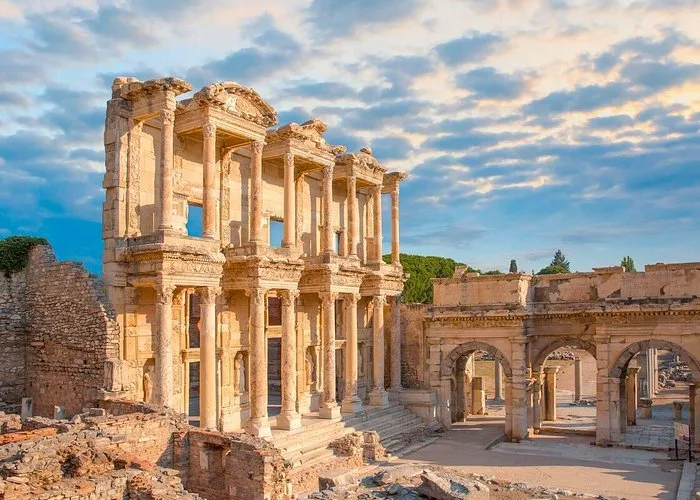
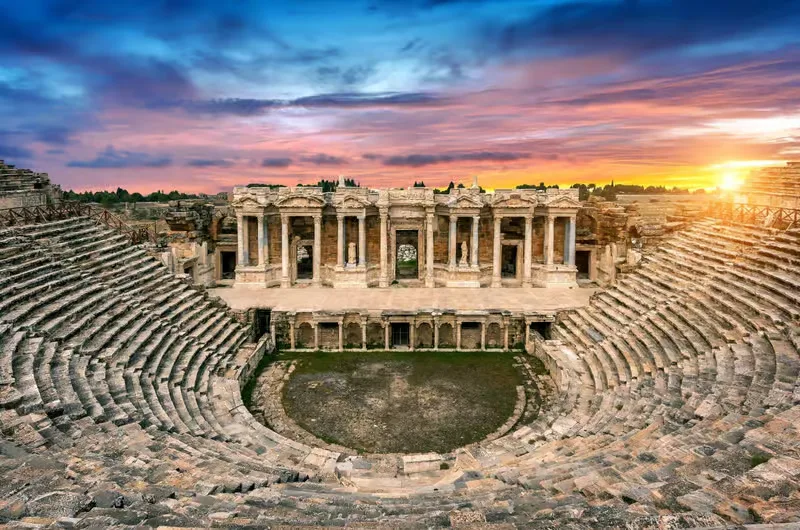
On this day, the base remains Selçuk. Since Ephesus is very close, there's no need to change hotels or carry luggage during the visit.
Ephesus deserves practically a full day and is the main archaeological site in this part of the itinerary. The ancient city was one of the great centres of the Greco-Roman world, preserving avenues, temples, homes, public buildings and theatres. Since much of the visit is exposed to the sun, water, sun protection and comfortable footwear matter.
Library of Celsus is probably the most famous structure within Ephesus and one of the archaeological site's most recognisable images. Its reconstructed façade helps you picture the scale and importance the ancient city held during its peak.
Great Theatre is another Ephesus highlight, built using the natural slope of a hillside. The structure impresses mainly through its scale and its capacity to hold thousands of people.
Terrace Houses help show a different side of Ephesus by revealing how some of the ancient city's wealthiest families lived. These spaces preserve mosaics, paintings and architectural details that complement the visit to the large public structures.
After the visit, the best plan is to return to Selçuk and spend the second night at the same accommodation. This way, there's no need to head to Pamukkale after several hours of walking through Ephesus.
Where to stay: Selçuk, second night in town.
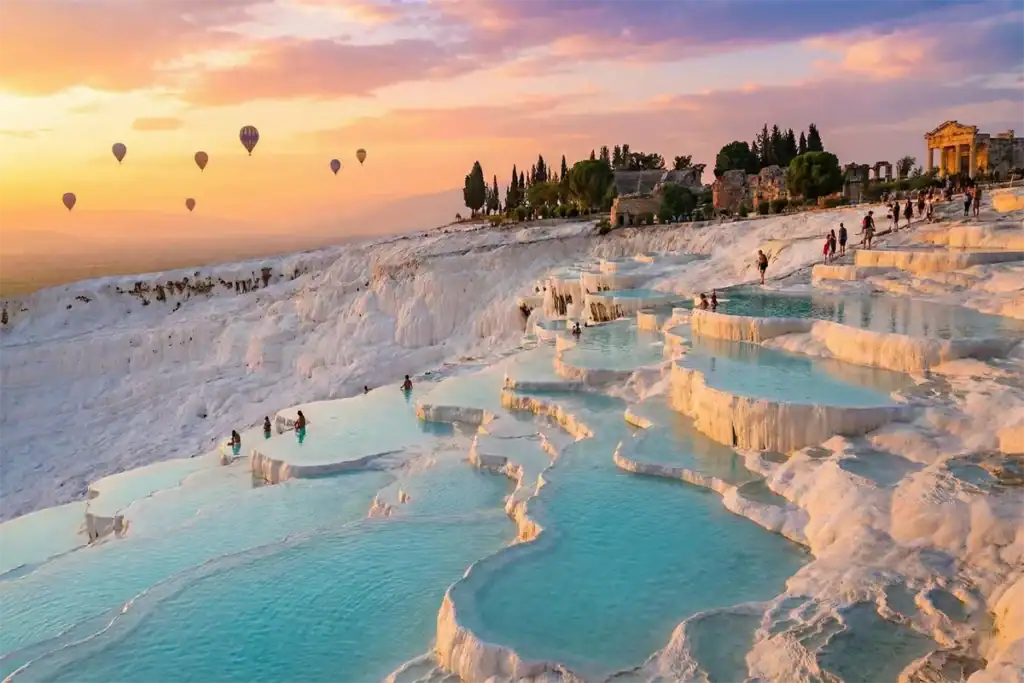
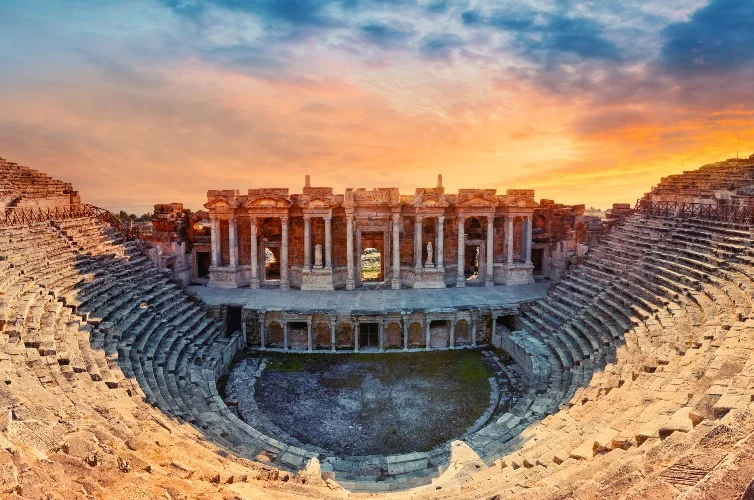
In the morning, check out in Selçuk and leave early toward Pamukkale. This transfer should happen early in the day so you arrive in the region with plenty of time to see Pamukkale and Hierapolis without rushing.
Pamukkale offers one of Turkey's most distinctive natural landscapes and is known for the white terraces formed along the hillside. The mineral-rich thermal waters leave clear travertine deposits as they flow down the terrain, creating the look that made the place famous.
Hierapolis sits right above the terraces and should be visited on the same day. The ancient city has a theatre, temples, public areas and an extensive necropolis, so Pamukkale and Hierapolis work much better as a single experience.
The big difference here is that there's no need to return to Selçuk after the visit. After finishing Pamukkale and Hierapolis, check in at accommodation in the region itself.
Where to stay: Pamukkale or the Denizli area, for one night.
Denizli to Istanbul and return
The last day begins already in the Pamukkale/Denizli area, avoiding any need to go back to Selçuk or Izmir.
Denizli serves as the transport reference point for leaving Pamukkale. From the airport serving the region, the itinerary continues by plane to Istanbul.
Istanbul: if your international flight also departs from Istanbul, leave a comfortable margin between the domestic and international flights, especially when the tickets are booked separately.
If the same-day connection ends up too tight, an alternative is to fly on to Istanbul at the end of Day 9 and spend the last night near the airport.
End of the itinerary: if your international flight only leaves the following day, spend the last night in Istanbul. Otherwise, the itinerary ends with the connection for your return flight.
What to prioritize in a 10-day Turkey itinerary
If this itinerary had to be trimmed down to the essentials, Istanbul, Cappadocia, Ephesus and Pamukkale would still be the four main destinations.
In Istanbul, the priorities would be Sultanahmet, Hagia Sophia, the Blue Mosque, Topkapi Palace and a trip along the Bosphorus. In Cappadocia, it's worth keeping Göreme, Uçhisar, one underground city and a few of the main valleys. The hot-air balloon ride is a highly sought-after experience, but it doesn't need to be treated as mandatory.
In Ephesus, the focus should be the ancient city. In Pamukkale, the travertines and Hierapolis work best together.
The most important thing is not to try to add too many destinations. Antalya, Bodrum, Fethiye and other regions are interesting, but they would make ten days feel too packed.
What can be optional in this itinerary
- The hot-air balloon ride in Cappadocia can be dropped if it's too expensive.
- There's no need to visit both Derinkuyu and Kaymaklı on the same trip.
- Some valleys can be dropped without hurting the Cappadocia experience.
- The Terrace Houses can be dropped if time is short.
- Istanbul's Asian side can be reduced if you'd rather spend more time in the historic centre.
Mistakes to avoid on a Turkey itinerary
The first mistake is trying to fit too many cities into just ten days. Turkey is large, and each change of region involves a hotel, an airport, roads and travel time.
Another mistake is renting a car in Istanbul. Public transport works much better for this itinerary, while driving and parking can complicate the trip.
In Cappadocia, the mistake would be arriving without having decided how to get around from the airport and explore the region. Anyone who doesn't want to drive should arrange the transfer and a private driver or organised tours in advance. It's also not worth planning the entire Cappadocia experience around the balloon ride, since the flight can be cancelled due to weather conditions.
In Ephesus and Pamukkale, trying to rush through both places on the same day just to save one night makes the itinerary far more exhausting.
Trip planning for Turkey: essential tips
Before the trip, it's worth sorting out a few practical points. Since the itinerary involves large cities, domestic flights and regions with scattered attractions, internet, payment and transport make a difference day to day.
ESSENTIAL APPS
- Google Maps for routes and getting around.
- Google Translate for signs, menus and communication.
- Airline apps to track your flights.
- Download offline maps before driving stretches.
INTERNET IN TURKEY
- An eSIM is a practical option for compatible phones.
- A local SIM card can also be bought after arrival.
- Mobile internet helps with maps, transfers and hotels.
- Don't rely only on venues' Wi-Fi.
HOW TO PAY
- The local currency is the Turkish lira.
- Cards are widely accepted in tourist areas.
- Carry some cash for small expenses.
- Bring more than one card for the trip.
TRANSPORT BETWEEN DESTINATIONS
- In Istanbul, use the metro, tram, ferry and walking.
- For Cappadocia, prefer a flight plus transfer or a rental car.
- After Cappadocia, fly to Izmir and continue to Selçuk, the base for Ephesus.
- After Pamukkale, use the Denizli area to return to Istanbul.