Last updated: September 2026
Istanbul is a huge, historic city full of contrasts. Within just a few kilometres, the trip passes through old mosques, Ottoman palaces, markets, busy neighbourhoods, modern streets and the Bosphorus, which separates the city's European and Asian sides.
For a first visit to Istanbul, the biggest challenge isn't finding what to do, but organising the attractions in a way that avoids unnecessary travel. In 3 days in Istanbul, you can see a good portion of the most important places if each day is focused on one region.
This itinerary starts in the historic centre of Sultanahmet, moves on to Topkapi Palace, the Basilica Cistern and the Grand Bazaar, and sets aside the third day for Galata, Istiklal Avenue, the Bosphorus and a stop on the Asian side.
How this Istanbul itinerary was planned
This itinerary is organised to cut down on time spent crossing Istanbul. Even though the city has a good network of metro, tram and ferry lines, distances can be long, and some of the most visited areas work much better when explored on foot.
The first day stays focused on Sultanahmet, home to Hagia Sophia, the Blue Mosque and an important part of Constantinople's history. The second day continues through the historic centre with Topkapi Palace, the Basilica Cistern and the Grand Bazaar.
On the third day, the itinerary switches sides and passes through the Galata area and Istiklal Avenue before reaching the Bosphorus. To round off the trip, Üsküdar or Kadıköy let you experience a bit of the Asian side without turning the day into a sequence of transfers.
Istanbul in 3 days: overview
Sultanahmet, Hagia Sophia and the Blue Mosque
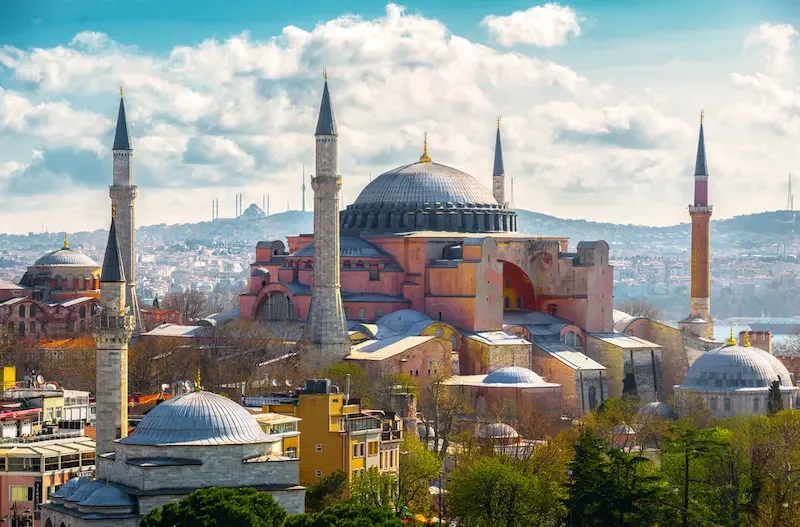
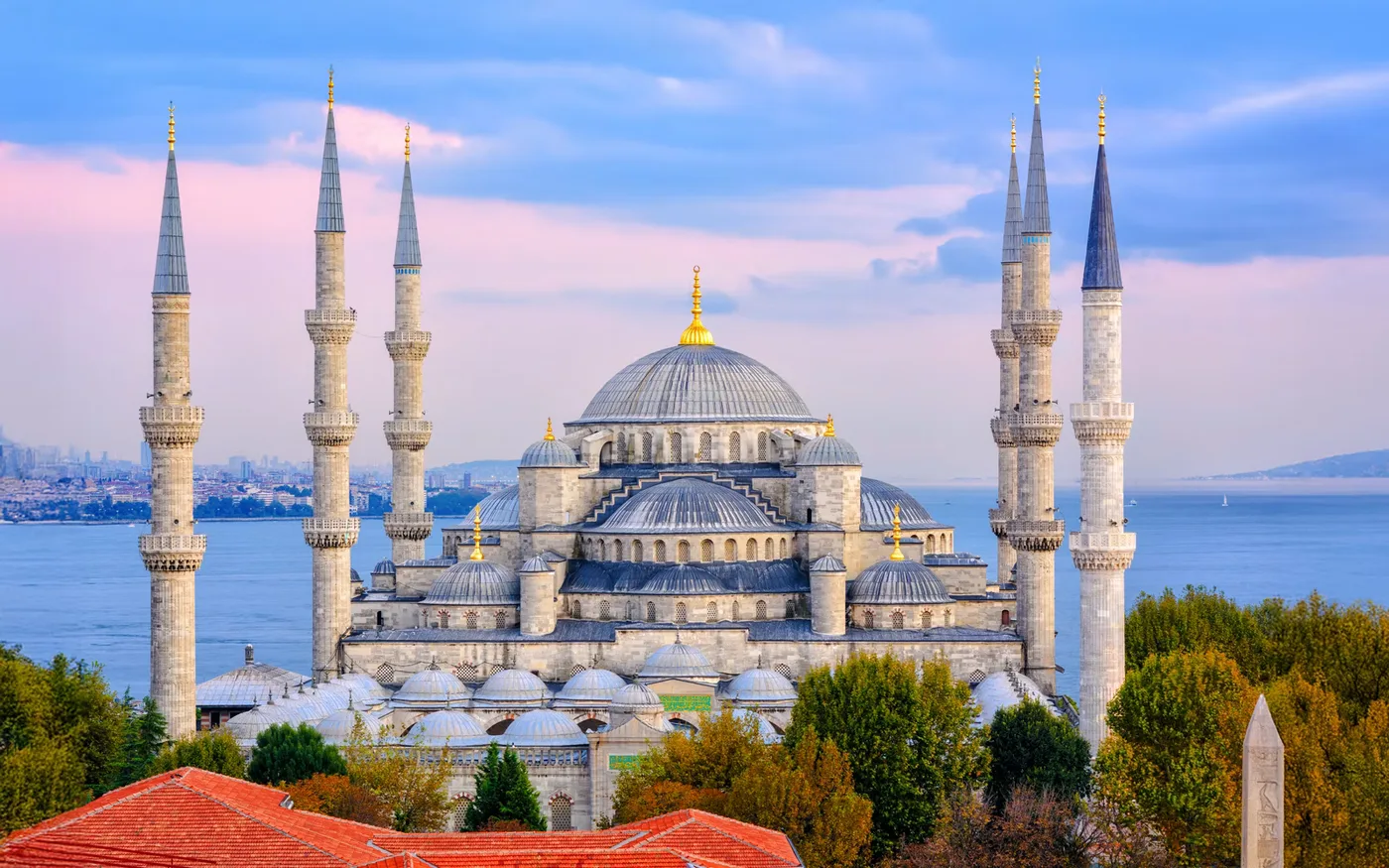
The first day stays almost entirely in the historic centre. It's a good way to start, since several of Istanbul's most important attractions sit close together and can be combined without relying on long transfers.
Morning in Sultanahmet
Sultanahmet is one of the best areas to begin a first trip to Istanbul, since it concentrates some of the city's most important monuments. The main attractions sit relatively close to one another, so a good part of the itinerary can be covered on foot through the streets of the historic centre.
Hagia Sophia is one of Istanbul's great symbols and gathers centuries of Byzantine and Ottoman history. Its architecture, scale and different functions over time make it one of the most important visits for understanding the history of ancient Constantinople and present-day Istanbul. For foreign tourists, the tourist route costs about 1,410 TL (approx. R$149). The prayer area follows different rules from the tourist visit.
Blue Mosque sits almost directly across from Hagia Sophia and, together with it, forms one of the city's most recognisable views. The large domes, the minarets and the religious space make it a natural addition to the same morning as Hagia Sophia. Free entry.
Sultanahmet Square occupies the space between Hagia Sophia and the Blue Mosque and links the neighbourhood's main attractions. The area also holds traces of the old Hippodrome of Constantinople, a reminder that this district was already one of the city's centres long before the Ottoman period.
Afternoon around the historic centre
After the main visits in Sultanahmet, it's worth continuing on foot through the streets of the historic centre rather than trying to cross Istanbul to fit in another distant area.
The pace for this first afternoon can be slower, leaving time to take in the architecture, wander into smaller streets and get to know the area between Sultanahmet and Eminönü a little better.
Late afternoon in Eminönü
Eminönü works well to close out the first day and gives you an early, closer look at the buzz of the Bosphorus. The area brings together ferries, shops, bridges and plenty of local foot traffic, creating an interesting contrast after Sultanahmet's grand historic sights.
From there, you can already sense how the Bosphorus is part of everyday life in Istanbul. Even without taking a boat trip on this first day, the area sets up the itinerary well for the experience reserved for day three.
Topkapi Palace, Basilica Cistern and the Grand Bazaar
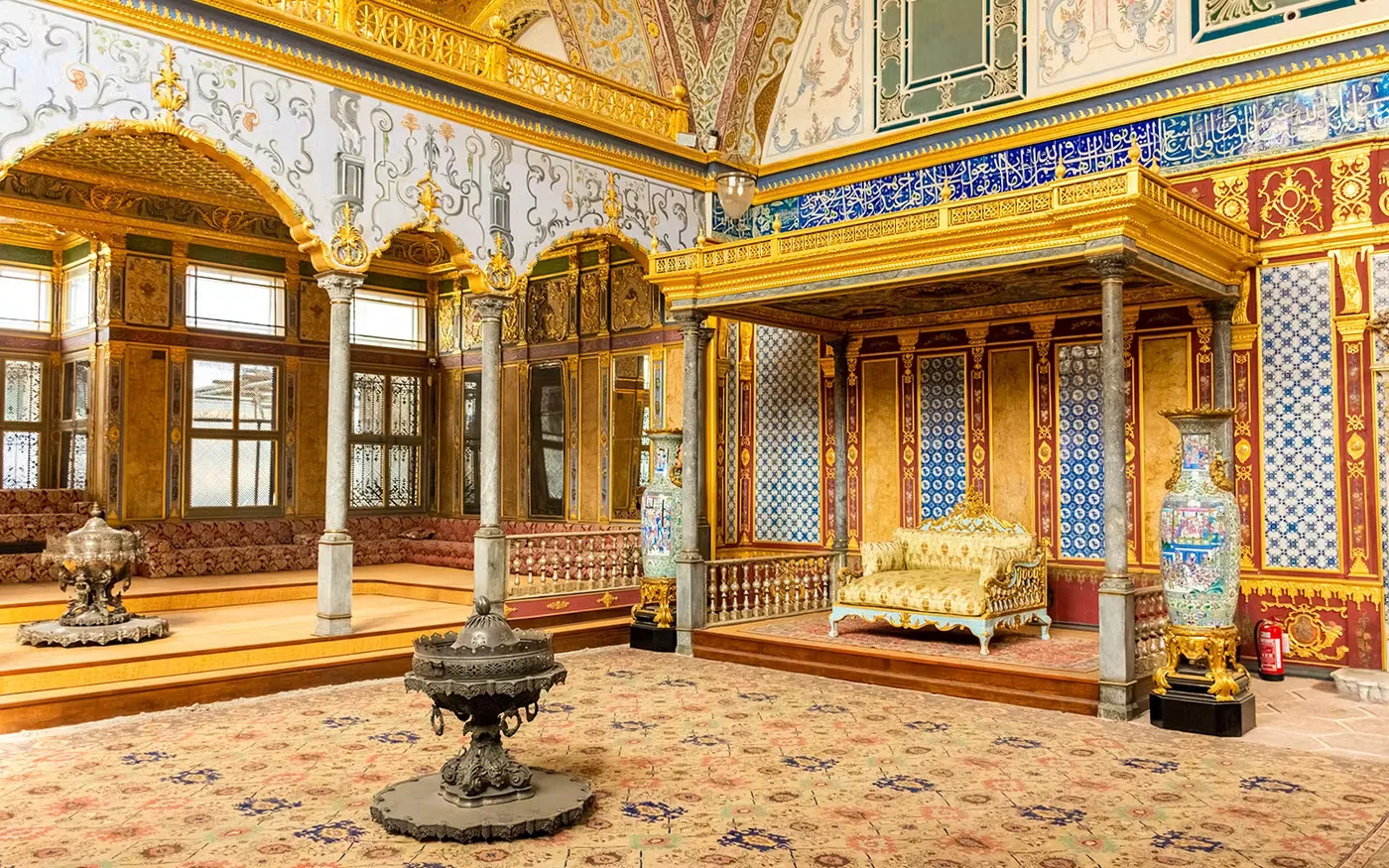
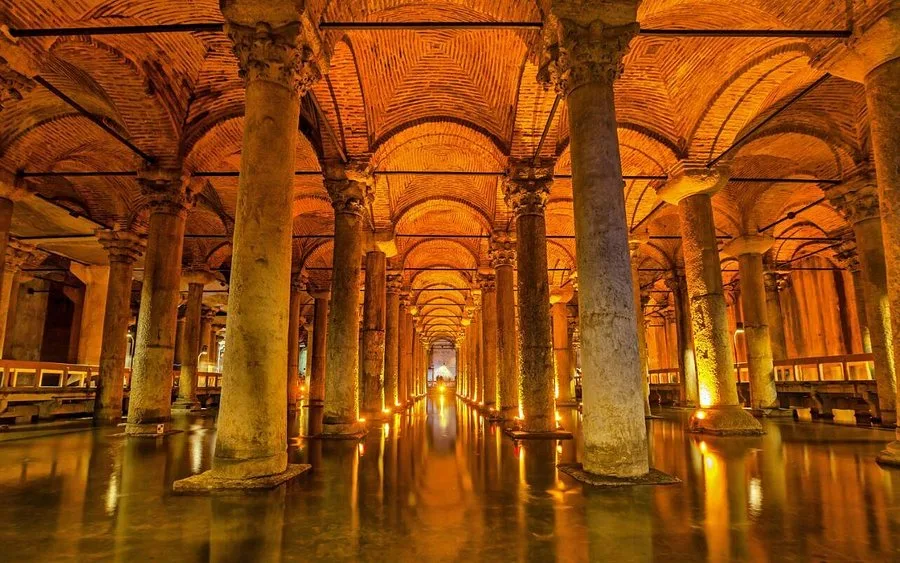
The second day stays in the historic centre, but with attractions quite different from the mosques visited on day one. The sequence combines a huge Ottoman complex, an underground structure and one of Istanbul's best-known markets.
Morning at Topkapi Palace
Topkapi Palace, the former residence of the Ottoman sultans, deserves plenty of time because it is much more than a single building. The complex has courtyards, halls, exhibitions and open areas with views over the Bosphorus, making the visit far longer than it might seem before you go in. For foreign visitors, the combined ticket for Topkapi + Harem + Hagia Irene costs 2,750 TL (approx. R$290).
I'd set aside a good part of the morning for the palace rather than trying to rush through it before another attraction. The number of different spaces and the complex's historical importance justify a calmer pace.
Basilica Cistern
Basilica Cistern offers a completely different experience from Sultanahmet's open-air attractions. The huge underground reservoir is held up by rows of columns and has an atmosphere that makes this one of the historic centre's most distinctive experiences. For foreign visitors, the daytime ticket costs 1,500 TL (approx. R$158). The evening session has a different rate.
It pairs very well with Topkapi Palace, since it's in the same general area and doesn't require crossing the city. After a morning in a large open complex, stepping into the cistern also completely changes the pace of the day.
Afternoon at the Grand Bazaar
Grand Bazaar can fill the second half of the afternoon and works best when you don't feel obliged to walk every single passage. The market has thousands of shops across different sections, so trying to see everything tends to make the experience more tiring than interesting. Free entry.
It's worth wandering without rushing, browsing the shops and stepping into only the areas that catch your interest. Even for those who don't plan to buy much, the Grand Bazaar helps round off the historic side of an Istanbul itinerary.
Galata, Istiklal Avenue, the Bosphorus and the Asian side
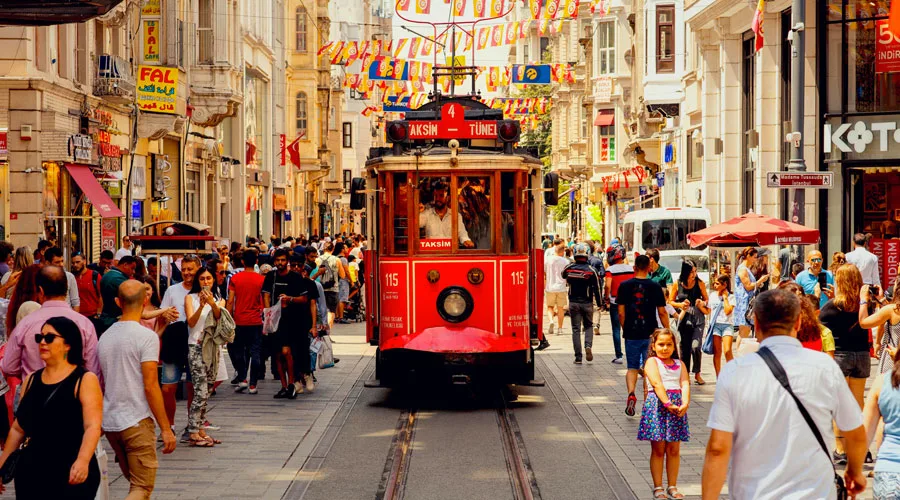
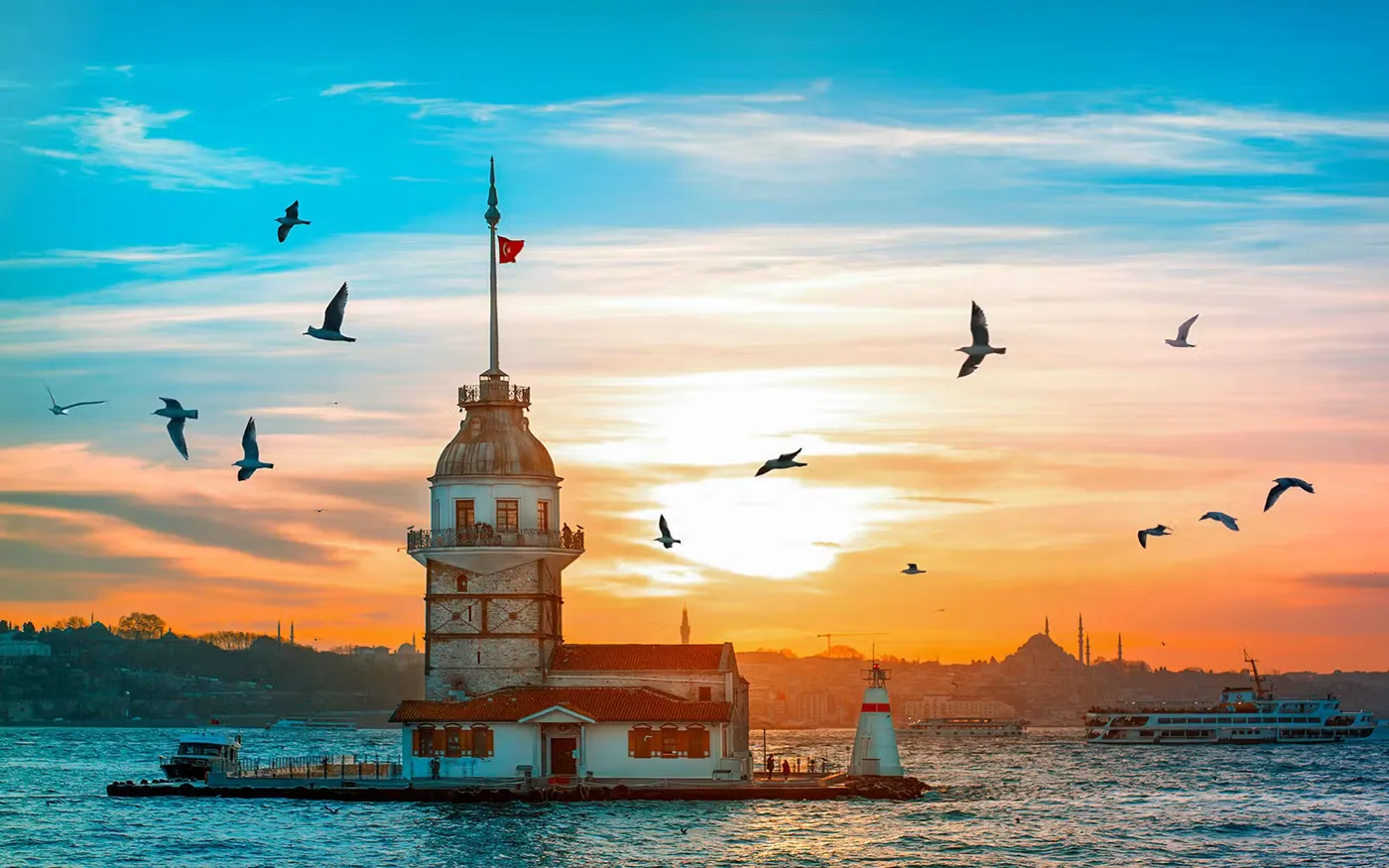
The third day leaves Sultanahmet behind and reveals a different Istanbul. The sequence moves through busier streets, modern neighbourhoods, Bosphorus views, and ends with the option of crossing to the Asian side.
Morning in Galata
The area around Galata Tower works well as the starting point for day three. The nearby streets mix old buildings, cafés, shops and sloping lanes that create an atmosphere completely different from Sultanahmet. For anyone wanting to go up to the panoramic area, the ticket for foreign visitors costs around 1,690 TL (approx. R$179).
Even if you decide not to pay to go up, it's worth exploring the surrounding streets. This part of Istanbul works especially well on foot and naturally leads the way toward Istiklal Avenue.
Istiklal Avenue
Istiklal Avenue is one of the city's busiest pedestrian areas and can be walked after Galata. Shops, restaurants, historic buildings and the well-known red tram make the avenue one of the best places to see Istanbul's more modern, bustling side.
What matters here is not treating Istiklal as just a street to cross. Walking without rushing lets you take in the façades, the side passages and the constant movement that sets this area apart from the historic centre.
Afternoon on the Bosphorus
Bosphorus: setting aside part of the third day for the water helps you understand Istanbul's geography much better. A boat trip or a ferry crossing shows the city from another angle and makes the divide between Europe and Asia much clearer.
From the boat, the itinerary shifts perspective completely. Mosques, palaces, neighbourhoods and the Bosphorus shoreline all become part of a single view, showing the city's scale in a way that's hard to grasp on foot alone.
Istanbul's Asian side
Üsküdar is a good choice for anyone looking for a calmer atmosphere and views back toward the European side. The area pairs well with the late afternoon and lets you see a part of Istanbul that many short itineraries end up skipping.
Kadıköy is the alternative for those who prefer restaurants, markets and a neighbourhood with more local buzz. It has a different feel from Üsküdar and works better for anyone who wants to end the itinerary walking through lively streets while looking for somewhere to have dinner.
In just three days, there's no need to try to get to know both Üsküdar and Kadıköy in depth on the same afternoon. Choosing one makes the last day more enjoyable and avoids turning the Asian side into a rushed visit.
What to prioritize in Istanbul in 3 days
If I had to trim the itinerary down to the essentials, I'd keep Sultanahmet, Hagia Sophia, the Blue Mosque, Topkapi Palace, the Basilica Cistern, Galata and the Bosphorus.
These places show some of Istanbul's key contrasts. Sultanahmet holds much of the monumental history, Galata and Istiklal show a more urban side, and the Bosphorus helps you understand the relationship between the European and Asian sides.
The Grand Bazaar is also worth a visit, but can get less time if markets and shopping aren't a priority. On the Asian side, choosing just Üsküdar or Kadıköy is enough for a three-day itinerary.
What can be optional in this itinerary
- The Grand Bazaar can get less time if shopping isn't a priority.
- Üsküdar or Kadıköy can be dropped if day three is running tight.
- There's no need to explore both Asian-side neighbourhoods in depth.
- Galata Tower can be experienced from the surrounding area only, if the roughly 1,690 TL (approx. R$179) ticket isn't a priority.
- Eminönü can be a shorter stop if day one runs late.
Mistakes to avoid in Istanbul
The first mistake is trying to cross the city several times in the same day. Istanbul is huge, and even with a good transport network, unnecessary travel can eat up a significant part of the itinerary.
Another mistake is trying to squeeze too many attractions into Sultanahmet. Hagia Sophia, the Blue Mosque and Topkapi Palace look very close together on the map, but each visit takes time, and the neighbourhood deserves to be explored without rushing.
It's also not worth relying on a car for this itinerary. The metro, tram, ferry and walking all work much better in the areas visited and avoid traffic and parking issues.
On the Asian side, trying to get to know both Üsküdar and Kadıköy in depth on the same afternoon can make the itinerary feel rushed. For three days, choosing the neighbourhood that best matches your interests is a better call.
Trip planning for Istanbul: essential tips
Before starting the itinerary, it's worth sorting out a few simple details. Public transport, internet access and the order of attractions all make a big difference in a city the size of Istanbul.
GETTING AROUND
- Use the Istanbulkart on the tram, metro and ferry.
- Walking works very well within each area.
- The ferry is one of the best ways to cross the Bosphorus.
- Avoid relying on a car in the historic centre.
APPS AND INTERNET
- Google Maps helps organise your travel between stops.
- Google Translate can help with signs and communication.
- An eSIM or local SIM makes using maps during the day easier.
- Save your hotel and main attractions before heading out.
HOW TO PAY
- The local currency is the Turkish lira.
- Cards are widely accepted in tourist areas.
- Carry some cash for small expenses.
- Bring more than one card for the trip.
MAIN TICKETS
Prices checked in September 2026 and subject to change.
- Hagia Sophia: about 1,410 TL (approx. R$149).
- Topkapi Palace: 2,750 TL (approx. R$290) for the combined ticket.
- Basilica Cistern: 1,500 TL (approx. R$158) during the day.
- Galata Tower: about 1,690 TL (approx. R$179).
- Blue Mosque and Grand Bazaar: free entry.